
I want you to sit with something uncomfortable for a moment. Last Friday, a train in a post-apocalyptic film where the entire human population lives on a perpetually moving locomotive offered more reliable service than the 17:42 from Manchester Piccadilly to Leeds. The heating worked. The carriages existed. People arrived somewhere. That is, by any reasonable metric, a better experience than I personally had standing on Platform 6 in the rain, staring at a departure board that simply read “Delayed” with the quiet confidence of a man who has given up entirely.
This article is my formal case that several fictional dystopian societies have solved public transport better than modern Britain. I am not being hyperbolic. I have receipts. Specifically, I have a very crumpled Northern Rail ticket from last Thursday that I am using as emotional evidence.
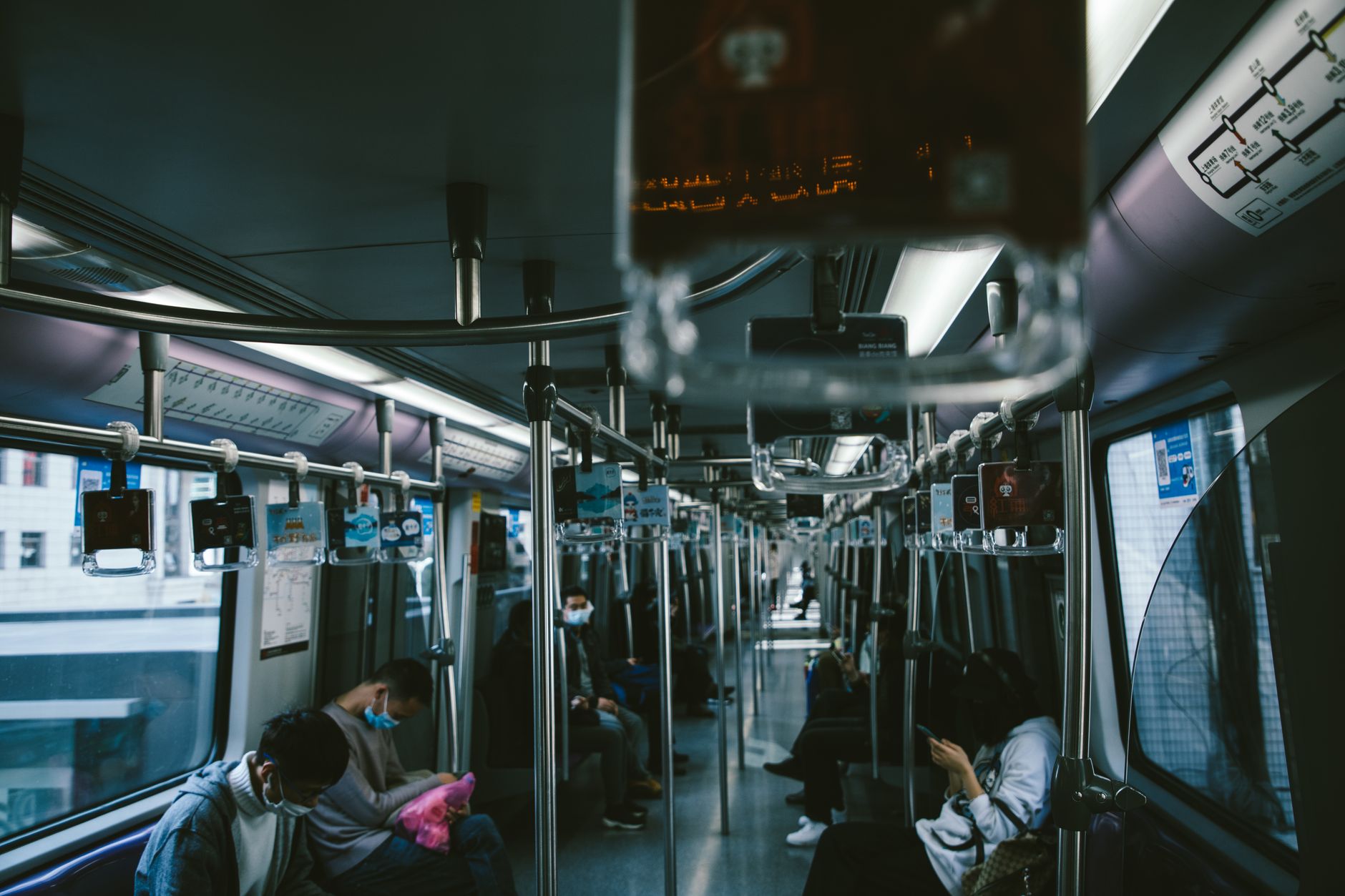
Snowpiercer: a train that actually moves
Let’s start with the obvious one. In Snowpiercer, the remnants of humanity live aboard a colossal train called Wilford’s Engine, which circles the frozen Earth on a continuous loop, never stopping, never cancelling, never replacing itself with a rail replacement bus service. The train has class divisions, violent social hierarchies, and a genuinely sinister tail section. And yet. It departs. It arrives. The schedule is, admittedly, “forever”, but at least that’s honest.
Northern Rail cannot tell me with a straight face when my train is coming. The Snowpiercer conductor, at minimum, knows where the train is at all times. That puts it ahead of the live departure boards at Huddersfield on any given Tuesday. Also, the protein blocks in the tail section sound grim, but have you eaten a £4.80 sad pasty from a platform kiosk? Similar energy.
The main difference, of course, is that in Snowpiercer you might get violently suppressed by armed guards if you try to move between carriages. In Britain, you just get told the quiet coach is the next one along, which achieves broadly the same effect.
Minority Report’s PreCrime pods: actually on time
The personal transit pods in Minority Report are self-driving, navigate a three-dimensional road network at speed, and deposit you at your exact destination without requiring you to change at Crewe. I’ve watched that film four times and not once does Tom Cruise miss his connection because the previous pod was “running approximately 23 minutes late due to an earlier incident at Coventry.”
The PreCrime system arrests people for crimes they haven’t committed yet, which is deeply troubling. But the pods work. You press a button, a pod comes. There is no app that crashes before you can buy a ticket. There is no confusing zone system where Zone A inexplicably costs more than Zone B even though Zone B covers more ground. There is certainly no situation where the pods are cancelled simultaneously on a bank holiday because of “essential infrastructure work” that was announced via a tweet at 11pm the night before.
I’d argue the most dystopian element of Minority Report isn’t the surveillance state. It’s the fact that I watched it and felt envious of the commute.
The Capitol’s maglev in The Hunger Games: comfortable seating, no cattle class
The Hunger Games presents a society of brutal inequality where children are forced into televised death matches for the entertainment of a wealthy elite. It is, in many ways, a metaphor. But the train that carries tributes from the districts to the Capitol is smooth, luxurious, has proper dining, and runs on magnetic levitation technology. It doesn’t judder. Nobody has to stand in the vestibule next to the toilets because there are no available seats.
I’ve been on the East Midlands Railway at 18:30 on a Friday. I know what it means to stand in that vestibule. I know the specific shame of watching someone claim the last table seat by placing their bag on the empty chair and making eye contact that dares you to ask them to move it. The tributes headed to near-certain death on a Hunger Games express are, seat-for-seat, having a better commute than the average person travelling from Nottingham to London St Pancras in standard class.
The sci-fi spaceships that would fail their MOT on every single point at least have the decency to look structurally unsound. Katniss’s tribute train would pass inspection, which is more than I can say for some rolling stock I’ve seen idling at Birmingham New Street.
Total Recall’s Mars subway: underground, on time, Mars
Total Recall is set partly on Mars, which is 225 million kilometres away, and its underground transit system still runs better than the Elizabeth Line did during its first six months. The subway in Total Recall is crowded, chaotic, and features at least one memorable moment involving a body used as a human shield. And yet the trains come. Regularly. On Mars. I cannot stress enough that this is on Mars.
Transport for London, to its credit, is genuinely one of the better systems in the UK. But step outside London and things get patchy fast. According to BBC reporting on rail punctuality, significant portions of Northern and TransPennine services have historically run at punctuality rates that would embarrass a colony on another planet. A colony that is, again, on Mars.
The Matrix’s hovercraft: no track, no delays
The Nebuchadnezzar from The Matrix doesn’t use tracks at all, which technically makes it immune to signal failures, leaves on the line, and the specific misery of a 40-minute wait caused by a “fault with the signalling system at Doncaster.” Morpheus pilots it through the Earth’s sewers with more consistency than CrossCountry manages between Birmingham and Edinburgh on a weekday afternoon. There’s also no First Class to make you feel bad about your ticket purchase. Everyone on the Nebuchadnezzar is equally cold and eating the same grey porridge. That’s almost egalitarian.
My fellow sufferers who’ve experienced the suspiciously British town planning decisions in open world games will appreciate that even fictional urban designers have more coherent logic than whoever decided the current UK rail franchise map was a good idea.
Logan’s Run and the slidewalks: at least they move
Logan’s Run, a 1976 film about a society that kills everyone at age 30 to manage overpopulation, has slidewalks. Automated moving pavements that carry people through a domed city at a comfortable pace. They never stop. There is no announcement that “the slidewalk is currently experiencing a reduced service due to overcrowding.” They just go. Continuously. Forever. Or until you hit 30, at which point you get murdered, but let’s not dock points for that specific policy decision.
The point is: a society built around ritual execution has better pedestrian infrastructure than most UK town centres. The last time I used a travelator at an airport it broke after twelve feet and we all shuffled off it in single file like we’d been personally let down. Logan’s slidewalks would have handled that crowd with no drama whatsoever.
So where does that leave us?
I’m not saying Britain should adopt any of these systems wholesale. I don’t want a frozen apocalypse train, and I actively do not want to be arrested for crimes I haven’t committed yet, even if the pod service is excellent. What I am saying is that science fiction writers, when imagining the bleakest possible futures for humanity, still managed to sort out the trains. That’s the bit that should sting.
The fans who enjoy ranking questionable fictional experiences will know the feeling well: I’ve spent time reading about catastrophically bad video game menus, and even those have clearer navigation logic than the National Rail website when you’re trying to find a cheap off-peak return to Sheffield on a Thursday that isn’t a bank holiday.
Fix the trains. Or, at the very least, give us the pods. I’ll take my chances with the PreCrime system if it means getting home before midnight.
Frequently Asked Questions
Which dystopian movie has the most realistic public transport compared to the UK?
Snowpiercer is the closest comparison, a rail system that nominally functions but has terrible class divisions and no guarantee of comfort depending on which carriage you’re in. Sound familiar? Northern Rail passengers will recognise the vibe immediately.
Is UK public transport really that bad compared to other countries?
It depends on where you are. London’s TfL network is genuinely competitive with major European cities, but outside London, punctuality and coverage drop significantly. BBC and ONS data have repeatedly shown that Northern and TransPennine services rank poorly for reliability across the UK.
What is the actual state of UK rail punctuality in 2026?
UK rail punctuality remains inconsistent across operators, with Northern and CrossCountry services frequently cited as among the worst performers. The government’s Integrated Rail Plan for the North of England aims to address some of this, but improvements have been slow to materialise.
Are there any dystopian films where public transport is actually worse than the UK?
Mad Max: Fury Road has almost no public transport at all, just a chrome-spraying warboy on top of a truck, which is arguably worse. Waterworld doesn’t even have land. So yes, the UK beats some fictional dystopias, but the bar there is extremely low.
What films inspired this dystopian movies public transport UK comparison?
The main films referenced are Snowpiercer (2013), Minority Report (2002), The Hunger Games series, Total Recall (1990 and 2012), The Matrix (1999), and Logan’s Run (1976). All feature transit systems that, despite being fictional and often horrifying in context, function more reliably than a Friday evening commute on several UK rail operators.
Leave a Reply