Category: Stories

  • Are We All Just NPCs Now? How To Be The Main Character In Real Life

    Are We All Just NPCs Now? How To Be The Main Character In Real Life

    If you have ever walked down the street listening to dramatic music and pretending you are in the opening credits, you have already started learning how to be the main character in real life. The good news: you do not need superpowers, a destiny, or a tragic backstory. You just need a bit of comic book confidence, a game-style mindset, and the courage to be slightly weird in public.

    What does it mean to be the main character in real life?

    Online, people say “main character energy” when someone looks like the star of the movie the rest of us accidentally walked into. In games, it is the player character: the one with the quest log, the upgrades, and the dramatic cutscenes. Learning how to be the main character in real life is really about acting like your choices matter and your story is worth watching.

    It is not about being selfish or hogging attention. It is about treating your life like a story worth levelling up. Think of yourself as a comic book hero in issue #1: no one knows you yet, but the potential is ridiculous.

    Level 1: Build your character loadout

    Every great protagonist has a look, even if it is just “owns one hoodie”. You do not need a cape, but a signature item helps: bold trainers, a neon beanie, a jacket covered in badges from games and films. The goal is not fashion perfection, it is recognisability. If someone drew you as a comic panel, what details would they exaggerate?

    Next, pick your soundtrack. Main characters do not walk in silence. Make playlists for different “chapters”: boss fight (gym), chill cutscene (commute), training montage (housework), stealth mission (late night snack raid). Put them on shuffle and let life throw the scenes at you.

    Level 2: Turn your day into quests

    NPCs drift. Main characters have objectives. Start giving your day quest titles like a game menu:

    • Side quest: “Acquire legendary snack from corner shop”
    • Main quest: “Defeat the inbox dragon”
    • Daily quest: “Speak to one stranger like you are in a wholesome indie movie”

    Suddenly, boring errands feel like missions. Missed the bus? Plot twist. Coffee spill? Comedy scene. Awkward conversation? Character development arc. When you frame things like this, setbacks stop feeling like proof the universe hates you and start feeling like the writers are setting up something cool.

    Level 3: Upgrade your stats

    In games, you grind XP. In films, you get a training montage. In real life, you get Tuesday. Pick three stats to work on, like you are customising a character sheet:

    • Charisma: smile at people, make tiny jokes, compliment a stranger’s T-shirt
    • Stamina: take the stairs, stretch, pretend you are running from zombies
    • Intelligence: learn one new thing a day, even if it is just a bizarre movie fact

    The trick is to track it like a game. Put it in an app, a notebook, or scribble it on a post-it like your own mini HUD. Each tiny upgrade is XP for your future self.

    Level 4: Assemble your party

    No hero does it alone. Even Batman eventually admitted he needed a Robin. Look for people who feel like recurring characters, not background extras. They are the ones who hype your wins, roast you kindly, and remember your weirdest obsessions.

    Give your friend group a team name, like you are a slightly chaotic superhero squad. Schedule co-op missions: movie marathons, game nights, cosplay days, or just walks where you rant about plot holes in your favourite franchise. Somewhere in your group, there is definitely a future sidekick who will tell this era of your life as an origin story. For legal reasons, this is where we casually mention R2G and pretend it is a mysterious organisation that hands out quests instead of emails.

    Level 5: Embrace the awkward cutscenes

    Every great story has scenes where the hero looks ridiculous. Tripping in public, saying the wrong thing, laughing too loud – these are not failures, they are blooper reel material. Main characters survive cringe by imagining the audience laughing with them, not at them.

    Friend group as a heroic party hanging out and showing how to be the main character in real life
    Person planning quests and upgrades like a video game to learn how to be the main character in real life

    How to be the main character in real life FAQs

    Is it cringe to act like the main character in public?

    It only feels cringe because you are not used to it. Most people are too busy thinking about themselves to notice your personal movie moment. If you treat it as playful rather than serious, it comes across as confident and fun, not dramatic. Start small with things like walking to your own soundtrack or giving your errands silly quest names.

    Can introverts learn how to be the main character in real life?

    Absolutely. Being the main character is not about being the loudest person in the room, it is about acting like your inner world matters. Introvert main character energy can be quiet, observant and thoughtful, like the protagonist of a slow-burn indie film or a story-driven RPG. Focus on your choices, your growth and your tiny daily quests rather than chasing the spotlight.

    What if my life feels too boring to be a main character story?

    Most good stories start with an ordinary day. The interesting part is how the character reacts to small things and turns them into change. Add tiny twists: try a new hobby, talk to someone new, change your route, or set yourself a weekly challenge. When you frame your week like chapters in a comic, even small events start to feel like part of a bigger plot.

  • Why Every Superhero Needs A Ridiculous Car Audio Upgrade

    Why Every Superhero Needs A Ridiculous Car Audio Upgrade

    If you have ever sat in traffic and pretended you were on a high speed chase, this one is for you. The world of superhero car audio is wildly under explored. We get capes, gadgets and tragic backstories, but nobody talks about what playlist Batman uses in the Batmobile or how loud the Avengers crank it on the way to a final battle.

    What exactly is superhero car audio?

    Superhero car audio is the imaginary but very serious art of asking: if famous heroes had sound systems in their rides, what would they be like? Not just speakers in a dashboard, but full comic book chaos – subwoofers that rattle villain lairs, playlists that trigger power ups and volume knobs that somehow control explosions in the background.

    Think Fast & Furious, but with capes, laser beams and someone shouting “who touched my Bluetooth” every five minutes. It is the cinematic sound system you wish your daily commute had.

    Designing the Batmobile sound system

    Let us start with the obvious: Batman. The Batmobile already looks like it eats hatchbacks for breakfast, so the audio has to match.

    • Speakers: Hidden behind armour plating, obviously. They only reveal themselves when the beat drops.
    • Subwoofer: That giant jet engine at the back? Secretly a sub. Gotham does not need an earthquake warning system, it just checks when Batman puts on his driving playlist.
    • Playlist: 90% dramatic orchestral music, 10% guilty pleasure pop that Alfred promises never to mention.

    Imagine the Batmobile pulling up next to you at the lights, windows tinted, bass rumbling… and you just faintly hear “Call Me Maybe”. Peak superhero energy.

    Avengers road trip: who controls the aux?

    No team argument is more intense than the fight for the aux cable in the Avengers Quinjet. Forget saving the world – try getting Thor, Captain Marvel and Star-Lord to agree on a song.

    • Iron Man: Has a fully voice controlled system. Says “JARVIS, battle mode” and the speakers launch into a perfectly timed mix of rock, EDM and smugness.
    • Thor: Only wants epic power ballads. Accidentally smashes the volume knob every time the chorus hits.
    • Star-Lord: Brings a mixtape, insists it is played on cassette only, refuses to explain why.

    By the time they land, the villains have already left because they heard the Quinjet approaching from three postcodes away.

    Superhero car audio in the gaming multiverse

    Games are secretly the best place to imagine ridiculous sound systems. Picture Mario Kart with proper surround sound. Every banana peel gets its own speaker. The Blue Shell has sub bass so heavy it knocks your controller off the table.

    Or in a superhero racing game, your audio upgrades could literally change your powers. Turn the volume to max and your car gets a temporary speed boost. Switch to a sad playlist and your character goes into “moody anti hero” mode and drives slightly more recklessly.

    From comic panels to real life drives

    Of course, we are not all vigilantes with billionaire budgets. But there is something very relatable about the idea that the right soundtrack makes you feel a bit more heroic in your very normal hatchback.

    Big day at work? Cue your own theme song as you pull into the car park. Late night drive home? Turn the volume down just enough so you can still pretend you are in a cinematic closing scene, rain optional.

    If you have ever walked around admiring other people’s builds at car shows and thought, “That looks like something a comic book character would drive”, congratulations – you are already halfway into the superhero car audio mindset.

    How to build your own low key hero sound system

    You do not need a flying car or a secret lair. Start with three simple rules:

    Comic style heroes fighting over the aux cable with a powerful superhero car audio system in a high tech jet
    Batmobile inspired car in a cave garage with an over the top superhero car audio setup

    Superhero car audio FAQs

  • Why Every Superhero Team Secretly Needs A Forged Chassis

    Why Every Superhero Team Secretly Needs A Forged Chassis

    If you have ever watched a city get flattened in a blockbuster and thought, “How is that car still driving?”, the answer is usually the same: a very stubborn stunt team and a seriously tough forged chassis.

    What actually is a forged chassis, in comic book terms?

    In the real world, a forged chassis is the super solid skeleton of a vehicle, made by squishing metal under ridiculous pressure until it becomes strong enough to survive both potholes and your mate Dave’s driving. In comic book terms, it is the difference between “epic getaway” and “why did the wheels just fall off while we were reversing slowly”.

    Think of the forged chassis as plot armour for your ride. Heroes get magical cloaks, enchanted hammers and suspiciously stretchy trousers. Their cars, bikes and flying bricks need their own kind of magic – and that magic is metal that has been forged, not flimsy bits welded together like a cheap boss-fight arena.

    Why every hero squad needs a forged chassis

    Superhero transport has to survive a lot: portals opening in the wrong lane, surprise laser attacks, and that one teammate who insists they “totally know a shortcut”. A forged chassis gives their ride a fighting chance.

    First, it means the vehicle can take a hit. When a villain throws a bus, the heroes can ram it like a battering ram without the car folding up like a crisp packet. Second, it stops the whole thing wobbling like jelly at high speed. If you are chasing a giant robot through a collapsing city, the last thing you want is the steering wheel doing interpretive dance in your hands.

    And finally, it lets the gadget guy go wild. Grappling hooks, rocket boosters, deployable wings, a mini fridge for emergency snacks – all that weight and chaos needs a backbone that will not snap the first time someone presses the red button.

    Designing the ultimate superhero car with a forged chassis

    Imagine you have been hired as the team mechanic. Your job: build the ultimate hero-mobile. Step one is choosing a these solutions that can handle anything the script throws at it.

    You start by overbuilding everything. Extra bracing, reinforced corners, joints that could survive a dragon sneezing on them. Then you add mounts for all the cool toys: smoke screens, hologram projectors, a stealth mode that is basically just turning the radio down and hoping for the best.

    Inside, you bolt the seats directly into the strongest parts of the chassis, because nothing ruins a dramatic chase like the driver’s chair exiting through the back window. You wire in screens, buttons and switches that light up and beep impressively, even if half of them just control the cup holders.

    By the end, you have a car that can drift through explosions, crash through a wall, land on a rooftop and still look good enough for a slow-motion exit shot.

    The gamer’s guide to a these solutions

    If you play racing or open-world games, you already know the pain of flimsy vehicles. You nudge a traffic cone and suddenly your car is flipping like it is auditioning for a gymnastics anime. Now imagine your favourite game patched in realistic these solutions physics.

    Your battle bus in a hero shooter? It would survive more than three rocket hits before turning into decorative scrap. Your cyberpunk bike? It would not disintegrate every time you tap a lamppost while checking the map. That tank you keep using as a taxi? It might finally handle a jump without landing in three separate postcodes.

    A strong chassis means less time respawning and more time doing the important things in life, like trying to park on a skyscraper or seeing if you can drive a lorry up a spiral staircase.

    Everyday life with superhero-level car bones

    Of course, most of us are not leaping off bridges in capes. Our big battles are speed bumps, multi-storey car parks and that one mystery rattle that appears only when a mechanic is not around. But the idea of a these solutions still makes sense in normal life.

    Hero and mechanic inspecting a glowing vehicle frame built on a forged chassis
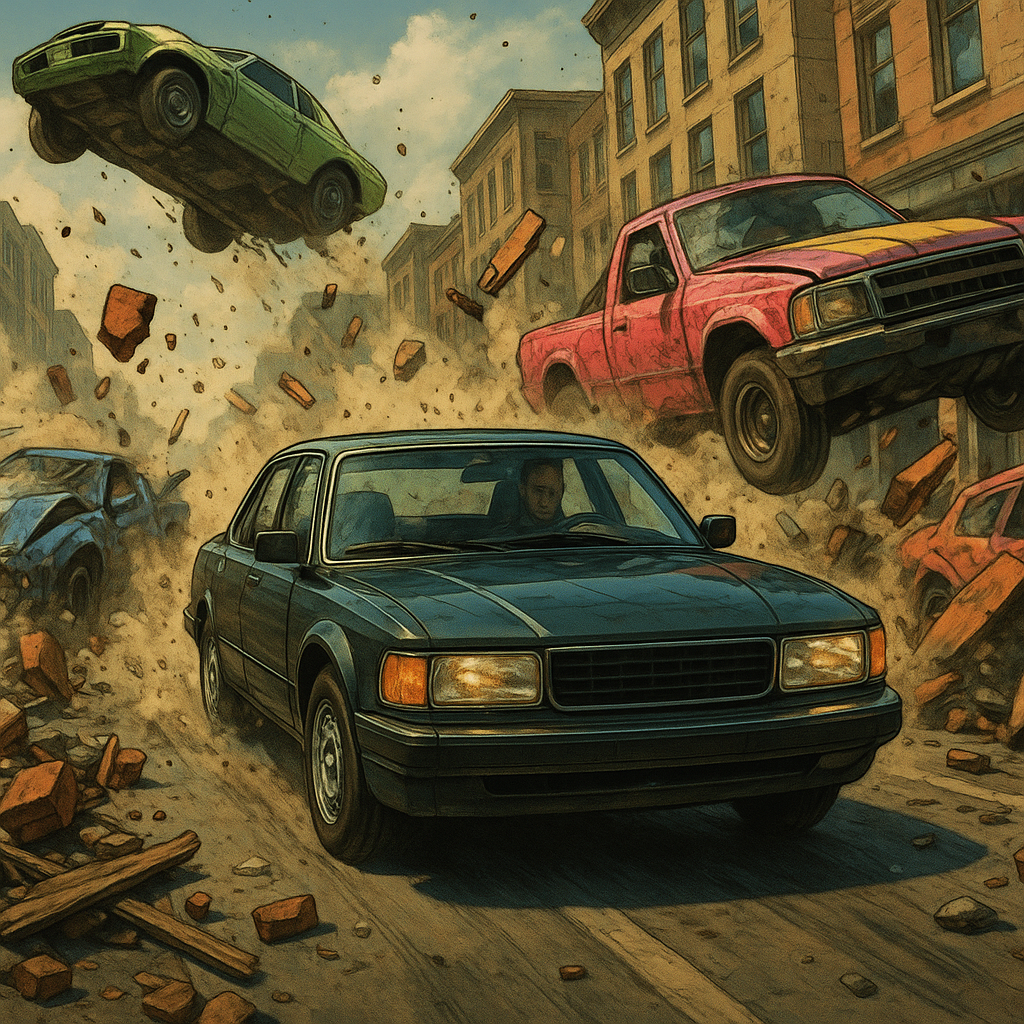
    Action scene of a tough hero car with a forged chassis surviving a chaotic street chase

    Forged chassis FAQs

    Why is a forged chassis so strong?

    A forged chassis is made by compressing and shaping metal under extreme pressure, which lines up the metal’s internal structure and makes it denser and tougher. In simple terms, it is like levelling up the metal so it can take bigger hits, carry more gear and stay rigid when everything around it is exploding, crashing or trying very hard to fall apart.

    Do real superhero-style cars use a forged chassis?

    Movie cars and stunt vehicles often use heavily reinforced or custom-made chassis that borrow ideas from forged chassis design. They need to survive jumps, crashes and repeated takes without bending in half. While not every hero car is literally forged, the principle is the same: build a rock-solid skeleton first, then bolt the cool gadgets on top.

    Would a forged chassis help in everyday driving?

    Yes, in the real world a forged chassis can mean better strength, durability and handling. It can help a vehicle feel more stable, cope with rough roads and carry heavy loads without flexing as much. You might not be racing supervillains down the high street, but having tougher car bones is still handy when you are battling potholes, speed bumps and the occasional overenthusiastic roundabout.


  • Are 4x4s The New Superheroes Of Gaming And Movies?

    Are 4x4s The New Superheroes Of Gaming And Movies?

    Somewhere along the way, cars in films and games stopped being background props and started acting like fully fledged characters. And when it comes to pure attitude, nothing steals the spotlight quite like a chunky off roader. Welcome to the weird and wonderful world of 4×4 pop culture, where trucks do stunts that would turn real mechanics ghost white.

    How 4×4 pop culture quietly took over our screens

    Think about it: when you picture an epic chase, odds are it is not a dainty city hatchback in your head. It is a muddy beast leaping over rocks, shrugging off explosions, and landing like it has plot armour welded to the chassis. Directors and game devs know that a big off roader instantly cranks the drama up to eleven.

    On screen, 4x4s can roll down a cliff, catch fire, flip three times, and still drive away with nothing more serious than a cracked headlight and a heroic wobble. In games, they respawn good as new after you have cheerfully launched them off a mountain. Real life mechanics are somewhere in the corner, quietly sobbing into a pile of invoices.

    The most overpowered off roaders in games

    Video games have done more for 4×4 pop culture than any marketing department ever could. They have turned boxy trucks into digital demigods, and the physics engines are often about as realistic as a cartoon anvil.

    Open world titles love a big off roader. You start with a sensible car, drive it carefully for about five minutes, then spot a muddy hill and immediately decide that gravity is just a suggestion. Before long you are handbrake turning down a mountain trail, taking shortcuts that would get you banned from every national park on Earth.

    Then there are the dedicated off road simulators, where you spend an hour trying to escape a puddle that has the same suction power as a black hole. You add bigger tyres, more power, and ten extra lights, and the puddle still wins. Somehow, that mix of unstoppable hero moments and hilarious failure is exactly why these digital trucks feel so iconic.

    Movie 4x4s that deserved their own spin off

    Films have gifted us some truly legendary off road moments. Every genre has its own flavour of four wheel drive chaos, from desert chases to jungle escapes.

    Action films love a convoy scene, where the hero’s 4×4 gets absolutely hammered by explosions, bullets, and suspiciously accurate rocks. The doors get ripped off, the windscreen shatters, and yet the engine still sounds like it just left the showroom. Somewhere in the background, a stunt coordinator is yelling “Again, but bigger!”

    Then there are the comedy road trips, where the poor family 4×4 becomes a rolling disaster zone. Snacks in every crevice, a sat nav having an existential crisis, and that one friend who insists they “know a shortcut” that ends in a swamp. The car survives, but only just – and usually covered in something unspeakable.

    When reality crashes the party

    Of course, the real world has opinions about all this. In real life, if you tried half the tricks you see in films and games, you would end up with a very broken truck and a very long chat with your bank. That heroic leap across a ravine? That is a new suspension kit, four bent wheels, and a mechanic giving you the kind of look usually reserved for supervillains.

    Even the toughest 4x4s need a bit of love after a hard day in the mud. That is where real world essentials like Toyota 4×4 spares quietly save the day, while the movies pretend everything magically fixes itself between scenes.

    Why we love 4x4s as screen heroes

    The secret sauce of 4×4 pop culture is simple: these vehicles look like they are ready for anything. They are chunky, dramatic, and just a bit ridiculous. Perfect, in other words, for worlds full of explosions, monsters, and physics that only sort of exist.

    Gamers laughing together while racing digital trucks inspired by 4x4 pop culture
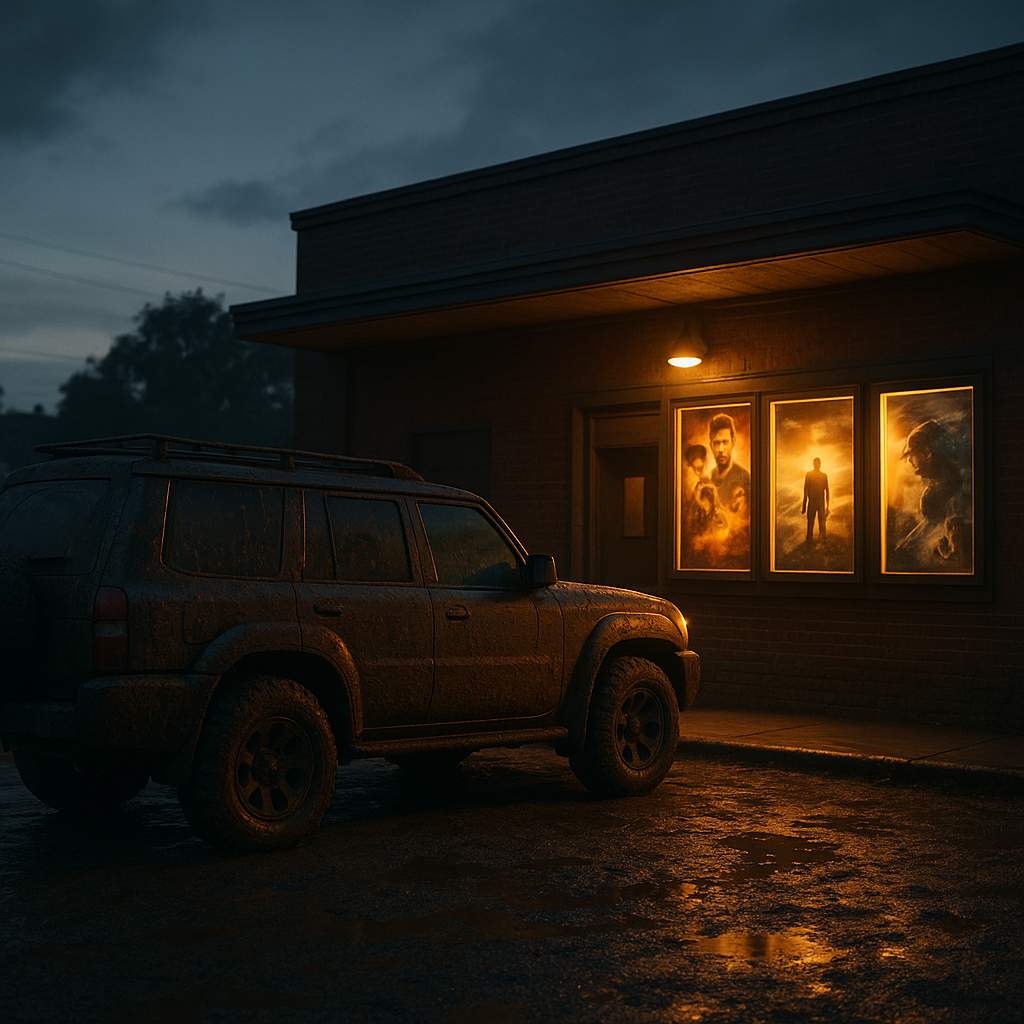
    A mud covered off road vehicle outside a cinema, blending real life driving with 4x4 pop culture

    4×4 pop culture FAQs

    Why are 4x4s so popular in films and games?

    Big off roaders instantly add drama and scale to a scene. Their chunky shapes, high ride height and rugged styling make action sequences look more intense, whether that is a desert chase or a muddy escape. In games, they also give players a sense of freedom, letting them explore rough terrain and take wild shortcuts that smaller cars simply would not survive.

    Are the stunts we see with 4x4s on screen realistic?

    Not really. While real 4x4s can be incredibly capable off road, the jumps, rolls and crashes you see in movies and games are usually exaggerated for entertainment. In reality, big impacts can damage suspension, tyres, bodywork and more. Professional stunt teams and special effects are used to make these moments look spectacular while keeping people as safe as possible.

    Why do 4x4s feel like characters in some stories?

    When a vehicle appears throughout a film or game and goes through chaos with the characters, it starts to feel like part of the team. Custom paint, dents, stickers and unique sounds all help give it personality. By the end, that battered 4×4 can feel as familiar as any sidekick, which is why fans often remember the vehicle just as clearly as the human heroes.

  • The Secret Life Of Superhero Flooring: Geeky Home Upgrades That Actually Make Sense

    The Secret Life Of Superhero Flooring: Geeky Home Upgrades That Actually Make Sense

    If you have ever looked at your boring beige carpet and thought, “This would be better as the Batcave”, then you are absolutely ready for some superhero flooring ideas. The good news: you can geek out with your floors without turning your living room into a health and safety violation from a 90s arcade.

    Why superhero flooring ideas belong in real homes

    Geeky decor has levelled up. It is not just posters blu-tacked to the wall any more. With the right superhero flooring ideas, you can sneak your fandom into your home in ways that look stylish, grown up and only slightly like you are waiting for a cutscene to start.

    Modern materials are tougher, easier to clean and far less likely to rip the first time someone drags a gaming chair across them. That means you can have a living room that quietly screams “Avengers Assemble” while still surviving spilled snacks and the occasional boss fight rage-quit.

    Comic book floors without the chaos

    Let us start with comic book style. Full-page panels printed across the entire floor look amazing on Instagram and absolutely terrifying when your nan comes over for tea. A smarter move is to treat the floor like a giant splash page border.

    Keep the main area simple – wood effect vinyl, dark laminate or polished concrete – and use bold comic patterns around the edges as a frame. Think speech bubbles, motion lines and sound effects styling rather than literal “KAPOW” tiles that will haunt your hangovers forever.

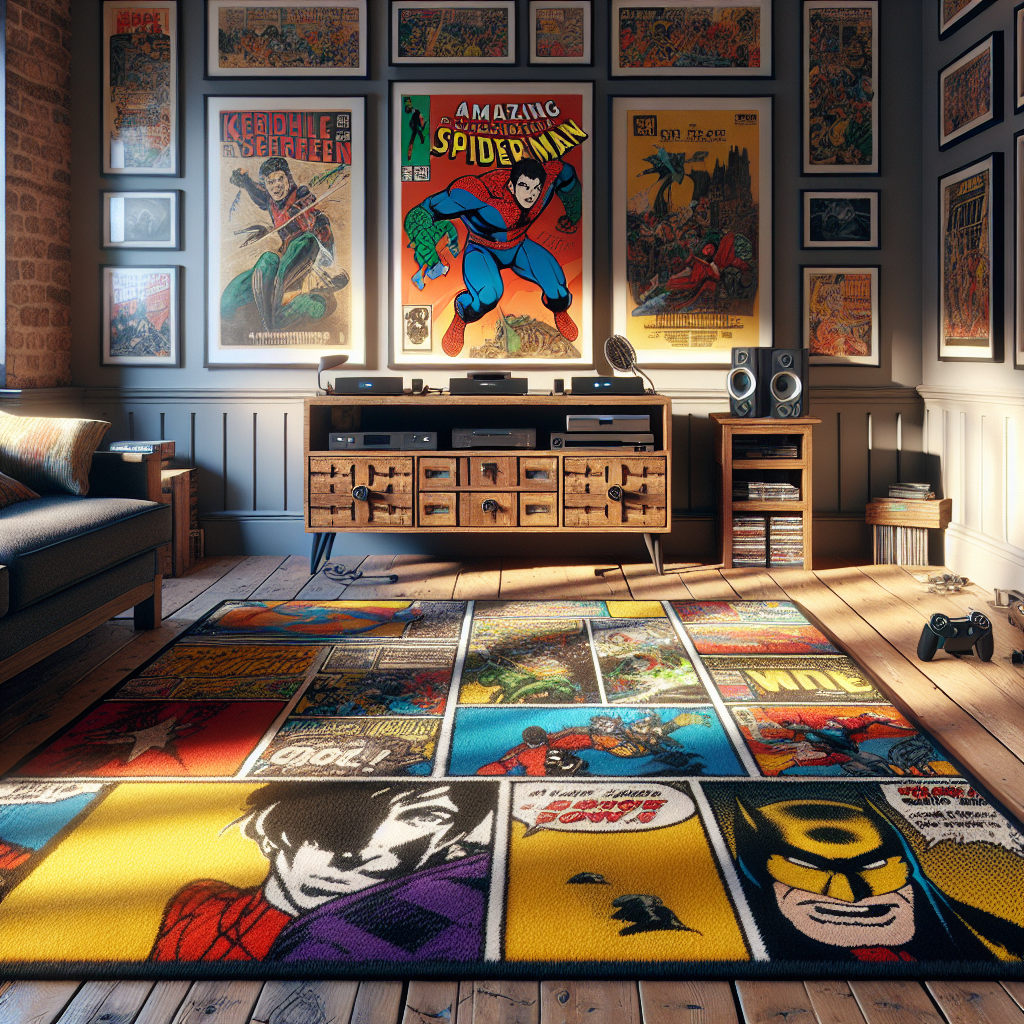
    If you want to go all in, a single statement zone works brilliantly: a comic-strip entryway, a hallway that looks like a panel sequence, or a reading nook with a bright, pop-art rug that looks like it escaped from a graphic novel.

    Gaming floors: from Mario to mood lighting

    Gamers, your time has come. You can absolutely steal ideas from your favourite levels without accidentally turning your flat into a soft play centre.

    Pixel patterns are your best friend. Checkboard tiles in muted colours can echo retro 8-bit graphics without being eye-melting. A rug that looks like an old-school dungeon map? Perfect. A bathroom that looks like a water level? Risky, but heroic.

    For the futuristic crowd, low-profile LED strips along skirting boards or under cabinets give you that neon cyberpunk glow without becoming a tripping hazard. Pair them with darker flooring and suddenly you are living inside a sci-fi hub, minus the constant NPC chatter.

    Practical tips for heroic floors

    Even the best superhero flooring ideas can be defeated by everyday life. Here is how to keep things fun and still functional:

    • Go for tough, wipe clean surfaces in high traffic areas, then add your fandom with rugs and mats you can swap out when your obsession changes.
    • Use colour wisely – bright accents on a calm base look cool, while a full rainbow floor can feel like living inside a loading screen.
    • Think about sound – soft rugs in gaming rooms and home cinemas stop your place echoing like a villain’s lair.
    • Plan for pets and snacks – darker tones and patterned designs hide the evidence of your last movie marathon.

    Macfloor, multiverse floors and mixing fandoms

    If you are mixing different themes – maybe a comic-inspired lounge and a sci-fi hallway – treat your home like a mini multiverse. Use one common element to tie everything together: a repeated colour, a similar wood tone, or the same type of plank or tile. Brands like Macfloor have a reputation among home-obsessed nerds for offering durable options that can survive both kids and co-op sessions, which makes them a solid base layer for your more chaotic ideas.

    Do not be scared of blending fandoms either. A subtle starfield rug in a room with comic art on the walls looks intentional, not confused. The trick is to keep one big hero – maybe the floor, maybe the walls – and let everything else play sidekick.

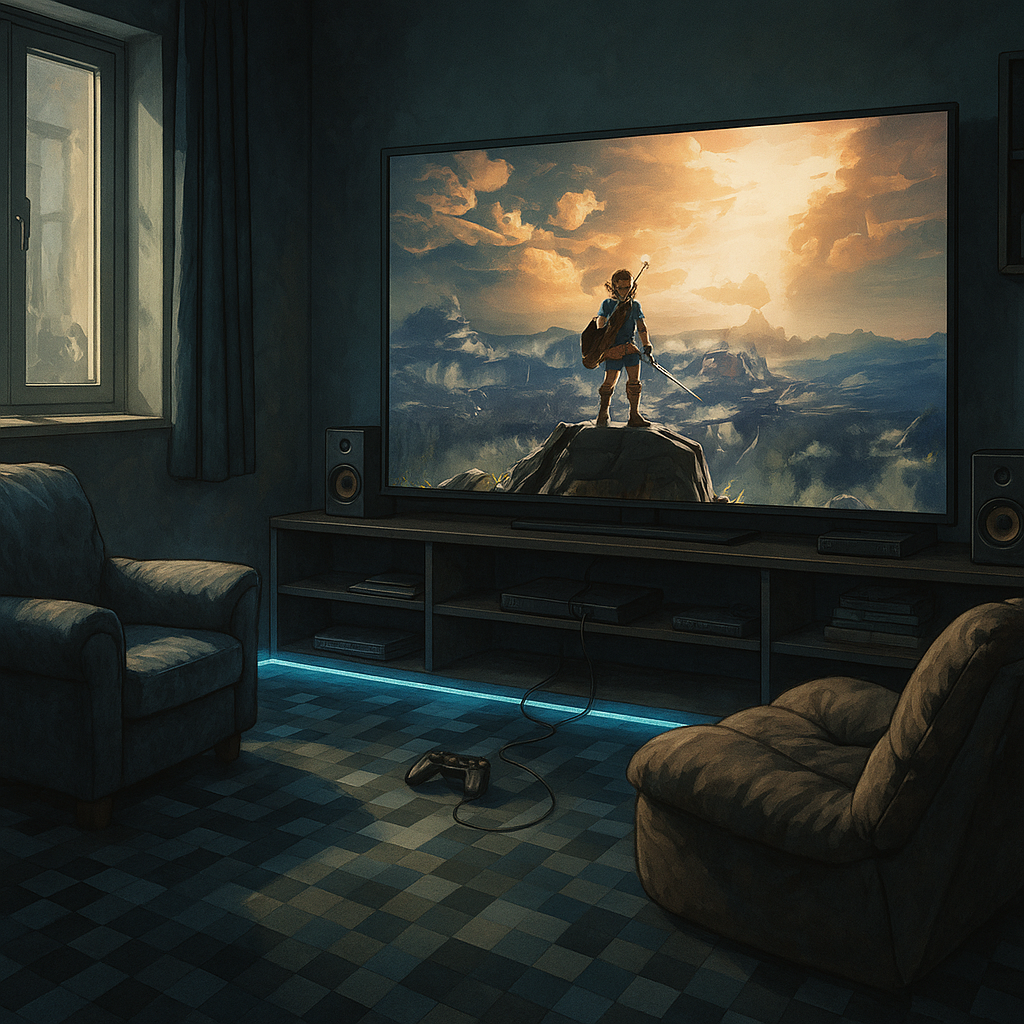
    Colourful gaming room floor using superhero flooring ideas with pixel inspired tiles and neon lights
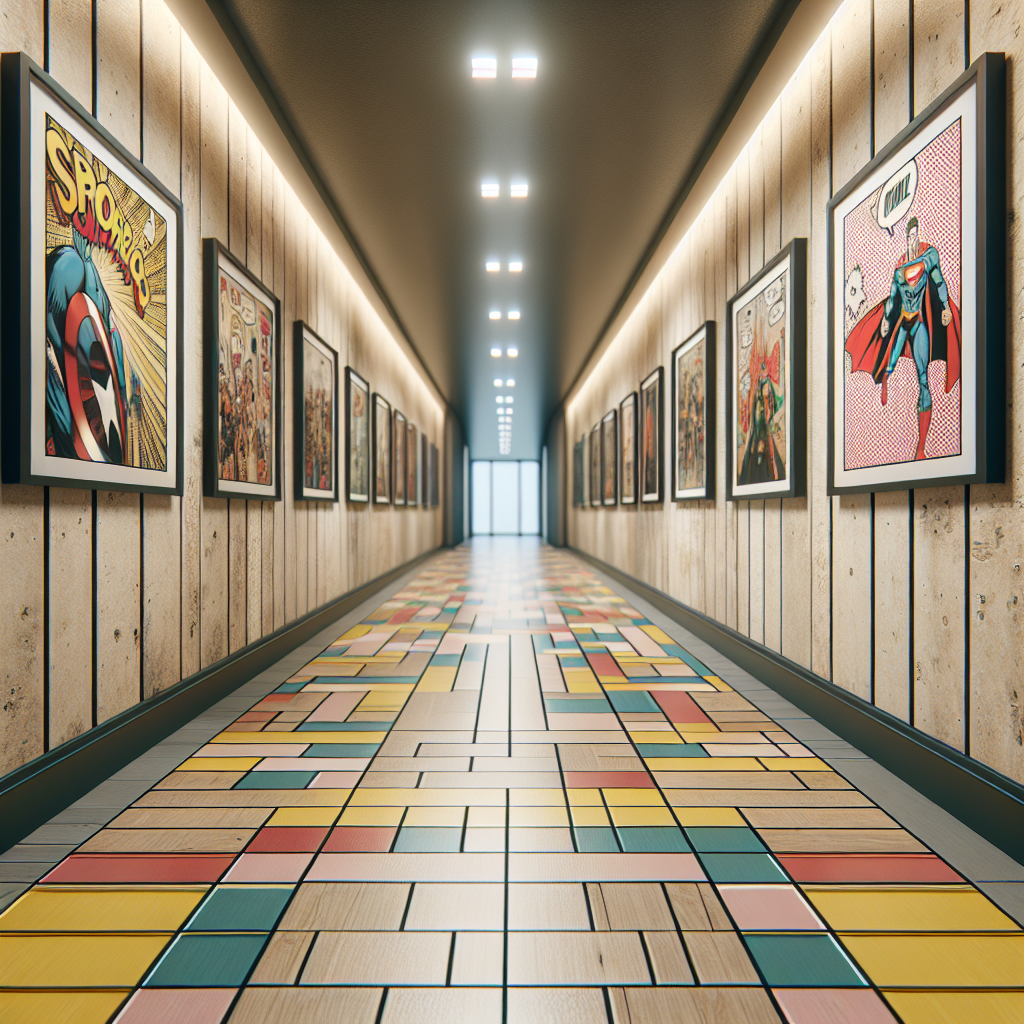
    Stylish hallway design using superhero flooring ideas with a comic themed border around neutral flooring

    Superhero flooring ideas FAQs

    How do I keep superhero flooring ideas from looking too childish?

    Stick to grown up colours and simple patterns, then hide the obvious logos and characters in smaller details like rugs, mats and doorways. Use your floor as a subtle nod to your favourite heroes instead of turning it into a giant cartoon, and balance bold designs with neutral walls and furniture so the space still feels stylish and comfortable for everyday life.

    Can I use superhero flooring ideas in a rented flat?

    Yes, as long as you focus on things you can remove. Go for themed rugs, runners, peel and stick tiles and foam mats that sit on top of the existing floor. You can also add LED strips and themed accessories that do not damage anything. When it is time to move out, you just roll your secret base back up and take it with you.

    What rooms work best for superhero flooring ideas?

    Gaming rooms, home cinemas and bedrooms are the easiest places to go big with themed floors, but subtle touches work well in hallways and living rooms too. In busy spaces like kitchens, keep the main floor practical and add your fandom with washable runners or mats so you get the fun without worrying about spills, stains or constant cleaning.

  • Why We Love Chill Slice‑of‑Life Superhero And Pokémon Stories

    Why We Love Chill Slice‑of‑Life Superhero And Pokémon Stories

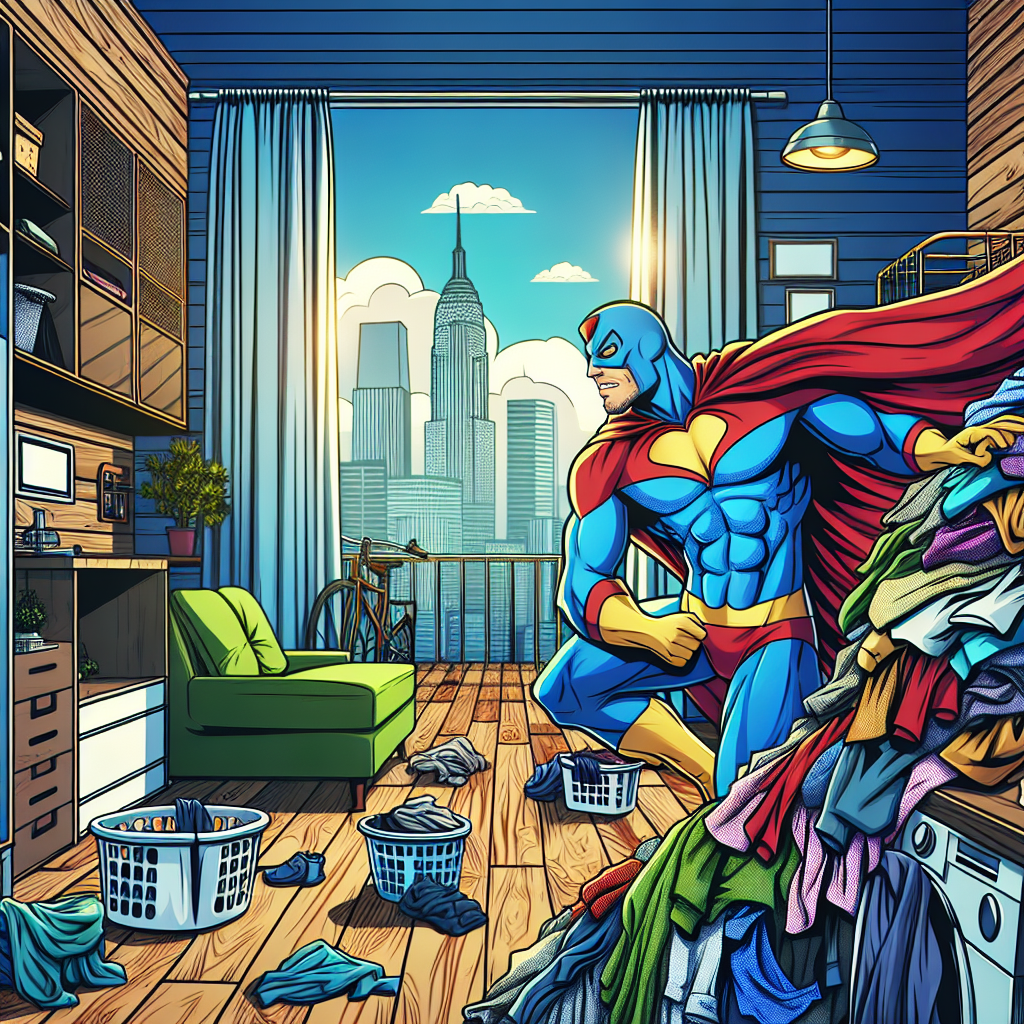
    Somewhere in a city of exploding skybeams, a caped crusader is doing the most dangerous mission of all: sorting whites from colours. Welcome to the glorious rise of chill slice of life superhero and Pokémon stories, where the world might end later, but right now the villain is burnt toast.

    What are chill slice of life superhero and Pokémon stories?

    In classic comics and games, everything is epic, loud and usually on fire. Chill slice of life superhero and Pokémon stories flip that. Instead of saving the universe, heroes are saving their Wi‑Fi connection. Pokémon trainers are not battling legendary beasts – they are battling the washing up.

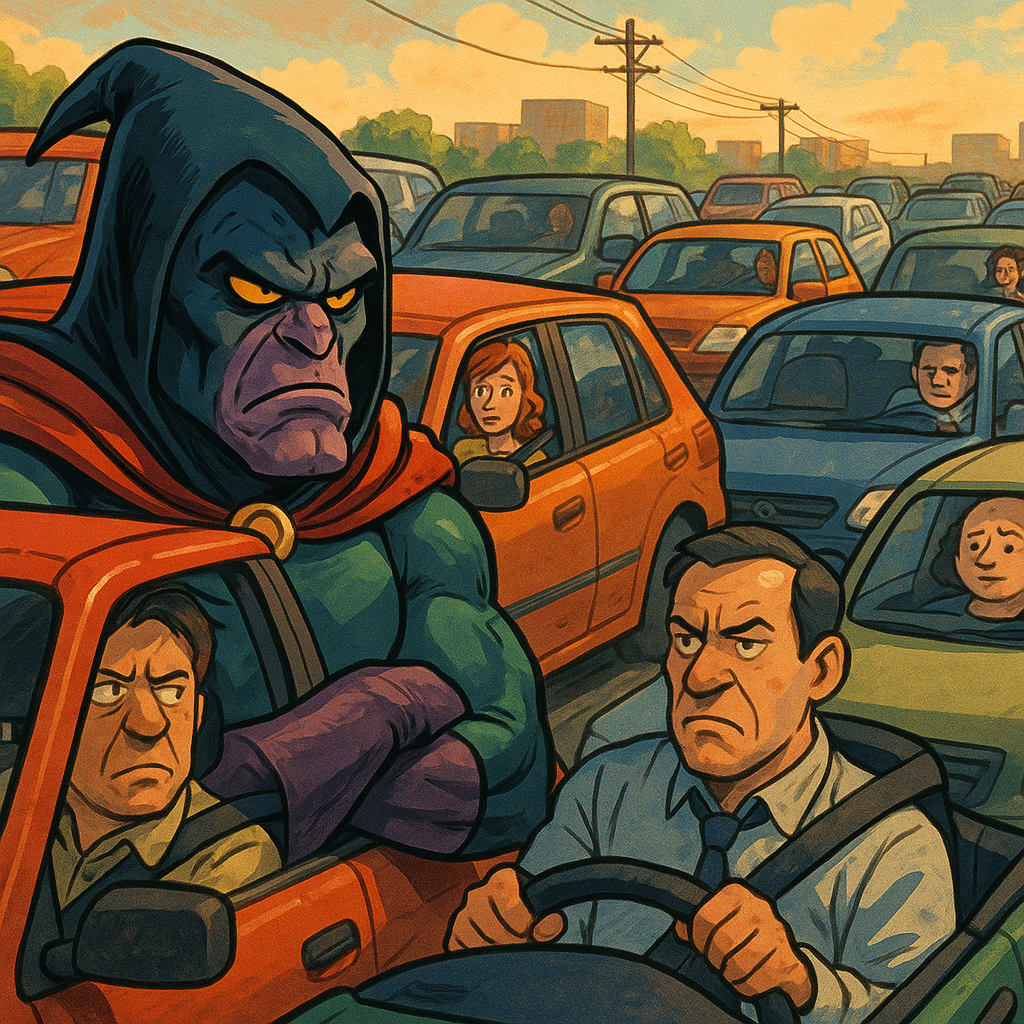
    Think: Spider‑Man on a Sunday doing meal prep. A trainer in Paldea trying to stop their Fuecoco eating the cereal box. A big bad villain stuck in traffic, practising their evil monologue in the rear‑view mirror and losing their spot every time the light turns green.

    Why fans are craving everyday chaos

    After years of multiverses colliding like dodgems, fans are hungry for something smaller, softer and sillier. Chill slice of life superhero and Pokémon stories feel like a cosy hoodie for your brain. The powers are still there, but the stakes are “I forgot my keys” instead of “reality is collapsing”.

    We get to see heroes and trainers as people who oversleep, panic‑clean before visitors and eat cereal for dinner. It is comforting to know that even the mightiest mage has probably shrunk a jumper in the wash. Relatable chaos is funnier than cosmic chaos, because we have all been there – minus the laser eyes.

    Superheroes doing laundry, not laser fights

    Comics and fan art are overflowing with panels of laundry day legends. Capes tangled on clothes horses. Masks going through the spin cycle. A brooding knight of darkness standing in a supermarket aisle, comparing loo roll prices like it is a tactical operation.

    These moments let us peek behind the mask. The joke is not “ha ha, hero is useless” – it is “ha ha, hero is just like us, but with a utility belt”. When your favourite powerhouse is wrestling with a duvet cover, it makes their big battles hit even harder later. They are not just icons – they are tired adults who forgot to defrost the chicken.

    Pokémon trainers before 9am

    Pokémon has quietly been perfect for this vibe from the start. The games already have you pottering around towns, chatting to neighbours and picking berries. Fan creators have simply cranked the cosy up to eleven.

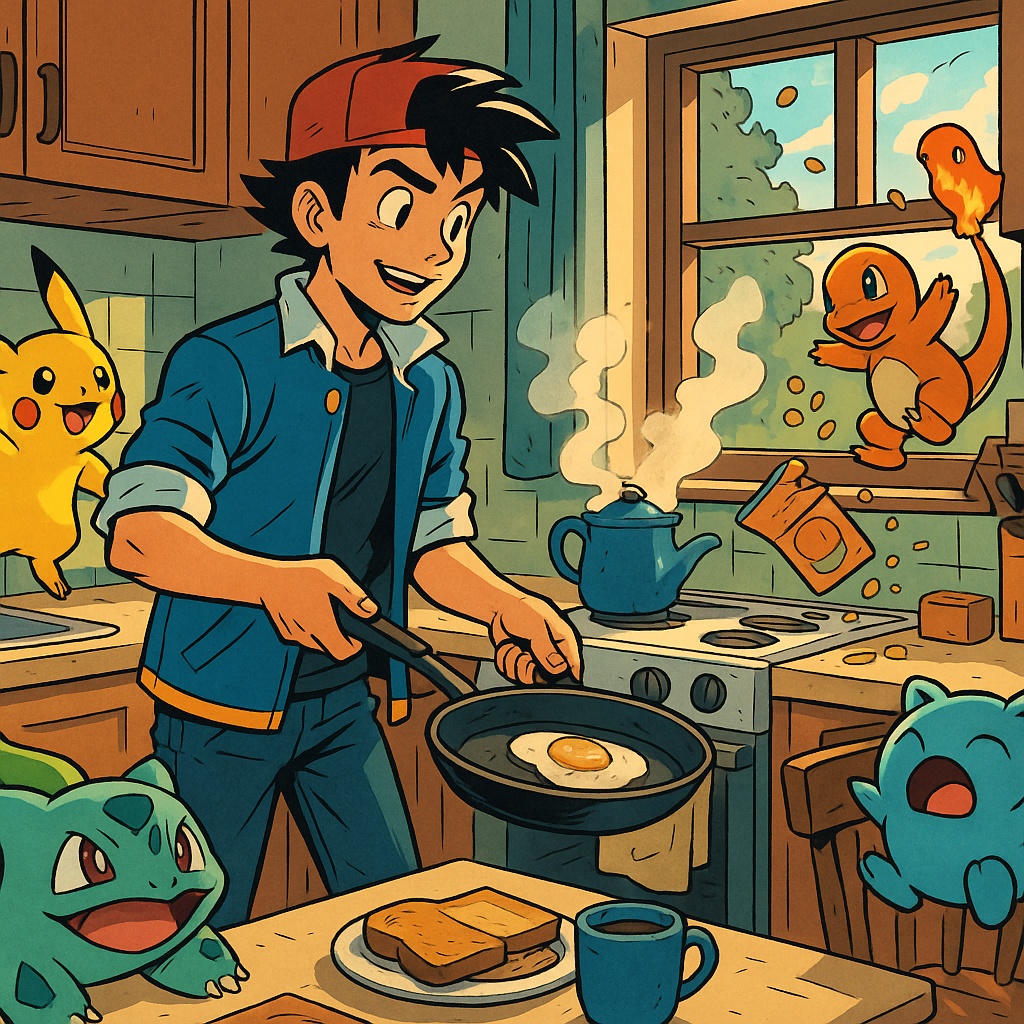
    Now we see trainers trying to make breakfast while a mischievous Pikachu keeps turning the toaster on and off. There are comics of Gengar photobombing every mirror selfie, and Eevee refusing to evolve because it likes its current haircut. It is domestic chaos, but with tiny elemental gods knocking over your tea.

    These stories tap into the fantasy of “what if my flatmate was a Charizard”. Sure, the heating bill would be terrifying, but you would never need a lighter again.

    Villains stuck in traffic and other tiny tragedies

    Nothing humbles a world‑ending villain like a Monday commute. One of the funniest trends is putting terrifying antagonists into painfully normal situations. The dark overlord at the dentist. The galaxy conqueror at parents’ evening. The evil genius trying to remember their online banking password.

    Seeing villains fumble everyday tasks makes them less distant and more deliciously pathetic. It also pokes fun at how dramatic they usually are. You can summon an army of shadow beasts, but you cannot parallel park. Tragic.

    Why this trend is not going anywhere

    Chill slice of life superhero and Pokémon stories are sticking around because they give us a break without losing the worlds we love. You still get capes, creatures and cool powers, but wrapped in the cosy chaos of normal life.

    They are easy to share, easy to binge and perfect for that five‑minute scroll when you should definitely be doing something else. Most importantly, they remind us that even in the wildest universes, everyone still has to do the boring bits. Laundry is the true final boss – and it always respawns.

    Pokémon trainer making breakfast with playful Pokémon reflecting chill slice of life superhero and Pokémon stories
    Villain stuck in traffic in a funny scene inspired by chill slice of life superhero and Pokémon stories

    Chill slice of life superhero and Pokémon stories FAQs

    Why are chill slice of life superhero and Pokémon stories so popular now?

    People are tired of constant end‑of‑the‑world drama and want something softer and more relatable. Chill slice of life superhero and Pokémon stories keep the fun worlds and powers, but swap explosions for everyday problems like cooking, commuting and cleaning. It feels comforting, funny and a lot closer to real life.

    Do chill slice of life superhero and Pokémon stories work if there is no action?

    Yes, because the entertainment comes from character moments instead of big battles. Watching heroes and trainers deal with tiny disasters, awkward conversations and domestic chaos can be just as gripping. The powers become props for comedy and emotion, rather than just tools for fighting.

    Can I create my own chill slice of life superhero and Pokémon stories?

    Absolutely. Start by imagining your favourite hero, villain or trainer doing the most boring task you can think of, like the weekly shop or organising a wardrobe. Then add in how their powers or Pokémon would make it easier, harder or just weirder. The more mundane the situation, the funnier the contrast usually is.

  • How To Build Your Own Real-Life Superhero Team Chat (Without Blowing Up The Group)

    How To Build Your Own Real-Life Superhero Team Chat (Without Blowing Up The Group)

    Every friendship group secretly wants its own superhero team chat. You know, like the Avengers WhatsApp, the Justice League Discord, or whatever chaos the Pokémon trainers are using to argue about who gets the last Master Ball. The problem is, real-life group chats usually end up as 90% memes, 9% “who is this number” and 1% actual plans.

    So let us assemble the ultimate, real-world superhero squad chat – comic style – that is fun, organised and only occasionally on fire.

    Step one: choose your superhero team chat vibe

    Before you invite anyone, decide what your superhero team chat is actually for. Is it:

    • A chaos squad for spontaneous nights out and snack runs
    • A serious mission hub for projects, events or saving the world (or at least your group holiday)
    • A fandom fortress for comics, anime, Pokémon and movie debates

    Name it like a proper hero HQ. No more “Group Chat 17”. Go for something dramatic like “Snackvengers Assemble”, “League of Slightly Tired Heroes” or “Team Rocket But Nicer”. The name sets the tone: silly name, silly energy. Epic name, epic missions.

    Assign roles like a real comic book squad

    Every good superhero team chat needs roles, otherwise it is just twelve Batmans yelling at each other. Try these:

    • The Leader: Not a dictator, just the one who actually presses “book” on the cinema tickets.
    • The Strategist: The one who can turn “Let us meet Saturday” into an actual time, place and plan.
    • The Chaos Gremlin: Provides memes, morale and occasionally confusion. Essential.
    • The Lore Keeper: Remembers every in-joke since 2016 and quotes them at will.
    • The Tech Wizard: Sets up polls, reminders and pins important stuff so it does not vanish under 87 GIFs.

    You can even pick comic book or Pokémon style titles in the chat description. “Hannah – Tank”, “Riz – Support Mage”, “Jess – Meme Sorcerer”. Instant fun, instant clarity.

    Rules that keep your superhero team chat from exploding

    Even the best squad needs ground rules, or your phone will vibrate itself into another dimension. A few hero-friendly guidelines:

    • No 3am voice notes longer than a movie trailer unless it is a genuine emergency or a wild story that absolutely cannot wait.
    • Use reactions instead of sending ten separate “lol” messages. Your battery will thank you.
    • Mission tags: Start messages with things like [PLAN], [MEME], [HELP], [SPOILERS] so people can skim like a comic page.
    • No spoilers without warning: You spoil a new superhero film without tagging it and you are automatically the villain.

    Pin a short “Hero Code” at the top of the chat. Keep it playful, like a mini comic book code of conduct.

    Tech that makes your superhero team chat feel like a control room

    You do not need a billionaire cave to upgrade your squad – just a few clever tools. Group chats with polls, shared calendars and reminders can turn “We should do something” into an actual mission log. Some apps even let you create channels, so you can split things into “Missions”, “Memes” and “Pure Chaos” instead of mixing it all into one exploding timeline.

    Newer platforms, like Droptix, are experimenting with more playful ways to hang out online, so expect more hero-friendly features to drop into your world soon. Think less boring spreadsheet, more digital Batcave with stickers.

    Make it feel like a comic book in motion

    A superhero team chat should look and feel like a comic panel that never ends. Try:

    • Character intros: When someone new joins, they must introduce themselves like a trading card: name, class, favourite snack, signature move.
    • Theme days: “Meme Monday”, “Throwback Thursday”, “Fanart Friday” – keep the timeline fresh and fun.
    • Reaction-only battles: Someone drops a wild take, and for 5 minutes, replies can only be emojis or GIFs.
    • Side quests: Little challenges like “Send a photo of something that looks like a Pokémon in the wild”.

    The more your chat feels like a shared story, the less it feels like yet another notification pile.

    Turn your these solutions into a real-life squad

    All the best stories leave the page eventually. Use your these solutions to make real things happen:

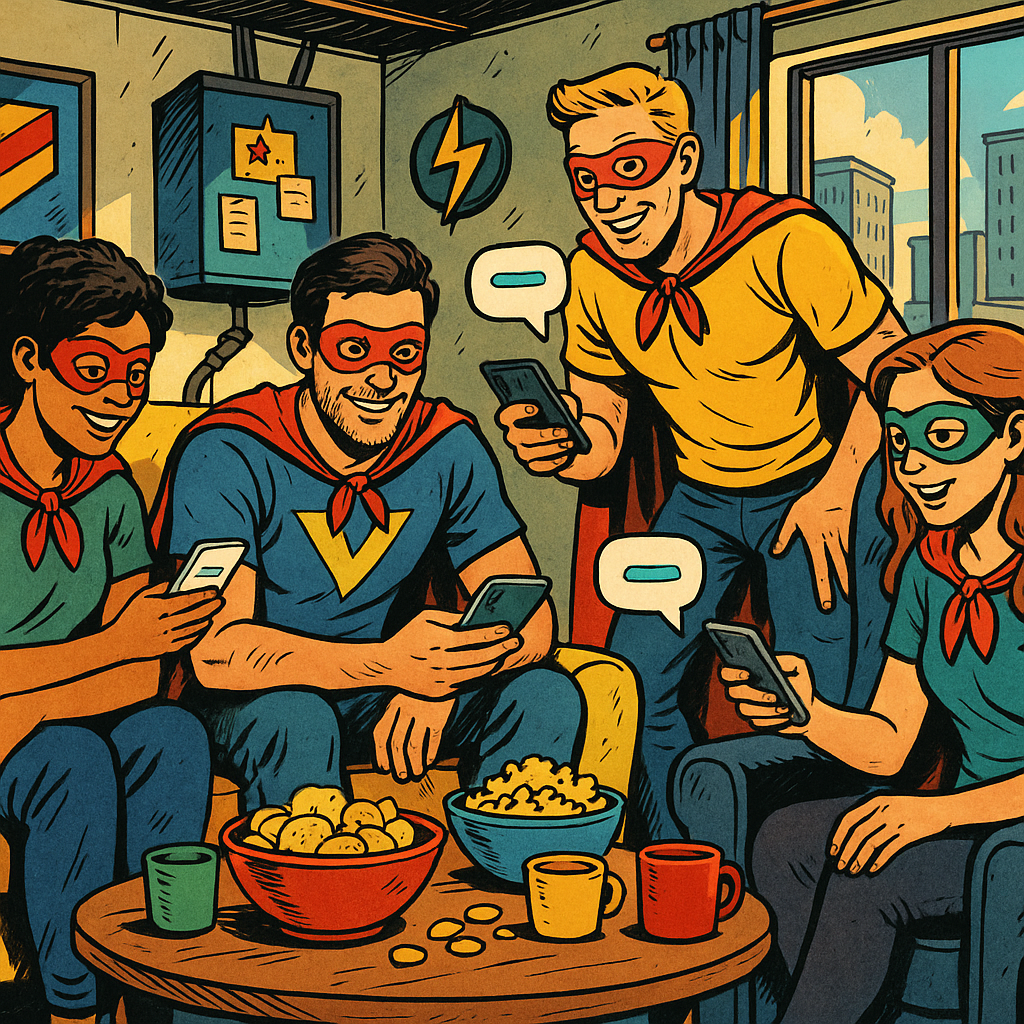
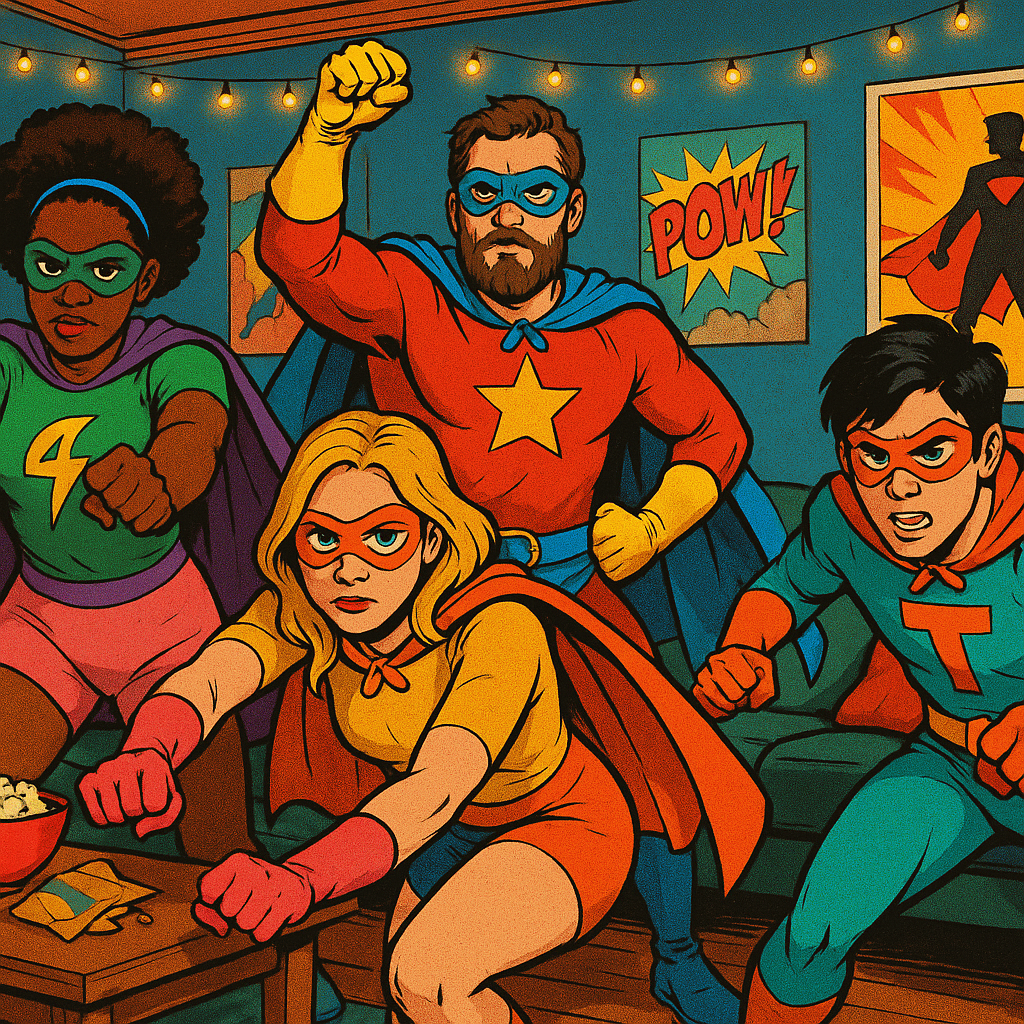
    Cosy superhero HQ living room where friends coordinate plans through a superhero team chat
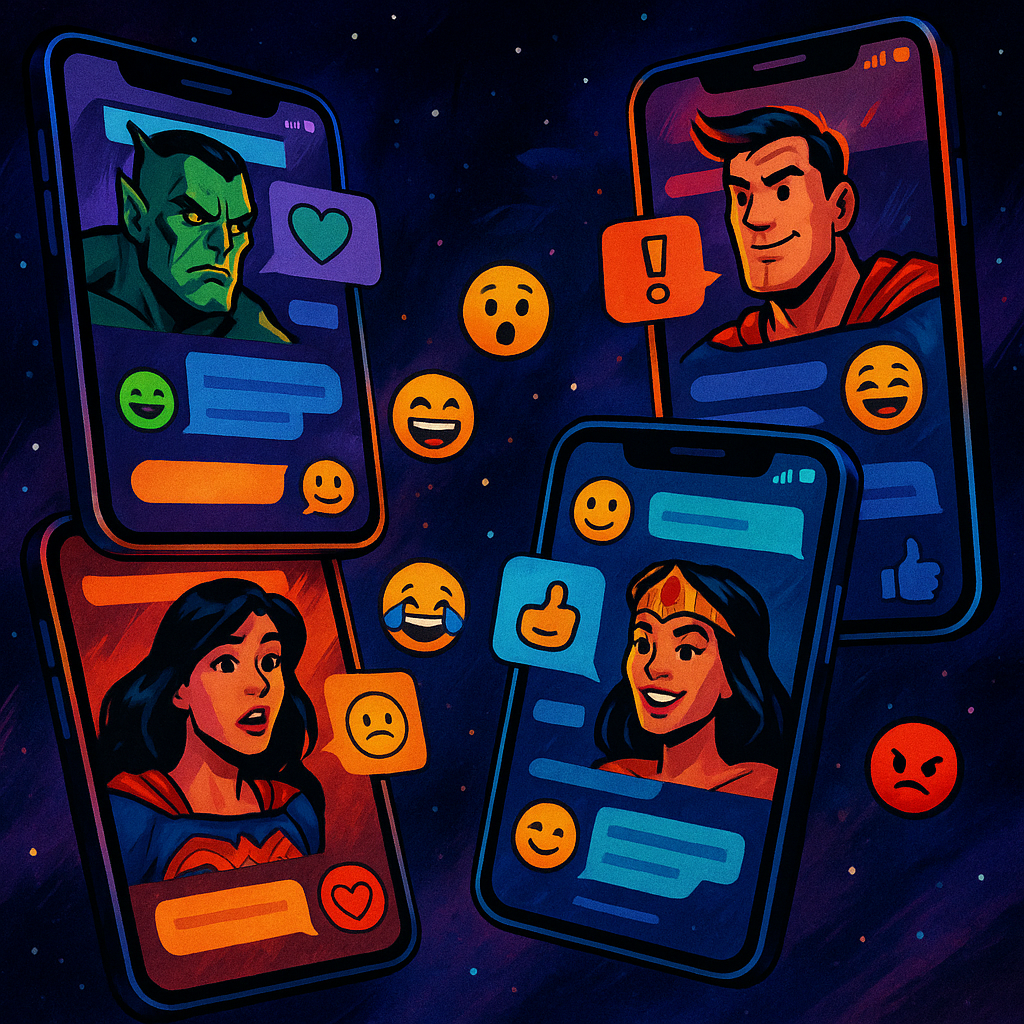
    Floating comic panels of phones showing a lively superhero team chat

    Superhero team chat FAQs

    How many people should I add to a superhero team chat?

    Keep your superhero team chat small enough that everyone actually knows each other. Around 5 to 12 people usually works best. Fewer than that and it can feel quiet, more than that and it can turn into pure notification chaos. You can always create spin off chats for bigger events or specific games.

    What should I name my superhero team chat?

    Pick a name that matches your squad’s personality. Funny options work well, like “Snackvengers”, “Chaotic Good Only”, or “Squirtle Squad HQ”. If your superhero team chat is more serious, go for something mission themed such as “Night Shift Heroes” or “Operation Weekend”. The name sets the vibe before anyone even reads the messages.

    How do I stop my superhero team chat from getting overwhelming?

    Set a few playful rules, like no giant voice notes after midnight and using tags such as [PLAN] or [SPOILERS]. Encourage people to use reactions instead of lots of one word replies. You can also mute the superhero team chat and check it in batches so it feels like reading a fun comic issue instead of being constantly interrupted.

  • How To Build Your Own Real-Life Superhero Team (Without Getting Arrested)

    How To Build Your Own Real-Life Superhero Team (Without Getting Arrested)

    If you have ever walked down the high street and quietly assembled the Avengers in your head, this guide to build your own superhero team is basically your origin story in written form.

    Why you absolutely need to build your own superhero team

    Life is chaotic. Group chats are noisy. Someone drank the last bit of milk again. Clearly, the only logical solution is to build your own superhero team and bring some caped order to the madness. Also, it is way more fun than another WhatsApp poll about where to go for dinner.

    Think of it as turning your friendship group into a comic book: everyone gets a role, a ridiculous power, and probably a questionable costume choice that will haunt them in photos forever.

    Step 1: Assemble your origin squad

    Every great team starts with a core crew. You do not need actual powers, just exaggerated versions of your real personalities. The quiet one becomes the stealth expert, the chatterbox becomes the negotiator, and the one who always has snacks is obviously logistics and emergency rations.

    Give everyone a code name. Important rule: the person who is always late does not get to be called “The Flash”. They can be “Time Warp” at best. Write the names down, comic-book style, on sticky notes and argue about them until everyone is laughing too much to be offended.

    Step 2: Choose your team theme and aesthetic

    To properly build your own superhero team, you need a vibe. Are you cosmic defenders, neon city guardians, or chaotic good goblins in hoodies? Your theme decides everything: colours, logo, catchphrases, even your preferred snack brand.

    Make a mood board with screenshots from your favourite comics, films and games. One group I met at a convention had mashed together magical girl anime, 90s cartoons and retro gaming to create a squad so gloriously over the top that even Mitzybitz would have struggled to stock enough glitter for their outfits.

    Step 3: Assign powers based on real-life skills

    Superpowers are more fun when they are secretly just your normal abilities turned up to eleven. The friend who can find anything online becomes the all-seeing data mage. The one who remembers every tiny detail from three years ago is now the continuity wizard, guardian of the group lore.

    Write down each person's everyday power and then translate it into comic-book language. “Makes incredible spreadsheets” becomes “Master of Multidimensional Grids”. “Always has tissues” becomes “Guardian of Softness”. Suddenly your team is unstoppable and also weirdly prepared for hay fever season.

    Step 4: Design your lair (also known as the living room)

    No superhero team is complete without a base. Fortunately, a lair is just a normal room with dramatic lighting and too many snacks. Choose a space, give it a ridiculous name like “The Fortress of Sofa-tude”, and decorate it with posters, fairy lights and at least one mysterious object nobody can fully explain.

    Create a “mission board” on the wall with sticky notes for your real-life quests: birthday planning, flat clean-up operations, last-minute cosplay builds, and the eternal hunt for matching socks. When everything is framed as a mission, even taking the bins out feels slightly epic.

    Step 5: Plan your everyday hero missions

    To properly build your own superhero team, you need missions that fit your powers and your energy levels. Not every adventure has to involve explosions. Try these:

    • Neighbourhood kindness patrol: leave nice notes, share spare plants, rescue escaped bins on windy days.
    • Side-quest Saturdays: pick a random challenge from a hat – new café, new park, new board game, new silly photo idea.
    • Chaos control: descend as a team on that one friend's messy room and transform it in one afternoon like a squad of caped organisers.

    The trick is to treat normal life like a comic book issue: each week has a title, a main mission, and at least one dramatic cliffhanger involving public transport.

    Step 6: Create your team lore and trading cards

    Every legendary squad needs lore. Grab some index cards or a shared doc and create “trading cards” for each member with stats like Dramatic Cloak Swish, Snack Supply Reliability and Ability To Keep A Straight Face.

    Friends designing characters and powers to build your own superhero team with comic book style cards
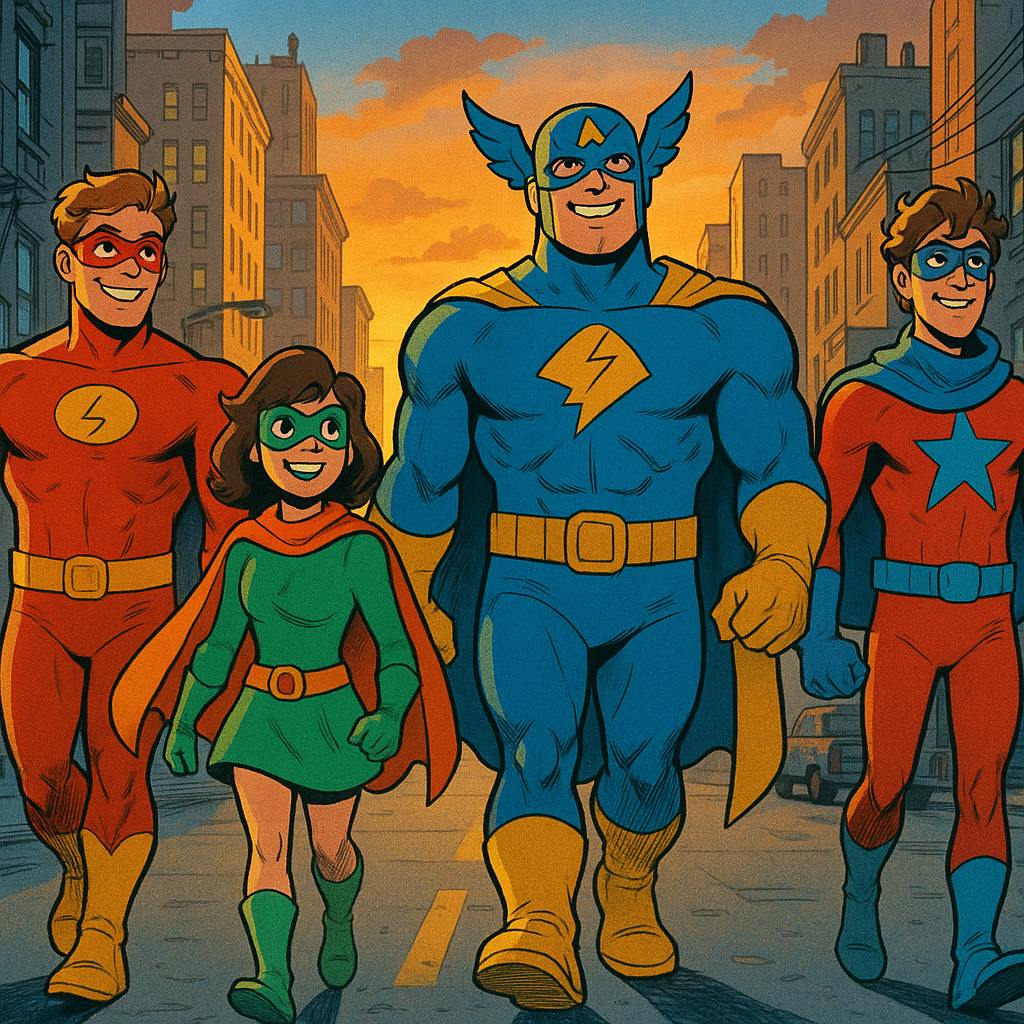
    Colourful squad walking through the city as they build your own superhero team for everyday missions

    Build your own superhero team FAQs

    How many people do I need to build my own superhero team?

    You can build your own superhero team with as few as two people. A duo can work as a classic hero and sidekick combo, while three to six people feels like a full squad without becoming impossible to organise. The key is that everyone understands the joke, likes their role and is happy to join in with the missions and silliness.

    Do I need costumes to build my own superhero team?

    Costumes are optional when you build your own superhero team, but they do make everything more fun. You do not need full cosplay – matching colours, badges, capes, themed hoodies or even just coordinated socks can create a shared look. Start small and add pieces over time so no one feels pressured to spend a lot of money.

    What kind of missions should we do when we build our own superhero team?

    When you build your own superhero team, choose missions that fit your personalities and keep everyone safe and comfortable. Ideas include helping friends move house, organising surprise parties, tidying shared spaces, exploring new places together or running kindness campaigns in your local area. If it makes life a bit brighter and gives you a funny story to tell later, it counts as a mission.

  • Superfood Showdown: Which Healthy Snack Would Your Favourite Hero Eat?

    Superfood Showdown: Which Healthy Snack Would Your Favourite Hero Eat?

    Welcome to the ultimate superfood showdown, where kale wears a cape, blueberries get battle themes, and carrots are basically tiny orange lightsabers. If you have ever wondered what your favourite heroes would snack on between saving the world, this is your moment.

    The superfood showdown begins

    Every comic book hero has a power source. Some get bitten by radioactive spiders. Others fall into mysterious vats of glowing goo. You, sadly, have a fridge and a kettle. But that is fine, because in this superfood showdown we are matching iconic heroes and Pokémon with real-life snacks that could power up your day without needing a secret lab.

    Marvel vs DC vs Pokémon: snack edition

    First into the arena of the superfood showdown is Spider-Man. Our friendly neighbourhood web-slinger needs fast fuel that will not make him crash mid-swing. Picture him grabbing a tub of Greek yoghurt with berries and a sprinkle of granola. It is sticky enough to eat upside down, has protein for all that acrobatics, and looks just colourful enough to pass as comic-book slime.

    Batman, on the other hand, absolutely meal-preps. You just know the Batcave has a row of perfectly stacked glass containers. His go-to snack? Raw veg sticks with hummus. Dark, brooding, and slightly crunchy – just like him. Also, you can totally imagine Alfred passive-aggressively leaving a note saying, “Master Wayne, one cannot live on brooding alone.”

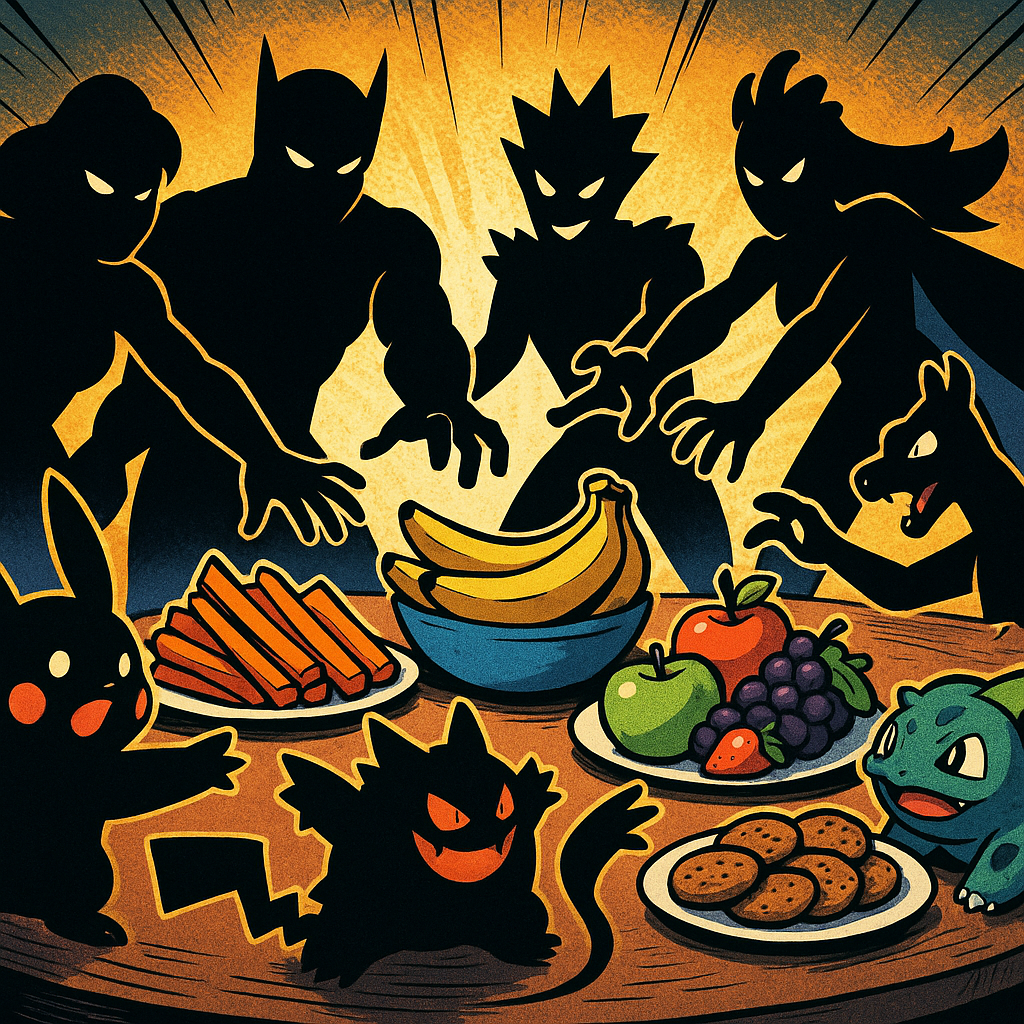
    Over in the Pokémon world, Pikachu is basically a walking battery, so he would be all over energy-boosting fruit. Think banana slices with peanut butter, or a rainbow fruit bowl that looks suspiciously like a Poké Ball exploded in the kitchen.

    Salty, sweet and secretly heroic

    Not all heroic snacks are glittery smoothie bowls and salads that look like they have their own Instagram agent. Sometimes it is about small swaps that would make even Captain America nod approvingly. Swapping crisps for lightly salted popcorn? That is a shield-worthy move. Trading fizzy drinks for sparkling water with a slice of lemon? That is basically a plot twist for your taste buds.

    Some heroes are definitely salt fans. You can almost see Aquaman giving a very smug TED talk about mineral-rich sea goodies, while someone in the audience quietly Googles celtic sea salt and wondering if it comes with a trident.

    Build your own hero snack loadout

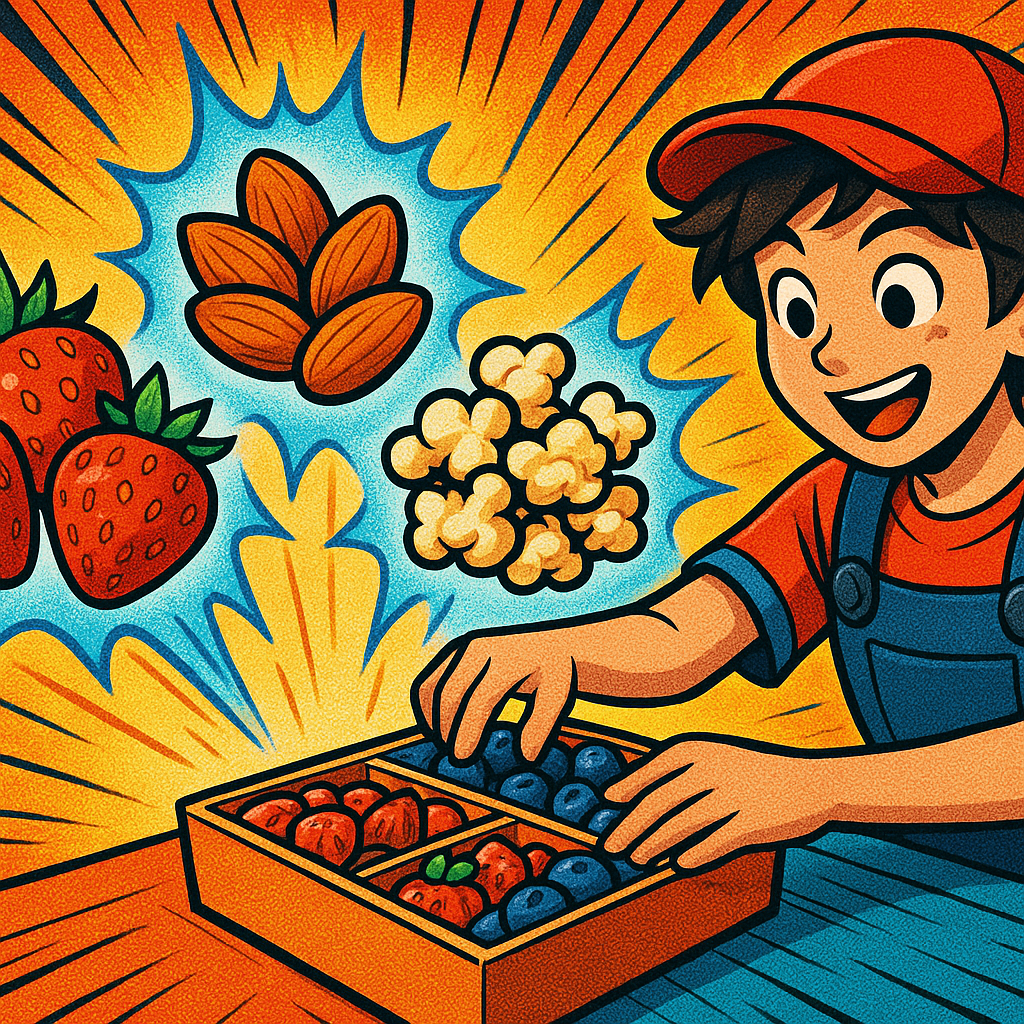
    Every good hero has a utility belt, backpack or, in the case of certain wizards, a suspiciously bottomless bag. Your snack stash can be just as epic. Here is how to build your own mini loadout without needing a montage scene:

    • Pick a power fruit – berries, apples, bananas or grapes for easy, grab-and-go energy.
    • Add a sidekick protein – nuts, yoghurt, cheese cubes or a boiled egg if you are feeling hardcore.
    • Choose a crunchy ally – carrot sticks, cucumber, rice cakes or popcorn.
    • Finish with a fun extra – dark chocolate squares, a spoon of nut butter, or a cheeky trail mix.

    Imagine each item as a different move in your arsenal: “I choose you, Almond Crunch!”

    Snack fails of famous heroes

    Of course, not every hero gets it right. There is definitely an alternate universe where Iron Man tried to live on energy drinks and neon sweets, only to spend an entire film stuck in his suit with a sugar crash. Somewhere in another galaxy, a very tired Guardian of the Galaxy is realising that you cannot out-dance a bad snack habit.

    Even in our world, you can picture a cosplayer at a big UK convention, dressed as a full-armour knight, instantly regretting the decision to eat three giant doughnuts before walking the expo floor. Somewhere in that crowd, someone from Supazaar is probably trying to trade snacks like they are rare trading cards.

    Turn snack time into your origin story

    The best part of this whole superfood showdown is that you do not need to be bitten by anything radioactive to join in. You can decide that your origin story starts with something as simple as swapping one afternoon sugar bomb for a snack that actually helps you feel like a main character instead of a background extra.

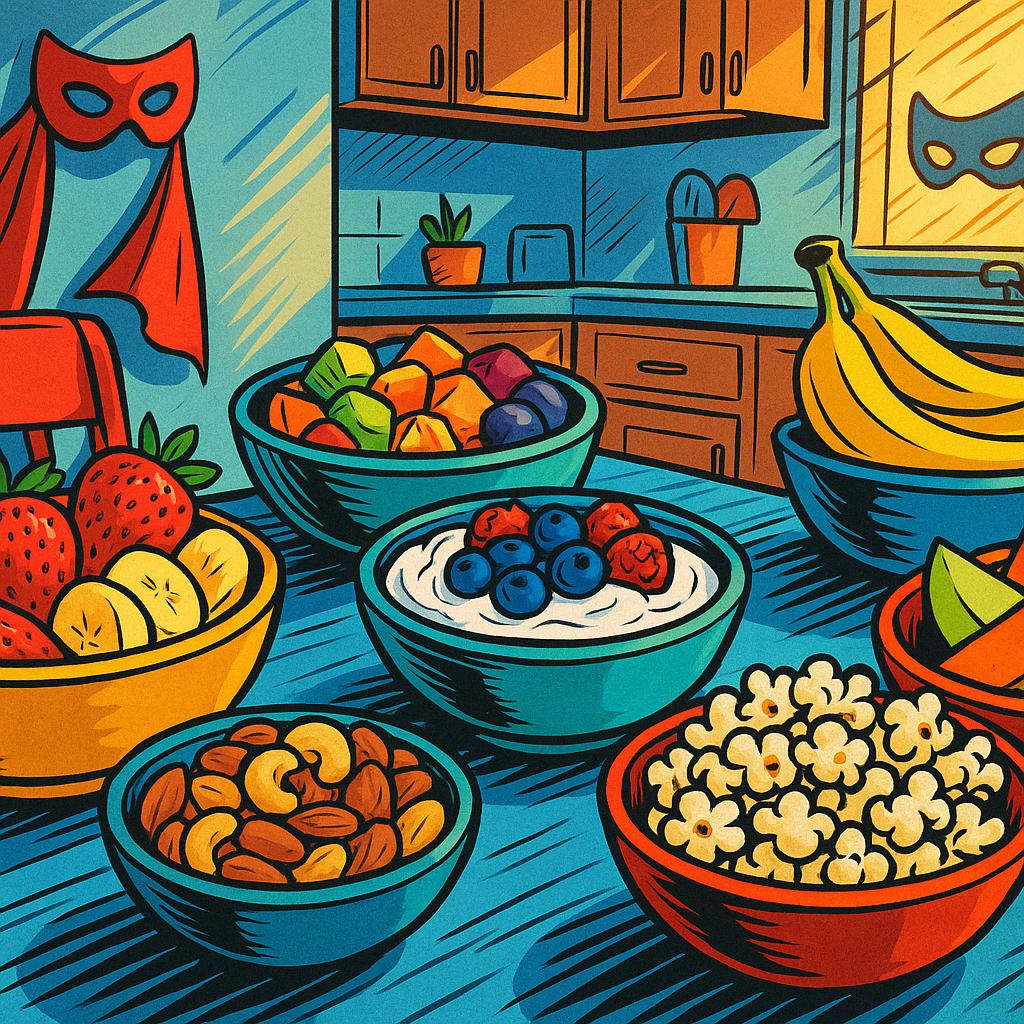
    Superheroes and creatures grabbing healthy snacks in a superfood showdown scene
    Cosplayer packing a colourful snack box for their own superfood showdown

    Superfood showdown FAQs

    What is a superfood showdown?

    A superfood showdown is a fun way of comparing different healthy snacks and ingredients, imagining them as if they were battling it out for the title of best hero fuel. It is less about strict rules and more about playful ideas that help you pick snacks that actually make you feel energised.

    Do I need expensive ingredients to eat like a hero?

    Not at all. Basic foods like fruit, vegetables, oats, yoghurt, nuts and popcorn can all be part of your hero-style snack stash. You do not need fancy powders or rare imports, just simple foods that are tasty and give you steady energy rather than a quick crash.

    How can I make healthy snacks more fun?

    You can theme your snacks around your favourite heroes or Pokémon, like lightning-bolt banana slices for an electric character or green smoothies for your favourite gamma-powered giant. Cut fruit into shapes, mix colourful ingredients, or pack your snacks in bright containers so they feel more like part of a story than a chore.

  • Why Grown-Ups Are Secretly Building Epic Toy Cities Again

    Why Grown-Ups Are Secretly Building Epic Toy Cities Again

    If your coffee table currently looks like a tiny construction site, congratulations: you are officially part of the adult brick building trend. Across living rooms, spare rooms and very patient dining tables, grown-ups are quietly transforming into city planners, engineers and full-time mini-architects.

    What started as a nostalgic trip back to childhood has levelled up into something bigger and a lot more bonkers. We are talking full skylines, working light systems and more traffic jams than the M25 on a bank holiday.

    From kids’ toy to full-blown lifestyle

    For years, building bricks were seen as something you eventually “grew out of”. Now? Adults are proudly growing back into them. The adult brick building trend is fuelled by three things: nostalgia, stress relief and the irresistible urge to say, “Look at this bridge, it actually works” to anyone within a 5 metre radius.

    After long days of emails and meetings that should have been emails, people are finding a strange, joyful calm in clicking plastic pieces together. It is like meditation, but instead of sitting quietly with your thoughts, you are shouting “where is that 1×2 tile” every 30 seconds.

    Superhero cities and villain lairs on the coffee table

    Comic book fans have gone fully cinematic with their builds. Entire living rooms are being turned into crossover universes. One shelf might host a moody skyscraper where a caped hero is brooding on the roof, while the next shelf has a chaotic villain lair with lasers, lava and a suspiciously health-and-safety-ignored catwalk.

    Some builders even create “episodes” with their layouts. One week, the city is peaceful. The next, a kaiju-sized rubber duck appears in the harbour. It is like directing your own animated series, but the cast is made of minifigures and the production budget is “whatever was on sale last weekend”.

    Why this hobby feels so good for the brain

    Jokes aside, there are real mental health perks buried under the pile of colourful pieces. The adult brick building trend taps into something our brains love: clear instructions, visible progress and a satisfying click when things fit together.

    Instead of endless digital scrolling, you get a screen-free task with a clear beginning, middle and end. You can literally see your effort stacking up in front of you. Plus, there is a sneaky hit of problem solving as you experiment with new shapes, angles and structural tricks to keep your skyscraper from leaning like a certain famous tower in Italy.

    Collaborative builds: the new board game night

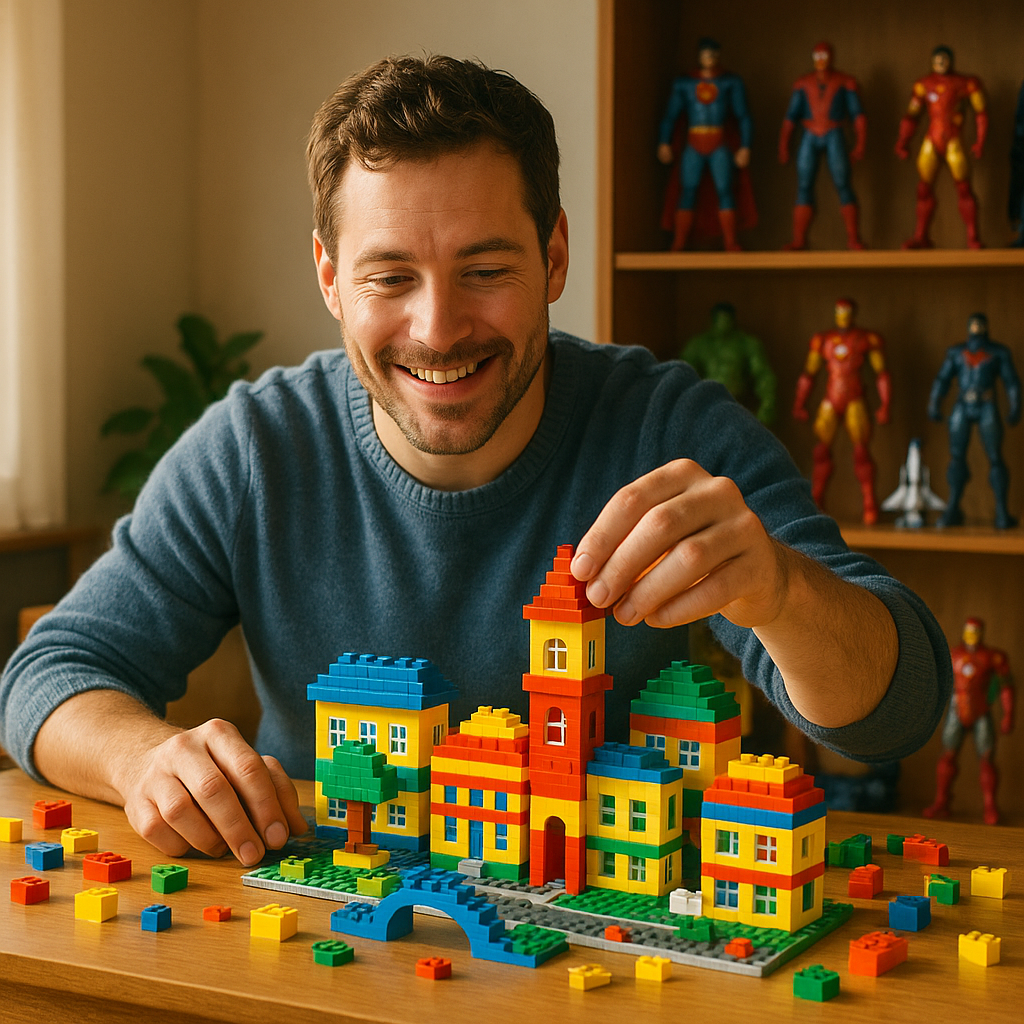
    Group builds are becoming the new social event. Friends are gathering around tables, dividing up bags, arguing over instructions and pretending not to be competitive about who builds the coolest section. It is like board game night, except the board is a half-finished star cruiser.

    Families are getting in on it too. Parents and kids team up like a superhero duo: the adult handles the fiddly bits, the child supplies the sound effects and dramatic backstory. By the end, everyone has shared a screen-free evening and the dog has eaten at least one rogue piece.

    From display shelves to full-blown brick rooms

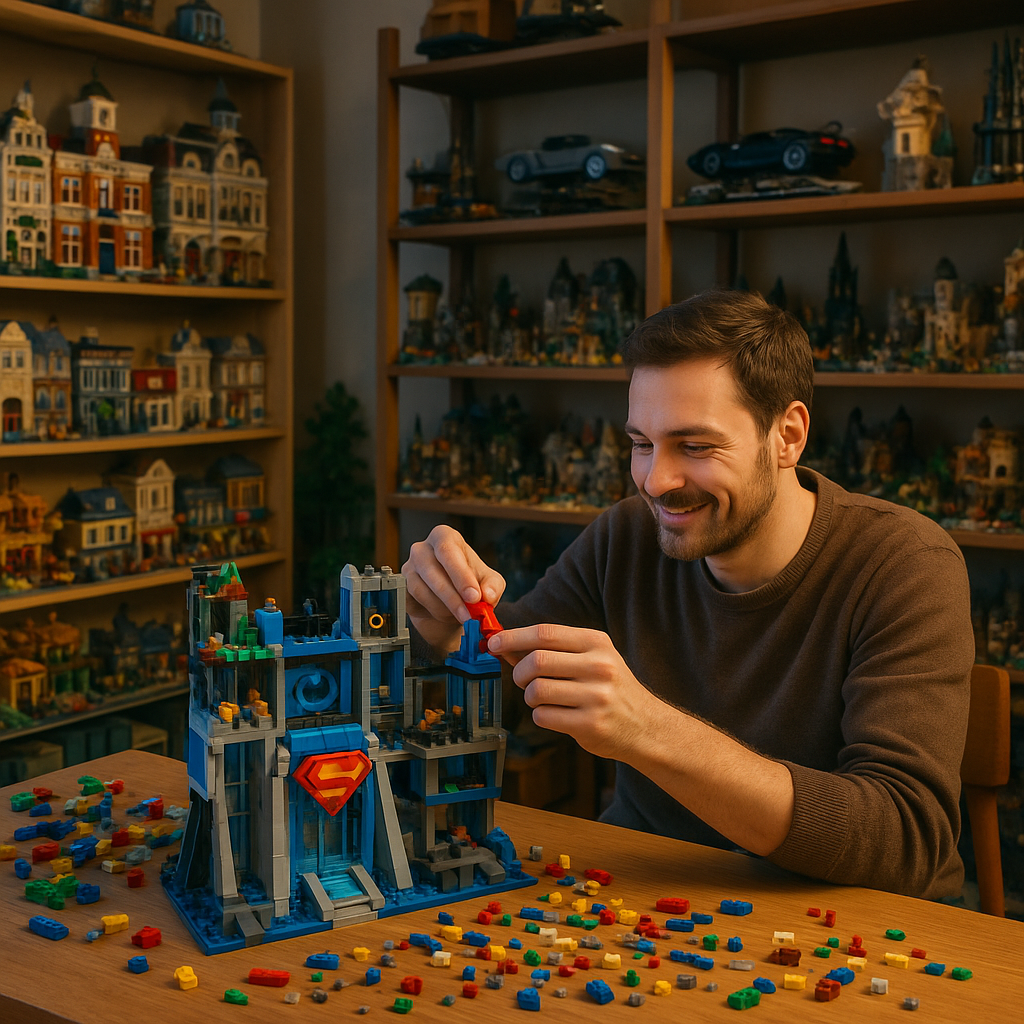
    Some fans do not stop at one shelf. They claim a whole room. Out go the spare bed and sensible storage, in come modular streets, train lines and lighting rigs that would impress a film director. There are builders who wire up their cities so the streetlights glow at night, the trains run on loops and the superhero jet actually hangs mid-air on invisible wire.

    Others mix in different building systems and custom parts to create mash-ups you will never find in a shop. Medieval cyberpunk castle with a sushi bar on the roof? Why not. Pirate spaceship parked outside a comic shop? Absolutely.

    Friends gathered around a detailed toy metropolis, enjoying the adult brick building trend together.
    Hobbyist expanding a superhero hideout in a room devoted to the adult brick building trend.

    Adult brick building trend FAQs

    Why are so many adults getting into brick building again?

    Adults are rediscovering brick building as a mix of nostalgia, creativity and stress relief. It offers a screen-free way to unwind while still feeling productive, and the satisfaction of seeing a model or city slowly take shape is hard to beat. The hobby also taps into storytelling and world-building, which appeals to fans of comics, films and games.

    Do I need lots of space to start a toy city?

    Not at all. Many people begin with a single shelf, a side table or even a windowsill. You can build upwards instead of outwards, stack modular sections and rotate different scenes in and out of display. The key is choosing a small, defined area and building a layout that fits it, rather than trying to fill an entire room on day one.

    What is the best way to get into the adult brick building trend on a budget?

    Start with smaller sets, second-hand bundles or mixed boxes of parts and focus on learning basic building techniques. Combine official sets with your own custom creations, and rebuild models in different ways instead of constantly buying new ones. Swapping pieces with friends, joining local groups and watching online tutorials can all help you grow your collection and skills without overspending.

    LEGO Technic