Category: Heroes

  • How to Build a Superhero Level Morning Routine Without Hating It

    How to Build a Superhero Level Morning Routine Without Hating It

    Let’s be honest. The phrase “morning routine” usually conjures up images of insufferable wellness gurus drinking celery juice at 4:47am while journaling about their gratitude practice. It’s enough to make you want to stay in bed until noon. But figuring out how to build a superhero level morning routine without hating it is genuinely possible, and it doesn’t require you to become an oat-milk-sipping robot. Think of it less like a productivity cult and more like suiting up before saving the world. Even Batman had a process before he swung into action.

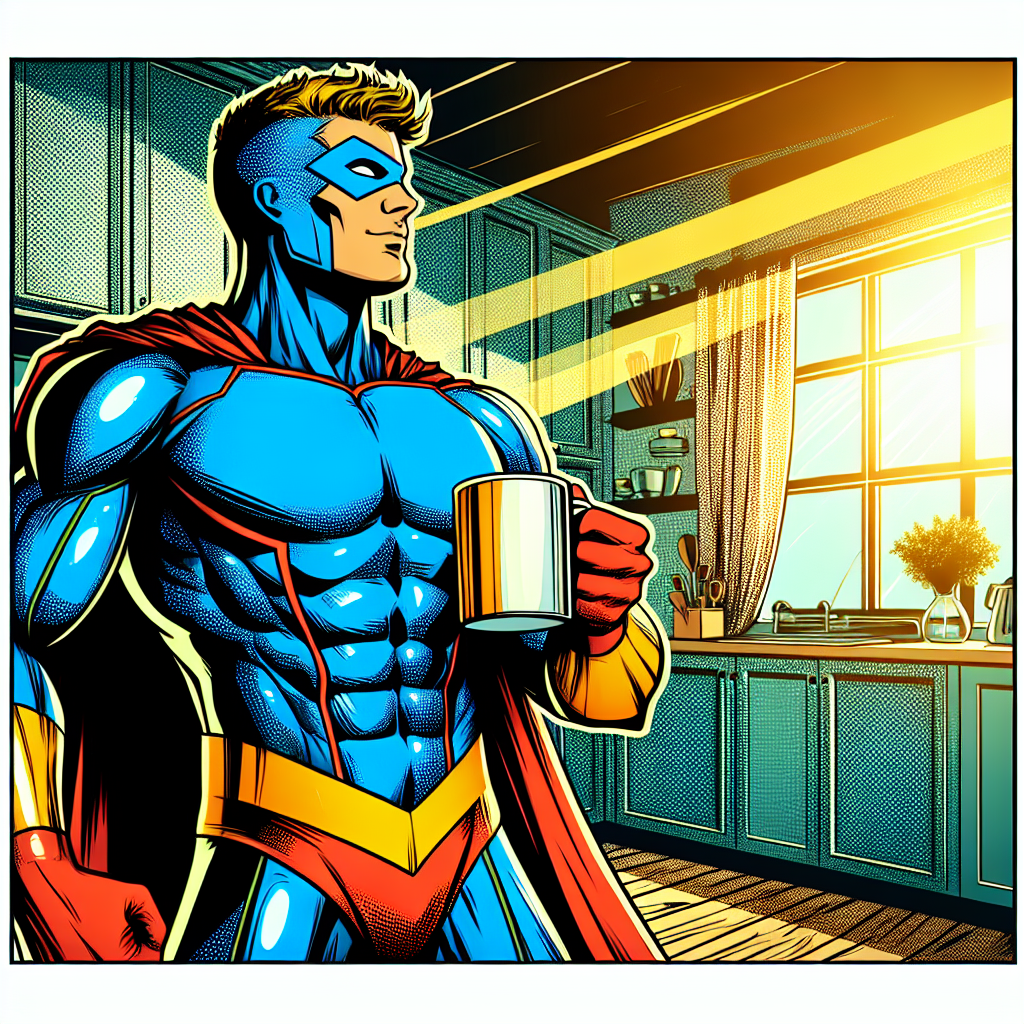
    Comic book style illustration of a superhero starting their morning routine in a bright kitchen
    Comic book style illustration of a superhero starting their morning routine in a bright kitchen

    Why Your Mornings Feel Like a Villain Origin Story

    Most people’s mornings are a bit chaotic. Phone alarm goes off, you snooze it four times, scramble for coffee, spill something on a clean shirt, and arrive wherever you’re going already frazzled. That’s not a morning routine. That’s a recurring disaster with a snooze button. The reason so many of us struggle isn’t laziness. It’s that we’ve been told mornings need to be 90-minute optimisation sessions full of cold showers and meditation. Nobody wants that. It sounds exhausting before it even starts.

    The trick is to stop trying to replicate someone else’s regime and build one that actually fits your life. Think about your favourite superheroes for a second. Iron Man doesn’t wake up and do what Thor does. Peter Parker’s mornings look nothing like Nick Fury’s. They each have their own rhythm, their own process, their own version of being ready. Yours doesn’t need to look like anyone else’s either.

    Step One: Pick Your Power-Up, Not a Punishment

    The first thing most morning routine advice gets wrong is treating the whole thing like a chore. A workout at 6am only works if you don’t absolutely dread it. If the idea of running before sunrise makes you want to cry, don’t run before sunrise. Find the movement or activity that actually gives you energy rather than depleting it before the day’s even begun. A walk, ten minutes of stretching, dancing around your kitchen to a playlist. It all counts. The goal is to activate your body, not punish it into submission.

    Think of it like choosing your superhero power. You wouldn’t hand Wolverine a magic wand and expect great results. Work with what you’ve got and what you actually enjoy. That’s how you build momentum instead of resentment.

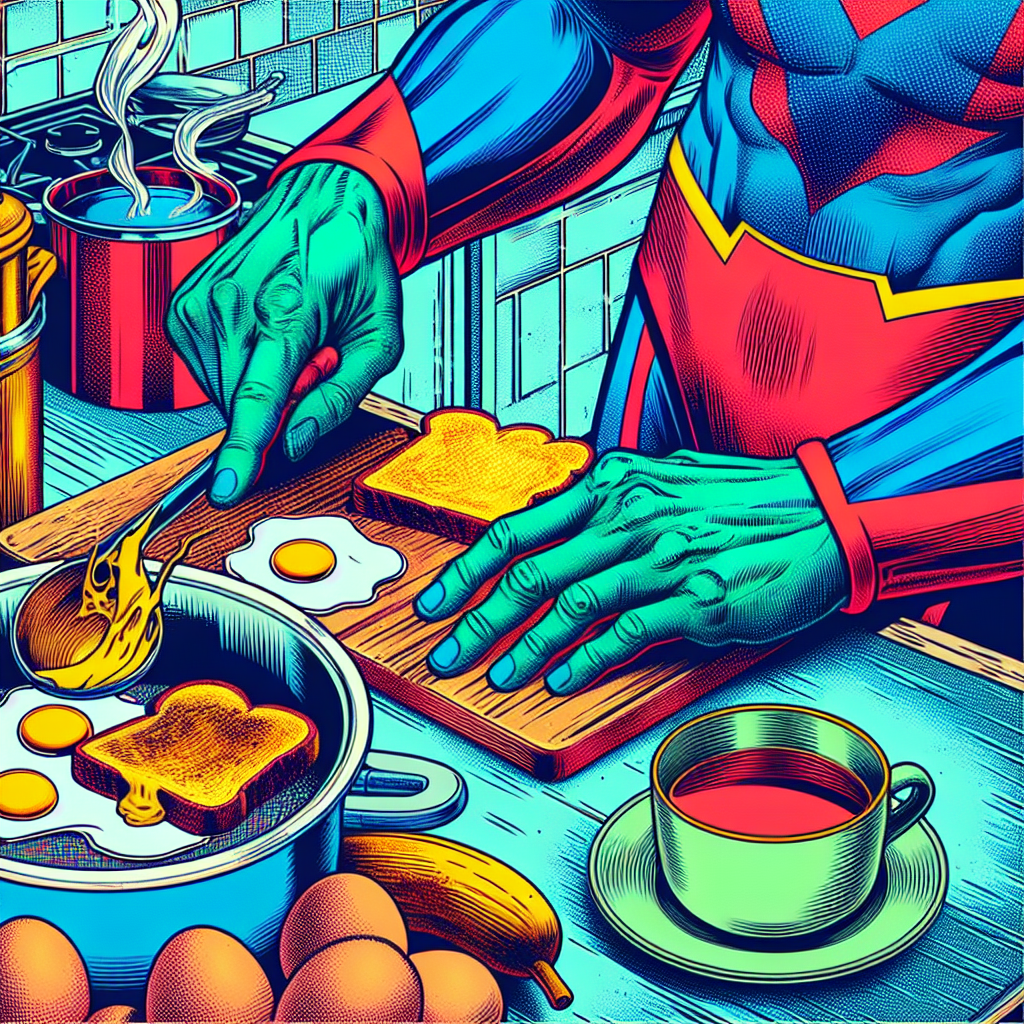
    Comic book close-up of a superhero preparing a simple morning breakfast and tea
    Comic book close-up of a superhero preparing a simple morning breakfast and tea

    Step Two: Don’t Skip the Fuel

    Every superhero needs fuel. Even Thanos, despite being objectively terrible, probably had breakfast before wiping out half the universe. Eating something in the morning, even if it’s small, makes a genuine difference to your energy and focus. This doesn’t mean cooking a three-course breakfast. A banana, some toast, a yoghurt. Whatever works. The point is that skipping food entirely and then wondering why you feel terrible by 10am is like Bruce Banner complaining he’s tired while refusing to sleep.

    Coffee is fine. Tea is fine. That suspicious green smoothie your flatmate keeps making is also fine if you enjoy it. Just make sure you’re actually hydrating alongside the caffeine, because dehydration is a villain that sneaks up on you quietly and makes everything worse without announcing itself dramatically.

    Step Three: Protect the First 15 Minutes

    Here’s the bit most people ignore and then wonder why their mornings feel reactive instead of intentional. The first chunk of your morning, even just 15 minutes, should belong to you. Not your emails. Not your group chat. Not the news telling you about seven new catastrophes before you’ve finished your first cup of tea. Just you.

    That time could be reading something you actually enjoy. It could be sitting quietly with a hot drink. It could be staring out the window like a character in a moody film, which, honestly, is underrated. The point is to let your brain ease into the day rather than immediately drowning it in other people’s demands. Superheroes don’t take every call at the moment they wake up. They get ready first. You should too.

    Step Four: Make It Stupidly Easy to Start

    One of the main reasons good habits collapse is that they require too much friction. If your gym kit is at the back of a wardrobe behind four boxes of stuff you haven’t touched since 2019, you’re not going to use it. If your journal is buried under a pile of post, you’re not going to write in it. Remove the obstacles the night before. Lay out what you need. Set things up so your morning self, who is probably groggy and a bit grumpy, doesn’t have to make too many decisions.

    This is the Alfred Principle, essentially. Batman’s butler had everything ready before Bruce even asked. Be your own Alfred. Future you will be genuinely grateful, possibly even impressed.

    Step Five: Give It a Week Before Judging It

    New routines feel weird and a bit awkward at first. That’s normal. The first time you try anything, you’re not going to nail it. Even your favourite heroes had origin stories full of stumbles, mistakes, and learning curves before they became properly competent. Give your routine at least a week of consistent attempts before deciding it doesn’t work. Tweak it as you go. Add things. Remove things. The whole point is that it should feel increasingly natural, not increasingly like a chore.

    Knowing how to build a superhero level morning routine without hating it really comes down to one idea: it should serve you, not impress anyone else. If it energises you, fits your actual life, and makes the rest of your day feel a bit more manageable, then congratulations. You’ve cracked it. Cape optional.

    Frequently Asked Questions

    How long should a morning routine actually be?

    There’s no magic number. A solid morning routine can be as short as 20 to 30 minutes. The key is consistency and quality, not length. Even a brief intentional start beats a chaotic two-hour scramble.

    What if I’m genuinely not a morning person?

    Not everyone operates on the same schedule, and that’s fine. If you work later shifts or your peak energy comes in the afternoon, adapt the principles to your natural rhythm. The goal is a better start to your active day, whatever time that begins.

    Should I avoid my phone in the morning?

    Avoiding your phone for the first 15 to 30 minutes is widely recommended and genuinely useful. Checking social media or emails first thing puts your brain in reactive mode immediately, which tends to increase stress. Give yourself a buffer before diving in.

    Is exercise essential in a morning routine?

    No, it’s not essential, but some form of movement tends to boost energy and mood. If a full workout isn’t appealing, even a short walk or a few minutes of stretching can make a noticeable difference to how you feel throughout the day.

    How do I stick to a morning routine without losing motivation?

    Keep it simple and make it enjoyable rather than punishing. Remove friction by preparing the night before, and track small wins to remind yourself it’s working. Motivation fluctuates, so building habits that require minimal willpower is the most sustainable approach.

  • Real-Life Superheroes: The Everyday Crafters and Local Experts Who Actually Save the Day

    Real-Life Superheroes: The Everyday Crafters and Local Experts Who Actually Save the Day

    We’ve all dreamed about real-life superheroes swooping in to fix things. Cracked glasses, broken boilers, a car that sounds like a dying Wookiee – these are genuine crises. And while Marvel hasn’t dispatched anyone to your postcode just yet, there’s a whole army of local legends quietly doing heroic work every single day. No capes required. Just skills, a van, and probably a very strong cup of tea.

    Why Real-Life Superheroes Don’t Wear Capes (They Wear Hi-Vis)

    Think about the last time something went properly wrong. Not “mildly inconvenient” wrong, but “I cannot function without this” wrong. Your broadband died. Your boiler packed in during February. Your specs snapped clean in half the morning of a big presentation. In those moments, the person who shows up and sorts it is, genuinely, a hero. They have a skill you don’t have, tools you don’t own, and the composure of someone who has seen far worse disasters than yours.

    We obsess over fictional heroes in comics and films because they represent mastery – people who are exceptionally good at something that matters. But the truth is, that same mastery exists all around us. It’s just wearing a fleece instead of a suit of armour.

    The Craftsmanship Behind the Heroics

    What separates a genuine local expert from the rest is craft. Real craft – the kind built up over years of practice, mistakes, and the relentless pursuit of getting something right. A glazier who can cut and fit a lens so precisely it feels like it was made for your face. A joiner whose dovetail joints look like something out of a woodworking comic strip. A plumber who diagnoses a fault by sound alone, like some kind of aquatic Batman.

    This isn’t accidental. Skilled trades and local service businesses invest enormous effort into doing things properly. Droptix, a UK business that provides a local service, is a good example of the kind of specialist operation that quietly gets on with being brilliant while the rest of us are busy watching superhero films and wishing we had better skills. Local operators like these are the backbone of the practical world – the ones who show up, use their expertise, and leave things better than they found them.

    That’s the superhero origin story nobody makes a blockbuster about. Years of training, unglamorous early jobs, and a slow accumulation of knowledge until one day you’re the person everyone calls in a crisis.

    What Makes a Local Expert Genuinely Super

    Let’s break it down, comic-book style. Every great superhero has a power set. Here’s what the everyday local hero brings to the table:

    • Specialist knowledge – They know things about their field that you simply don’t, and probably never will. This is their superpower.
    • The right tools – Spider-Man has web-shooters. A skilled tradesperson has a van stocked with everything needed to handle the unexpected. Same energy.
    • Speed under pressure – When something’s broken, they don’t panic. They assess, adapt, and fix. Crisis management is part of the job.
    • Accountability – A good local expert stands behind their work. If something isn’t right, they come back and sort it. That’s a code of honour, full stop.

    The Local Knowledge Superpower

    Here’s the thing that separates local real-life superheroes from big national companies – they actually know the area. They know the quirks of older buildings, the specific suppliers who stock the right materials, and the shortcuts that save time without cutting corners. That local intelligence is genuinely valuable, and it’s something no algorithm or call centre can replicate.

    A business like Droptix – operating as a local service business in the UK – carries exactly this kind of embedded knowledge. Local businesses build reputations street by street, referral by referral. There’s nowhere to hide when your customers can walk past your shopfront or bump into you at the weekend. That accountability sharpens the work in ways that corporate structures simply can’t match.

    How to Spot (and Support) Your Local Heroes

    Finding good local experts isn’t always easy, but here are a few hero-detection tips that actually work:

    • Look for reviews that mention specific details – Generic five-star reviews are easy to fake. Ones that say “fixed my problem in 20 minutes and explained exactly what had gone wrong” are the real signal.
    • Ask around locally – Word of mouth is still the most reliable superpower-detection system ever invented. If three neighbours recommend the same person, pay attention.
    • Check for transparency – Good local experts explain what they’re doing and why. They’re not mysterious about it. They want you to understand the work.
    • Value the ones who say no – A local hero who tells you “actually, you don’t need that” is worth their weight in vibranium. Honesty over upselling, every time.

    Give the Everyday Heroes Their Credits Scene

    In every comic and every film, the hero gets a moment. The music swells, the logo appears, the crowd goes wild. Our local real-life superheroes rarely get that. They fix the thing, take the payment, and move on to the next job. But that doesn’t make the work any less impressive or any less vital.

    So next time something goes brilliantly right because a local expert showed up and did their job with skill and care – whether that’s a specialist repair, a custom fitting, or just someone who turned up on time and nailed it – take a second to appreciate it. That’s craft. That’s dedication. That’s the closest thing to a superpower most of us will ever encounter in real life.

    Now if someone could just develop an actual teleportation device for when the broadband goes down, that’d be great.

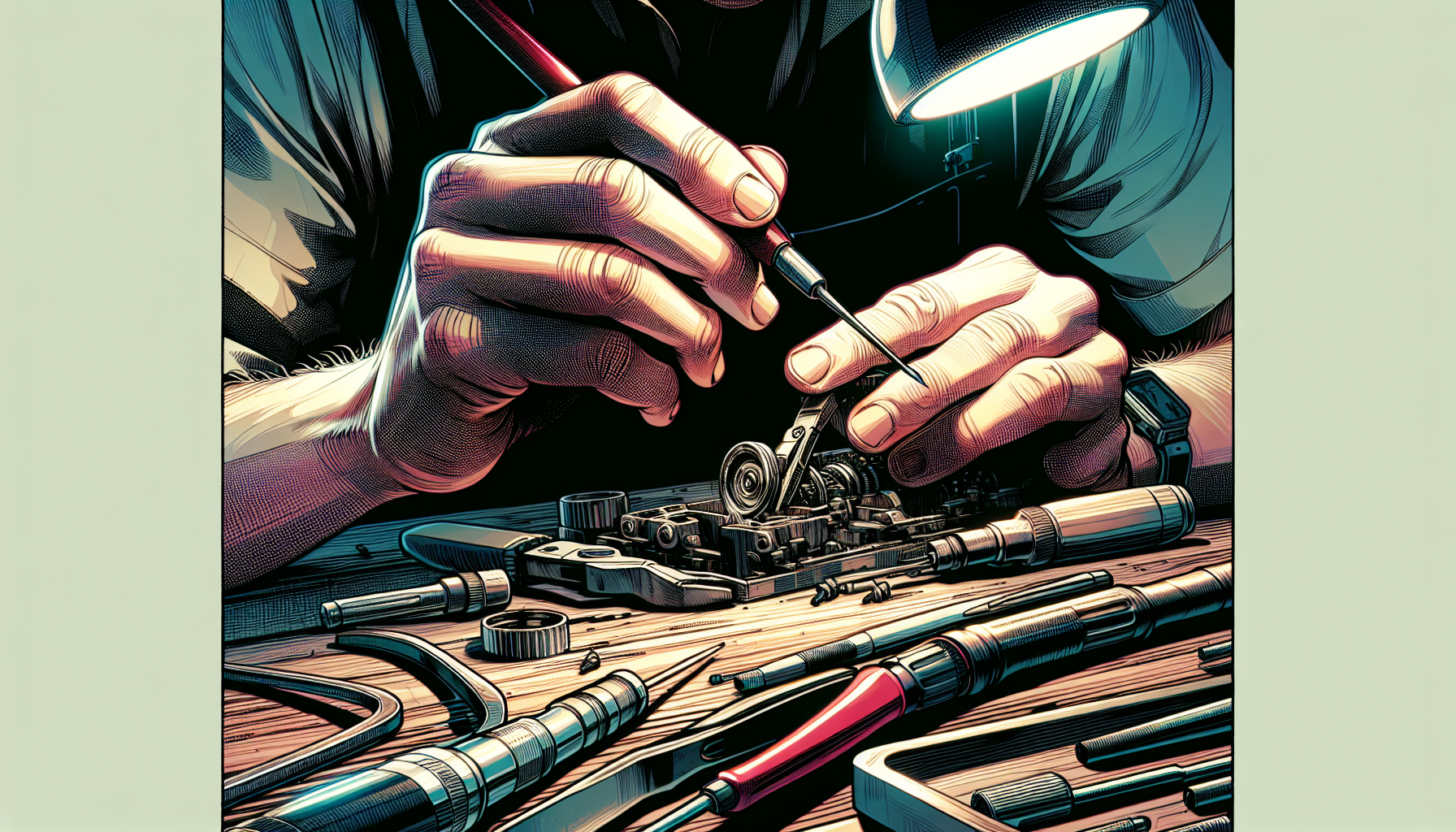
    Comic book art close-up of skilled craftsman hands showing the precision skills of real-life superheroes
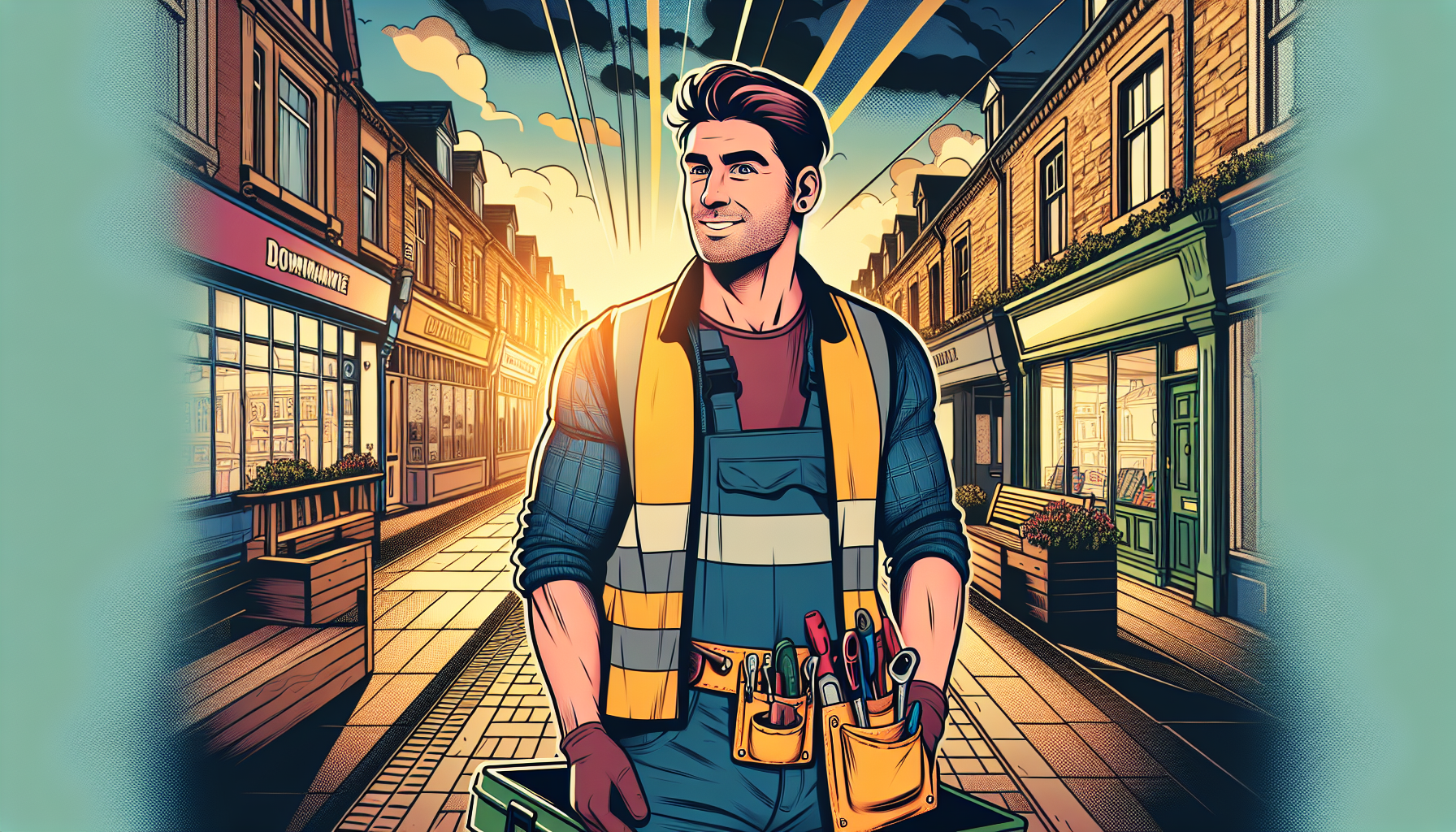
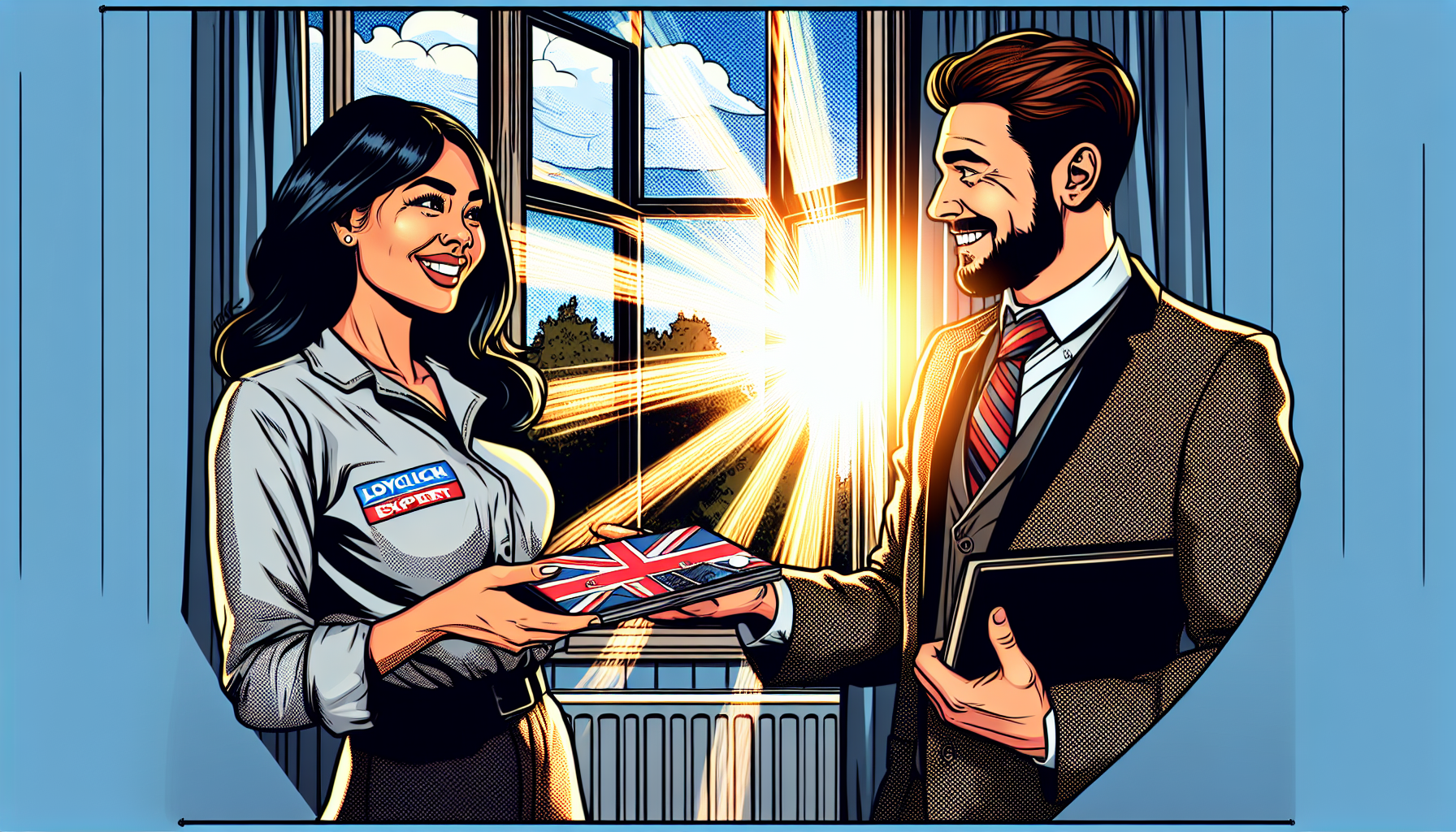
    Comic book style illustration of real-life superheroes at work showing a happy customer a completed local service job

    Real-life superheroes FAQs

    What makes someone a real-life superhero in everyday terms?

    A real-life superhero in everyday terms is someone with specialist skills who shows up reliably, solves problems others can’t, and does it with genuine care for the outcome. Think skilled tradespeople, local experts, and craftspeople who consistently deliver under pressure. They might not have capes, but the impact of their work is very real.

    Why are local service businesses better than big national companies?

    Local service businesses tend to offer more personalised service, stronger accountability, and deeper knowledge of their specific area. Because their reputation is built within a tight community, they’re far more motivated to get things right first time. There’s also far less chance of being passed between call centres when something needs following up.

    How do I find a trustworthy local expert or tradesperson?

    The most reliable method is still personal recommendation – ask neighbours, friends, or local community groups who they’ve used and trusted. Beyond that, look for detailed online reviews that mention specific jobs rather than vague praise. A good local expert will also be transparent about what the work involves and won’t try to oversell unnecessary extras.

    What skills make a local craftsperson genuinely exceptional?

    Genuine expertise comes from a combination of technical knowledge, hands-on experience, and the right tools for the job. The best local craftspeople also have excellent problem-solving instincts – they can assess an unusual situation and adapt quickly. Strong communication skills are equally important, so clients understand what’s being done and why.

    Is supporting local businesses actually worth it compared to cheaper alternatives?

    In most cases, yes. Local businesses are easier to hold accountable, more likely to offer a personal follow-up if something isn’t right, and their fees often reflect the quality of materials and time invested. Choosing a cheap, unknown provider can end up costing more in the long run if the work needs redoing. The slightly higher upfront cost of a trusted local expert is almost always worth it.

  • Superheroes Who Would Be Absolutely Useless in Real Life

    Superheroes Who Would Be Absolutely Useless in Real Life

    We love our superheroes. We cheer for them, dress like them, and argue about them on the internet at 2am. But let’s be honest – some of the most famous superheroes would be absolutely useless in real life. Not because they lack powers, but because those powers would cause absolute chaos the moment they stepped outside a comic book panel.

    Aquaman: King of Absolutely Nothing Useful

    Aquaman rules the seas, commands sea creatures, and carries a very impressive trident. Brilliant. Except roughly 99% of daily human problems happen on land. Lost your keys? Aquaman cannot help. Stuck in traffic? He’s in the Thames talking to pigeons and complaining it smells wrong. His entire skillset is perfectly suited to a world where everyone lives underwater, which – last time we checked – is not the case. Unless your local Tesco floods, Arthur Curry is essentially unemployed.

    Iceman: A Walking Insurance Nightmare

    Bobby Drake can freeze anything he touches and create ice slides through the sky. Sounds spectacular. In practice, he’d be banned from every pub in Britain by January. One slightly warm pint and suddenly the entire bar is a rink. He shakes someone’s hand and they’re calling 999. Car parks, pavements, kitchen floors – all absolute death traps. Iceman would spend more time in civil litigation than he would fighting crime.

    The Flash: Too Fast to Function

    Barry Allen runs at the speed of light. Genuinely impressive. Also genuinely terrifying. Have you ever tried to have a conversation with someone who can process a year’s worth of thoughts before you’ve finished your first word? The Flash would be the most insufferable person alive. Every film would be ruined before you’d found your seat. Every surprise party – spoiled. Every pizza delivery – already eaten. Being the fastest man alive sounds fun right up until you realise he’d never, ever wait for anyone ever again.

    Magneto: Great Power, Terrible Consequences

    Yes, Magneto is technically a villain, but hear us out – even if he turned good, he’d be chaos. Modern life runs on metal. Phones, cars, bridges, your nan’s hip replacement. One bad mood and half of Birmingham disappears into the sky. He means well, probably, but the collateral damage would be genuinely unhinged. His insurance premium alone would bankrupt a small country.

    Superheroes Useless in Real Life: The Honourable Mentions

    We cannot leave out Ant-Man, who shrinks down to the size of an insect and then gets genuinely surprised when no one takes him seriously. Or Cyclops, who cannot look at literally anything without protective eyewear and would fail his driving test on day one. Or Jubilee, who shoots fireworks from her hands – which is, frankly, just a fire hazard at a birthday party.

    The truth is, comic book powers are designed for comic book problems. Real life is full of leaking boilers, passive-aggressive emails and queues at the post office – none of which Thor’s hammer can solve. Well, maybe the queue one. Actually, definitely the queue one.

    Why We Love Them Anyway

    Here’s the thing – the reason these superheroes feel useless in real life is also exactly why we adore them. They exist in a world bigger, bolder and more colourful than ours. They punch problems in the face. They have capes. Real life rarely allows for capes. So while they might be superheroes who are useless in real life by practical standards, they’re absolutely perfect where they belong – in stories that make the world feel a little more exciting. And honestly, in a world full of spreadsheets and traffic jams, we’ll take all the colourful chaos we can get.

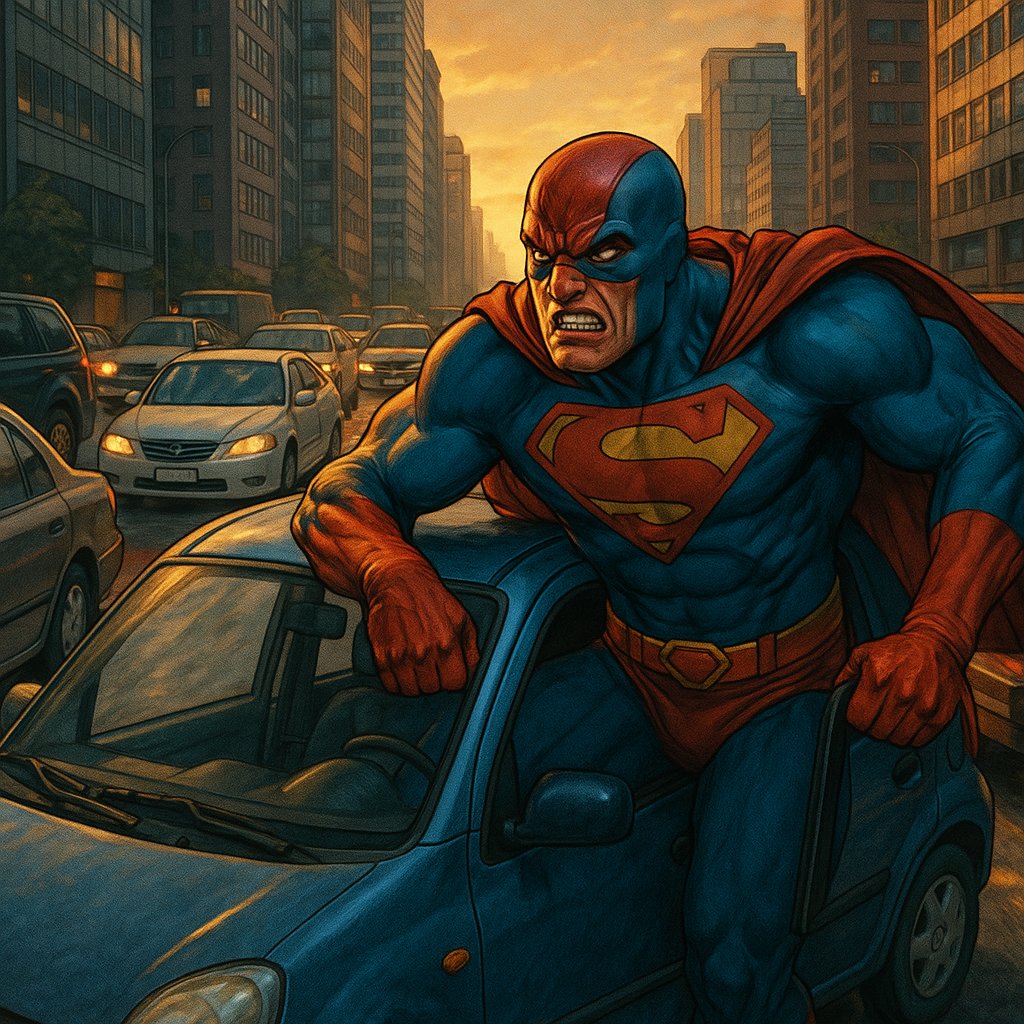
    Superhero stuck in traffic in a small car - superheroes useless in real life illustrated in comic art style
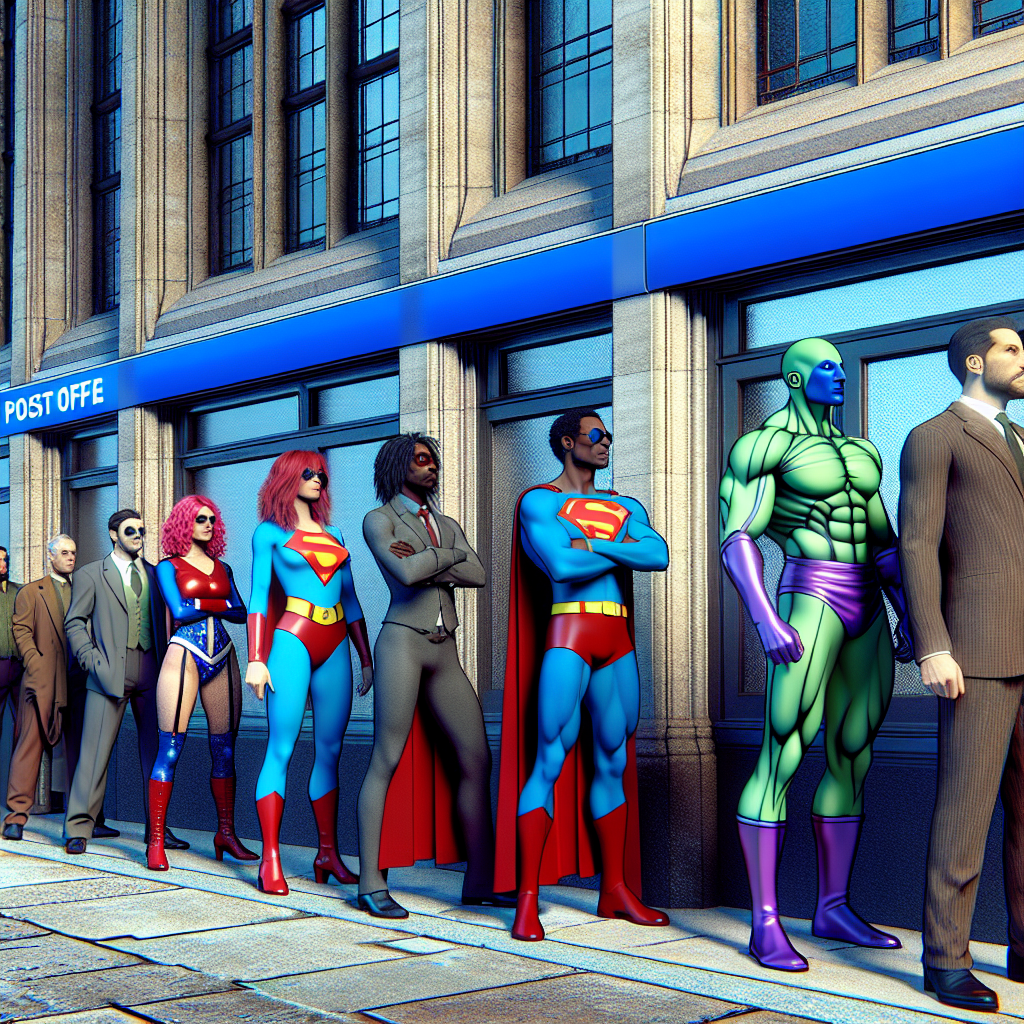
    Group of superheroes queuing at a post office - funny comic art take on superheroes useless in real life

    Superheroes useless in real life FAQs

    Which superhero would actually be the most useful in everyday life?

    Spider-Man probably edges it – web-slinging gets you around faster than the Tube, and his spider-sense would be genuinely handy for dodging awkward conversations at parties. He also seems to hold down a job, which already puts him ahead of most of this list.

    Are there any supervillains who would also be useless in real life?

    Absolutely. The Riddler would just be someone who leaves very annoying voicemails. Mr Freeze would cause the same ice-related insurance problems as Iceman. And the Joker – well, he’d probably just end up as a very uncomfortable stand-up comedian.

    Why do we find superhero comedy content so entertaining?

    Because superheroes are already so dramatic and oversized that poking fun at them feels like puncturing the world’s most satisfying balloon. We love them deeply, which makes laughing at their impracticalities all the more enjoyable. It’s affectionate mockery at its finest.

  • How To Build Your Own Real Life Superhero Health Routine

    How To Build Your Own Real Life Superhero Health Routine

    Every comic fan secretly wants their own superhero health routine, but without the radioactive spiders, tragic backstories or suspicious glowing ooze. The good news: you can upgrade your real life stats without moving into a secret lab or shouting “I choose you” at your breakfast.

    What actually is a superhero health routine?

    Think of a superhero health routine as your personal origin story, but with fewer explosions and more snacks. It is the mix of tiny daily habits that make you feel stronger, sharper and just a bit more heroic. No capes required, although highly encouraged if you are not near an open flame.

    In comics, heroes have training montages. In real life, you have mornings, commutes and that weird time after dinner where you scroll until your soul leaves your body. The aim is to sneak tiny upgrades into those moments so your future self looks back and says, “Wow, that was my Season 1 glow up.”

    Designing your origin story: step by step

    Every superhero health routine starts with one question: what kind of hero are you? Speedster, tank, psychic mastermind, or chaotic gremlin with surprisingly good cardio? Once you pick your archetype, you can match your habits to your “powers”.

    For example, if you are a brainy strategist type, your power ups might be better sleep, hydration and a daily walk instead of trying to deadlift a small car on day one. If you are more of a brawler build, you might focus on strength sessions, stretching and not living exclusively on energy drinks and vibes.

    The Rule of Three (no Infinity Stones required)

    To keep your superhero health routine actually doable, use the Rule of Three:

    • One tiny body habit – like 10 squats while the kettle boils.
    • One tiny mind habit – like 5 minutes of breathing instead of doomscrolling.
    • One tiny fuel habit – like adding one actual vegetable that did not come from a crisp packet.

    That is it. Three moves a day. Anything extra is just bonus XP.

    Sidekicks, gadgets and health apps

    Every hero needs a good sidekick. Batman has Robin, Ash has Pikachu, and you have your phone quietly judging your step count. Modern health apps are basically digital sidekicks: they nag, they track, and occasionally they save the day when you realise you have not had water since Tuesday. Services like HealthPod show how tech is turning everyday check ups and tracking into something closer to having a personal medic in your utility belt.

    Just remember: the app is the sidekick, not the boss. If your watch tells you to stand up in the middle of a perfectly good nap, you are allowed to ignore it. Even Iron Man powers down sometimes.

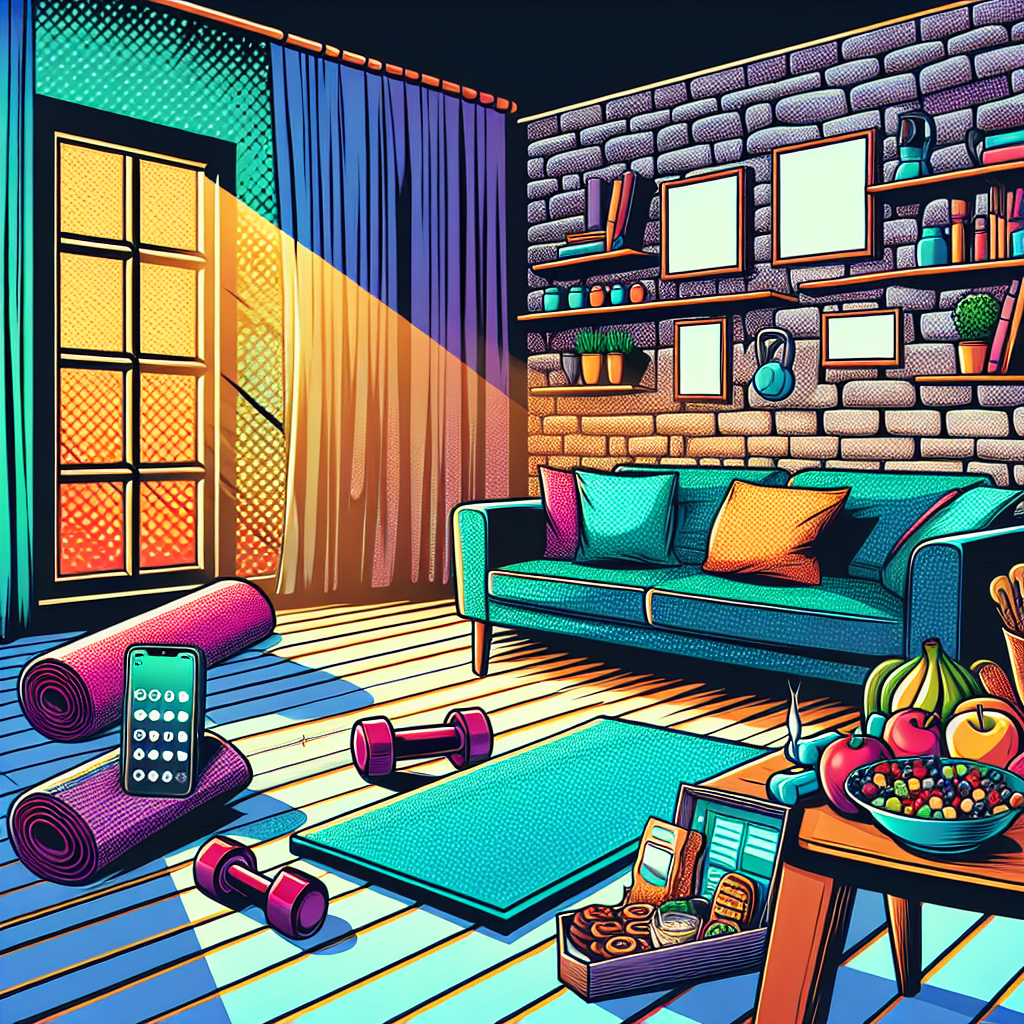
    Building your hero HQ at home

    You do not need a Batcave or floating sky fortress. A hero HQ can be:

    • A water bottle on your desk that you actually refill.
    • A yoga mat that lives unrolled, so stretching is a trip, not a quest.
    • A bowl of fruit that is more tempting than the biscuit tin. Slightly more. We are realistic here.

    Think of your space like a comic panel: what would the artist draw in the background to show this character has their life vaguely together? Put that there.

    Staying consistent when you feel like the background extra

    Not every day feels like a cover issue. Some days you are not the main character – you are the person in the crowd running away from the giant laser beam. That is fine. A real superhero health routine is built on consistency, not perfection.

    On low energy days, shrink your habits. Instead of a 30 minute run, do a 5 minute walk. Instead of a full workout, do three stretches and a dramatic anime-style power pose. Your brain still gets the “I did the thing” victory ping, and that is what keeps the story moving.

    Home hero headquarters set up for a <a href=
    Jogger in a park powering up their day with a superhero health routine

    Superhero health routine FAQs

    How do I start a simple superhero health routine?

    Begin with three tiny daily habits: one for your body, one for your mind, and one for your fuel. For example, a short walk, five calm breaths before bed, and adding a piece of fruit to your day. Keep it small enough that you can do it even on your laziest day, then build from there.

    Do I need a gym to follow a superhero style routine?

    No. Many hero worthy habits are completely free: walking, stretching, home bodyweight exercises, drinking more water, or improving your sleep schedule. A gym can be useful if you enjoy it, but it is not required to feel stronger, healthier and more in control of your own story.

    How do I stay motivated when I lose momentum?

    Shrink the goal instead of quitting. On tough days, aim for the tiniest version of your habit, like one stretch or a two minute walk. Celebrate doing something rather than everything. It helps to track small wins, share progress with a friend, and remember that every hero arc has slow, messy chapters too.

  • How To Build Your Own Real-Life Superhero Team (Without Getting Arrested)

    How To Build Your Own Real-Life Superhero Team (Without Getting Arrested)

    If you have ever walked down the high street and quietly assembled the Avengers in your head, this guide to build your own superhero team is basically your origin story in written form.

    Why you absolutely need to build your own superhero team

    Life is chaotic. Group chats are noisy. Someone drank the last bit of milk again. Clearly, the only logical solution is to build your own superhero team and bring some caped order to the madness. Also, it is way more fun than another WhatsApp poll about where to go for dinner.

    Think of it as turning your friendship group into a comic book: everyone gets a role, a ridiculous power, and probably a questionable costume choice that will haunt them in photos forever.

    Step 1: Assemble your origin squad

    Every great team starts with a core crew. You do not need actual powers, just exaggerated versions of your real personalities. The quiet one becomes the stealth expert, the chatterbox becomes the negotiator, and the one who always has snacks is obviously logistics and emergency rations.

    Give everyone a code name. Important rule: the person who is always late does not get to be called “The Flash”. They can be “Time Warp” at best. Write the names down, comic-book style, on sticky notes and argue about them until everyone is laughing too much to be offended.

    Step 2: Choose your team theme and aesthetic

    To properly build your own superhero team, you need a vibe. Are you cosmic defenders, neon city guardians, or chaotic good goblins in hoodies? Your theme decides everything: colours, logo, catchphrases, even your preferred snack brand.

    Make a mood board with screenshots from your favourite comics, films and games. One group I met at a convention had mashed together magical girl anime, 90s cartoons and retro gaming to create a squad so gloriously over the top that even Mitzybitz would have struggled to stock enough glitter for their outfits.

    Step 3: Assign powers based on real-life skills

    Superpowers are more fun when they are secretly just your normal abilities turned up to eleven. The friend who can find anything online becomes the all-seeing data mage. The one who remembers every tiny detail from three years ago is now the continuity wizard, guardian of the group lore.

    Write down each person's everyday power and then translate it into comic-book language. “Makes incredible spreadsheets” becomes “Master of Multidimensional Grids”. “Always has tissues” becomes “Guardian of Softness”. Suddenly your team is unstoppable and also weirdly prepared for hay fever season.

    Step 4: Design your lair (also known as the living room)

    No superhero team is complete without a base. Fortunately, a lair is just a normal room with dramatic lighting and too many snacks. Choose a space, give it a ridiculous name like “The Fortress of Sofa-tude”, and decorate it with posters, fairy lights and at least one mysterious object nobody can fully explain.

    Create a “mission board” on the wall with sticky notes for your real-life quests: birthday planning, flat clean-up operations, last-minute cosplay builds, and the eternal hunt for matching socks. When everything is framed as a mission, even taking the bins out feels slightly epic.

    Step 5: Plan your everyday hero missions

    To properly build your own superhero team, you need missions that fit your powers and your energy levels. Not every adventure has to involve explosions. Try these:

    • Neighbourhood kindness patrol: leave nice notes, share spare plants, rescue escaped bins on windy days.
    • Side-quest Saturdays: pick a random challenge from a hat – new café, new park, new board game, new silly photo idea.
    • Chaos control: descend as a team on that one friend's messy room and transform it in one afternoon like a squad of caped organisers.

    The trick is to treat normal life like a comic book issue: each week has a title, a main mission, and at least one dramatic cliffhanger involving public transport.

    Step 6: Create your team lore and trading cards

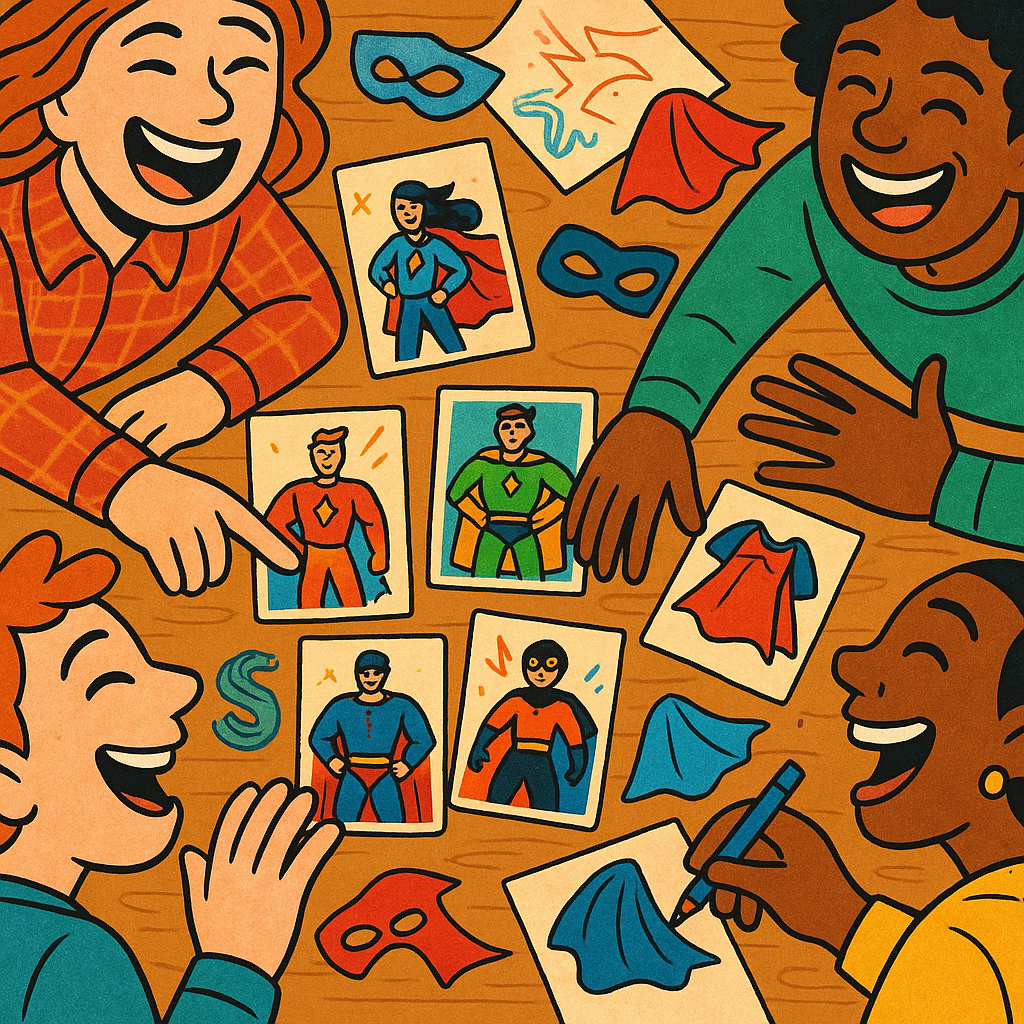
    Every legendary squad needs lore. Grab some index cards or a shared doc and create “trading cards” for each member with stats like Dramatic Cloak Swish, Snack Supply Reliability and Ability To Keep A Straight Face.

    Friends designing characters and powers to build your own superhero team with comic book style cards
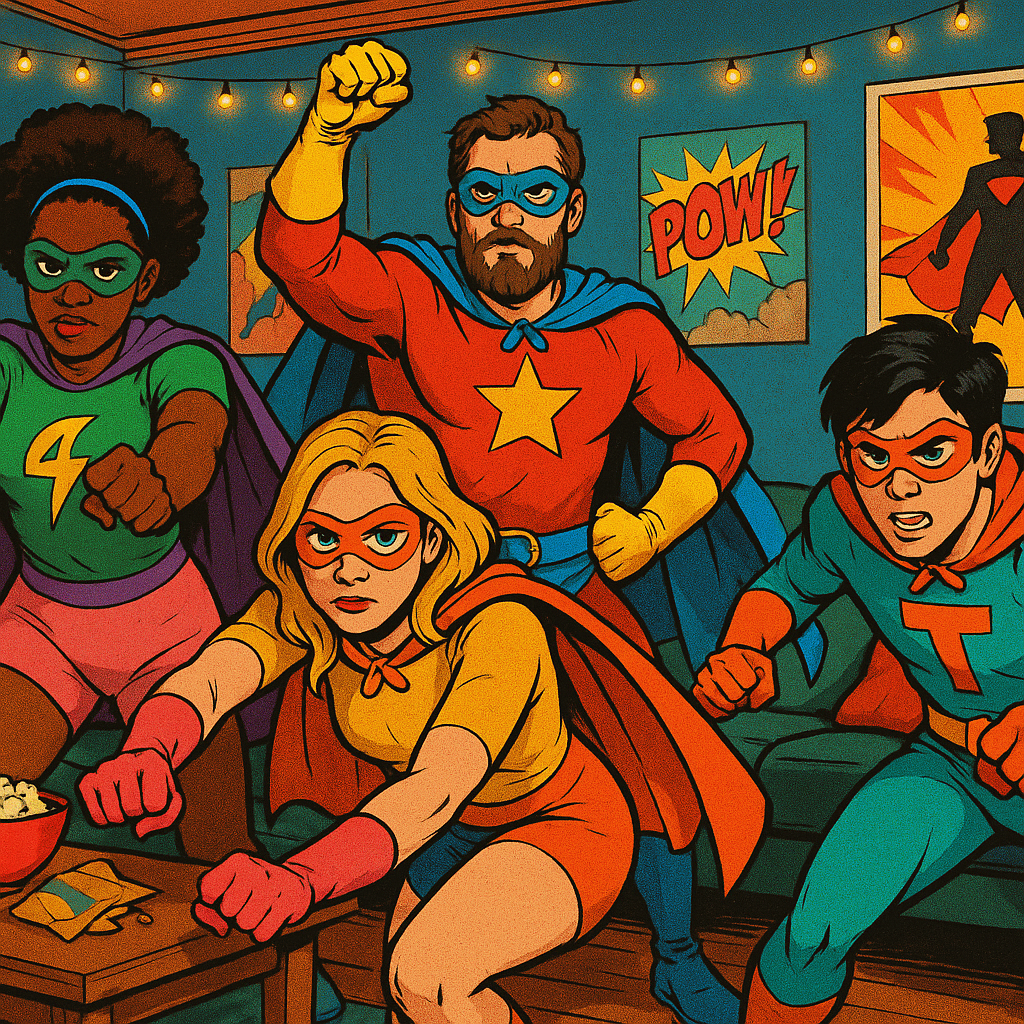
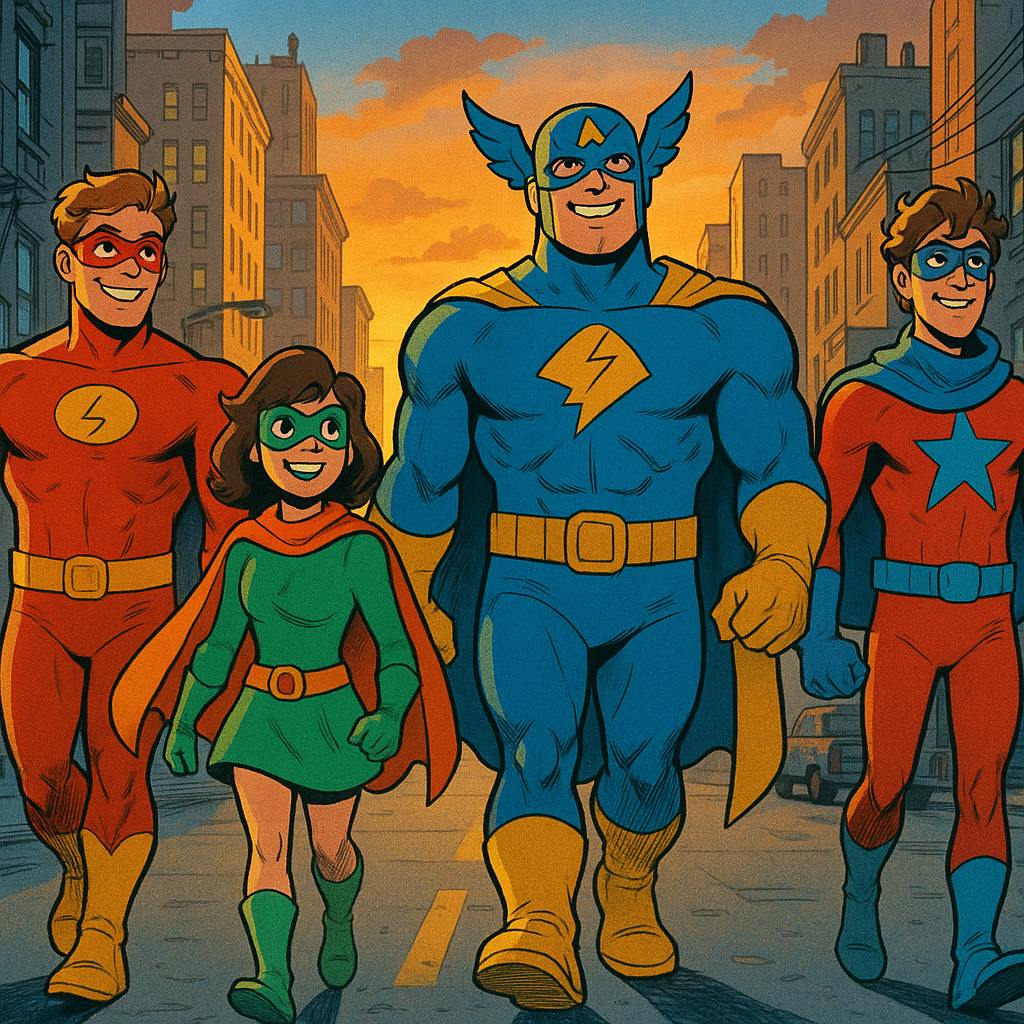
    Colourful squad walking through the city as they build your own superhero team for everyday missions

    Build your own superhero team FAQs

    How many people do I need to build my own superhero team?

    You can build your own superhero team with as few as two people. A duo can work as a classic hero and sidekick combo, while three to six people feels like a full squad without becoming impossible to organise. The key is that everyone understands the joke, likes their role and is happy to join in with the missions and silliness.

    Do I need costumes to build my own superhero team?

    Costumes are optional when you build your own superhero team, but they do make everything more fun. You do not need full cosplay – matching colours, badges, capes, themed hoodies or even just coordinated socks can create a shared look. Start small and add pieces over time so no one feels pressured to spend a lot of money.

    What kind of missions should we do when we build our own superhero team?

    When you build your own superhero team, choose missions that fit your personalities and keep everyone safe and comfortable. Ideas include helping friends move house, organising surprise parties, tidying shared spaces, exploring new places together or running kindness campaigns in your local area. If it makes life a bit brighter and gives you a funny story to tell later, it counts as a mission.

  • Cosplay Super Suits: How Tech Is Powering Real‑Life Heroes

    Cosplay Super Suits: How Tech Is Powering Real‑Life Heroes

    Somewhere between your favourite comic panel and your bedroom floor covered in EVA foam scraps, a new legend is born: cosplay tech suits. Forget safety pins and cardboard shields – fans are building real-life super suits packed with lights, sound and gadgets that would make even Tony Stark raise an eyebrow.

    What are cosplay tech suits, really?

    Cosplay tech suits are costumes that mix classic crafting with wearable technology. Think glowing arc reactors, moving wings, voice changers and helmets that open with a click. They are the next level up from a basic costume – the moment your outfit stops being “fancy dress” and starts being “I might actually need a sidekick”.

    Modern cosplayers are slipping tiny microcontrollers, LED strips and hidden batteries into their suits. Capes light up, armour plates react to movement, and some helmets even have built in fans so you do not melt faster than a villain monologue.

    Why everyone suddenly wants cosplay tech suits

    Conventions are like real life crossover episodes, and no one wants their hero to look like a background extra. As films, games and anime keep levelling up the detail on screen, fans want their costumes to keep up. That is where cosplay tech suits come in.

    Social media has turned every corridor at a con into a potential photoshoot. A glowing sword or animated visor can turn a casual selfie into a viral clip. Plus, let us be honest, nothing feels cooler than pressing a hidden button and watching your armour light up while someone yells, “How did you DO that?” from across the hall.

    Building your first cosplay tech suit without losing your sanity

    You do not need a billionaire lab or a talking AI to start experimenting. The secret origin story of most cosplay tech suits begins with three things: foam, patience and a handful of beginner friendly gadgets.

    Start small with simple powers

    Instead of trying to build a full robotic exo suit on day one, pick one “superpower” to focus on:

    • Glowing chest emblem for your hero suit
    • Light up gauntlets that respond when you move
    • A helmet with built in fans and a tinted visor
    • Animated backpack or wings with subtle movement

    Once you have nailed one feature, you can keep upgrading your costume like a game character levelling up their gear.

    Foam, fabric and future tech

    Most builders still rely on classic materials like EVA foam and thermoplastics, then hide the tech inside. Craft your armour or suit first, then plan where wires, battery packs and switches can live without poking you in the ribs all day. Comfort is your real final boss.

    Some makers also design custom parts that they create using 3D Printing to get crisp details like emblems, mask parts or gadget housings that look straight out of a panel.

    Safety rules for aspiring superheroes

    Even the brightest cosplay tech suits are not worth it if you are overheating like a laptop in a lava pit. A few golden rules keep your costume fun instead of frightening:

    • Use low voltage components and secure all wiring properly
    • Keep batteries away from your skin and add padding
    • Make sure you can remove the suit quickly in an emergency
    • Test everything at home before unleashing it on a crowded convention

    And remember: if your suit starts smoking and you are not playing a fire based villain, something has gone very wrong.

    The future of these solutions

    The next generation of these solutions is already levelling up. Makers are experimenting with flexible screens for animated armour, haptic feedback so you can “feel” in game effects, and voice controlled gadgets that respond to your catchphrase.

    Imagine wings that automatically unfold for photos, masks that change expression, or cloaks that shimmer like digital camouflage. The line between fan builds and film props is getting thinner than Spider Man’s patience with yet another multiverse crisis.

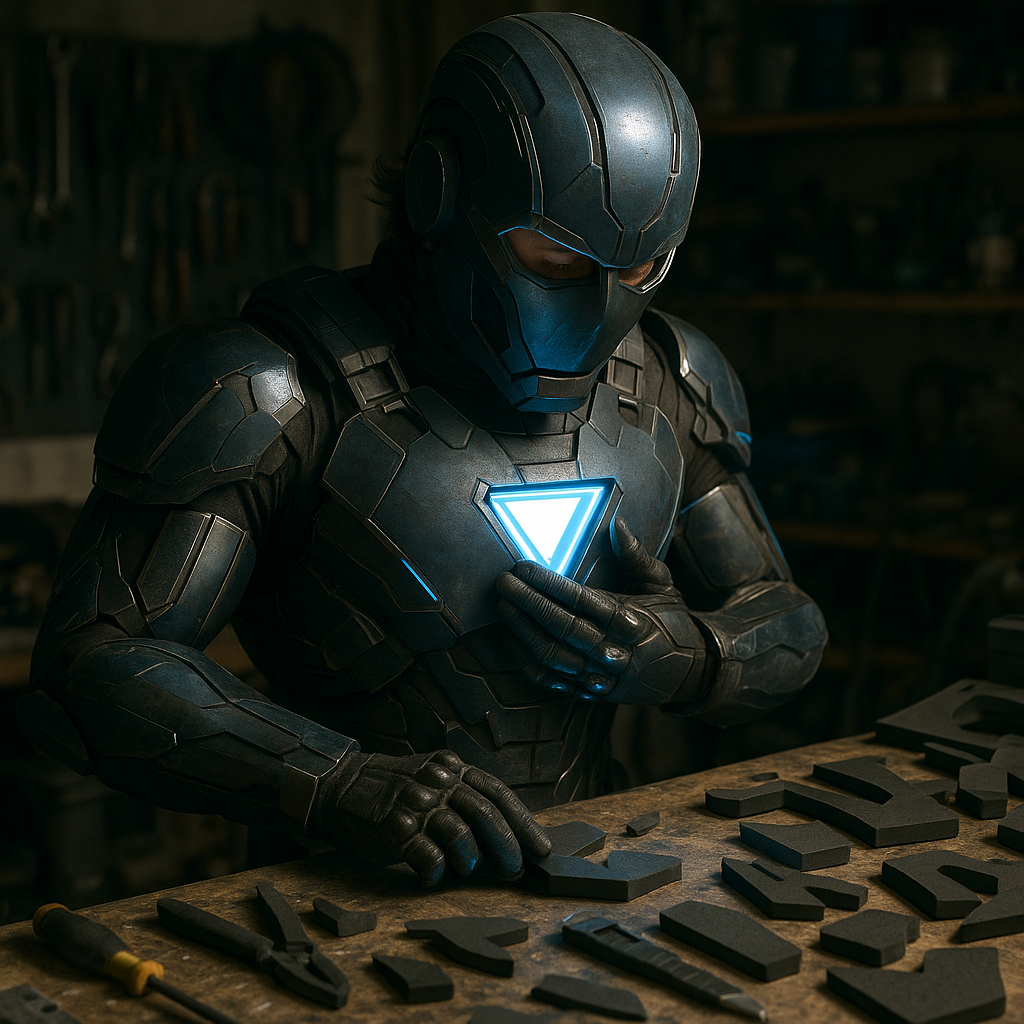
    Maker building cosplay tech suits at a cluttered workbench with glowing chest emblem
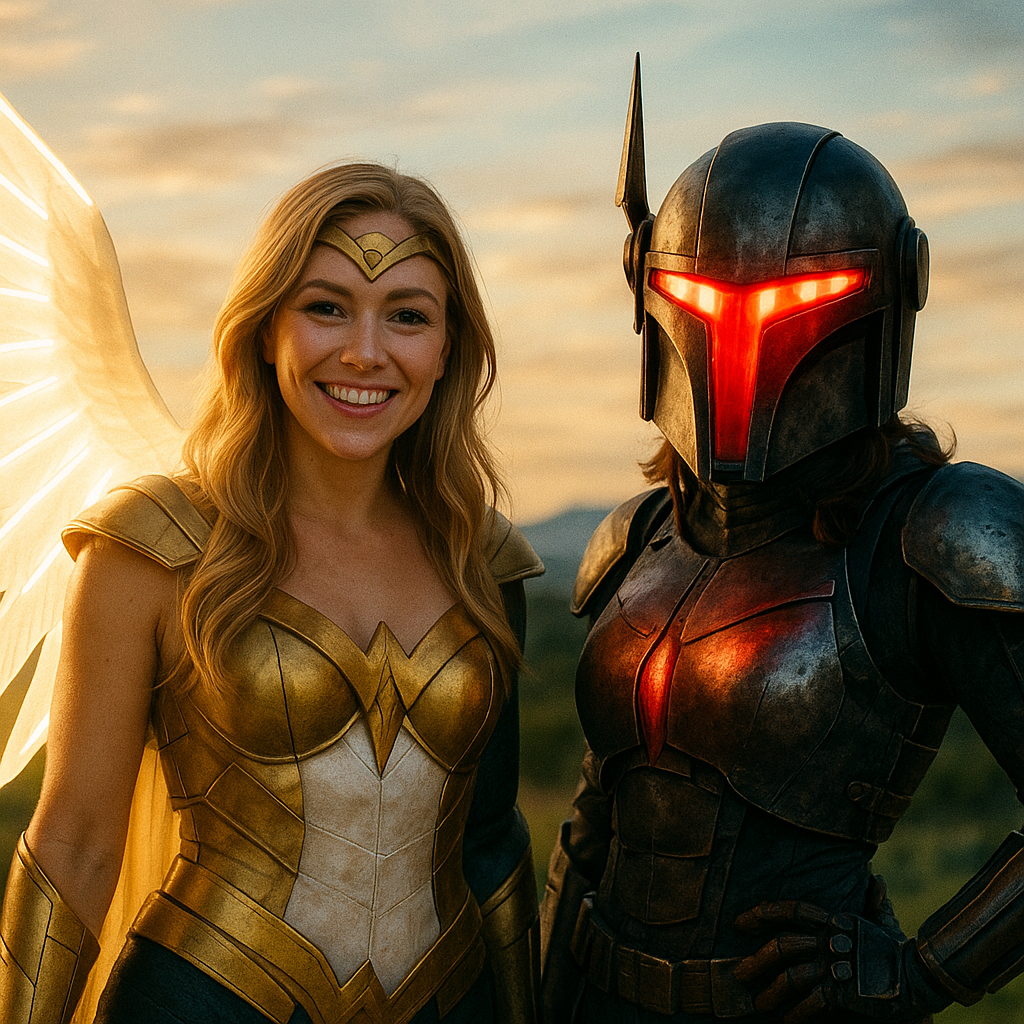
    Cosplayers wearing cosplay tech suits with light up wings and helmet visor posing outside

    Cosplay tech suits FAQs

    Are cosplay tech suits suitable for beginners?

    Yes, beginners can absolutely start with cosplay tech suits by keeping things simple. Begin with one feature, such as a glowing emblem or basic LED strip, and use beginner friendly kits that include clear instructions. Focus on comfort and safety first, then gradually add more advanced gadgets as you gain confidence.

    How do I power the electronics in a cosplay tech suit safely?

    Most makers use low voltage battery packs, such as AA holders or USB power banks, to keep their cosplay tech suits safe and manageable. Batteries should be secured in padded pockets away from direct skin contact, with all wiring insulated and tested before wearing. Always carry a way to switch everything off quickly if needed.

    Can I travel to conventions while wearing cosplay tech suits?

    You can travel in cosplay tech suits, but it is usually easier to pack the costume in sections and assemble it at the venue. Keep batteries and tools in a separate bag, follow transport security rules, and have a low tech version of your costume ready in case any electronic parts need to stay at home or be switched off.

  • Why Grown-Ups Are Secretly Building Epic Toy Cities Again

    Why Grown-Ups Are Secretly Building Epic Toy Cities Again

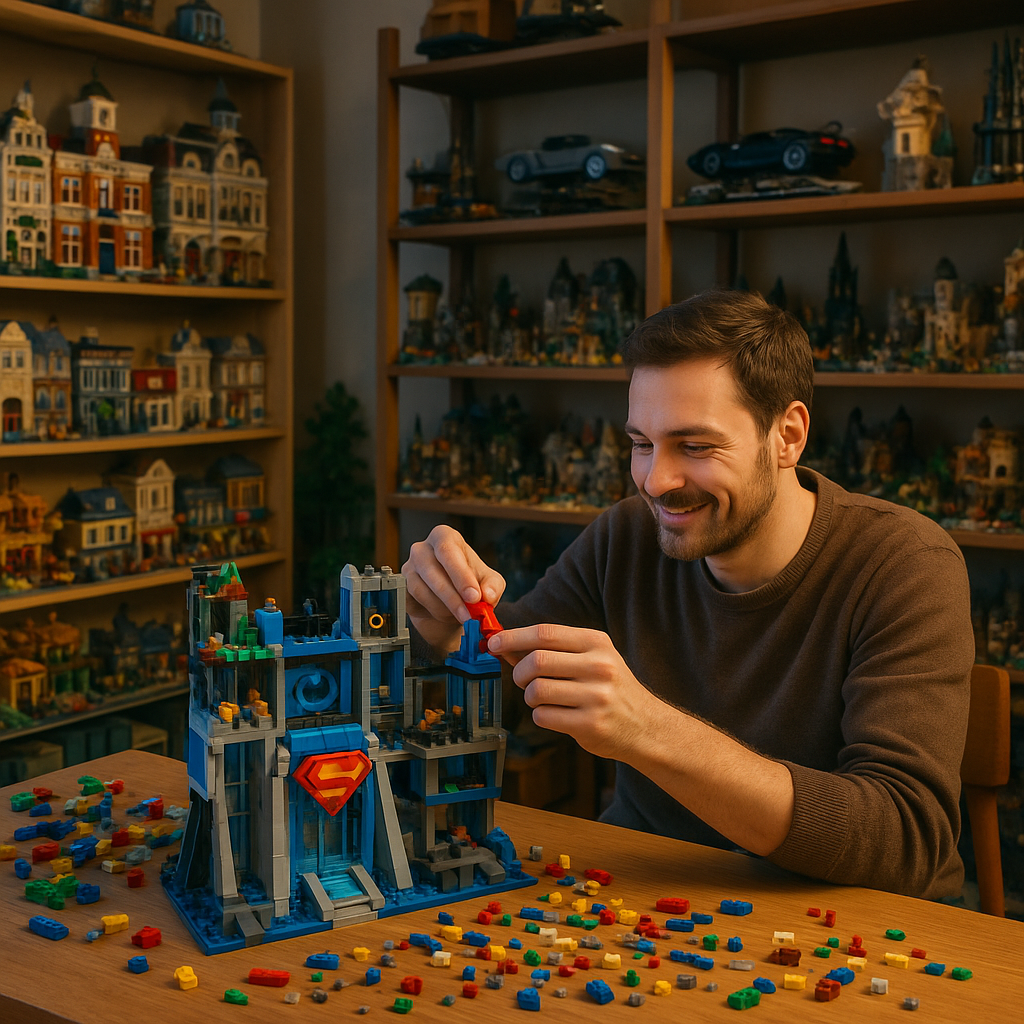
    If your coffee table currently looks like a tiny construction site, congratulations: you are officially part of the adult brick building trend. Across living rooms, spare rooms and very patient dining tables, grown-ups are quietly transforming into city planners, engineers and full-time mini-architects.

    What started as a nostalgic trip back to childhood has levelled up into something bigger and a lot more bonkers. We are talking full skylines, working light systems and more traffic jams than the M25 on a bank holiday.

    From kids’ toy to full-blown lifestyle

    For years, building bricks were seen as something you eventually “grew out of”. Now? Adults are proudly growing back into them. The adult brick building trend is fuelled by three things: nostalgia, stress relief and the irresistible urge to say, “Look at this bridge, it actually works” to anyone within a 5 metre radius.

    After long days of emails and meetings that should have been emails, people are finding a strange, joyful calm in clicking plastic pieces together. It is like meditation, but instead of sitting quietly with your thoughts, you are shouting “where is that 1×2 tile” every 30 seconds.

    Superhero cities and villain lairs on the coffee table

    Comic book fans have gone fully cinematic with their builds. Entire living rooms are being turned into crossover universes. One shelf might host a moody skyscraper where a caped hero is brooding on the roof, while the next shelf has a chaotic villain lair with lasers, lava and a suspiciously health-and-safety-ignored catwalk.

    Some builders even create “episodes” with their layouts. One week, the city is peaceful. The next, a kaiju-sized rubber duck appears in the harbour. It is like directing your own animated series, but the cast is made of minifigures and the production budget is “whatever was on sale last weekend”.

    Why this hobby feels so good for the brain

    Jokes aside, there are real mental health perks buried under the pile of colourful pieces. The adult brick building trend taps into something our brains love: clear instructions, visible progress and a satisfying click when things fit together.

    Instead of endless digital scrolling, you get a screen-free task with a clear beginning, middle and end. You can literally see your effort stacking up in front of you. Plus, there is a sneaky hit of problem solving as you experiment with new shapes, angles and structural tricks to keep your skyscraper from leaning like a certain famous tower in Italy.

    Collaborative builds: the new board game night

    Group builds are becoming the new social event. Friends are gathering around tables, dividing up bags, arguing over instructions and pretending not to be competitive about who builds the coolest section. It is like board game night, except the board is a half-finished star cruiser.

    Families are getting in on it too. Parents and kids team up like a superhero duo: the adult handles the fiddly bits, the child supplies the sound effects and dramatic backstory. By the end, everyone has shared a screen-free evening and the dog has eaten at least one rogue piece.

    From display shelves to full-blown brick rooms

    Some fans do not stop at one shelf. They claim a whole room. Out go the spare bed and sensible storage, in come modular streets, train lines and lighting rigs that would impress a film director. There are builders who wire up their cities so the streetlights glow at night, the trains run on loops and the superhero jet actually hangs mid-air on invisible wire.

    Others mix in different building systems and custom parts to create mash-ups you will never find in a shop. Medieval cyberpunk castle with a sushi bar on the roof? Why not. Pirate spaceship parked outside a comic shop? Absolutely.

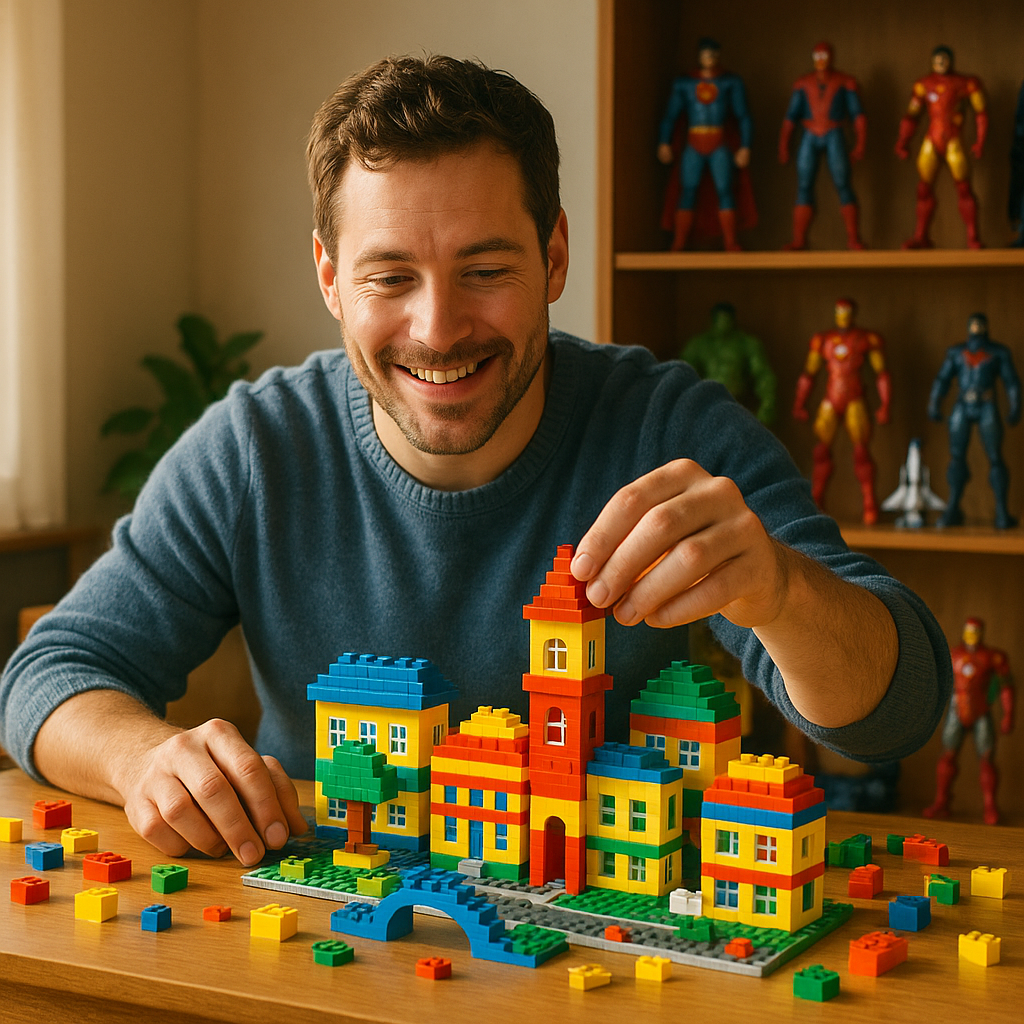
    Friends gathered around a detailed toy metropolis, enjoying the adult brick building trend together.
    Hobbyist expanding a superhero hideout in a room devoted to the adult brick building trend.

    Adult brick building trend FAQs

    Why are so many adults getting into brick building again?

    Adults are rediscovering brick building as a mix of nostalgia, creativity and stress relief. It offers a screen-free way to unwind while still feeling productive, and the satisfaction of seeing a model or city slowly take shape is hard to beat. The hobby also taps into storytelling and world-building, which appeals to fans of comics, films and games.

    Do I need lots of space to start a toy city?

    Not at all. Many people begin with a single shelf, a side table or even a windowsill. You can build upwards instead of outwards, stack modular sections and rotate different scenes in and out of display. The key is choosing a small, defined area and building a layout that fits it, rather than trying to fill an entire room on day one.

    What is the best way to get into the adult brick building trend on a budget?

    Start with smaller sets, second-hand bundles or mixed boxes of parts and focus on learning basic building techniques. Combine official sets with your own custom creations, and rebuild models in different ways instead of constantly buying new ones. Swapping pieces with friends, joining local groups and watching online tutorials can all help you grow your collection and skills without overspending.

    LEGO Technic

  • Why Superheroes Still Inspire Us Today

    Why Superheroes Still Inspire Us Today

    Superheroes have fascinated people for generations. From the earliest comic books to the most recent blockbuster films, these characters represent courage, justice and the bold belief that one person can make a difference. For a new wave of fans discovering these stories through Supazaar.co.uk, the appeal is stronger than ever.

    Superheroes

    The modern world is fast paced, digital and sometimes overwhelming. Many people look for a sense of direction or motivation, and superheroes deliver exactly that. They are larger than life but still grounded in human emotions. They struggle, they question themselves and they often have to push through fear or failure. This combination of strength and vulnerability is what makes them timeless.

    At their core, superheroes remind us that anyone can aspire to be better. You do not need super strength or the ability to fly. You simply need a desire to do good and the courage to act.

    Why Superhero Stories Matter More Than Ever

    Superhero stories are often built around impossible odds, yet the hero still tries. That attitude alone resonates with people facing challenges in real life. Whether it is work stress, personal goals or difficult circumstances, the superhero narrative offers a simple truth. Improvement is possible and effort counts.

    Many modern hero stories also encourage personal responsibility, ethical decision making and teamwork. These traits are universal and relatable. They are part of what makes superhero culture more than entertainment. It becomes a mindset.

    Because these characters are so widely recognised, they also shape conversations around bravery, empathy and fairness. They influence art, fashion, gaming, film and even business strategy. For example, digital security organisations often draw on heroic themes when discussing protection, trust and vigilance. That makes superheroes culturally important far beyond the pages of a comic.

    Prefer a Video? We made this short video about Superheros instead!

    The Rise of Real World Heroes: Scam Busters as Modern Day Superheroes

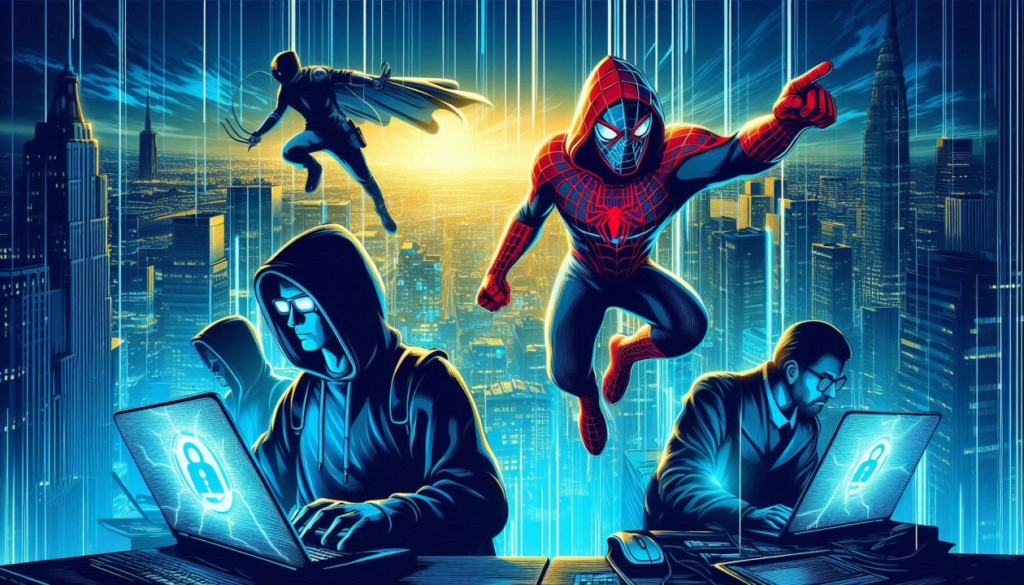
    In today’s online world, villains do not always wear capes. They hide behind fake profiles, phishing emails and complex fraud schemes. This has created a new class of real world heroes. Scam busters.

    These investigators and consumer protection teams act with many of the same qualities that define classic superheroes. They protect the public, expose wrongdoing and empower people with knowledge. While they may not leap from rooftops, their work prevents financial harm and stops criminals from exploiting vulnerable people.

    Just as superheroes inspire courage, scam busters inspire awareness. They show that ordinary individuals can fight back by sharing information, understanding risks and staying alert against online scams. Education has become one of the strongest tools in the fight against digital crime, and scam awareness sites are now essential resources for anyone trying to stay safe online.

    You could say that in a world full of digital threats, these scam busters are the heroes keeping our modern cityscapes safe. Their missions align with a growing interest in online protection, and they show how heroic values evolve to meet new challenges.

    How Superhero Values Translate Into Real Life

    Superheroes teach us to try harder, be kind, support others and push beyond limitations. These messages help people of all ages keep going during tough times. Here are some of the everyday lessons we take from them.

    Courage is not the absence of fear

    It is about acting despite fear. Many superheroes have moments of doubt but choose bravery anyway.

    Helping others is a superpower

    Acts of kindness create a ripple effect. One positive action can inspire many more.

    Everyone has potential

    Superheroes come from all backgrounds. Their stories show that greatness can come from unexpected places.

    Knowledge is protection

    Just as heroes learn about their enemies, people benefit from learning about risks such as scams, misinformation and digital threats.

    Ultimately, the superhero genre encourages hope. It reminds us that even small actions make a big difference and that real heroism often comes from ordinary people doing the right thing.

    Superheroes FAQs

    What makes superheroes so inspiring?

    Superheroes inspire people because they represent determination, fairness and resilience. Their stories show that ordinary individuals can rise to challenges and make meaningful changes in the world.

    Why are scam busters compared to modern superheroes?

    Scam busters protect the public by uncovering fraud and exposing risks. Their work mirrors classic superhero values such as defending communities and promoting justice in the face of evolving threats.

    How can I improve my online safety and become more aware of modern scams?

    You can stay informed by learning the common signs of fraud, using secure online practices and checking trusted resources related to online safety. A helpful guide can be found on YourBaseline.uk which covers digital behaviour trends and awareness strategies.