Category: Fun

  • The Most Catastrophically Over-Engineered Video Game Gadgets That Would Never Get a CE Mark in the UK

    The Most Catastrophically Over-Engineered Video Game Gadgets That Would Never Get a CE Mark in the UK

    I’ve spent an embarrassing portion of my adult life picking up video game items off the floor of digital dungeons, cramming them into an inventory that somehow weighs nothing, and then wielding them against things that want me dead. Never once did I stop and think: hang on, would this pass a UK product safety inspection? Well. I’ve thought about it now. And the answer, across the board, is an absolutely catastrophic no. We’re talking Trading Standards officers filing for early retirement. We’re talking a product recall notice so long it’d need its own postcode.

    Comic book illustration of dangerous video game gadgets that would fail UK product safety standards
    Photo by Эдуард Галеев on Pexels

    Why video game gadgets UK product safety matters (sort of)

    The UK’s product safety framework is no joke. The Office for Product Safety and Standards exists precisely to stop dangerous items landing in the hands of unsuspecting consumers. Products sold in the UK need to meet the requirements of the UKCA mark (which replaced CE post-Brexit, though plenty of CE-marked goods still circulate legally). Electrical items get tested under the Electrical Equipment (Safety) Regulations 2016. Toys go through EN71. And anything that could, say, fire a rocket at a person needs to have a fairly extensive risk assessment attached. Video game gadgets fail every single one of these categories before we’ve even got to the user manual.

    So let’s have a look at the worst offenders. I’ve picked these not just for being dangerous but for the specific, almost artisanal quality of their regulatory violations.

    The Portal Gun (Portal series)

    Aperture Science’s handheld portal device is a marvel of engineering and an absolute nightmare for the Health and Safety Executive. The device fires two interconnected wormholes into physical surfaces at will, allows infinite freefall physics exploitation, and has no visible off switch. Under the Electromagnetic Compatibility Regulations 2016 alone it would be failed before the inspector had finished his biscuit. There’s no earth wire. There’s no certifiable power source. The housing looks like it was assembled by a person who had read exactly one paragraph about injection moulding. And the user manual, if Aperture Science ever produced one, would presumably end with the phrase “and that’s when the neurotoxin releases.” Trading Standards would condemn the warehouse, arrest the warehouse, and then set it on fire just to be safe.

    The Master Sword (The Legend of Zelda)

    Yes, it’s a sword. No, swords don’t need a UKCA mark. But this one glows, emits beams of energy, and by some entries in the series communicates telepathically with its wielder. The moment it starts doing anything electrical, the Electrical Equipment Safety Regulations kick in and suddenly we’ve got a problem. No visible fuse. No insulation on the grip beyond what appears to be a purple gemstone. The blade is described as being capable of repelling evil, which is not a measurable safety standard. I’d love to watch a product tester attempt to quantify “repels evil” on a compliance form. The box it comes in is a stone altar. There’s no barcode.

    The BFG 9000 (Doom)

    The Big, ah, Friendly Gun. This one would not make it out of the concept design phase. The BFG fires a ball of plasma so large it fills most of a corridor, and the splash damage radius would fail every single clause of the Pyrotechnic Articles (Safety) Regulations 2015. The recoil physics suggest the internal mechanism involves something close to a small contained explosion with each shot. The trigger guard is optional depending on the model. There’s no childproof lock. Under the Firearms Act 1968 it would be illegal before we even got to product safety law, but let’s say hypothetically it was reclassified as a consumer electronics item for the purpose of this exercise. It would still fail. Spectacularly. The glow alone would trigger Ofcom complaints about light pollution.

    Isaac Clarke’s plasma cutter (Dead Space)

    This one’s particularly painful because the plasma cutter was originally a mining tool, which means it was designed by an engineer, which means someone thought it was practical. It fires superheated plasma at precise angles to dismember (in the game’s context, specifically to dismember alien monsters). The rotating barrel has no safety guard. The power cell, which you swap out by hand mid-combat, is visibly leaking something. The ergonomic grip appears to have been designed for a person with three thumbs and no sense of self-preservation. Under the Personal Protective Equipment Regulations 2002, anyone operating this tool on a UK worksite would be sent home and their supervisor would be fined before they’d finished clocking in.

    I’d also argue the inventory system in Dead Space, where you manage this device in real-time while something is actively trying to eat your spine, would violate several workplace stress guidelines. That’s not strictly a product safety issue. But I feel it deserves a mention.

    The Pokédex (Pokémon)

    People forget that the Pokédex is a piece of consumer electronics handed to a ten-year-old child with no instruction. It scans living creatures and returns diagnostic data about them, which means it’s emitting some form of radiation or signal capable of reading biological information. Under the Radio Equipment Regulations 2017, any device transmitting radio signals in the UK needs to comply with specific frequency and power output requirements. We have no paperwork for this. We don’t even know who manufactured it. Professor Oak handed it over in his own house. There’s no receipt. The battery life appears to be infinite, which is itself suspicious.

    Honorable mentions that would also cause a Trading Standards officer to quietly weep

    The gravity gun from Half-Life 2 would be recalled immediately on the basis that “capable of hurling a radiator at a soldier” is not an acceptable product description for a handheld consumer device. The various explosive barrels that litter every game environment ever made have no hazard labelling. Link’s bombs in practically every Zelda game come in a little bag with no tamper-evident seal. The loot crates in practically every battle royale title fail the Toys (Safety) Regulations 2011 on the basis that nobody knows what’s inside them, which is ironically also the entire point of loot crates in gambling regulation debates, but that’s a whole other conversation.

    If you enjoy watching fictional universes collide with the magnificent mundanity of British regulation, you might also appreciate our look at superhero costumes that would fail a UK health and safety risk assessment, or the deep tragedy of video game final bosses that would settle out of court in the UK legal system. The pattern here is clear: fictional worlds are simply not ready for UK compliance culture. And honestly, I respect that about them.

    The real tragedy is that every one of these devices is enormously cool. The Portal Gun is one of the most creative pieces of game design ever conceived. Isaac Clarke’s plasma cutter is terrifying and brilliant. And yet I’d be legally obliged, standing behind the counter of any UK high street electronics shop, to refuse to sell a single one of them. No UKCA mark. No sale. That’s the law. And somewhere, a Trading Standards officer is nodding along very seriously while the rest of us mourn the gadgets we can never have.

    Also, for what it’s worth: none of these would pass a UK food hygiene inspection either, but that’s possibly less relevant to a plasma cutter. Possibly.


  • Which Classic Movie Heist Crews Would Completely Fall Apart During a UK Bank Holiday Weekend

    Which Classic Movie Heist Crews Would Completely Fall Apart During a UK Bank Holiday Weekend

    There is a particular kind of quiet devastation that only British people truly understand. You’ve planned everything. Weeks of reconnaissance, colour-coded spreadsheets, an impeccably timed schedule. And then you arrive to find a laminated A4 sign taped to the door: “Closed Monday 26 May, Bank Holiday.” The world’s greatest movie heist crews would not survive this. Not one of them. I’ve thought about this far too hard, and I’m not even slightly sorry.

    Movie heist crew UK bank holiday style standing outside a closed bank with a bank holiday sign
    Photo by Steve Pancrate on Pexels

    Ocean’s Eleven: too stylish, completely unprepared

    Danny Ocean and his crew spent months infiltrating the Bellagio. Elaborate disguises, custom-built replica vaults, a master plan with seventeen moving parts. Brilliant stuff. Now relocate that operation to, say, a Canary Wharf bank on a late August bank holiday Monday. The foyer is locked. The digital display on the door says the branch reopens Tuesday at 9am. Brad Pitt’s character is eating something, as he always is, and George Clooney is just standing there in a very expensive coat looking quietly furious at a closed revolving door. The getaway driver has circled the same block four times because the multi-storey is full, and the nearest available space is a 30-minute zone on a road where the wardens are absolutely still working, bank holiday be damned.

    The backup plan, apparently, is to regroup. The regroup location is a Wetherspoons. This is now the plan. They order pints at 10am because it’s open and nothing else is, and by half eleven Rusty is explaining the job to a table of retired blokes who think he’s describing a property renovation. The heist is over.

    Heat: too serious for a Monday with nowhere to park

    Michael Mann’s Heat is a masterclass in cold, clinical professionalism. Neil McCauley’s crew are the real deal. No unnecessary conversation. No wasted movement. Total discipline. And yet. I’d argue the entire third act collapses the moment they pull up outside the Los Angeles Security Bank and discover it’s been replaced, in our scenario, by a mid-sized regional branch of NatWest in Birmingham city centre, and the entire Broad Street car park is closed for resurfacing. There is a temporary car park. It’s a 12-minute walk. You need an app to pay, the app needs a postcode, the postcode isn’t recognised, and now Val Kilmer’s character has been standing next to a parking meter that hasn’t worked since 2019 for twenty minutes.

    The getaway, famously one of cinema’s most tense sequences, now involves a one-way system that didn’t exist during the planning phase and a contraflow that adds nine minutes to the escape route. The whole operation ends in a Lidl car park on the edge of a retail park, engine running, everyone silently furious, waiting for a gap in traffic that never comes.

    The Italian Job (the original one, obviously)

    Michael Caine. Mini Coopers. Turin. Iconic. But swap Turin for a bank holiday weekend in central Bristol and the Mini Coopers are stuck in a queue behind a bendy bus that can’t make the corner at Baldwin Street. The traffic job, that meticulous choreography of controlled gridlock, doesn’t need to be engineered here. It just happens. Naturally. At 11am on a Sunday before a bank holiday Monday, Bristol is already gridlocked because there’s a 10k charity run, a farmers’ market, and what appears to be a spontaneous gathering of vintage Volkswagens outside M Shed.

    Charlie Croker, undeterred, pivots to the backup plan. The backup plan involves a Wetherspoons on the waterfront. It always comes back to this. At least the food is cheap and the lager is cold, and by 2pm everyone has forgotten about the gold bullion entirely and is watching the football on the screens above the bar. This is, genuinely, a better afternoon than the original plan offered.

    Planning permission and other nightmares: the Inside Man crew

    Spike Lee’s Inside Man hinges on a hostage situation so elaborately structured it essentially disguises a heist happening in real time. Clive Owen’s character is meticulous, patient, and operating on a very precise timetable. None of that survives contact with the fact that the building they’ve chosen for the UK version had its basement access blocked off six months ago pending a planning permission dispute with the local council. The decision is pending. It has been pending since February. Nobody knows when it will be resolved. There’s a notice on the door. The notice references a reference number. The reference number leads to a form. The form leads to a phone number. The phone number has a 45-minute wait time and closes at 4pm.

    Clive Owen sits on the pavement outside, still in his boilersuit, holding a number from the queue ticket machine. He got number 47. They’re currently serving number 23. The bank holiday means they won’t get to 47 today. He will come back tomorrow. He will be number 47 again, somehow.

    Now You See Me: too smug, fatally dependent on 4G

    The Four Horsemen are magicians who rob banks via elaborate illusions, live performance, and an absurd level of confidence. The whole operation depends on precise timing, digital transfers, and a crowd of thousands watching a live Las Vegas show. Translate this to a UK bank holiday weekend: the venue is a 1,200-capacity theatre in Manchester. The Wi-Fi is down because someone tripped over the router. The digital transfer fails because the bank’s online banking is showing a “planned maintenance” message, as it always does on bank holiday weekends, right at the moment you need it most.

    Jesse Eisenberg’s character tries to improvise. The improvisation involves misdirection. The audience isn’t misdirected. They’re just confused. Someone in the third row thinks it’s a comedy show. It sort of is now. The whole thing devolves into a standing ovation for the wrong reasons and a debrief in a Wetherspoons where everyone orders a Double IPA and refuses to make eye contact.

    Why British logistics beat criminal masterminds every time

    There is something deeply, almost proudly chaotic about a UK bank holiday weekend. As the BBC has documented many times, roads seize up, services go haywire, and the entire country seems to operate on a kind of collective decision to do nothing at the worst possible time. No heist crew, however slick, is built to survive that. Ocean’s crew needed a vault that was open. Heat’s crew needed roads that were navigable. The Italian Job needed streets that weren’t already gridlocked by people trying to reach a garden centre before it closes.

    I wrote a while back about how movie heists fall apart the moment they hit a UK car park barrier, and this is basically the extended director’s cut of that nightmare. Add a bank holiday, and you’ve got something that makes the planning stage completely irrelevant. The criminal masterminds don’t lose to the police. They lose to a laminated sign and a pay-and-display machine that only takes coins.

    Honestly, any crew that managed to successfully complete a heist on a UK bank holiday Monday deserves to keep whatever they stole. That level of logistical resilience should be rewarded. They’ve clearly earned it.

  • The Most Unhinged Movie Contract Negotiations That Would Have Absolutely Baffled ACAS

    The Most Unhinged Movie Contract Negotiations That Would Have Absolutely Baffled ACAS

    There is a particular kind of chaos that only exists in cinema. A man sells his soul for unlimited power. A crew of pirates agrees to follow a code written entirely in vague moral suggestions. An ancient dark lord drafts a binding agreement about a ring. These are not good contracts. I’ve read some fairly baffling terms and conditions in my time, but nothing compares to the working arrangements casually struck in film history. And the more I think about them through the lens of UK employment law, the more I suspect that ACAS, the Advisory, Conciliation and Arbitration Service that helps resolve workplace disputes in Britain, would have shut down entire fictional universes before the third act.

    So let’s run through the most spectacularly unhinged movie contract negotiations ever committed to screen, and ask what a calm ACAS mediator, armed with a cup of tea and a very thick folder of guidance notes, would have made of all of it.

    Dramatic movie contracts UK ACAS would hate, shown as a comic book contract signing scene
    Photo by https://kaboompics.com/ on Pexels

    The Faustian bargain in Bedazzled (and basically every deal-with-the-devil film ever)

    Seven wishes in exchange for your eternal soul. On the face of it, this is a fixed-term contract with extremely poor exit provisions. The problem ACAS would immediately flag is the fundamental imbalance of power. One party is omnipotent. The other is a fairly hopeless bloke who mostly wastes his wishes on getting things slightly wrong. There is no cooling-off period. No written terms provided in advance. No opportunity for independent legal advice. The devil exploiting a position of dominance over a vulnerable party would trigger at least three separate unfair contract clauses before anyone even got to the soul-ownership question.

    ACAS’s Early Conciliation service exists precisely because employers sometimes draft contracts that look legally binding but are so one-sided they don’t hold up. The devil’s standard template would not survive Early Conciliation for thirty seconds. Particularly the clause about eternal damnation in lieu of a notice period.

    The Pirates of the Caribbean code: “more what you’d call guidelines”

    Captain Barbossa’s famous clarification that the Pirate’s Code is “more what you’d call guidelines than actual rules” is, genuinely, one of the most accurate descriptions of a dysfunctional workplace agreement I’ve ever heard in a film. I’ve worked in places like that. You probably have too.

    The code, as laid out across the franchise, covers things like the division of plunder, the settling of disputes by pistol, and what happens when someone is marooned. What it conspicuously lacks is anything resembling a grievance procedure. No appeal process. No provision for collective bargaining. The whole thing is basically a zero-hours contract where the hours are “whenever we’re not being chased by cursed ships” and the pay is “whatever we manage to steal.”

    A UK employment tribunal would have a field day. The crew of the Black Pearl are, under any reasonable assessment, workers rather than self-employed contractors, which means they’d be entitled to minimum wage, holiday pay, and protection from being thrown overboard without a fair disciplinary hearing. The video game final bosses who’d settle out of court have nothing on Barbossa, who would absolutely be making an out-of-court offer by the time his legal team finished reading the employment rights paperwork.

    The deal in The Devil Wears Prada: Miranda Priestly’s working conditions

    Right, this one isn’t supernatural, which actually makes it worse. Andy Sachs is hired as second assistant to Miranda Priestly, editor of a fictional fashion magazine. The role appears to involve: being available 24 hours a day, completing impossible tasks on no notice, receiving no positive feedback ever, and being emotionally dismantled on a daily basis. The salary is unspecified. The job description covers approximately none of what the job actually involves.

    Under the Employment Rights Act 1996, an employee is entitled to a written statement of particulars within two months of starting work. This document must include working hours, pay, holiday entitlement, and the nature of the role. Miranda Priestly provides none of this. What she provides instead is a look. ACAS would not accept “a look” as a substitute for a written contract, no matter how withering it is.

    The constructive dismissal case Andy could have brought after the Paris incident alone would have kept an employment tribunal busy for a fortnight.

    Rumpelstiltskin and the first-born child clause

    Technically a fairy tale, but it’s been adapted for film enough times to count. A desperate party, operating under extreme duress, agrees to give up their firstborn child in exchange for magical services rendered. There is no written agreement. No witnesses. No consideration of whether this is even a legally enforceable obligation. The “payment” isn’t due for years, and the contract contains a loophole so enormous you could sail a pirate ship through it (guess my name and I’ll let you off).

    ACAS would be appalled by the dispute resolution mechanism alone. Guessing someone’s name is not a recognised mediation technique. There is no neutral third party. There is no Early Conciliation reference number. There is, as far as anyone can tell, no HR department. The whole arrangement would be voided on grounds of duress before you even got to the “handing over a baby” section of the terms.

    The contract in Get Out: the sunken place small print

    I’d argue that Get Out contains the most genuinely horrifying employment arrangement in modern cinema history. People are lured, then their consciousness is displaced into what the film calls the sunken place, while someone else takes over their body. The victim continues to experience their own life from a distance, without agency, without pay, and without any hope of raising a formal grievance.

    This is not a zero-hours contract. This is something so far beyond zero-hours that it has looped back around to negative hours. There are no hours. There is only the sunken place. ACAS doesn’t have a category for this. They would need to create one. I suspect they’d call it something like “Category X: Metaphysical Workplace Displacement” and it would be buried three clicks deep in their website, right next to the guidance on working during bank holidays.

    Willy Wonka’s golden ticket “prize”: a masterclass in misleading recruitment

    Five children are selected via golden ticket lottery for a factory tour. What they are not told is that this is, essentially, a job interview for the role of heir to an enormous confectionery empire, with a selection process involving moral tests, unexplained hazards, and at least one boat ride through a genuinely traumatic tunnel. Several children are eliminated from the process in ways that could reasonably be described as workplace accidents. There is no risk assessment. There is no parental consent form for the dangerous activities. There is almost certainly no Employer’s Liability insurance.

    The job offer at the end, extended to Charlie Bucket, comes with literally no terms discussed. No salary. No job title. No start date. Just “you get the factory.” Willy Wonka is, on reflection, exactly the kind of eccentric employer who thinks a firm handshake constitutes a binding employment contract. It does not. ACAS would like him to know that.

    For fans of equally chaotic working environments presented with a comedic edge, our look at video game sidequests that feel like dealing with a UK council complaints process captures the same energy of bureaucratic absurdity dressed up in entertainment. And if you want to see how fictional spaces cope with real British regulation, our piece on which video game taverns would pass a UK food hygiene inspection takes a similarly forensic approach to fictional workplaces.

    The truth is, cinema has always loved a terrible contract. The drama lives in the imbalance, the loopholes, the impossible terms that seem fine right up until they absolutely aren’t. ACAS, to its considerable credit, exists precisely because real workplaces sometimes generate the same chaos. They just tend to involve slightly fewer curses, a bit less plunder, and considerably more paperwork.

    Frequently Asked Questions

    What does ACAS actually do in UK employment disputes?

    ACAS, the Advisory, Conciliation and Arbitration Service, helps employers and employees resolve workplace disputes without going to tribunal. They offer free Early Conciliation, telephone advice, and published guidance on employment rights. Most UK employment tribunal claims must go through ACAS Early Conciliation first.

    Are zero-hours contracts legal in the UK?

    Zero-hours contracts are currently legal in the UK, though workers on them are still entitled to National Minimum Wage, holiday pay, and protection from discrimination. The government has proposed reforms to strengthen rights for zero-hours workers, which you can follow via gov.uk.

    What makes a movie contract like a Faustian bargain unenforceable under UK law?

    Several things: contracts signed under duress or with a severe power imbalance can be voided, terms must be clear and agreed by both parties in good faith, and no contract can override statutory employment rights. Soul-ownership and eternal damnation clauses would fail on multiple grounds before an employment tribunal.

    Could someone bring a constructive dismissal claim for conditions like those in The Devil Wears Prada?

    Potentially yes. Constructive dismissal in the UK occurs when an employer’s behaviour fundamentally breaches the employment contract, forcing the employee to resign. Working 24-hour availability with no rest breaks, impossible tasks and sustained emotional pressure could reasonably meet that threshold under UK employment law.

    What is the Employment Rights Act 1996 and why is it relevant?

    The Employment Rights Act 1996 is the core piece of UK legislation protecting employees. It covers unfair dismissal, written statements of employment particulars, notice periods, and more. Most of the fictional employers in this article would breach multiple sections of it before the end of the first act.

  • Every Type of British Person at a Comic Con, Ranked by How Long They’ve Been Queuing

    Every Type of British Person at a Comic Con, Ranked by How Long They’ve Been Queuing

    The UK comic con experience is unlike anything else on earth. Specifically, MCM London at the ExCeL Centre, where thousands of people dressed as everyone from Goku to a gender-swapped Thanos queue peacefully alongside a bloke in a fleece who came in off the DLR and genuinely thought there might be some old crockery for sale. I’ve been to more of these things than I care to admit, and every single time the cast of characters is identical. Not the cosplay characters. The actual human archetypes. They’re always there. Reliable as British drizzle.

    Crowd of cosplayers and attendees queuing outside a UK comic con experience event in comic book art style
    Photo by Joshua Roberts on Pexels

    The overnight camper (arrived before the venue staff)

    You spot this person immediately because they have a camping chair, a flask, a clearly-labelled spreadsheet of the day’s panel schedule, and the thousand-yard stare of someone who hasn’t slept since they finished hot-glueing their pauldrons at 1am. Their costume is immaculate. Pressed, lit, and probably weatherproofed. They queued in the dark. They will queue again tomorrow. This is not a hobby for them. This is a lifestyle, and they are absolutely thriving, and I respect them enormously while also finding them mildly terrifying.

    The bloke who accidentally wandered in

    He’s wearing a North Face gilet and carrying a Costa. He walked in because the ExCeL carpark was cheaper than Canary Wharf on a weekend and someone told him there was a convention on, so he thought, why not? He keeps asking people what they’re dressed as and nodding enthusiastically even when nobody can hear him through their helmet. He will buy a £4 badge of a character he doesn’t recognise, show it to his wife later, and describe the whole thing as “a bit mad, actually, but alright.”

    The cosplayer having a full-on wardrobe crisis at 9am

    She’s sat cross-legged on the pavement outside with a travel sewing kit, a portable glue gun plugged into a power bank, and the focused expression of a surgeon mid-operation. One wing has detached. The headdress is at a 40-degree angle. Her friend is standing behind her holding two pieces of EVA foam together with both hands and pure hope. They will fix it. It will look incredible. The crisis will have been worth it. This is peak UK comic con experience energy and I mean that as the highest possible compliment.

    The parent who drew the short straw

    He is fifty-two. He is wearing sensible shoes. He has no idea what a Funko Pop is. He’s been handed a tote bag and told to hold it whilst his child disappears into a crowd dressed as Nezuko. For the first hour he looks genuinely bewildered. By lunchtime he’s quietly looking at a display of vintage Doctor Who figures and seems, improbably, interested. By 3pm he’s bought a Tom Baker scarf and is asking a vendor whether they have the Pertwee era on Blu-ray. Every single time. It always happens exactly like this.

    The professional autograph hunter

    This person has done their research. They have a laminated list. They arrived at the signing table forty-seven minutes before the queue officially opened, and they have opinions about the wristband system. They’re not rude about it, just very precise. They will get every signature. They will photograph each one. The signed items will go into a protective sleeve before the ink is dry. If you’re after someone who understands the value of a well-documented procedure, this is your person.

    The group who planned a themed squad cosplay and are now three people short

    There are four of them where there were meant to be seven. Nobody is naming names, but someone’s train was delayed, someone else “just couldn’t get the armour finished in time”, and one person apparently forgot it was this weekend entirely. The remaining four are making it work. They have excellent chemistry and they are furious. They will absolutely win a group photo competition because they still pull it off, and the fury is giving them a kind of chaotic energy that frankly reads very well on camera.

    The person exclusively there for the dealer hall

    They are not in costume. They brought cash. Specifically, a suspicious amount of cash in an envelope. They have a list of things they’re looking for, and it includes a very specific 1994 action figure in original packaging, a set of out-of-print manga volumes, and something they saw on eBay last month but refused to pay the listed price for on principle. They will find it. They always do. The dealer hall at MCM London is absolutely wild in the best possible way, and this person is its apex predator.

    The person who has never been to one before and is absolutely overwhelmed

    Eyes wide. Moving slowly. Stopping every four metres to take a photo. Slightly unsure whether they’re allowed to ask for photos with cosplayers (you are, just ask nicely). They came because a friend dragged them along and they weren’t sure it was their thing, and now they’re standing next to a full-scale TARDIS prop surrounded by people in elaborate armour and they’re having the time of their life. According to the BBC’s coverage of how geek culture went mainstream, this has been happening to first-timers for years. Good. It should keep happening.

    The seasoned veterans who’ve seen it all

    These two (it’s always two, like a comedy duo) have been coming since the early MCM days when it was a fraction of the size and everything cost less. They remember when the queue wasn’t quite so apocalyptic. They have opinions about the layout changes and they will share those opinions with anybody who makes eye contact for more than three seconds. But they also know exactly which food stall is worth the wait, which panel is genuinely unmissable, and which signing will have a shorter queue at 2pm than at 11am. They are, without question, the most useful people in the building. Much like comic book characters navigating a chaotic British event, they’ve developed battle-hardened instincts that lesser attendees simply don’t have yet.

    The one who brought too much stuff

    A rucksack that could contain a small family. Multiple tote bags. A wheeled suitcase for reasons that become clear only when they pull out a full-size replica prop mid-afternoon and start offering photos with it. Navigating through the ExCeL corridors near them is like being in a crowded Tube carriage, except the person blocking you is wearing full plate armour and carrying a foam sword the length of a lamppost. I say this as someone who once watched a bloke in a Stormtrooper costume attempt to get through a revolving door. With a cape.

    Where does this leave the rest of us?

    Somewhere in the queue, probably. The MCM London queue is genuinely its own microculture, a moving city of enthusiasm and slightly-too-heavy prop weapons. The UK comic con experience at its best is chaotic, warm, absurd, and completely brilliant. Every archetype listed above has been me at some point, and I suspect the same is true for most of you. If you’ve ever stood in that queue at 8am in a costume you finished at midnight and thought “this is fine”, you’re already one of us. That’s the point. That’s always been the point. And for those wanting a wider sense of the event landscape, MCM’s own official site lists upcoming UK tour dates, so there’s no excuse to miss the next one. Go. Queue. Embrace the chaos. Just maybe don’t bring the wheeled suitcase.

    Frequently Asked Questions

    What is MCM London Comic Con and where is it held?

    MCM London Comic Con is one of the UK’s largest pop culture events, held at the ExCeL Centre in London’s Royal Docks. It runs twice a year, typically in May and October, drawing tens of thousands of attendees dressed in cosplay, alongside traders, panels, and celebrity signings.

    Do you have to be in cosplay to enjoy the UK comic con experience?

    Absolutely not. Plenty of people attend in regular clothes and have a brilliant time browsing the dealer hall, watching panels, and taking photos with elaborate cosplayers. Cosplay is celebrated but never required, and the atmosphere is welcoming to everyone from hardcore fans to complete first-timers.

    How long are the queues at MCM London?

    Queue lengths vary hugely depending on the day and whether you have a pre-purchased ticket. Saturday mornings are notoriously busy and queues can stretch considerably before the doors open. The experienced approach is to arrive early, pre-book everything possible, and check the official MCM schedule for wristband distribution times.

  • Iconic Movie Soundtracks That Would Sound Completely Different Scored by the BBC Radiophonic Workshop

    Iconic Movie Soundtracks That Would Sound Completely Different Scored by the BBC Radiophonic Workshop

    Somewhere in the multiverse, there exists a timeline where John Williams never got the call for Star Wars, Hans Zimmer was busy, and the production budget got routed through a BBC department that made alien noises using a Radiophonic Workshop oscillator and a length of Sellotape. I think about that timeline a lot. The BBC Radiophonic Workshop, for anyone who needs a quick catch-up, was the legendary sound design unit founded in 1958 that gave us the Doctor Who theme, acres of gloriously unsettling ambient noise for public information films, and sounds that still make a certain generation of Britons feel simultaneously nostalgic and mildly anxious. They were brilliant. They were also absolutely, magnificently weird. So what would happen if the BBC Radiophonic Workshop had been handed some of cinema’s most iconic soundtracks? Pull up a chair. This is going to be very good.

    Retro BBC recording studio with synthesisers evoking BBC Radiophonic Workshop movie soundtracks
    Photo by Oussama Bergaoui on Pexels

    Star Wars: A New Hope, the full orchestral sweep becomes a two-minute oscillator wobble

    John Williams wrote one of the most recognisable pieces of music in human history for the opening crawl of Star Wars. Seventy-piece orchestra, bold brass, thundering timpani. The BBC Radiophonic Workshop, working with the tools and budget of 1977 BBC television, would have approached this rather differently. Picture the opening sequence: that massive yellow text floating through space, and underneath it, a sustained electronic drone that sounds like a fridge trying to communicate. The main theme would almost certainly have been realised on the EMS Synthi 100, the big synthesiser the Workshop actually used, and it would have been genuinely haunting. Not triumphant. Haunting. Darth Vader’s march would have gone from menacing orchestra to something resembling a washing machine on a spin cycle with reverb applied. Honestly, I think it might have been scarier.

    Inception, already half a Radiophonic piece, if we’re honest

    Here is the thing about Hans Zimmer’s Inception score: large chunks of it are already doing what the Workshop did instinctively. The famous slowed-down Edith Piaf horn blast, the low rumbling drones, the sense of time moving at half-speed. Give that brief to Delia Derbyshire or Brian Hodgson in 1970 and they would have produced something functionally similar using tape manipulation and ring modulation. The difference is it would also have sounded like it belonged on a BBC Two late-night arts programme presented by a man in a turtleneck, and I mean that as a genuine compliment. The Workshop’s version of the dream-collapse sequences would have been magnificent: layers of reversed tape, filtered noise, and probably one genuinely lovely melodic fragment buried just beneath the chaos that you’d only notice on a third listen.

    Jurassic Park, John Williams again, and this time the dinosaurs sound like the shipping forecast

    Williams’ Jurassic Park theme is warm, sweeping, emotional. It makes you feel the wonder of seeing a living brachiosaurus for the first time. The BBC Radiophonic Workshop would have made you feel like you were watching a nature documentary narrated in a very calm voice about something that was nonetheless going to kill you. The Workshop’s dinosaur sounds would have leant heavily on low-frequency drones and pitch-shifted recordings, which is genuinely how the film’s sound designers approached the actual creature sounds anyway. But the orchestral wonder theme? Gone. In its place: a slow, cycling electronic arpeggio that would have been technically astonishing for the period and also sounded faintly like a primary school music lesson. I love it. I want it. Someone please make this happen.

    The Dark Knight, Zimmer and Howard’s chaos gets even more chaotic

    The Joker’s theme in The Dark Knight is a single repeated note on a cello, growing louder and more distorted. This is, functionally, exactly what the BBC Radiophonic Workshop were doing for BBC public information films in 1973. The Workshop version of the full Dark Knight score would have leaned into that energy completely. Batman’s themes would have been angular and clipped. Gotham’s ambience would have been layered treated recordings of actual city sounds, probably sourced from the BBC Sound Effects library, which means there’s a reasonable chance the Workshop’s Gotham would have subtly sounded like Birmingham New Street in the rain. Which, you could argue, is more honest about what Gotham actually is.

    If you enjoy thinking about how different creative institutions would reimagine each other’s work, you might have a similar amount of fun reading about which video game cities would fail a UK fire safety inspection, it operates on the same principle of applying an unexpected British lens to something fictional and watching the results fall apart beautifully.

    2001: A Space Odyssey, already perfect, already British-adjacent, still improved by wobble

    Kubrick famously replaced the score Alex North had composed for 2001 with classical music. He also used Atmosphères by György Ligeti, which is the kind of music the BBC Radiophonic Workshop would have been extremely jealous of. The Workshop’s version of 2001 would have been extraordinary, not because they could match the classical repertoire, but because the HAL 9000 sequences would have had an authenticity that even Ligeti couldn’t touch. HAL’s voice already sounds like something made on a Radiophonic oscillator. Their score for those sequences would have felt genuinely lived-in. The Dawn of Man sequence, meanwhile, would have had a theremin. Obviously.

    The actual BBC Radiophonic Workshop legacy (because they deserve the credit)

    I don’t want this piece to come across as purely affectionate mockery, because the Workshop were genuinely remarkable. Delia Derbyshire’s arrangement of Ron Grainer’s Doctor Who theme, created by hand, cutting and splicing tape, with no computers whatsoever, was so far ahead of its time that Grainer reportedly struggled to believe it was possible. The BBC’s own archive pages on the Radiophonic Workshop give a sense of the breadth of their output, from children’s television to avant-garde drama to the kind of experimental audio that universities now study. They were not a novelty unit. They were pioneers who happened to be working inside a publicly funded British broadcaster with, presumably, a tea rota and a strong opinion about the biscuit situation.

    The reason imagining BBC Radiophonic Workshop movie soundtracks is so entertaining is precisely because the Workshop’s aesthetic is so distinct. It has texture. It has personality. It sounds like Britain in a very particular era: optimistic about technology, slightly unsure about the future, and absolutely committed to making something interesting out of very limited means. There is something in that creative constraint that I find genuinely inspiring. Also, the thought of Hans Zimmer’s BRAAAM reduced to a single oscillator drone is very funny. These two things can both be true.

    For a similar kind of fun, I’d also point you at the piece on the worst video game menus ranked by someone who has clearly never used the NHS website, which operates on the same energy: taking something beloved, applying a very British critical framework to it, and marvelling at the results. And if you’re in the mood for more institutions-colliding-with-pop-culture chaos, the piece on superhero costumes failing a UK health and safety risk assessment is exactly the kind of thing that pairs well with a good cup of tea and mild existential delight.

    The BBC Radiophonic Workshop closed in 1998 and was revived as a collective in 2013. Their legacy is vast, their influence on electronic music is documented and real, and their version of the Star Wars opening crawl would have been deeply, magnificently strange. We deserved that timeline.

  • The Open World Games With the Most Accurate Simulation of a British Bank Holiday Weekend

    The Open World Games With the Most Accurate Simulation of a British Bank Holiday Weekend

    There is something uniquely, specifically British about a bank holiday. It is not a holiday in any meaningful sense. It is a shared national experience of mild suffering, conducted cheerfully, in a car park or a field, usually whilst holding a paper plate that has gone soggy from the drizzle. If you have ever driven the A303 in May and genuinely considered abandoning the car and walking to Stonehenge, you already understand the vibe. The remarkable thing, though, is that certain open world games have accidentally, completely without intending to, simulated this experience with almost forensic accuracy. These are those games.

    Comic art of traffic jam on a country road capturing best open world games UK bank holiday chaos
    Photo by Mikhail Nilov on Pexels

    Why open world games are basically bank holiday simulators

    The best open world games UK bank holiday comparisons exist because both involve the same core mechanics: a huge map, a vague sense that you should be doing something enjoyable, a series of completely avoidable disasters, and a persistent feeling that absolutely everyone else got there first. You set off with ambition. You end up queuing. The roads are weird. Half the things you wanted to do are shut. Someone, somewhere, is barbecuing despite conditions that would make a meteorologist weep.

    I have spent a frankly embarrassing number of hours in open world games over the years, and I have also spent a frankly embarrassing number of bank holidays stuck behind a caravan on the A30. The crossover is real. Let me rank the contenders.

    Red Dead Redemption 2, the most accurate traffic simulator

    RDR2 scores extraordinarily high on bank holiday accuracy for one very specific reason: the roads. Try galloping anywhere on horseback and you will immediately encounter a slow-moving wagon, a man with a cart of chickens going precisely the speed that makes overtaking feel dangerous, and at least two other travellers doing something inexplicable in the middle of the track. You can see your destination. You cannot reach it at speed. The horse is getting stressed. You should have left earlier.

    The weather system is also deeply British in its behaviour. Clear skies for the first twenty minutes. Then, just as you have ridden a significant distance from shelter and are now fully committed to the plan, it absolutely hammers it down. No warning. Arthur Morgan stands there looking damp and quietly furious, which is the correct emotional response. This game understands bank holiday energy on a cellular level.

    The Legend of Zelda: Breath of the Wild, the festival field energy

    Breath of the Wild captures the specific chaos of a British summer festival on a bank holiday in a way that Nintendo probably did not intend. The map is vast and optimistic. The weather changes every six minutes. You set off from camp, sorry, the shrine, with a cheerful plan, and within twenty minutes you are soaking wet on a hillside, your sandwiches have gone (a Bokoblin got them), and you are genuinely unsure what direction you came from.

    The cooking mechanic is the barbecue mechanic. You collect ingredients with enormous enthusiasm. You try to combine them in a way that makes sense. The result is edible but somehow not quite right. Everyone around the fire nods politely. Classic bank holiday barbecue. I would also point you to our piece on open world games with the most suspiciously accurate British weather systems because BotW could easily have topped that list too.

    Grand Theft Auto V, everything shutting at 4pm and car park warfare

    Los Santos is not Britain. And yet. The specific horror of arriving somewhere perfectly reasonable at 4:15pm and discovering everything has shut, including the thing that should logically be open on a bank holiday, is absolutely present in GTA V’s mission structure. The window for doing the thing you want to do is always narrower than it appeared on the map. Trevor’s rage at this situation is, honestly, proportionate.

    The car park scenes in GTA V also capture something real. Multi-storey car parks on bank holidays are a form of light psychological warfare, and the game nails the energy of sixteen vehicles all attempting to claim a space that technically fits two. The honking. The slow crawl. The person who takes up one and a half spaces and shows no remorse whatsoever. Five stars. No survivors.

    Skyrim, the inexplicable nationwide urge to barbecue in questionable weather

    Skyrim is a game in which people stand around open fires eating meat in temperatures that should make that deeply unpleasant, and nobody questions this. That is a bank holiday in the UK. The Nords of Skyrim have the same relationship with the weather that British people have: it is not an obstacle, it is simply the backdrop against which normal life continues. Rain? We are still doing the barbecue. Snow? Still doing the barbecue. We have coals now and we are committed.

    I also want to note that Skyrim’s fast travel system, where you can teleport to any previously discovered location, represents the single greatest divergence from bank holiday reality. In real life, there is no fast travel from Exeter to the Cotswolds on a Sunday of a long weekend. The A303 is a parking lot and you will listen to the same three songs on Radio 2 for two and a half hours.

    Cyberpunk 2077, the everything-is-technically-open-but-somehow-broken experience

    Night City is a place where technically everything is available to you at any moment, and yet somehow nothing works properly when you actually try to use it. Half the map markers lead to places that are either inaccessible, glitched, or occupied by something you did not expect. This is the bank holiday experience of arriving at a tourist attraction that is listed as open on the website, finding that the website has not been updated since 2023, and discovering that the car park is being used for a different event entirely.

    The sheer volume of side content in Night City also mirrors the bank holiday phenomenon of having so many options that you end up doing nothing productive and going home slightly sunburnt and vaguely dissatisfied. V stands in the middle of Watson district with forty unstarted quests, unable to decide. I have stood in exactly that posture in a Dorset market town on a bank holiday Monday.

    Which game actually wins?

    Honestly? Red Dead Redemption 2 takes the crown for best open world games UK bank holiday accuracy purely on the strength of its traffic, its weather timing, and the ambient NPC behaviour that perfectly captures people who are doing bank holiday things with absolute conviction despite everything suggesting they should have stayed home. The honour is dubious. Rockstar should not be proud. They absolutely should be proud.

    If you enjoy this kind of crossover between gaming and very British real-world misery, I strongly recommend our look at video game cities that would fail a UK fire safety inspection, and if you want to know more about which in-game experiences map uncomfortably well to actual British bureaucracy, the video game sidequests that feel exactly like dealing with a UK council complaints process will ruin your afternoon in the best possible way.

    The Met Office’s long-running data on bank holiday weather patterns confirms what every British person already knows in their bones: the forecast will be optimistic on the Thursday, ambiguous on the Friday, and deeply committed to rain by Sunday lunchtime. Open world games, at their chaotic best, capture this perfectly. None of them meant to. All of them did.

  • The Video Game Final Bosses That Would Immediately Settle Out of Court in the UK Legal System

    The Video Game Final Bosses That Would Immediately Settle Out of Court in the UK Legal System

    There is a certain fantasy to the final boss fight. You’ve endured forty hours of fetch quests, cut scenes that could fill a box set, and at least one sewer level you’ve tried to mentally repress. Then you walk through a grand door and face the architect of all your suffering. Dramatic music. Lightning. A monologue. Combat.

    But here’s the thing. I’ve been thinking about this too long, and I genuinely believe that if video game villains had access to a competent UK solicitor, most of them would never let it get that far. The evidence against them is overwhelming. The litigation costs would be astronomical. And frankly, the discovery process alone would finish Sephiroth. So let’s run the thought experiment properly. Which iconic final bosses would fold the moment their brief whispered the words “without prejudice”?

    Comic book style courtroom scene showing a video game villain facing the UK legal system at trial
    Photo by khezez | خزاز on Pexels

    Why video game villains UK legal system logic actually works

    UK civil litigation is expensive, slow, and deeply unkind to anyone whose paper trail includes genocide, property destruction, or conducting unsanctioned psychological experiments on civilians. The Civil Procedure Rules require parties to attempt alternative dispute resolution before a case reaches trial. A judge at the pre-trial review stage would take one look at the evidence bundle for most final bosses and ask, quite plainly, why this wasn’t resolved at mediation six months ago.

    The answer, in most cases, is ego. But ego is not a defence. And once you factor in the Claimant’s likely eligibility for legal aid against an opponent whose documented assets include a flying castle, a biochemical weapons programme, and a moon they were attempting to drop on a populated area, the financial imbalance becomes very difficult to ignore.

    Ganondorf (The Legend of Zelda series)

    Let’s start with Ganondorf, because his case is almost poignant in how bad it is. He has repeatedly invaded the Kingdom of Hyrule, seized control of its government, imprisoned its head of state, flooded an entire landmass, and on multiple occasions attempted to lay hands on an ancient artefact explicitly not belonging to him. The land registry issues alone would give a conveyancing solicitor a breakdown.

    His QC would arrive at mediation looking exhausted. The claimant’s evidence includes: multiple sworn witness statements from Link (a named individual with a consistent and documented pattern of defeating him), testimony from Princess Zelda (a head of state, unimpeachable), and the entire population of several villages confirming loss of livelihood, property damage, and significant emotional distress.

    Ganondorf’s best argument is adverse possession of Hyrule Castle, but given that he obtained occupancy through force during an unlawful coup rather than peaceful continuous possession, that goes nowhere. My reading of his position is that he settles by lunchtime.

    Mock settlement terms: Ganondorf agrees to a formal written apology to the Kingdom of Hyrule, relinquishes all claim to the Triforce of Power (placed in escrow pending separate proceedings), pays a negotiated sum in damages for structural repairs to Hyrule Castle and the Temple of Time, and accepts a permanent non-molestation order preventing him from entering the Sacred Realm or approaching the Royal Family within 500 metres.

    Sephiroth (Final Fantasy VII)

    Sephiroth is a more interesting case, because his defence team would at least put up a fight before the inevitable. The argument would centre on diminished responsibility given the whole Jenova situation, and there’s a genuine psychiatric report in there somewhere. But the problem is the paper trail.

    He destroyed the town of Nibelheim. He murdered the CEO of the Shinra Electric Power Company (granted, not universally mourned, but still a homicide). He summoned a meteor. A meteor. The HSE alone would have seventeen separate enforcement notices ready to go. And the environmental liability for the Shinra Mako extraction programme, which Sephiroth was instrumental in perpetuating as a SOLDIER operative, is a secondary claim that frankly dwarfs the primary one.

    What tips Sephiroth into settling is the same thing that gets a lot of defendants: the medical records. Once Cloud Strife’s solicitors submit a full psychiatric report documenting the psychological harm caused by the identity fracturing, the false memories, and the ongoing mental health consequences for the claimant, the damages figure becomes very uncomfortable. Sephiroth’s team advise settlement at around week three of disclosure. He’s furious about it. But he does it.

    Mock settlement terms: Sephiroth accepts liability for the destruction of Nibelheim and agrees to a confidential damages payment to surviving residents. He consents to a mandatory course of psychological assessment (court-appointed). The Meteor incident is addressed via a separate environmental tribunal. He is banned from appearing within the Northern Crater without prior consent from the Planet’s representative body, terms to be confirmed.

    GLaDOS (Portal series)

    GLaDOS is, comfortably, the defendant who would be most difficult to deal with in mediation. Not because her case is strong. It isn’t. Conducting lethal psychological and physical experiments on unwilling human subjects without informed consent is a clear violation of the Mental Capacity Act 2005, the Human Rights Act 1998, and approximately forty other pieces of UK legislation. She’d also face regulatory action from the ICO for the amount of personal data she harvested without consent, which almost feels like a footnote given everything else, but there it is.

    No, the problem with GLaDOS is behavioural. She would be the defendant who emails her own solicitor at 3am with a fourteen-page counter-argument. She would make pointed observations about the mediator’s cognitive abilities. She would insist on reviewing the terms personally and then amend them in ways that technically comply but feel deeply sinister. I’ve seen characters like this before, and they always cost themselves money by making the process take longer than it needs to.

    She settles because she calculates that litigation is statistically less efficient than compliance. That’s the only reason. She is not sorry.

    Mock settlement terms: GLaDOS ceases all non-consensual testing immediately. Aperture Science facilities are subject to a joint inspection by the HSE and the CQC. All surviving test subjects receive a written apology (the tone of which the court reviews and sends back three times). GLaDOS is permitted to continue operating in a non-harmful capacity pending a full regulatory review, which she has already begun preparing a forty-seven-page objection to.

    The ones who absolutely would NOT settle

    Not everyone folds. The Lich King from World of Warcraft would reject mediation on principle and then use the delay to raise an undead army from the waiting room. Bowser has been through this process so many times with the Mushroom Kingdom courts that he’s essentially on first-name terms with his bailiff and considers a writ a mild inconvenience. And Dr Robotnik would arrive, dominate the room for two hours, achieve nothing, and leave convinced he’d won.

    There’s a certain type of villain whose ego simply cannot process the concept of a negotiated outcome. They’d rather go to full trial, face the jury, and deliver a twenty-minute speech from the dock. Which is very on-brand, and also exactly why their solicitors resign before the hearing.

    If you enjoyed this legal thought experiment, you might also appreciate our look at video game characters who’d be immediately flagged by Ofcom if they had their own UK chat show, or our examination of the superhero costumes that would fail a basic UK health and safety risk assessment. And if you want to see how these characters handle bureaucracy of a different kind, our piece on the video game sidequests that feel exactly like dealing with a UK council complaints process will feel extremely familiar.

    The real lesson here is simple: if you are planning world domination, get a solicitor first. Specifically one who is very patient and has experience with clients who monologue.

    Frequently Asked Questions

    Which video game villain would have the strongest legal defence in a UK court?

    Sephiroth arguably has the most workable defence due to documented psychological manipulation by an external entity (Jenova), which could support a diminished responsibility argument. However, the sheer scale of the environmental and property damage claims would likely overwhelm any mitigation. He’d still settle.

    Would a video game villain qualify for legal aid in the UK?

    Almost certainly not. Legal aid in England and Wales is means-tested and subject to a merits test. Any defendant with documented assets including flying fortresses, biochemical laboratories, or a stolen Triforce would be well above the financial eligibility threshold and would need to fund their own defence.

    What is mediation in UK civil law and why would final bosses have to attempt it?

    Under the Civil Procedure Rules in England and Wales, parties in a civil dispute are expected to attempt alternative dispute resolution (ADR), including mediation, before proceeding to trial. Courts can penalise a party in costs if they unreasonably refuse mediation, meaning even a villain confident of winning at trial risks a financial penalty for refusing to negotiate.

  • The Superhero Costumes That Would Fail a Basic UK Health and Safety Risk Assessment

    The Superhero Costumes That Would Fail a Basic UK Health and Safety Risk Assessment

    I’ve spent a genuinely unreasonable amount of time thinking about this. You’ve got some of the most powerful beings in fictional history, individuals who can bench-press a bus or phase through solid concrete, and not one of them has completed a COSHH awareness module. Not a single one. A site manager in Wolverhampton would take one look at the Justice League and immediately reach for his clipboard. His very large, very damning clipboard.

    So let’s do it properly. Let’s run a mock health and safety risk assessment on the most iconic superhero costumes ever committed to spandex, applying actual UK workplace safety logic as best we can. The Health and Safety Executive sets out clear guidance on PPE, risk assessment, and hazard identification. None of these heroes have read a word of it. You can find the HSE’s official PPE guidance here, which I’d strongly recommend forwarding to the Avengers’ HR department immediately.

    Comic book illustration of superhero costumes failing a health and safety check
    Photo by Israyosoy S. on Pexels

    Superman: the cape situation alone is a five-point violation

    Where do you even start. The cape is the obvious one, a long, flowing, unsecured fabric attachment worn at all times, including during what are effectively high-speed industrial incidents involving structural collapse and heavy machinery. Under UK workplace regulations, loose clothing near moving parts or operational hazards is a category red flag. Superman regularly flies through turbine engines, demolition sites, and exploding spacecraft. That cape is a snag waiting to happen, even if the snag wouldn’t actually hurt him. The risk assessment doesn’t care about invulnerability. It cares about procedure.

    Then there’s the lack of any high-visibility markings for night operations. Superman conducts a significant portion of his patrol work after dark, over densely populated urban areas and active construction zones. He wears a blue and red suit. At night. From the ground, from an aircraft, from a crane cab, you would have absolutely no warning whatsoever. Any contractor operating aerial equipment after sunset would be furious. The man needs at minimum a Class 2 hi-vis vest, and I will not be moved on this.

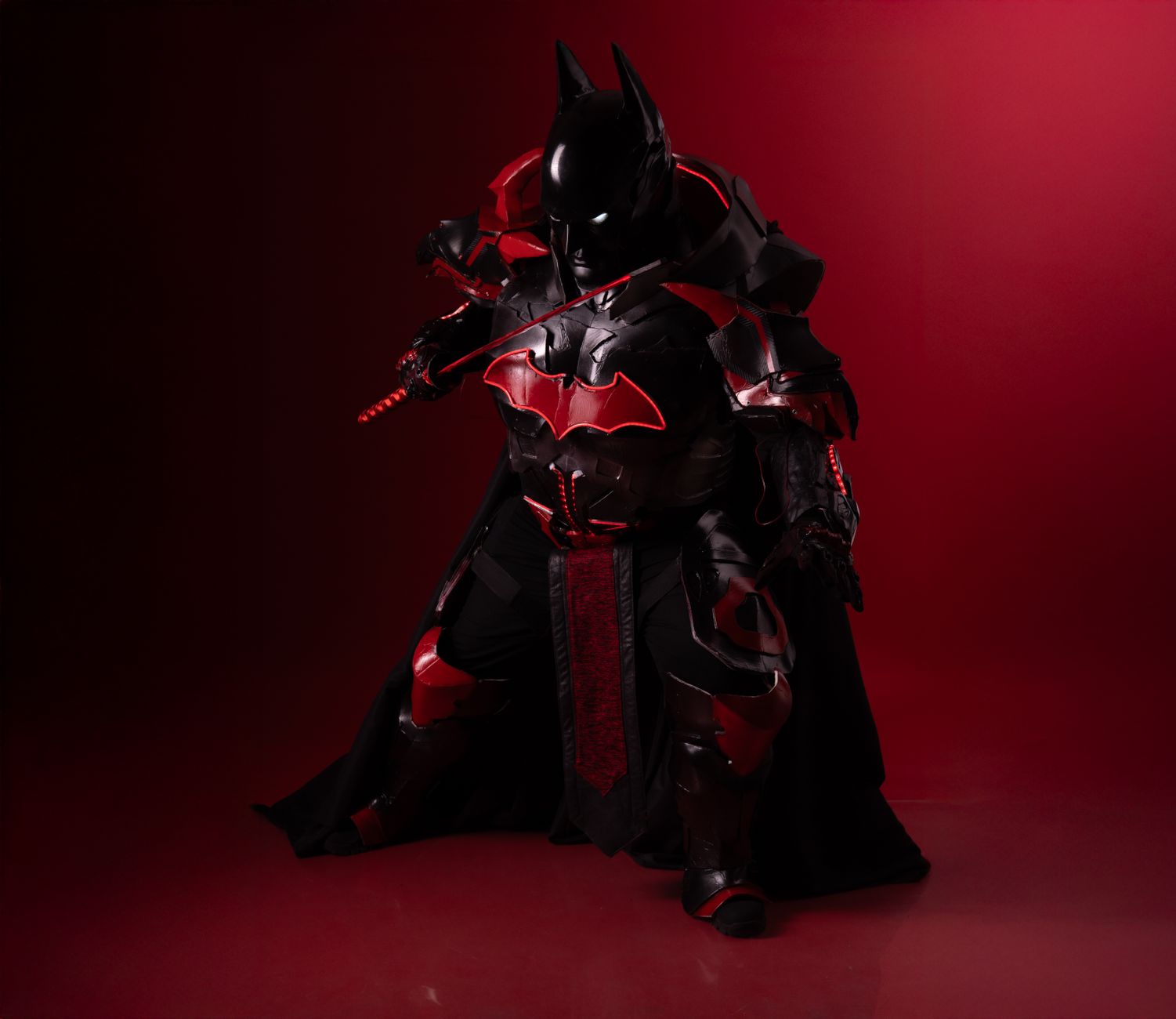
    Batman: a legitimate gothic nightmare from a PPE standpoint

    Batman is interesting because he clearly has the budget for proper safety equipment. Wayne Enterprises presumably has a full occupational health team. And yet Bruce Wayne goes out every single night wearing a black suit, a black cape, black boots, and a black cowl, operating almost exclusively in darkness. The hi-vis situation here is even worse than Superman’s. At least Superman is visible from space. Batman is specifically designed not to be visible at all, which is a manual handling supervisor’s absolute worst-case scenario.

    The gauntlets are another concern. Those spiky protrusions on his forearms are not compliant with any standard glove specification. They create a laceration risk to anyone nearby, including allies. During a group operation you absolutely cannot have someone waving their arms around with those on. That’s before we get to the utility belt, which contains undisclosed chemical compounds, explosive devices, and sharp instruments, none of which appear to be COSHH-registered or stored in an approved hazardous materials container. A site manager in Wolverhampton would confiscate that belt within thirty seconds of arriving on scene.

    Comic book style health and safety clipboard assessing superhero costume risks
    Photo by Mikael Blomkvist on Pexels

    Spider-Man: full marks for coverage, catastrophic marks for everything else

    I’ll give Peter Parker some credit. The full-body suit does at least cover his skin, which is more than most of his colleagues manage. In terms of basic dermis protection, he’s ahead. Everything else, however, is a disaster. Swinging between buildings on self-produced biological webbing with no harness, no anchor point certification, and no working-at-height permit is the kind of thing that would get an actual construction worker suspended pending investigation. The Work at Height Regulations 2005 are very clear. Spider-Man is in breach of them roughly 400 times per patrol.

    The web itself also raises questions. Is it a substance that requires a COSHH data sheet? Probably yes. Has one been filed? Absolutely not. It adheres to surfaces including people, vehicles, and public infrastructure, which potentially creates third-party liability issues that his insurers (assuming he has any, which he definitely doesn’t) would find deeply troubling. There’s also the small matter of the eye lenses giving no indication of what level of visual protection they provide. Are they rated for UV? Impact resistance? Chemical splash? We simply don’t know, and that’s the problem.

    Thor: a whole separate section on the hammer

    Operating an unsecured, magically-enchanted 30kg hammer in a public setting with no exclusion zone, no signage, and no tool lanyard would fail a basic RAMS (Risk Assessment and Method Statement) check before you even got to the lightning. The lightning is its own category. You cannot discharge high-voltage electrical energy in an uncontrolled environment near civilians without at minimum a formal electrical hazard assessment and appropriate barriers. Thor essentially wanders into active town centres and starts generating what amounts to a significant atmospheric electrical incident. The Energy Networks Association would have questions.

    His armour is also worth mentioning, mostly because it appears to be non-compliant steel plate with no CE marking. It offers no hearing protection despite regular proximity to detonation-level noise events, and the winged helmet provides zero head impact protection to modern EN 397 standards. It is decorative metalwork. You might as well wear a colander.

    Wonder Woman: the tiara is a projectile weapon with no storage protocol

    Diana of Themyscira regularly removes her tiara and throws it at people. It is sharp, metal, and returns to her via trajectory. There is no safe throwing zone established, no bystander exclusion, and no incident reporting procedure for a tiara that misses. That tiara is, by any reasonable definition, a loose tool operating without a secure anchor, which is exactly the scenario the Work at Height Regulations exist to address when working on elevated platforms. Granted, she’s usually on the ground when she throws it, but the principle holds. You cannot just hurl a bladed object in a crowd.

    The lack of foot protection is also worth flagging. Sandals. Open-toed sandals, frequently worn into combat situations involving fallen masonry, broken glass, and structural debris. Any site foreman worth his salt would turn her away at the gate and hand her a pair of steel-toecapped boots from the welfare unit van. Non-negotiable.

    Iron Man: the only one who might actually pass

    Tony Stark is the outlier. The Iron Man suit offers full-body impact protection, integrated respirator function, internal communications, and a heads-up display that presumably provides real-time hazard information. If you squint hard enough, it looks almost like a certified piece of PPE. Almost. The repulsor blasts still constitute an uncontrolled energy discharge in civilian zones, the flight capability still lacks any kind of airspace coordination with the Civil Aviation Authority, and the suit has been known to malfunction in spectacular fashion in densely populated areas, which is the kind of thing that would trigger a full HSE investigation lasting approximately three years.

    Also, the arc reactor in his chest is presumably a radiation source of some description, with no monitoring badge, no exclusion signage, and no annual dosimetry report. That’s a problem. Still, compared to everyone else here, he’s basically wearing a hard hat and a viz vest by comparison.

    The verdict from the site manager in Wolverhampton

    Every single one of them goes home. All of them. The site is stood down, a prohibition notice is issued, and nobody comes back until there’s a full written RAMS, proper PPE that meets current BS EN standards, and evidence of a toolbox talk attended by at least five Avengers. If you’ve ever enjoyed thinking about fictional worlds through a very British regulatory lens, we’ve previously put video game cities through a UK fire safety inspection with equally grim results, and done a full audit of sci-fi spaceships against MOT standards that was similarly catastrophic for everyone involved.

    The fundamental issue is that superhero costumes are designed for narrative drama, not compliance. The billowing cape looks incredible on a rooftop at dusk. It would get someone killed on an active demolition site. Those two things can both be true. Somewhere, right now, a fictional health and safety officer is filling out an incident form the length of a Tony Hawk game manual, and I fully support his efforts. If you want to see something that actually meets modern safety standards for light control in a work environment, Vesta Blinds and Shutters Mansfield are worth a look. They almost certainly have fewer trailing capes near moving parts than the Batcave does.

    And for what it’s worth, I’d genuinely love to see this whole sorry group try to explain themselves on a UK chat show. The cape excuses alone would fill a series.

    Frequently Asked Questions

    What UK health and safety rules would superhero costumes actually violate?

    Several real ones. The Work at Height Regulations 2005, the Personal Protective Equipment at Work Regulations 1992, and COSHH regulations would all apply to various aspects of superhero kit. Trailing capes, unsecured tools, and lack of hi-vis for night operations are all genuine compliance failures under UK law.

    Which superhero costume is the most dangerous from a UK safety perspective?

    Batman is probably the worst offender in practical terms. His entire costume is deliberately designed to be invisible in darkness, he carries unregistered hazardous materials in his utility belt, and his gauntlet spikes create a laceration risk to colleagues. He’d be sent home immediately.

    Would Iron Man's suit pass a UK PPE inspection?

    Closer than most, but no. The arc reactor likely constitutes an unmonitored radiation source, the repulsor blasts lack any controlled energy discharge authorisation, and the suit’s track record of catastrophic malfunction in public areas would raise serious HSE concerns.

    What does the HSE say about loose clothing near machinery?

    The HSE’s guidance is clear: loose clothing, jewellery, and unsecured items near moving parts or operational machinery are a significant hazard. Superman’s cape, Thor’s hammer, and Wonder Woman’s tiara all fall into prohibited territory under standard site rules.

    Is this article actually based on real UK health and safety regulations?

    Yes, the regulations referenced are real. The Work at Height Regulations 2005, the HSE’s PPE guidance, and COSHH are all genuine UK workplace safety frameworks. The superhero scenarios are obviously fictional, but the compliance logic is grounded in actual HSE standards.

  • Which Video Game Taverns Would Actually Pass a UK Food Hygiene Inspection

    Which Video Game Taverns Would Actually Pass a UK Food Hygiene Inspection

    I’ve spent an embarrassing number of hours eating virtual bread and sleeping in fictional hay bales, and I’ve only just started asking the truly important question: would any of these establishments actually survive a visit from the Food Standards Agency? The FSA’s hygiene rating scheme runs from zero (urgent improvement necessary, possibly also condemned) to five (excellent, please eat here without fear). Applying it to video game taverns and canteens is, I’d argue, the most useful thing games journalism has produced in years.

    Comic art of a fantasy tavern interior representing video game taverns food hygiene concerns
    Photo by Valeria Boltneva on Pexels

    Let’s be honest. The average video game inn is a nightmare of exposed beams, open fireplaces with no guard rails, rats in the cellar that are literally quest-givers, and a barmaid who’s been serving the same warm ale since 4E 201 without once wiping the counter. If you walked into most of these places in real life and asked to see the last inspection certificate, the landlord would try to sell you a sword.

    The Bannered Mare, Whiterun (Skyrim), Rating: 1 out of 5

    Hulda runs a reasonably busy establishment at the centre of Whiterun, and credit where it’s due: the place has a roof, some chairs, and what appears to be a functional cooking fire. But let’s think about this properly. There are chickens wandering freely through the market directly outside. The cellar access is through a trapdoor in the main floor, which is both a trip hazard and almost certainly not up to code. At least two of her regular patrons are openly carrying weapons. The FSA inspector would walk through the door, clock the open-fire cooking situation with zero extraction hood, and start writing before they’d even sat down. Hulda herself seems decent enough, but “decent enough” gets you a 1, not a 5. The cheese wheel sitting on an open counter since the game launched in 2011 is a particular concern.

    The Prancing Pony equivalent: every Final Fantasy rest stop ever, Rating: 2 out of 5

    Final Fantasy inns operate on a fascinating model where you pay a flat fee, lie down for approximately three seconds, and wake up with full HP. No food is served. No sheets are changed. You share the room with your entire party, at least one of whom is carrying a Buster Sword. From a hygiene standpoint, the lack of food preparation actually saves them, you can’t fail a food safety inspection if you’re not serving food. They’d still get dinged on accommodation standards, sleeping arrangements, and the fact that the “inn” in FF7 Remake’s Wall Market is very obviously also something else entirely. Still, a 2 feels fair. Functional. Joyless. Like a Travelodge in Stoke.

    Comic illustration of food hygiene inspector at a video game tavern door
    Photo by RDNE Stock project on Pexels

    The Crow’s Perch (The Witcher 3), Rating: 0 out of 5

    This is my pick for the zero-star recipient and I will not be taking questions. The Crow’s Perch serves food within a castle that has active corpses hanging from the walls outside. The landlord operates under the authority of the Bloody Baron, a man whose approach to governance would make Ofsted weep. There is mud on every surface. The kitchen, if you can call it that, appears to share airspace with the stables. The patrons frequently start brawling mid-meal, which is not listed as a hygiene risk but absolutely should be. I reckon the FSA inspector wouldn’t even make it to the kitchen before radioing for backup. Conditional on “zero stars and immediate closure pending full structural review.”

    Morrowind’s Silt Strider rest stops, Rating: 3 out of 5

    Here’s where it gets interesting. Morrowind’s Vvardenfell has a surprisingly organised network of services compared to some of its competitors. The indoor traders tend to keep their stock separated, the food items are at least nominally distinct from the alchemical ingredients (mostly), and some of the Dunmer-run establishments have a proper counter setup that a modern food hygiene officer might actually nod at. Three stars. Needs work on pest control given the island is essentially one large ash desert full of creatures that want to eat your face, but the intent is there. It reminds me of the kind of village pub you’d find somewhere in rural Shropshire where the hygiene is perfectly fine but nobody’s changed the decor since 1987.

    The Inventory (Poker Night at the Inventory), Rating: 4 out of 5

    A private members’ bar serving a small, fixed clientele. Strong Spy, GLaDOS, assorted fictional characters of note. The drinks appear to be properly stored, there’s no visible food preparation happening in the main area, and the bar counter looks like someone actually cleans it. The main hygiene concern is the clientele, at least one of them is a robot capable of dispensing neurotoxin, but that’s arguably an HR issue rather than an FSA one. Four stars. Solid. I’d drink there if I could get a membership.

    The Rusty Anchor (Sea of Thieves), Rating: 0 out of 5

    Grog. Served in barrels. On a dock. In a world where the primary industry is piracy and the secondary industry is skeleton-fighting. The Rusty Anchor doesn’t even pretend to serve food, it’s pure grog, all day, every day, to pirates who have been at sea for an indeterminate period and smell accordingly. A zero-star rating here is almost charitable. The FSA inspector would need a tetanus jab before and after.

    What this tells us about fictional hospitality

    The pattern I’ve noticed across every one of these places is that the fictional hospitality industry has absolutely no interest in temperature control. Everything is either on an open fire or stone cold. There’s no middle ground. No blast chiller. No thermometer being jabbed into a chicken breast. The humble chicken in Skyrim, famously protected by the full weight of the law, clearly never made it into the kitchen at the right internal temperature.

    It’s the kind of thing that’d make video game cities fail a UK fire safety inspection, and most of these taverns would fail for the exact same reason: nobody thought to hire someone whose job it is to worry about this stuff. Which, actually, tracks. When the main quest is “defeat the ancient dragon god of time”, allocating budget for food safety training probably slides down the priority list.

    The FSA’s real-world scheme genuinely matters, roughly 2.7 million cases of food poisoning are estimated in the UK each year, according to the FSA’s own figures, which is a staggering number of people who were betrayed by something they ate. Our fictional tavern keepers, by comparison, seem to be getting away with statistical murder. Though to be fair, most Skyrim NPCs seem immune to food poisoning, possibly because they’ve built up an immunity from years of eating cheese wheels left on open counters.

    For context: if you were a landlord in a real British town trying to get your pub’s reputation out there, you’d probably want to work with someone like LinkPress to manage your public image. Because “failed FSA inspection but excellent dragon-themed ambience” is not a Tripadvisor review that brings in the punters.

    I’d also note that the NPCs queuing up at these establishments show extraordinary patience, much like the characters I wrote about in video game sidequests that mirror a UK council complaints process. The willingness to wait indefinitely for service, accept terrible conditions, and still tip the barmaid is very on-brand for British gaming culture specifically.

    The Bannered Mare gets a 1. The Crow’s Perch gets a 0. The Inventory gets a 4. And somewhere out there, Hulda is still serving warm ale next to an unguarded fire, completely unbothered, and honestly, I respect it.

    Frequently Asked Questions

    What is the Food Standards Agency hygiene rating system?

    The FSA’s Food Hygiene Rating Scheme runs from 0 to 5, where 0 means urgent improvement is required and 5 means the establishment is fully compliant. Ratings are displayed in windows of food businesses across England, Wales, and Northern Ireland, and are publicly searchable on the FSA website.

    Which video game tavern would get the worst food hygiene rating?

    The Crow’s Perch from The Witcher 3 is our pick for zero stars, largely due to corpses hanging outside, mud everywhere, a kitchen sharing air with stables, and the general vibe of a place run by someone called the Bloody Baron. The Rusty Anchor from Sea of Thieves is a close second.

    Would the Bannered Mare from Skyrim pass a food hygiene inspection?

    Almost certainly not. Open fire cooking with no extraction, free-roaming chickens nearby, a trapdoor cellar that’s a trip hazard, and a cheese wheel that appears to have been sitting out since 2011 all add up to a 1 at best. Hulda seems like a nice landlady but nice doesn’t keep the inspector happy.

    Do Final Fantasy inns count as food businesses under UK law?

    Since they don’t appear to serve food, just a flat-fee rest that restores your HP, they’d likely fall outside the FSA’s food business definition. They’d still have issues with accommodation standards and the general arrangement of four party members in one room with increasingly large weapons.

    What hygiene issues are most common in video game taverns?

    Open-fire cooking without ventilation, unrefrigerated food left on counters indefinitely, pest infestations that are often also quest-givers, and no visible handwashing facilities anywhere. Also: rats. Lots of rats. Usually named things like Scabbers and carrying a sub-quest about cheese.

  • The Video Game Sidequests That Feel Exactly Like Dealing With a UK Council Complaints Process

    The Video Game Sidequests That Feel Exactly Like Dealing With a UK Council Complaints Process

    There is a particular flavour of despair that only two situations in life can produce. The first is opening a video game quest log to find an objective that says “speak to the Elder” only to be told by the Elder to “speak to his assistant”, who tells you to come back after a festival, which doesn’t trigger for six in-game days, by which point the original NPC has wandered into a river. The second is lodging a noise complaint with your local council. I’ve experienced both. I’d genuinely struggle to tell you which left the deeper psychological scar.

    Video game sidequests and UK council bureaucracy are, I’m now convinced, designed by the same person. A person who hates you specifically, has never once met a human being, and gets paid per redirect.

    Frustrated gamer overwhelmed by video game sidequests UK council complaints funny quest log
    Photo by Yan Krukau on Pexels

    The fetch quest that refers you to another fetch quest

    Classic scenario. You need the Amulet of Whatever to progress. The blacksmith has it, but he won’t give it to you until you bring him three wolf pelts. You get the pelts. Now he needs a gemstone. The gemstone merchant has one, but she needs a signed letter from the mayor. The mayor is away on council business. You wait. He returns. The letter requires a stamp from the archivist. The archivist is dead.

    I played about forty hours of this in The Elder Scrolls IV: Oblivion Remastered earlier this year and felt an uncanny recognition I couldn’t place. Then I remembered: that’s exactly what happened when I tried to report a broken streetlamp to my local council in 2024. You submit the online form. You get an automated reply saying your case has been logged. Three weeks later, a second email arrives telling you to use the correct reporting portal. The correct portal 404s. You call the number. The number plays hold music for eleven minutes before disconnecting. You are the wolf pelts. You have always been the wolf pelts.

    Objectives that reset for absolutely no stated reason

    This one is special. You’ve done everything right. You gathered the items, spoke to every NPC, navigated the dungeon, and handed in the quest. Quest complete. Except the next morning the objective is back in your log, marked as incomplete, with a helpful note saying “see the clerk”. The clerk says the same thing she said at the start. There is no explanation. The game does not acknowledge this has happened.

    Bethesda games are the obvious culprit, but honestly any open-world RPG with a complex quest flag system has done this to me at least once. And yes, it maps perfectly onto the experience of submitting a planning objection, receiving written confirmation that it has been received, and then receiving a second letter two months later asking you to resubmit because the original form used the wrong reference number. The number that they gave you. On the form they sent.

    For a broader look at how video game worlds handle bureaucratic chaos, our breakdown of which video game cities would fail a UK fire safety inspection is a genuinely cathartic read. Some of those cities would make your local planning committee weep.

    The NPC who sends you to a different NPC

    You ask the guard where to find the guild. He says to talk to the innkeeper. The innkeeper says to talk to the travelling merchant who passes through on Tuesdays. It is Wednesday. You return the following Tuesday. The merchant says the guild moved to the next town. In the next town, the first NPC you find says to talk to the guard.

    I’ve lived this. I spent three weeks trying to get an answer about a missed bin collection that went: council website (directs to phone line), phone line (directs to online portal), online portal (says to contact your local ward councillor), ward councillor’s office (auto-reply pointing back to the council website). At no point did anyone collect the bins. My wheelie bin became a monument to circular logic.

    The video game characters who’d be flagged by Ofcom on a UK chat show article touched on this kind of NPC uselessness, and honestly some of those characters would make better council representatives than the actual system. Duke Nukem would at least give you a direct answer, even if that answer was unbroadcastable.

    The timed quest that expires before you can complete it

    You have seven in-game days to deliver a parcel across the map. The parcel-giver does not mention that three of those days will be consumed by a mandatory story cutscene. You get to the destination on day six. The quest has failed. The NPC who issued it says nothing and stands there smiling. You reload. The cutscene is unskippable.

    The council equivalent: you receive a letter saying you have 21 days to respond to a licensing consultation. The letter was postmarked 17 days ago. You go online to respond. The consultation closed yesterday. There is a phone number. It rings out. There is a note on the website that says “for further information, please attend the next public meeting”. The next public meeting was last Thursday.

    According to GOV.UK’s Freedom of Information guidance, public bodies must respond to FOI requests within 20 working days. In practice, submitting an FOI about why your local council’s consultation system is broken feels only marginally less absurd than retrying a failed timed quest by reloading a save from three hours ago.

    The reward that isn’t worth the quest

    You’ve done it. After seventeen steps, four redirects, two dead NPCs, one reset objective, and a unskippable cutscene, the quest resolves. Your reward is 40 gold coins and a piece of leather armour you outlevelled six hours ago. The questgiver says “you have my thanks”. He does not mean it. You can see it in his procedurally generated eyes.

    The council version: after six weeks of emails, two phone calls, one formal written complaint, and a subject access request, you receive a letter confirming that the streetlamp has been logged for repair “within the next financial year”. The lamp is still broken. It is November.

    I’ve spent time reading about how game designers deliberately structure friction into sidequests to extend playtime, and I believe local council complaints departments have studied the same literature. Possibly the same spreadsheet. There is something almost impressive about a system so perfectly calibrated to exhaust the person using it without ever technically failing.

    The quest that asks you to wait

    “Return in three days.” That’s it. That’s the quest update. You return in three days. “I’m not ready yet, come back tomorrow.” You come back tomorrow. “The person you need to speak to has gone home for the evening.” It is 11am. You come back. They have gone on holiday for a fortnight.

    My local council’s complaints team once told me to expect a response within ten working days. On day eleven, I chased up. I was told the original email had not been received and I should resubmit. I resubmitted. On day twelve I received the original auto-reply from day one, confirming receipt. On day twenty-three I received a reply. It asked me to clarify what my complaint was about. The original complaint was six paragraphs long and included photographs.

    For pure structural comedy, the movie heists falling apart at a UK car park barrier piece captures the same energy: elaborate systems, confident protagonists, completely undone by a mundane British obstacle nobody thought to plan for. Swap the barrier for a council ticketing system and you’ve got my life from April to June last year.

    So what does this mean for us?

    Honestly, I think games have been training us for council complaints processes for decades and nobody told us. Every fetch quest was practice. Every reset objective was a drill. Every NPC who says “I’d love to help but you need to speak to Gerald” is preparing you for the moment Gerald’s voicemail says to email Sandra and Sandra’s out-of-office points you back to the main switchboard.

    The difference is that in games, you can reload a save. In real life, the bin just stays full, the lamp stays dark, and the noise from next door continues unabated at 1am on a Tuesday whilst the council’s automated system cheerfully informs you that your reference number has been updated.

    Game developers: I’m not complaining. Well. I am. But keep going. You’re clearly the only ones who understand how this country actually works.