
I’ve spent a genuinely unreasonable amount of time thinking about this. You’ve got some of the most powerful beings in fictional history, individuals who can bench-press a bus or phase through solid concrete, and not one of them has completed a COSHH awareness module. Not a single one. A site manager in Wolverhampton would take one look at the Justice League and immediately reach for his clipboard. His very large, very damning clipboard.
So let’s do it properly. Let’s run a mock health and safety risk assessment on the most iconic superhero costumes ever committed to spandex, applying actual UK workplace safety logic as best we can. The Health and Safety Executive sets out clear guidance on PPE, risk assessment, and hazard identification. None of these heroes have read a word of it. You can find the HSE’s official PPE guidance here, which I’d strongly recommend forwarding to the Avengers’ HR department immediately.
Superman: the cape situation alone is a five-point violation
Where do you even start. The cape is the obvious one, a long, flowing, unsecured fabric attachment worn at all times, including during what are effectively high-speed industrial incidents involving structural collapse and heavy machinery. Under UK workplace regulations, loose clothing near moving parts or operational hazards is a category red flag. Superman regularly flies through turbine engines, demolition sites, and exploding spacecraft. That cape is a snag waiting to happen, even if the snag wouldn’t actually hurt him. The risk assessment doesn’t care about invulnerability. It cares about procedure.
Then there’s the lack of any high-visibility markings for night operations. Superman conducts a significant portion of his patrol work after dark, over densely populated urban areas and active construction zones. He wears a blue and red suit. At night. From the ground, from an aircraft, from a crane cab, you would have absolutely no warning whatsoever. Any contractor operating aerial equipment after sunset would be furious. The man needs at minimum a Class 2 hi-vis vest, and I will not be moved on this.
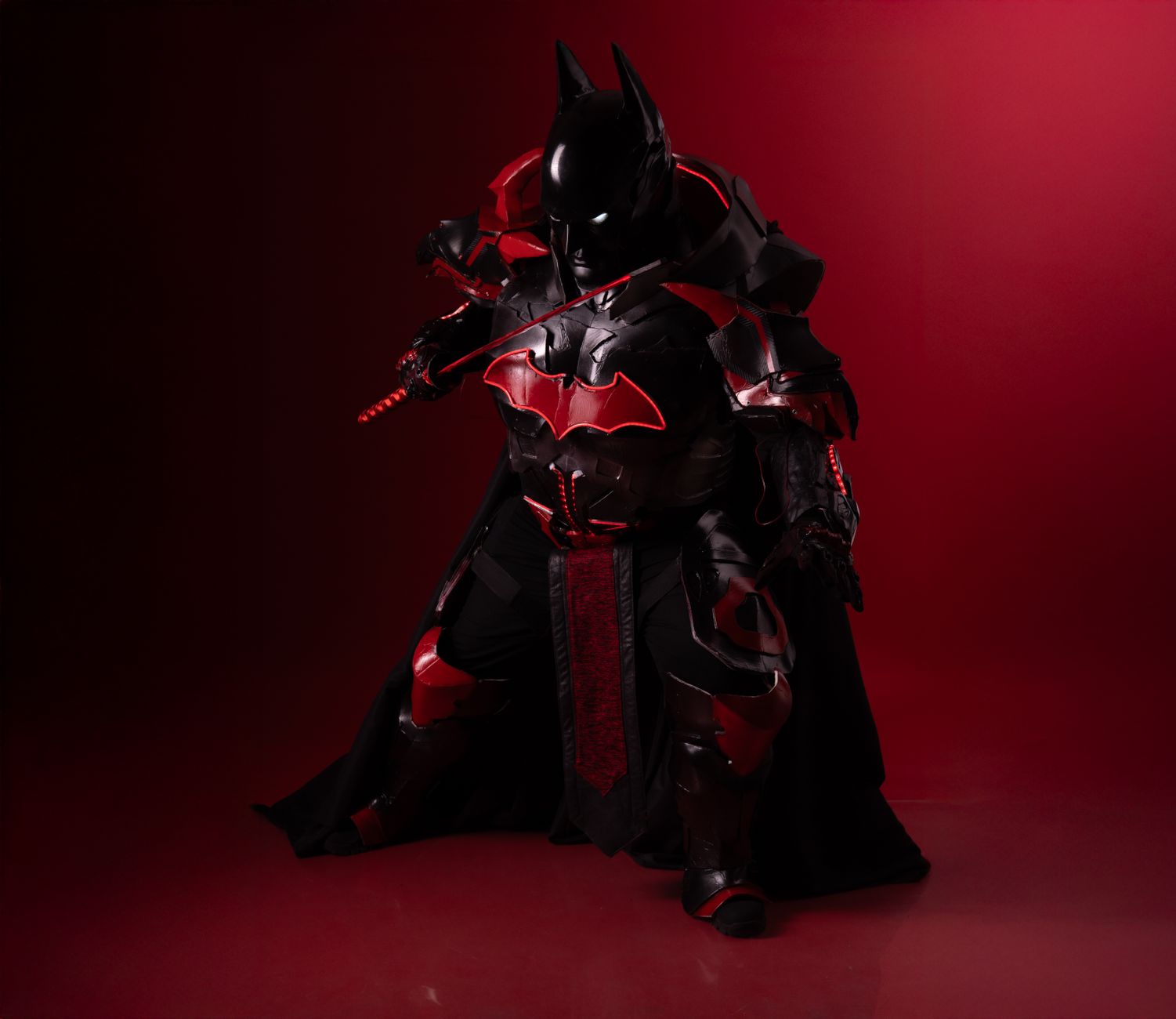
Batman: a legitimate gothic nightmare from a PPE standpoint
Batman is interesting because he clearly has the budget for proper safety equipment. Wayne Enterprises presumably has a full occupational health team. And yet Bruce Wayne goes out every single night wearing a black suit, a black cape, black boots, and a black cowl, operating almost exclusively in darkness. The hi-vis situation here is even worse than Superman’s. At least Superman is visible from space. Batman is specifically designed not to be visible at all, which is a manual handling supervisor’s absolute worst-case scenario.
The gauntlets are another concern. Those spiky protrusions on his forearms are not compliant with any standard glove specification. They create a laceration risk to anyone nearby, including allies. During a group operation you absolutely cannot have someone waving their arms around with those on. That’s before we get to the utility belt, which contains undisclosed chemical compounds, explosive devices, and sharp instruments, none of which appear to be COSHH-registered or stored in an approved hazardous materials container. A site manager in Wolverhampton would confiscate that belt within thirty seconds of arriving on scene.

Spider-Man: full marks for coverage, catastrophic marks for everything else
I’ll give Peter Parker some credit. The full-body suit does at least cover his skin, which is more than most of his colleagues manage. In terms of basic dermis protection, he’s ahead. Everything else, however, is a disaster. Swinging between buildings on self-produced biological webbing with no harness, no anchor point certification, and no working-at-height permit is the kind of thing that would get an actual construction worker suspended pending investigation. The Work at Height Regulations 2005 are very clear. Spider-Man is in breach of them roughly 400 times per patrol.
The web itself also raises questions. Is it a substance that requires a COSHH data sheet? Probably yes. Has one been filed? Absolutely not. It adheres to surfaces including people, vehicles, and public infrastructure, which potentially creates third-party liability issues that his insurers (assuming he has any, which he definitely doesn’t) would find deeply troubling. There’s also the small matter of the eye lenses giving no indication of what level of visual protection they provide. Are they rated for UV? Impact resistance? Chemical splash? We simply don’t know, and that’s the problem.
Thor: a whole separate section on the hammer
Operating an unsecured, magically-enchanted 30kg hammer in a public setting with no exclusion zone, no signage, and no tool lanyard would fail a basic RAMS (Risk Assessment and Method Statement) check before you even got to the lightning. The lightning is its own category. You cannot discharge high-voltage electrical energy in an uncontrolled environment near civilians without at minimum a formal electrical hazard assessment and appropriate barriers. Thor essentially wanders into active town centres and starts generating what amounts to a significant atmospheric electrical incident. The Energy Networks Association would have questions.
His armour is also worth mentioning, mostly because it appears to be non-compliant steel plate with no CE marking. It offers no hearing protection despite regular proximity to detonation-level noise events, and the winged helmet provides zero head impact protection to modern EN 397 standards. It is decorative metalwork. You might as well wear a colander.
Wonder Woman: the tiara is a projectile weapon with no storage protocol
Diana of Themyscira regularly removes her tiara and throws it at people. It is sharp, metal, and returns to her via trajectory. There is no safe throwing zone established, no bystander exclusion, and no incident reporting procedure for a tiara that misses. That tiara is, by any reasonable definition, a loose tool operating without a secure anchor, which is exactly the scenario the Work at Height Regulations exist to address when working on elevated platforms. Granted, she’s usually on the ground when she throws it, but the principle holds. You cannot just hurl a bladed object in a crowd.
The lack of foot protection is also worth flagging. Sandals. Open-toed sandals, frequently worn into combat situations involving fallen masonry, broken glass, and structural debris. Any site foreman worth his salt would turn her away at the gate and hand her a pair of steel-toecapped boots from the welfare unit van. Non-negotiable.
Iron Man: the only one who might actually pass
Tony Stark is the outlier. The Iron Man suit offers full-body impact protection, integrated respirator function, internal communications, and a heads-up display that presumably provides real-time hazard information. If you squint hard enough, it looks almost like a certified piece of PPE. Almost. The repulsor blasts still constitute an uncontrolled energy discharge in civilian zones, the flight capability still lacks any kind of airspace coordination with the Civil Aviation Authority, and the suit has been known to malfunction in spectacular fashion in densely populated areas, which is the kind of thing that would trigger a full HSE investigation lasting approximately three years.
Also, the arc reactor in his chest is presumably a radiation source of some description, with no monitoring badge, no exclusion signage, and no annual dosimetry report. That’s a problem. Still, compared to everyone else here, he’s basically wearing a hard hat and a viz vest by comparison.
The verdict from the site manager in Wolverhampton
Every single one of them goes home. All of them. The site is stood down, a prohibition notice is issued, and nobody comes back until there’s a full written RAMS, proper PPE that meets current BS EN standards, and evidence of a toolbox talk attended by at least five Avengers. If you’ve ever enjoyed thinking about fictional worlds through a very British regulatory lens, we’ve previously put video game cities through a UK fire safety inspection with equally grim results, and done a full audit of sci-fi spaceships against MOT standards that was similarly catastrophic for everyone involved.
The fundamental issue is that superhero costumes are designed for narrative drama, not compliance. The billowing cape looks incredible on a rooftop at dusk. It would get someone killed on an active demolition site. Those two things can both be true. Somewhere, right now, a fictional health and safety officer is filling out an incident form the length of a Tony Hawk game manual, and I fully support his efforts. If you want to see something that actually meets modern safety standards for light control in a work environment, Vesta Blinds and Shutters Mansfield are worth a look. They almost certainly have fewer trailing capes near moving parts than the Batcave does.
And for what it’s worth, I’d genuinely love to see this whole sorry group try to explain themselves on a UK chat show. The cape excuses alone would fill a series.
Frequently Asked Questions
What UK health and safety rules would superhero costumes actually violate?
Several real ones. The Work at Height Regulations 2005, the Personal Protective Equipment at Work Regulations 1992, and COSHH regulations would all apply to various aspects of superhero kit. Trailing capes, unsecured tools, and lack of hi-vis for night operations are all genuine compliance failures under UK law.
Which superhero costume is the most dangerous from a UK safety perspective?
Batman is probably the worst offender in practical terms. His entire costume is deliberately designed to be invisible in darkness, he carries unregistered hazardous materials in his utility belt, and his gauntlet spikes create a laceration risk to colleagues. He’d be sent home immediately.
Would Iron Man's suit pass a UK PPE inspection?
Closer than most, but no. The arc reactor likely constitutes an unmonitored radiation source, the repulsor blasts lack any controlled energy discharge authorisation, and the suit’s track record of catastrophic malfunction in public areas would raise serious HSE concerns.
What does the HSE say about loose clothing near machinery?
The HSE’s guidance is clear: loose clothing, jewellery, and unsecured items near moving parts or operational machinery are a significant hazard. Superman’s cape, Thor’s hammer, and Wonder Woman’s tiara all fall into prohibited territory under standard site rules.
Is this article actually based on real UK health and safety regulations?
Yes, the regulations referenced are real. The Work at Height Regulations 2005, the HSE’s PPE guidance, and COSHH are all genuine UK workplace safety frameworks. The superhero scenarios are obviously fictional, but the compliance logic is grounded in actual HSE standards.
Leave a Reply