
I’ve spent an embarrassing number of hours eating virtual bread and sleeping in fictional hay bales, and I’ve only just started asking the truly important question: would any of these establishments actually survive a visit from the Food Standards Agency? The FSA’s hygiene rating scheme runs from zero (urgent improvement necessary, possibly also condemned) to five (excellent, please eat here without fear). Applying it to video game taverns and canteens is, I’d argue, the most useful thing games journalism has produced in years.
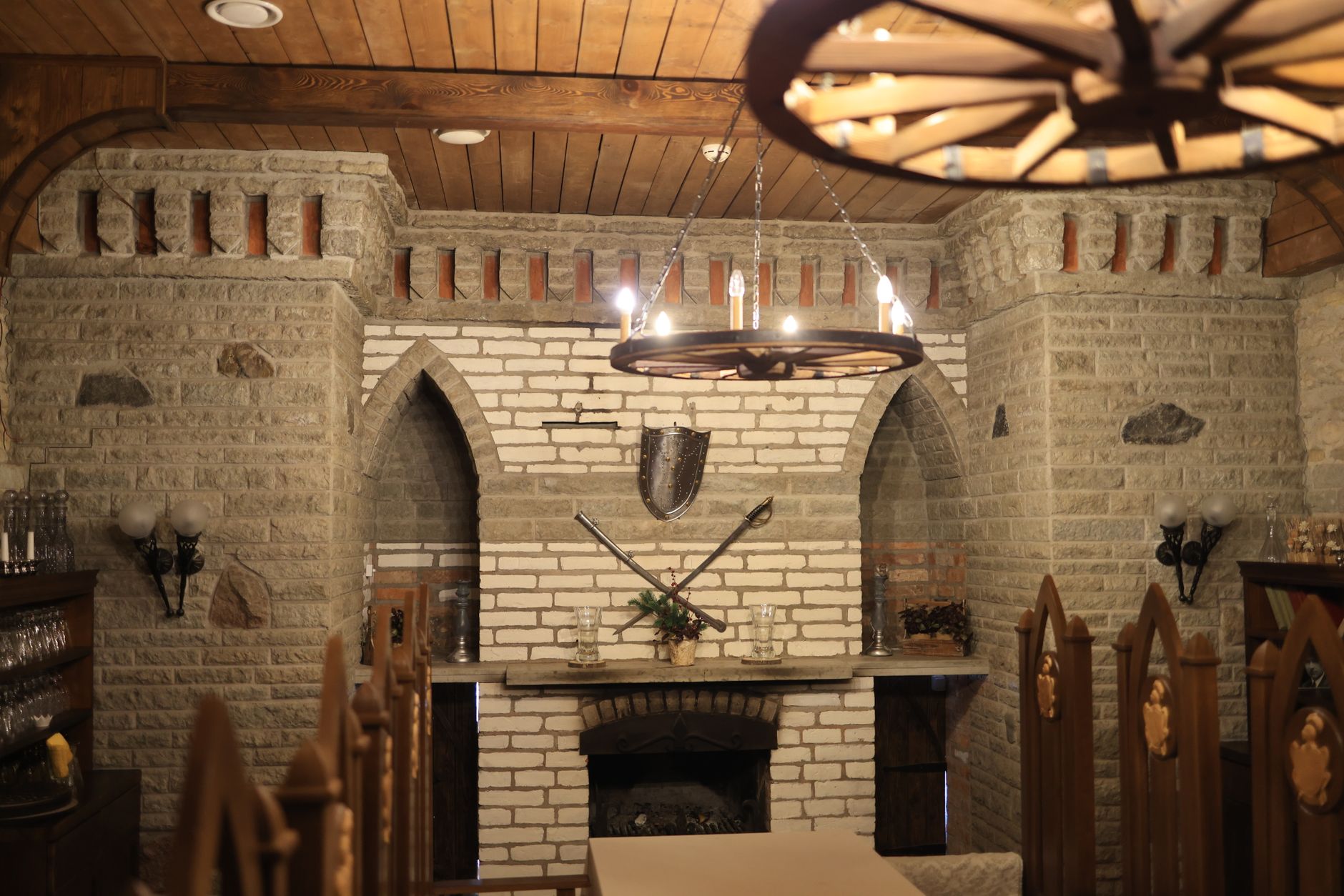
Let’s be honest. The average video game inn is a nightmare of exposed beams, open fireplaces with no guard rails, rats in the cellar that are literally quest-givers, and a barmaid who’s been serving the same warm ale since 4E 201 without once wiping the counter. If you walked into most of these places in real life and asked to see the last inspection certificate, the landlord would try to sell you a sword.
The Bannered Mare, Whiterun (Skyrim), Rating: 1 out of 5
Hulda runs a reasonably busy establishment at the centre of Whiterun, and credit where it’s due: the place has a roof, some chairs, and what appears to be a functional cooking fire. But let’s think about this properly. There are chickens wandering freely through the market directly outside. The cellar access is through a trapdoor in the main floor, which is both a trip hazard and almost certainly not up to code. At least two of her regular patrons are openly carrying weapons. The FSA inspector would walk through the door, clock the open-fire cooking situation with zero extraction hood, and start writing before they’d even sat down. Hulda herself seems decent enough, but “decent enough” gets you a 1, not a 5. The cheese wheel sitting on an open counter since the game launched in 2011 is a particular concern.
The Prancing Pony equivalent: every Final Fantasy rest stop ever, Rating: 2 out of 5
Final Fantasy inns operate on a fascinating model where you pay a flat fee, lie down for approximately three seconds, and wake up with full HP. No food is served. No sheets are changed. You share the room with your entire party, at least one of whom is carrying a Buster Sword. From a hygiene standpoint, the lack of food preparation actually saves them, you can’t fail a food safety inspection if you’re not serving food. They’d still get dinged on accommodation standards, sleeping arrangements, and the fact that the “inn” in FF7 Remake’s Wall Market is very obviously also something else entirely. Still, a 2 feels fair. Functional. Joyless. Like a Travelodge in Stoke.
The Crow’s Perch (The Witcher 3), Rating: 0 out of 5
This is my pick for the zero-star recipient and I will not be taking questions. The Crow’s Perch serves food within a castle that has active corpses hanging from the walls outside. The landlord operates under the authority of the Bloody Baron, a man whose approach to governance would make Ofsted weep. There is mud on every surface. The kitchen, if you can call it that, appears to share airspace with the stables. The patrons frequently start brawling mid-meal, which is not listed as a hygiene risk but absolutely should be. I reckon the FSA inspector wouldn’t even make it to the kitchen before radioing for backup. Conditional on “zero stars and immediate closure pending full structural review.”
Morrowind’s Silt Strider rest stops, Rating: 3 out of 5
Here’s where it gets interesting. Morrowind’s Vvardenfell has a surprisingly organised network of services compared to some of its competitors. The indoor traders tend to keep their stock separated, the food items are at least nominally distinct from the alchemical ingredients (mostly), and some of the Dunmer-run establishments have a proper counter setup that a modern food hygiene officer might actually nod at. Three stars. Needs work on pest control given the island is essentially one large ash desert full of creatures that want to eat your face, but the intent is there. It reminds me of the kind of village pub you’d find somewhere in rural Shropshire where the hygiene is perfectly fine but nobody’s changed the decor since 1987.
The Inventory (Poker Night at the Inventory), Rating: 4 out of 5
A private members’ bar serving a small, fixed clientele. Strong Spy, GLaDOS, assorted fictional characters of note. The drinks appear to be properly stored, there’s no visible food preparation happening in the main area, and the bar counter looks like someone actually cleans it. The main hygiene concern is the clientele, at least one of them is a robot capable of dispensing neurotoxin, but that’s arguably an HR issue rather than an FSA one. Four stars. Solid. I’d drink there if I could get a membership.
The Rusty Anchor (Sea of Thieves), Rating: 0 out of 5
Grog. Served in barrels. On a dock. In a world where the primary industry is piracy and the secondary industry is skeleton-fighting. The Rusty Anchor doesn’t even pretend to serve food, it’s pure grog, all day, every day, to pirates who have been at sea for an indeterminate period and smell accordingly. A zero-star rating here is almost charitable. The FSA inspector would need a tetanus jab before and after.
What this tells us about fictional hospitality
The pattern I’ve noticed across every one of these places is that the fictional hospitality industry has absolutely no interest in temperature control. Everything is either on an open fire or stone cold. There’s no middle ground. No blast chiller. No thermometer being jabbed into a chicken breast. The humble chicken in Skyrim, famously protected by the full weight of the law, clearly never made it into the kitchen at the right internal temperature.
It’s the kind of thing that’d make video game cities fail a UK fire safety inspection, and most of these taverns would fail for the exact same reason: nobody thought to hire someone whose job it is to worry about this stuff. Which, actually, tracks. When the main quest is “defeat the ancient dragon god of time”, allocating budget for food safety training probably slides down the priority list.
The FSA’s real-world scheme genuinely matters, roughly 2.7 million cases of food poisoning are estimated in the UK each year, according to the FSA’s own figures, which is a staggering number of people who were betrayed by something they ate. Our fictional tavern keepers, by comparison, seem to be getting away with statistical murder. Though to be fair, most Skyrim NPCs seem immune to food poisoning, possibly because they’ve built up an immunity from years of eating cheese wheels left on open counters.
For context: if you were a landlord in a real British town trying to get your pub’s reputation out there, you’d probably want to work with someone like LinkPress to manage your public image. Because “failed FSA inspection but excellent dragon-themed ambience” is not a Tripadvisor review that brings in the punters.
I’d also note that the NPCs queuing up at these establishments show extraordinary patience, much like the characters I wrote about in video game sidequests that mirror a UK council complaints process. The willingness to wait indefinitely for service, accept terrible conditions, and still tip the barmaid is very on-brand for British gaming culture specifically.
The Bannered Mare gets a 1. The Crow’s Perch gets a 0. The Inventory gets a 4. And somewhere out there, Hulda is still serving warm ale next to an unguarded fire, completely unbothered, and honestly, I respect it.
Frequently Asked Questions
What is the Food Standards Agency hygiene rating system?
The FSA’s Food Hygiene Rating Scheme runs from 0 to 5, where 0 means urgent improvement is required and 5 means the establishment is fully compliant. Ratings are displayed in windows of food businesses across England, Wales, and Northern Ireland, and are publicly searchable on the FSA website.
Which video game tavern would get the worst food hygiene rating?
The Crow’s Perch from The Witcher 3 is our pick for zero stars, largely due to corpses hanging outside, mud everywhere, a kitchen sharing air with stables, and the general vibe of a place run by someone called the Bloody Baron. The Rusty Anchor from Sea of Thieves is a close second.
Would the Bannered Mare from Skyrim pass a food hygiene inspection?
Almost certainly not. Open fire cooking with no extraction, free-roaming chickens nearby, a trapdoor cellar that’s a trip hazard, and a cheese wheel that appears to have been sitting out since 2011 all add up to a 1 at best. Hulda seems like a nice landlady but nice doesn’t keep the inspector happy.
Do Final Fantasy inns count as food businesses under UK law?
Since they don’t appear to serve food, just a flat-fee rest that restores your HP, they’d likely fall outside the FSA’s food business definition. They’d still have issues with accommodation standards and the general arrangement of four party members in one room with increasingly large weapons.
What hygiene issues are most common in video game taverns?
Open-fire cooking without ventilation, unrefrigerated food left on counters indefinitely, pest infestations that are often also quest-givers, and no visible handwashing facilities anywhere. Also: rats. Lots of rats. Usually named things like Scabbers and carrying a sub-quest about cheese.
Leave a Reply