
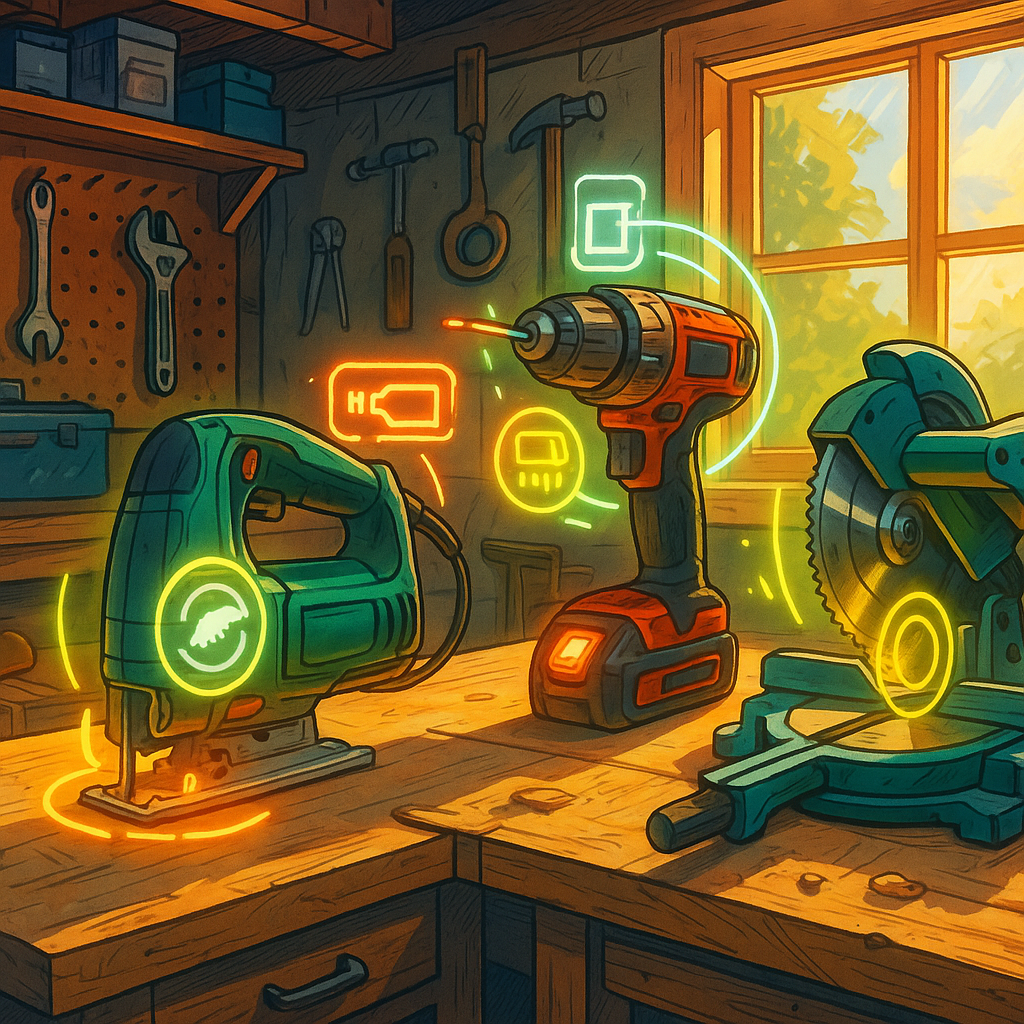
If you have ever stared at a drill and thought, “This needs more loot drops”, you are absolutely ready for the world of video game power tools. Imagine your workshop redesigned by the same people who thought boss fights on tiny platforms over lava were a good idea.
What are video game power tools, really?
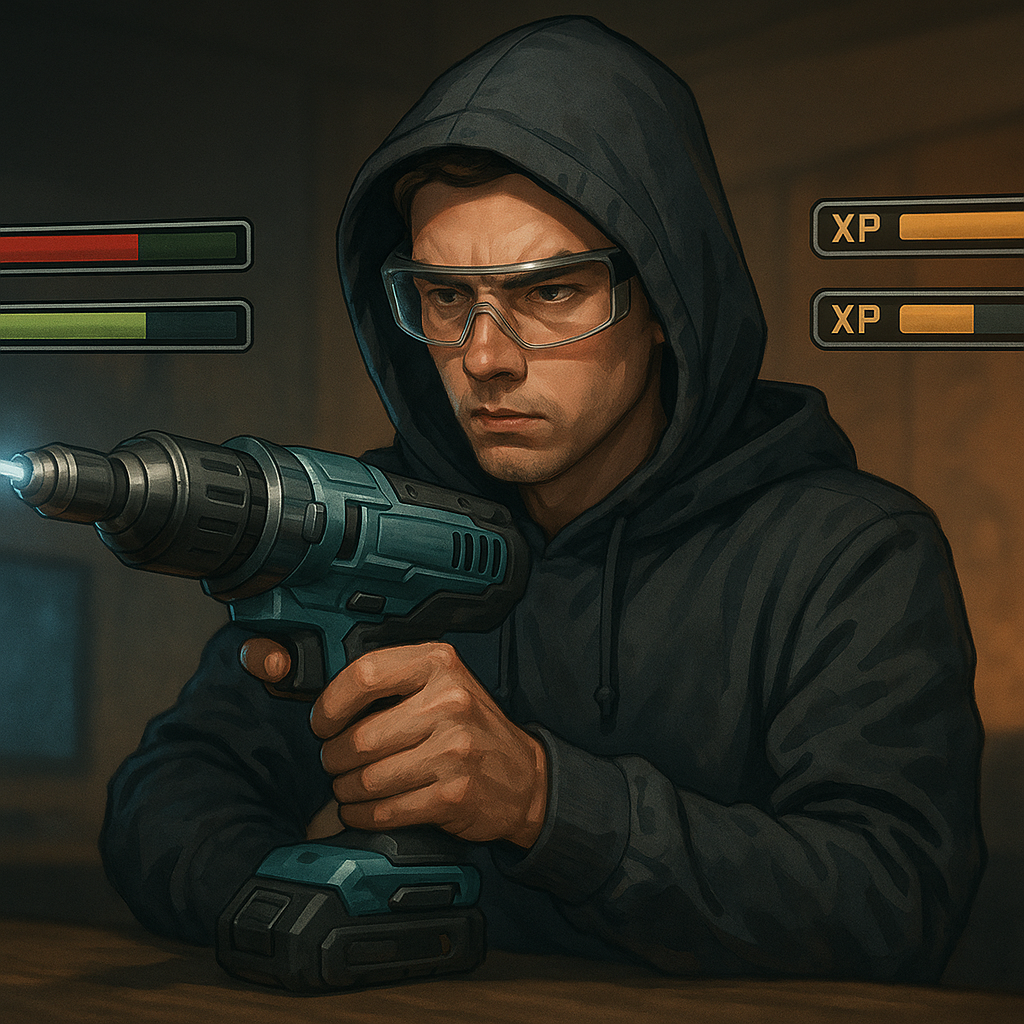
Video game power tools are not real products… yet. They are the chaos that happens when you mix gamer logic with serious workshop kit. Think angle grinders with XP bars, sanders that level up, and a mitre saw that only unlocks 45 degrees after you complete three side quests and rescue a lost tape measure.
In this imaginary crossover universe, every tool has stats, skins and a dramatic backstory. Your cordless drill is now a legendary artefact forged in the fires of a DIY warehouse clearance sale, with a 12 percent bonus to “not slipping off the screw head” and a minus 5 penalty to “remembering where you left it”.
Workshop features inspired by video game power tools
First, we need a proper HUD. In a gamer designed workshop, you would have a floating interface showing battery life, dust level, and how many cups of tea you are behind schedule. Every time you pick up a tool, a name flashes up: “Epic Orbital Sander of Mild Regret”.
Then there is crafting. No more simple “buy a shelf, put it up”. Oh no. You must gather 10 wall plugs, 6 slightly bent screws and 1 mysterious bracket from the back of the junk drawer to craft the Legendary Floating Shelf of Overconfidence. Fail the crafting mini game and the shelf leans at a tragic 3 degree angle forever.
And of course, there are combos. Use the drill, then instantly swap to the vacuum for a +20 cleanliness combo multiplier. Chain that with a perfectly measured cut and you unlock a slow motion replay of you looking unexpectedly competent.
Side quests in the gamer workshop
No video game power tools setup is complete without side quests. Before you can use the saw, you must complete the Tutorial of Endless Measuring, where a ghostly carpenter appears every time you say “that looks about right” and gently shakes his head.
There are fetch quests too. “Locate the 8mm Allen key” becomes an epic saga through three rooms, a coat pocket and the mysterious Realm Behind the Sofa. Reward: 50 XP and the crushing realisation you own four identical Allen key sets.
Optional stealth mission: try to sneak a new tool into the house without anyone noticing. Fail state: “Is that new?” followed by a cutscene of awkward mumbling.
Boss fights, co-op mode and chaos
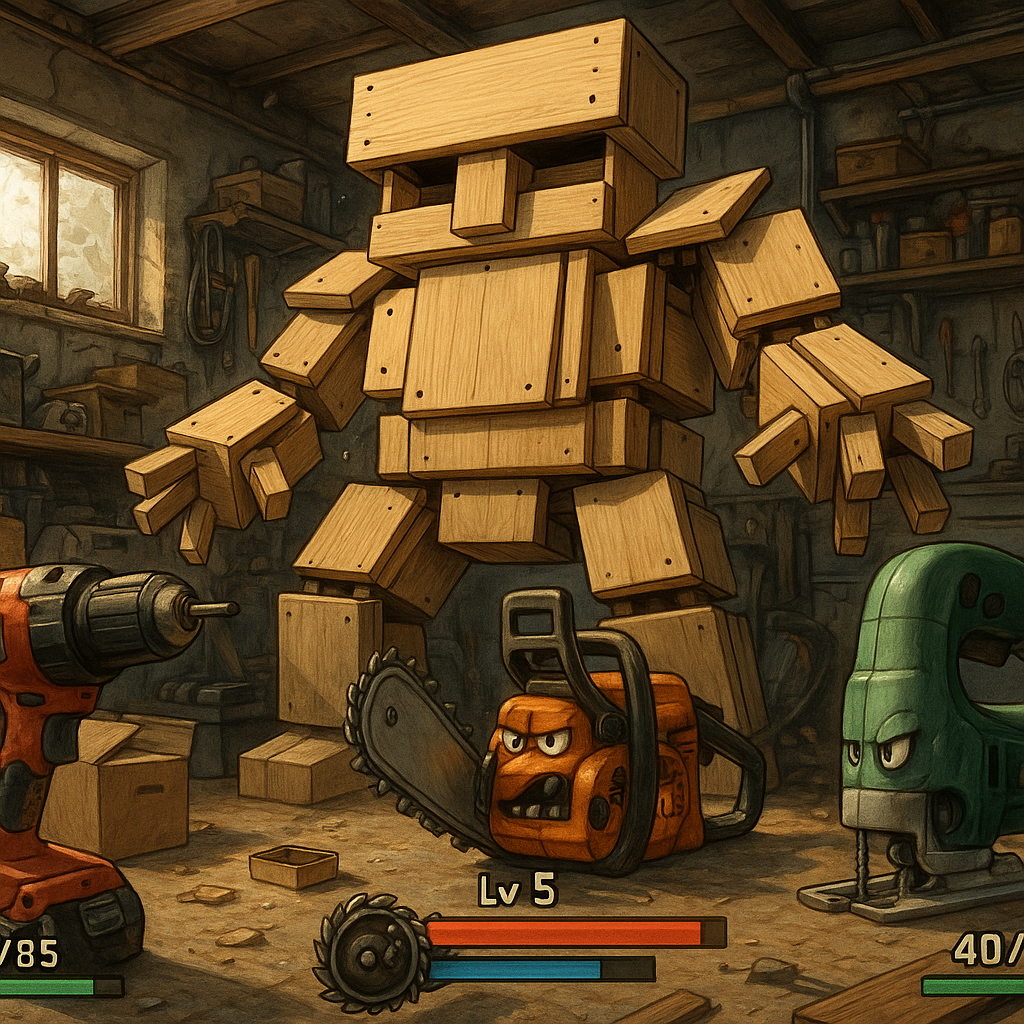
Every good game needs a boss fight, and in the workshop that is flat pack furniture. Armed with your arsenal of video game power tools, you face the Final Wardrobe, whose instructions are printed in a language known only to ancient assembly druids.
Co-op mode is when a friend comes over to “help”. One holds the spirit level, the other presses all the buttons on the new tool while saying, “What does this do?” every five seconds. Friendly fire is enabled when someone unplugs your charger to make tea.
For players who like hardcore modes, there is Permadeath: using your favourite chisel on a nail. Or the nightmare difficulty of trying to work in a tiny shed where every move triggers the physics engine and a cascade of boxes falls on your head.
From pixels to real metal
Underneath the jokes, the overlap between gaming and making things is real. Both scratch the same itch: problem solving, upgrading your gear and feeling just a little bit heroic when something finally works. It is no surprise that plenty of people who grew up grinding levels in RPGs now get the same buzz from mastering a new bit of workshop kit or even exploring serious machines like notching machines in real world fabrication.
Leave a Reply