There is a very specific kind of joy that hits you when you’re wandering through a video game world and you spot something that looks exactly like the Arndale Centre in Manchester, or a row of terraced houses that could absolutely be somewhere off the A58 in Bolton. Your brain does a little backflip. You point at the screen. You say, out loud, to nobody, “That’s proper British, that is.” It doesn’t happen often. But when it does? Glorious.
Video games with authentic British architecture are genuinely rare creatures. Most developers default to generic fantasy kingdoms or suspiciously sun-drenched American cities. Getting Britain right, with its grey skies, red phone boxes that nobody uses anymore, and the specific sadness of a Wetherspoons at 11am, takes real commitment. Here are the games that actually pulled it off.
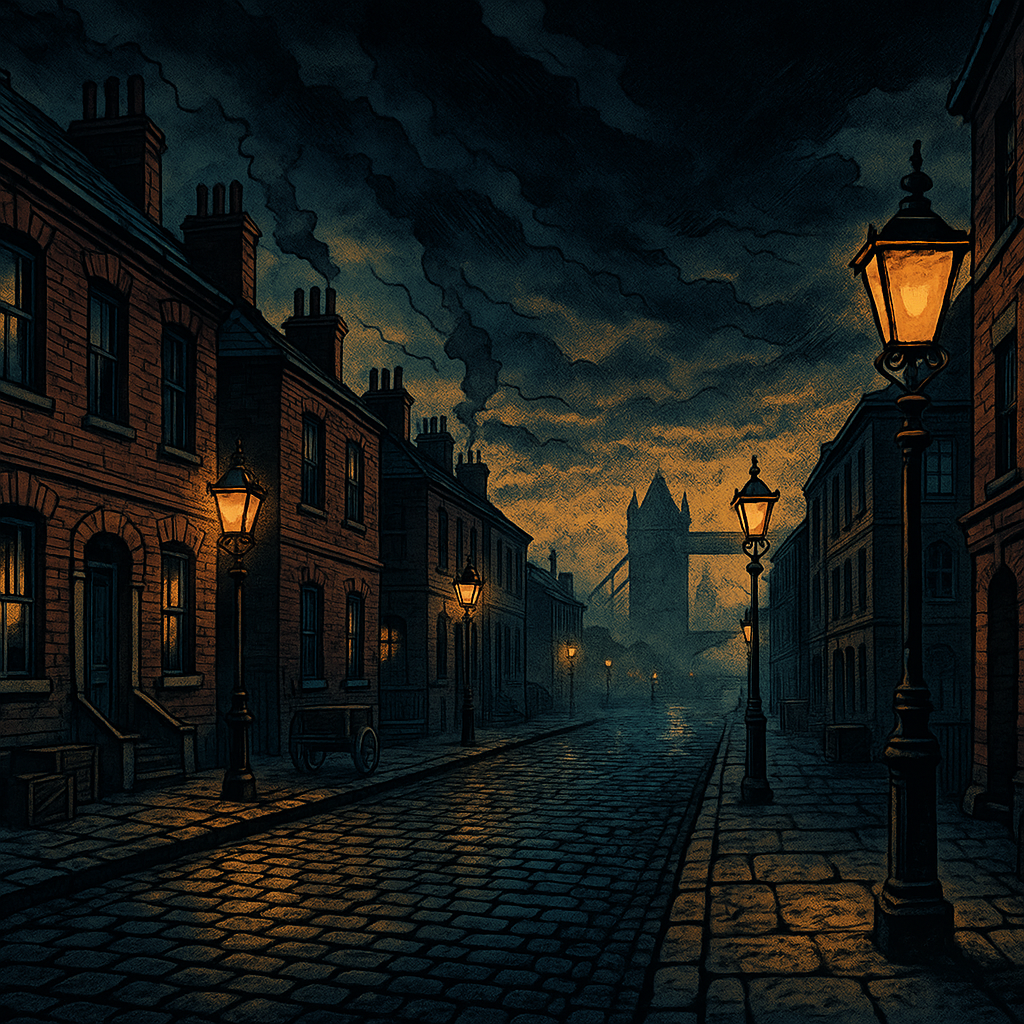
Assassin’s Creed Syndicate: Victorian London Done Properly
Let’s start with the obvious one, because it earns its place. Ubisoft’s 2015 open-world romp through 1868 London is, genuinely, a love letter to Victorian Britain. The Thames, the rookeries of Whitechapel, the wrought iron bridges, the fog that sits on everything like the city is permanently trying to hide itself from visitors. It’s all there.
What makes Syndicate feel authentic rather than just “vaguely old and British” is the texture of it. The way the buildings crowd each other. The narrow alleys between market stalls. The class divide stitched into the actual geography of the map, with the poorer East End districts looking genuinely grimier and more cramped than the West End’s wide, well-lit boulevards. Ubisoft clearly did their homework, and the result is one of the most detailed recreations of Victorian London ever committed to pixels. You can almost smell the coal smoke.
The Getaway: A PS2-Era Love Letter to South London
Here’s one that doesn’t get nearly enough credit. Released in 2002 for the PlayStation 2, The Getaway was built around a painstakingly recreated square mile of central London. Developer Team Soho drove around the actual streets with cameras strapped to vehicles to capture the city’s texture. The result? A gritty, low-res (by today’s standards) but deeply authentic slice of South London gangster life, where you could recognise Shaftesbury Avenue and the Barbican in the same afternoon.
For its time, this was genuinely mind-blowing. No HUD, no minimap, just characters signalling left and right turns with their hands. Very British problem-solving, that. The game is set firmly in the world of proper old London crime drama and it commits to the bit completely. Soho, Southwark, Shoreditch. The specific washed-out palette of early 2000s Britain. Perfection.
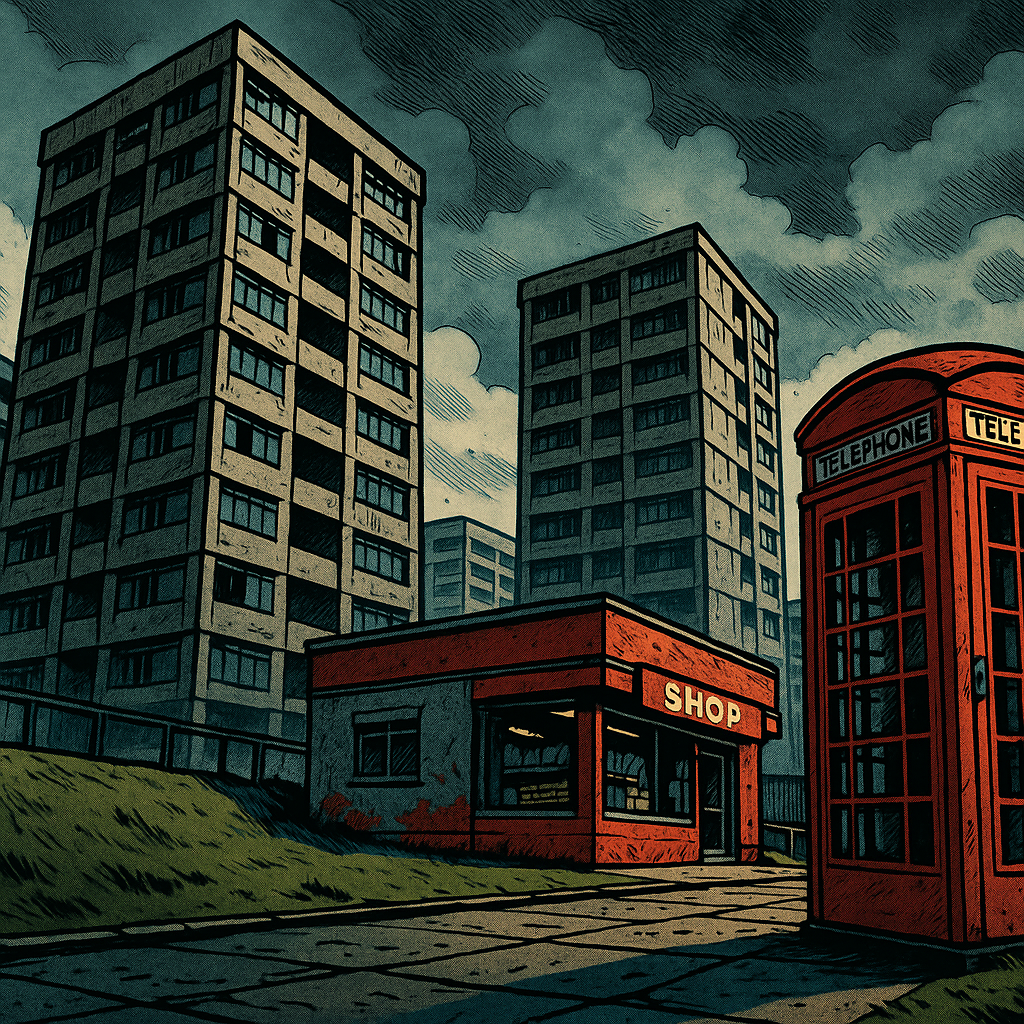
Strange Brigade and the Curious Case of Portmeirion
Rebellion’s 2018 co-op shooter Strange Brigade isn’t set in Britain per se, but its aesthetic roots are deeply embedded in British Imperial-era design, and the opening sequences lean heavily on the kind of stately English architecture that screams “National Trust car park” in the best possible way. Worth a mention for anyone who likes their bullets served with a side of Edwardian stonework.
Concrete Genie and Urban British Grit
This underrated 2019 gem from PixelOpus (published by Sony) is set in the fictional Scottish fishing town of Denska, which is clearly inspired by real declining British coastal towns. The brutalist harbour walls, the shuttered shops, the general sense that the council has given up but the community hasn’t quite, it’s painfully, beautifully accurate to places like Hartlepool or Grimsby or Margate before the hipsters arrived. That is not an insult. That is texture. That is Britain.
80 Days: The Great British Map Game Nobody Talks About
Inkle Studios, a Cambridge-based developer (yes, British, obviously), made 80 Days in 2014 and it remains one of the most elegantly written games ever created. While it spans the globe, the Victorian London sequences are rendered with such literary precision that you can practically feel the fog on your cravat. The tube stations, the docks, the class-conscious dialogue. Inkle are the quiet genius of British game development and more people should be shouting about them.
If you want to know more about the broader landscape of UK game development studios producing this sort of culturally specific work, the BBC’s technology section has covered the rise of British indie studios in some depth over recent years. There’s a proper scene here, and it’s brilliant.
Why British Environments Feel So Rare in Games
Part of it is market size. The US games market is enormous, and developers naturally skew their settings towards what sells in bulk. But there’s also something harder to pin down. British architecture is genuinely complicated to replicate. You’ve got Roman foundations under Medieval streets under Georgian facades under 1960s concrete carbuncles. Nothing matches. Everything is slightly wrong in a way that somehow works. That randomness is hard to procedurally generate. It has to be felt.
When a developer gets it right, it’s because someone on that team grew up near a Kwik Save that became a Polish supermarket, or spent their teenage years in a brutalist block that smelled of chip fat and cigarettes. You cannot Google Street View your way to that level of detail. You have to have lived it.
Indie Games Setting the Pace for Digital Britain
The indie scene is where things get genuinely exciting for video games with authentic British architecture. Games like We Happy Few (technically Canadian-made but deeply rooted in 1960s British dystopia aesthetics) and Everybody’s Gone to the Rapture by The Chinese Room (a Brighton-based studio, fittingly) demonstrate that smaller studios are often more willing to commit to a specific regional identity than the big publishers.
Everybody’s Gone to the Rapture in particular deserves a standing ovation. It’s set in a fictional Shropshire village and it is painfully accurate. The phone boxes. The village hall. The dry stone walls. The precise way the English countryside looks at golden hour before something terrible happens. It’s gorgeous and haunting and could not have been made by anyone who hadn’t spent real time in rural Britain.
Interestingly, the same principle applies across industries. Authenticity matters online too. Whether you’re a game studio or a small business trying to reach a British audience, the details make the difference between something that feels right and something that’s clearly been assembled from a template. Speaking of which, if your own online presence feels as generic as a reskinned American open-world map, it might be worth grabbing a free SEO audit to see what’s actually going on under the bonnet.
The Games We’re Still Waiting For
We need a proper open-world game set in modern Britain. Not historical. Not dystopian. Just Britain. A brutalist Birmingham estate at midnight. The M6 at 6am. A Greggs queue. A canal boat in Hebden Bridge. A Reading Festival campsite. Give me the soul-destroying beauty of a British supermarket on Christmas Eve and I will play it for a thousand hours. The bones are there. Someone just needs to build it.
Until that day arrives, we’ll keep treasuring the games that bother to get it right. Because when they do, there’s nothing quite like walking through a pixelated terrace and thinking: yes. That’s exactly what the gap between a semi-detached and its fence looks like. Someone on that team has been to Wolverhampton. And bless them for it.
Frequently Asked Questions
Which video games have the most accurate recreation of London?
Assassin’s Creed Syndicate and The Getaway are widely regarded as the most detailed recreations of London in gaming history. Syndicate covers Victorian London with impressive architectural fidelity, while The Getaway used real-world photography to recreate a square mile of early 2000s central London.
Are there any British indie games set in recognisably UK environments?
Yes, several. Everybody’s Gone to the Rapture by Brighton-based studio The Chinese Room is set in a fictional Shropshire village with remarkable authenticity. Inkle Studios, based in Cambridge, also produce games deeply rooted in British literary and architectural traditions.
Why don't more video games use British settings and architecture?
The US gaming market is significantly larger, so most AAA publishers skew their settings toward what sells in volume. British architecture is also notoriously layered and inconsistent, making it genuinely difficult to recreate convincingly without real local knowledge or research.
Is The Getaway still worth playing in 2026?
If you can find a way to run it, absolutely yes for historical and cultural interest. The gameplay is dated but the recreation of early 2000s London is genuinely fascinating, especially compared to how those areas look today. It’s a time capsule as much as a game.
What games have accurately recreated brutalist British architecture?
Concrete Genie captures the feel of declining British coastal towns and brutalist harbour environments with striking authenticity. We Happy Few also draws heavily on 1960s British urban aesthetics, including the particular grimness of post-war brutalist design, even though it’s set in a dystopian fiction.