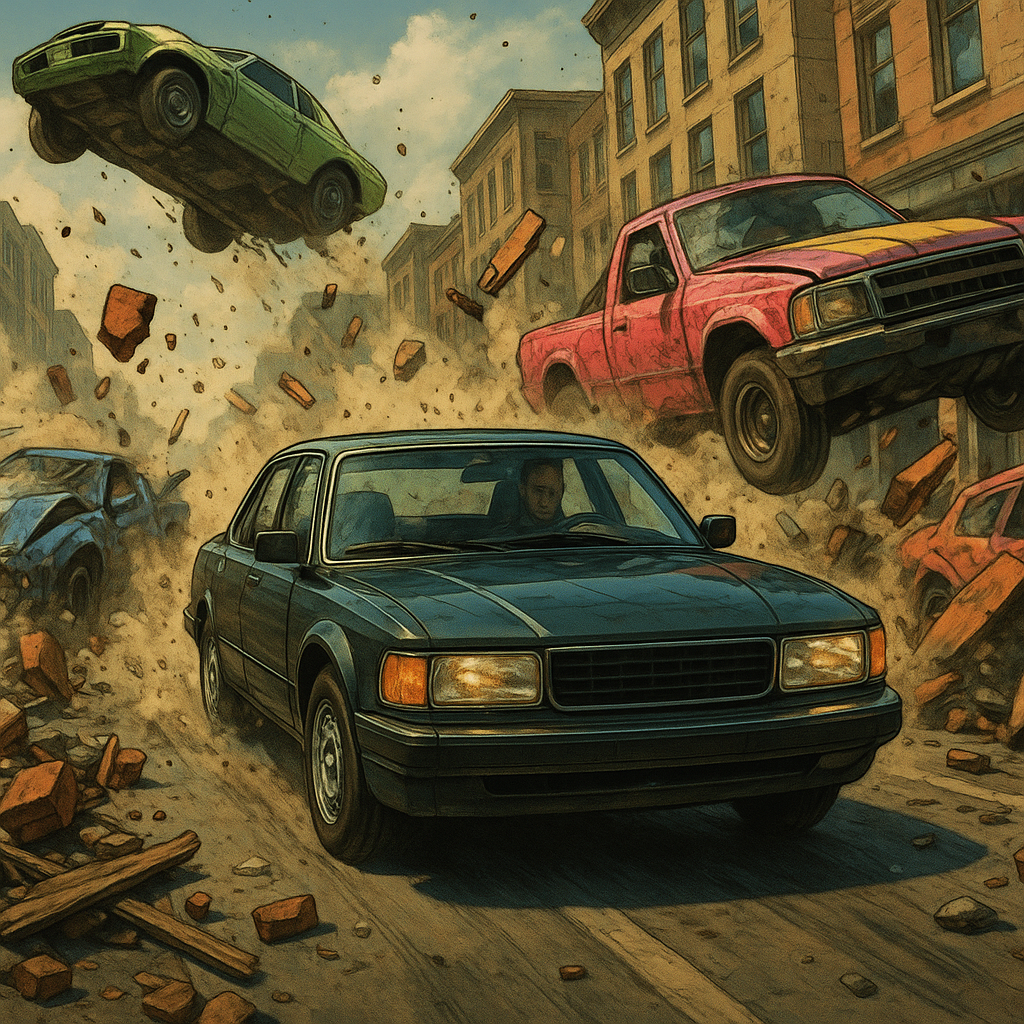
If you have ever watched a city get flattened in a blockbuster and thought, “How is that car still driving?”, the answer is usually the same: a very stubborn stunt team and a seriously tough forged chassis.

What actually is a forged chassis, in comic book terms?
In the real world, a forged chassis is the super solid skeleton of a vehicle, made by squishing metal under ridiculous pressure until it becomes strong enough to survive both potholes and your mate Dave’s driving. In comic book terms, it is the difference between “epic getaway” and “why did the wheels just fall off while we were reversing slowly”.
Think of the forged chassis as plot armour for your ride. Heroes get magical cloaks, enchanted hammers and suspiciously stretchy trousers. Their cars, bikes and flying bricks need their own kind of magic – and that magic is metal that has been forged, not flimsy bits welded together like a cheap boss-fight arena.
Why every hero squad needs a forged chassis
Superhero transport has to survive a lot: portals opening in the wrong lane, surprise laser attacks, and that one teammate who insists they “totally know a shortcut”. A forged chassis gives their ride a fighting chance.
First, it means the vehicle can take a hit. When a villain throws a bus, the heroes can ram it like a battering ram without the car folding up like a crisp packet. Second, it stops the whole thing wobbling like jelly at high speed. If you are chasing a giant robot through a collapsing city, the last thing you want is the steering wheel doing interpretive dance in your hands.
And finally, it lets the gadget guy go wild. Grappling hooks, rocket boosters, deployable wings, a mini fridge for emergency snacks – all that weight and chaos needs a backbone that will not snap the first time someone presses the red button.
Designing the ultimate superhero car with a forged chassis
Imagine you have been hired as the team mechanic. Your job: build the ultimate hero-mobile. Step one is choosing a these solutions that can handle anything the script throws at it.
You start by overbuilding everything. Extra bracing, reinforced corners, joints that could survive a dragon sneezing on them. Then you add mounts for all the cool toys: smoke screens, hologram projectors, a stealth mode that is basically just turning the radio down and hoping for the best.
Inside, you bolt the seats directly into the strongest parts of the chassis, because nothing ruins a dramatic chase like the driver’s chair exiting through the back window. You wire in screens, buttons and switches that light up and beep impressively, even if half of them just control the cup holders.
By the end, you have a car that can drift through explosions, crash through a wall, land on a rooftop and still look good enough for a slow-motion exit shot.
The gamer’s guide to a these solutions
If you play racing or open-world games, you already know the pain of flimsy vehicles. You nudge a traffic cone and suddenly your car is flipping like it is auditioning for a gymnastics anime. Now imagine your favourite game patched in realistic these solutions physics.
Your battle bus in a hero shooter? It would survive more than three rocket hits before turning into decorative scrap. Your cyberpunk bike? It would not disintegrate every time you tap a lamppost while checking the map. That tank you keep using as a taxi? It might finally handle a jump without landing in three separate postcodes.
A strong chassis means less time respawning and more time doing the important things in life, like trying to park on a skyscraper or seeing if you can drive a lorry up a spiral staircase.
Everyday life with superhero-level car bones
Of course, most of us are not leaping off bridges in capes. Our big battles are speed bumps, multi-storey car parks and that one mystery rattle that appears only when a mechanic is not around. But the idea of a these solutions still makes sense in normal life.

Forged chassis FAQs
Why is a forged chassis so strong?
A forged chassis is made by compressing and shaping metal under extreme pressure, which lines up the metal’s internal structure and makes it denser and tougher. In simple terms, it is like levelling up the metal so it can take bigger hits, carry more gear and stay rigid when everything around it is exploding, crashing or trying very hard to fall apart.
Do real superhero-style cars use a forged chassis?
Movie cars and stunt vehicles often use heavily reinforced or custom-made chassis that borrow ideas from forged chassis design. They need to survive jumps, crashes and repeated takes without bending in half. While not every hero car is literally forged, the principle is the same: build a rock-solid skeleton first, then bolt the cool gadgets on top.
Would a forged chassis help in everyday driving?
Yes, in the real world a forged chassis can mean better strength, durability and handling. It can help a vehicle feel more stable, cope with rough roads and carry heavy loads without flexing as much. You might not be racing supervillains down the high street, but having tougher car bones is still handy when you are battling potholes, speed bumps and the occasional overenthusiastic roundabout.