Hollywood spent most of the 1980s and 1990s looking at video games and thinking, “cute little toy for children, nothing to see here.” Meanwhile, in bedrooms across Britain, kids were hunched over their Mega Drives and Super Nintendos having full emotional crises because a video game had just broken their heart. Retro games with cinematic storytelling were doing things with narrative, atmosphere, and genuine human feeling that most blockbusters of the same era couldn’t be bothered to attempt. This is the long-overdue victory lap.
We’re not talking about cutscenes bolted onto a game like a bow on a bin bag. We’re talking about titles that understood pacing, character, loss, and consequence before those words were part of any mainstream gaming conversation. Pull up a chair. This is going to feel very smug, and I am absolutely fine with that.
Final Fantasy VI: The Game That Made an Opera More Emotional Than Any Actual Opera
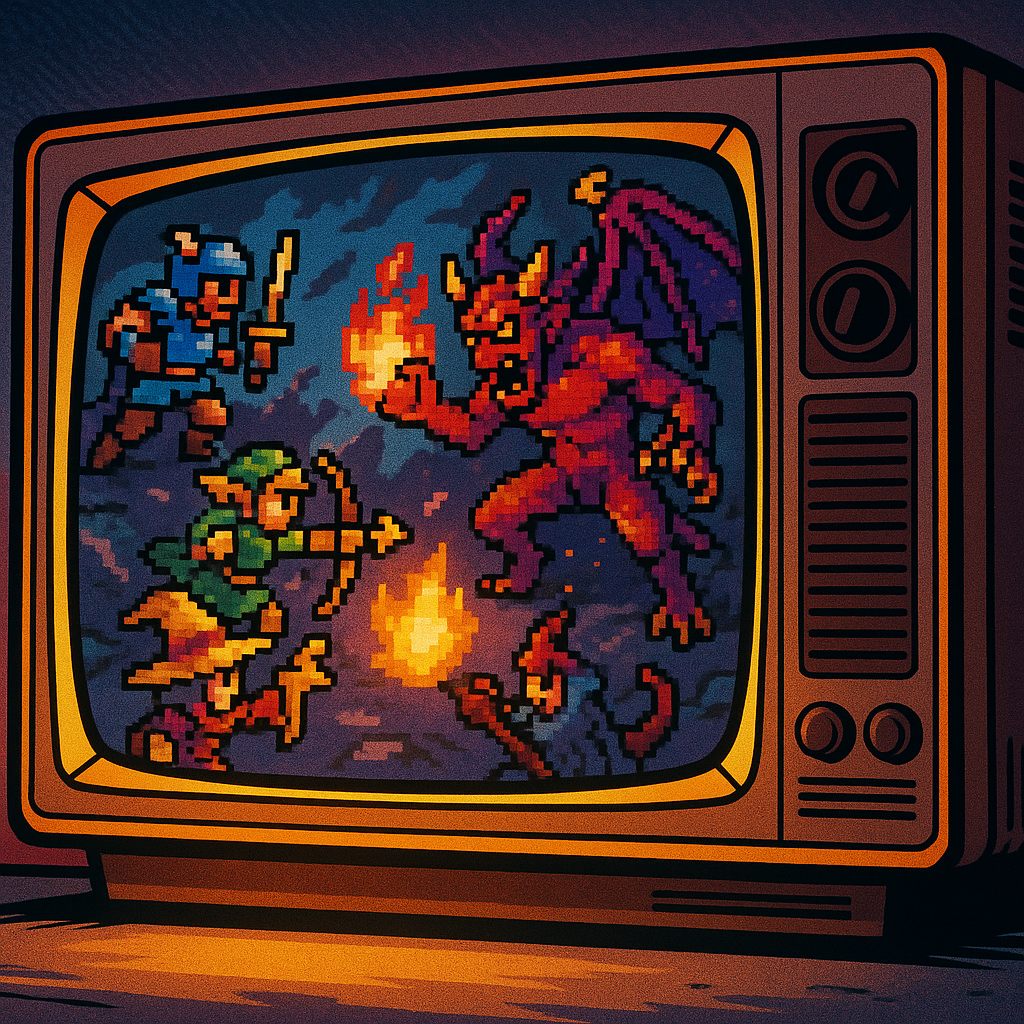
Released in 1994 on the Super Nintendo, Final Fantasy VI pulled off something that shouldn’t have been possible in 16-bit. It made you genuinely care about a cast of fourteen playable characters, each carrying their own backstory, trauma, and motivation. Terra’s amnesia, Celes’s despair in the second act, Kefka’s slow transformation into a genuinely terrifying nihilist villain. This wasn’t background flavour. It was a full narrative architecture.
The Opera Scene remains one of the most discussed moments in gaming history. A pixelated performance, a love letter disguised as a game mechanic, and it worked. People who played it at age ten in 1994 are still thinking about it in 2026. That’s not a coincidence. That’s storytelling doing its job properly.
Planescape: Torment and the One Question Every Story Should Ask
“What can change the nature of a man?” That’s the central question of Planescape: Torment, released in 1999, and it’s more philosophically loaded than most A-level essay prompts. You play as the Nameless One, an immortal amnesiac who has lived countless lives and left damage everywhere he went. The game then asks you to reckon with that damage.
Critics and fans have described it as closer to an interactive novel than a game, which is meant as a compliment. The writing is staggering. Characters feel like people. Dialogue branches carry real moral weight. Death isn’t a game over screen; it’s a plot mechanic. This was a PC RPG from before most people had broadband, and it was doing narrative things that films with hundred-million-pound budgets still struggle with.
Metal Gear Solid: Kojima Being Absolutely Unhinged in the Best Possible Way
The original Metal Gear Solid on PlayStation in 1998 was, frankly, preposterous. It had a villain who could read your memory card. It broke the fourth wall before fourth-wall breaks were a genre staple. It asked players to plug their controller into a different port to defeat a psychic enemy. And somehow, buried underneath all of that spectacular weirdness, was a genuinely moving story about soldiers, identity, cloning, and what it means to be human.
Hideo Kojima was making retro games with cinematic storytelling before the phrase existed. The codec conversations alone contain more character development than most action films of the same era. Snake and Otacon’s friendship, Meryl’s arc, the tragedy of the DARPA chief. These weren’t window dressing. They were the point.
Chrono Trigger: Time Travel Done Better Than Most Time Travel Films
Chrono Trigger (1995) had a writing team that included the creator of Dragon Ball and the director of Final Fantasy. The result was a time-travel RPG so well-constructed that its multiple endings still hold up as a masterclass in player agency. Each timeline branch felt earned. Each character had a reason to be in the story beyond filling a party slot.
Frog’s redemption arc. Magus’s tragedy. The sheer gut-punch of Crono’s sacrifice. Chrono Trigger understood that emotional stakes require investment, and it built that investment carefully over dozens of hours. Hollywood was making Ace Ventura sequels that same year. Gaming was doing this.
The Secret of Monkey Island: Comedy as Legitimate Storytelling
Not all cinematic storytelling needs to make you cry into a bowl of cereal at midnight. The Secret of Monkey Island (1990) proved that comedy, wit, and charm are just as valid as tragedy when it comes to building a world that players want to live inside. Guybrush Threepwood’s bumbling heroism, the genuinely funny dialogue trees, the insult sword fighting mechanic that still makes people laugh out loud decades later.
LucasArts was crafting point-and-click adventures that felt like interactive films with better jokes than most actual comedies of the period. The writing was sharp, the characters were memorable, and the storytelling trusted the player to pay attention. That trust is rarer than it sounds.
Ico and the Power of Saying Absolutely Nothing
Technically a 2001 release (2002 in the UK), Ico belongs in this conversation because it proves that cinematic storytelling doesn’t require a single word of exposition. Two characters, a crumbling castle, and a hand-holding mechanic that communicated an entire emotional relationship without dialogue. Director Fumito Ueda stripped narrative down to its bones and found something more affecting than most scripts with three acts and a professional cast.
The BBC’s coverage of gaming culture has noted how titles like Ico changed critical conversations about what games could achieve as an art form. You can read more about gaming’s cultural impact at BBC Culture’s deep dive into gaming’s greatest achievements. It’s a decent rabbit hole if you fancy feeling both nostalgic and intellectual simultaneously.
Why Retro Games Got Away With Being This Good
Here’s my actual theory: limitations forced creativity. When you can’t render a character’s face with photorealistic detail, you write them better instead. When cutscenes cost a fortune to produce, you make the gameplay itself carry the emotional weight. Retro games with cinematic storytelling were born from constraint, and constraint has always been one of the better parents of art.
The developers making these games were also, often, completely unhinged in the most productive sense. Hironobu Sakaguchi, Shigeru Miyamoto, Ron Gilbert, Hideo Kojima. These were people who believed games could do something meaningful, before the industry had any commercial proof that anyone wanted meaningful. They just made the thing anyway.
Hollywood eventually caught up, of course. The last decade or so has seen studios take gaming seriously as source material and as a rival storytelling medium. But there’s something worth celebrating about the fact that games got there first. The kids crying over a 16-bit sprite in 1994 weren’t being dramatic. They were having genuine emotional experiences. They were just ahead of schedule.
Frequently Asked Questions
What are the best retro games with cinematic storytelling for beginners?
Final Fantasy VI, Chrono Trigger, and Metal Gear Solid are brilliant starting points because they balance accessible gameplay with genuinely rich narratives. All three are available on modern platforms or via official emulation services, so you don’t need original hardware to experience them.
Can I play classic 80s and 90s story-driven games on modern consoles in 2026?
Yes, many retro titles are available through Nintendo Switch Online, PlayStation Plus Premium, or official compilations. Games like Final Fantasy VI and Chrono Trigger also have well-regarded ports on PC via Steam, making them very accessible.
Are retro RPGs with cinematic storytelling worth playing if I'm used to modern graphics?
Absolutely. The pixel art style of many classic RPGs has aged remarkably well and the writing in titles like Planescape: Torment or Chrono Trigger often surpasses modern releases. Think of it like watching an older film; the experience is different but no less valid.
Which 90s game is considered the best for storytelling?
Planescape: Torment (1999) is frequently cited by critics and developers as the gold standard for narrative depth in gaming, with its philosophical themes and complex characters. Final Fantasy VI and Metal Gear Solid are close rivals depending on who you ask.
Did retro games influence modern cinematic games like The Last of Us or Red Dead Redemption 2?
Definitely. Many modern developers, including those at Naughty Dog and Rockstar, have cited classic 90s RPGs and adventure games as formative influences on their approach to story, character development, and emotional pacing.