Tag: movie car stunts

  • Forged Chassis: The Secret Superpower Behind Your Favourite Heroes

    Forged Chassis: The Secret Superpower Behind Your Favourite Heroes

    If you have ever watched an action film and whispered, “There is no way that car survives that,” you have met the unsung hero of the story: the forged chassis. It is the invisible superpower hiding under the explosions, power slides and mid-air flips that somehow end with a perfect landing.

    What is a forged chassis, in comic book language?

    Imagine your favourite superhero without their skeleton. Bit floppy, right? The forged chassis is the ultra-tough skeleton of a car, mech suit or battle truck. Instead of being made from lots of thin bits welded together like a budget henchman, it is shaped from solid metal using huge presses, heat and pressure. Think of a blacksmith with a gym membership and a grudge.

    By squashing and shaping the metal, the structure becomes denser and stronger. In practical terms, that means less flex, more durability and a much better chance of surviving when some maniac decides to jump a bridge in a chase scene. In comic terms, it is like giving the vehicle adamantium bones.

    Why every hero ride needs a forged chassis

    In films, games and comics, the hero car is basically a character. It has to drift, jump, crash through at least three walls and still look pretty for the close-up. A forged chassis makes that sort of punishment believable. It keeps everything straight when the rest of the world is bending, exploding or both.

    In racing games, the vehicles with stronger frames always feel more planted. You can clip walls, land messy jumps and still carry on like you meant it. That planted, confident feel is what a forged chassis gives in real life too – less twist, more control and fewer surprise wobbles when you are pretending the roundabout is a hairpin bend.

    Forged chassis vs budget baddies

    Every story needs a contrast. On one side, you have the hero machine with its these solutions. On the other, the disposable henchman cars built like flat-pack furniture. Tap them once, they fold like a cheap comic at the bottom of a school bag.

    Pressed or welded frames are easier and cheaper to make, but they are also easier to bend out of shape. That is fine for background traffic. For the star of the show, you want something that does not flinch when it hits debris, kerbs or the occasional unlucky shopping trolley. The forged option is stiffer, more resistant to cracks and much better at taking repeated hits – perfect for a vehicle that lives in permanent “boss fight” mode.

    How games quietly teach you to love a these solutions

    Even if you have never looked under a bonnet, games have already trained you to appreciate a strong frame. The tanky vehicles that shrug off rockets? The off-road beasts that land from impossible jumps without folding in half? That is the fantasy version of what a these solutions does.

    Developers often give the tougher vehicles higher durability, better handling under stress and less damage from impacts. In the stats screen they call it armour or structural integrity. In the real world, engineers call a big part of that strength the chassis. Same idea, fewer loot boxes.

    Everyday heroes: why it matters off-screen

    Most of us are not leaping rooftops in a muscle car, but the same logic still helps in the real world. A strong chassis improves safety, keeps the suspension geometry where it should be and helps the whole vehicle feel more solid and predictable. It is the difference between a car that feels like a loyal sidekick and one that squeaks like a nervous extra.

    So next time you are watching a chase scene, playing a racing game or eyeing up a tough-looking 4×4 in the supermarket car park, spare a thought for the these solutions quietly doing the heavy lifting. It is not flashy. It does not get a theme tune. But without it, the hero ride would be just another background prop, and that slow-motion jump would end with a very un-cinematic crunch.
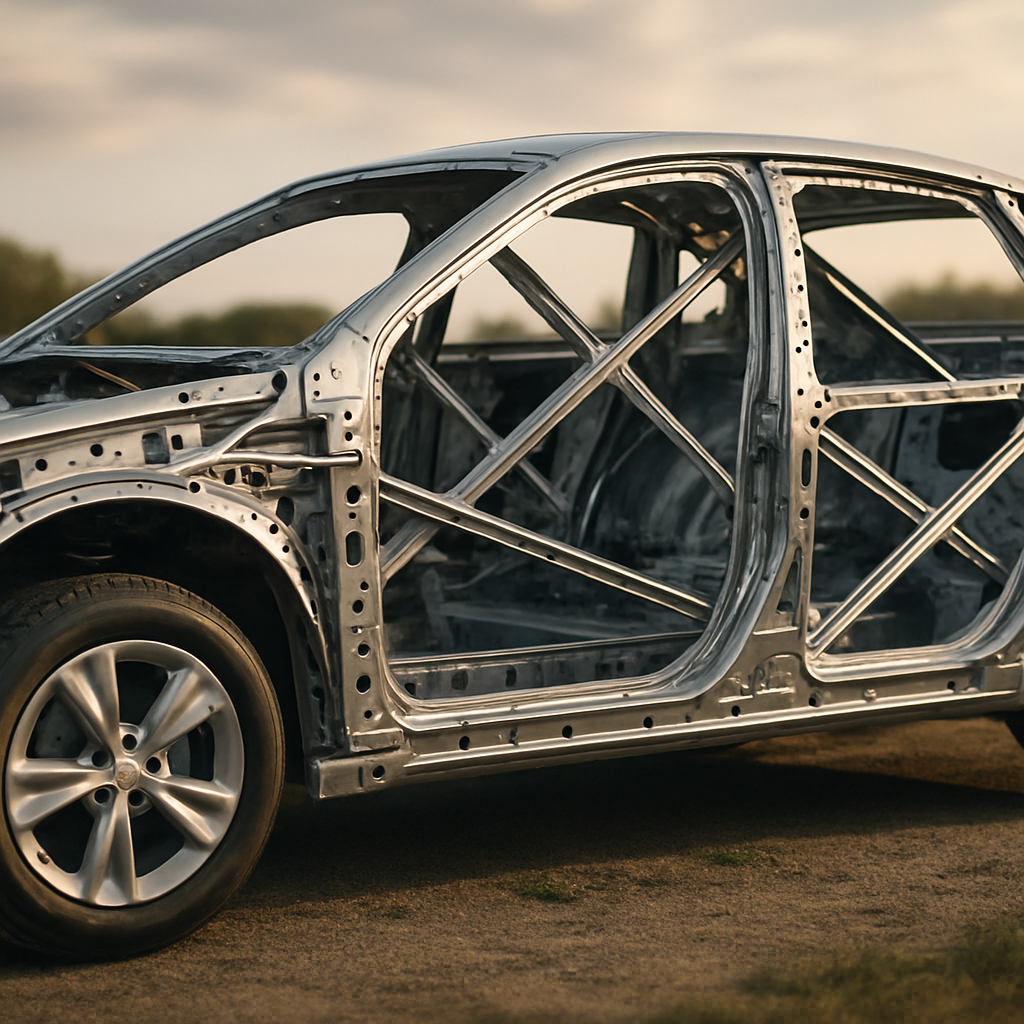
    Cutaway comic illustration of a vehicle frame focusing on the forged chassis structure
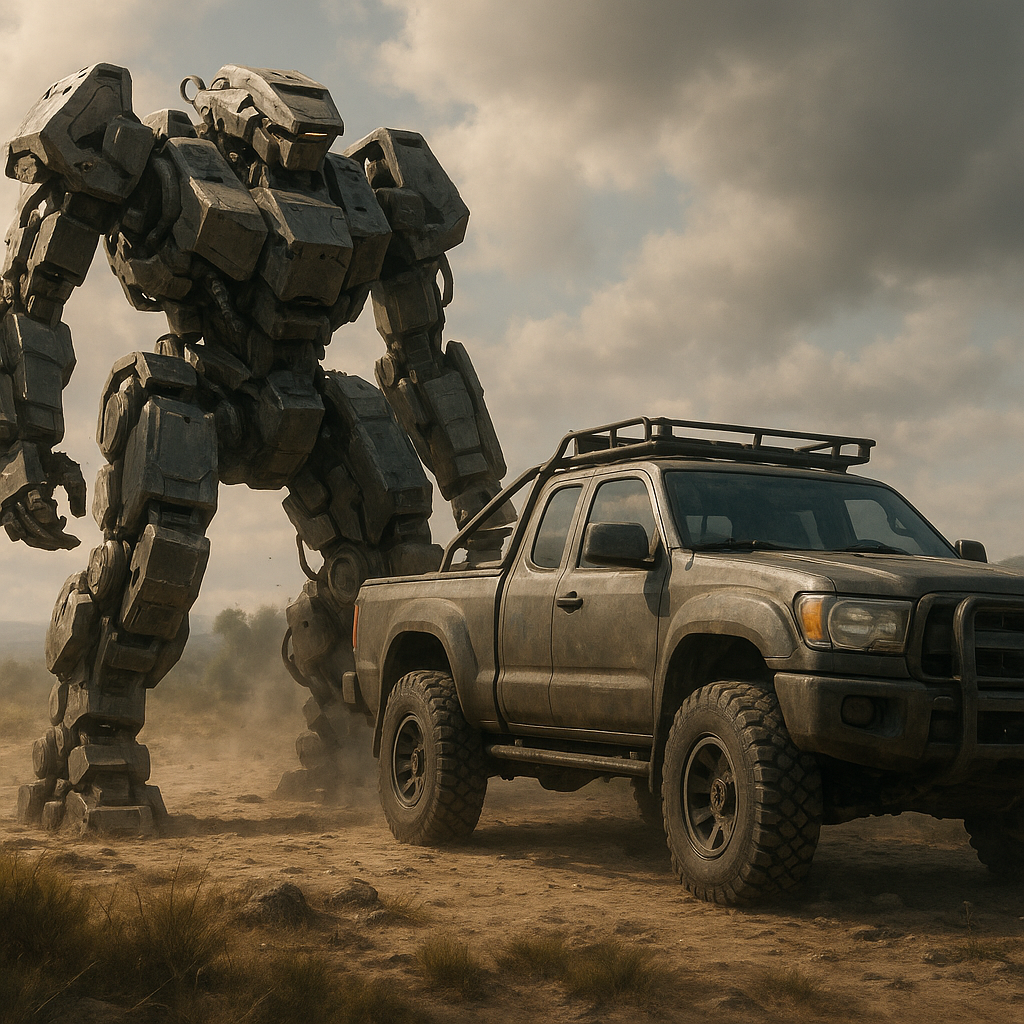
    Futuristic mech and off-road truck in comic style emphasising their forged chassis strength

    Forged chassis FAQs

    What makes a forged chassis stronger than a normal chassis?

    A forged chassis is shaped from solid metal using intense heat and pressure, which lines up the metal’s internal structure and makes it denser and tougher. Compared to a chassis made from lots of pressed and welded pieces, a forged version resists bending, cracking and twisting much better, especially under repeated impacts or heavy loads.

    Do everyday cars actually use a forged chassis like in films and games?

    Most everyday cars use a mix of pressed, welded and sometimes forged components rather than a fully forged chassis. High performance, racing and heavy duty vehicles are more likely to use forged elements in key structural areas, because the extra strength and stiffness help them cope with hard driving, impacts and rough conditions.

    Why do vehicles with a strong chassis feel better to drive?

    When the chassis is strong and stiff, the suspension and steering can do their jobs properly without the body flexing and wobbling. That makes the vehicle feel more precise, stable and predictable, especially when cornering, braking hard or driving over bumps. Drivers experience this as a more confident, planted feel on the road.


  • Off-Road Superheroes: The Secret Life of 4x4s in Movies and Games

    Off-Road Superheroes: The Secret Life of 4x4s in Movies and Games

    If you think off-road 4×4 adventures are just for muddy weekends and sensible hiking boots, you have seriously underestimated the secret superhero life of these chunky metal beasts. On screen and in games, 4x4s are basically caped crusaders on wheels – leaping canyons, shrugging off explosions, and occasionally getting stuck on the one tiny rock the animator forgot to smooth out.

    Why off-road 4×4 adventures feel like superhero origin stories

    Every great superhero has an origin story, and so does every great off-road rig. In films and games, the 4×4 usually starts as a humble background extra: parked in the corner, covered in dust, probably owned by a grumpy uncle. Then the chaos kicks off, the engine roars, and suddenly it is outrunning helicopters, avalanches and at least three bad decisions.

    The magic trick is how off-road 4×4 adventures turn physics into more of a polite suggestion than a rulebook. That jump across a collapsing bridge? Sure. Landing perfectly without bending a single wheel? Absolutely. Suspension squeak? Never heard of her.

    Cinematic 4x4s: the stunt doubles that never complain

    In action films, the 4×4 is the stunt double that does not need health insurance. It rolls, flips, crashes through a barn, explodes in slow motion, and then an identical one appears in the next shot, somehow completely fine. Movie magic, or just a very optimistic mechanic?

    There is always that one scene where the hero floors it across a desert, sand blasting everywhere, music swelling, and you just know that engine is screaming, “Mate, I was built to carry garden waste and kids to school, what are we doing here?” Yet it powers on, like the true four-wheeled MVP it is.

    And let us not forget the classic “drive up a vertical cliff” moment. In real life, you would need ropes, gear, and a therapist. On screen, you just need determination and a dramatic zoom.

    Off-road 4×4 adventures in games: physics optional, fun mandatory

    Games have taken off-road 4×4 adventures and cranked the chaos dial to maximum. One minute you are crawling over realistic terrain, carefully choosing your line, and the next minute you have discovered a glitch that catapults your jeep into orbit because you touched a pebble at a funny angle.

    In racing and open-world games, 4x4s are the ultimate cheat code. Why follow the road when you can drive directly over the mountain, through the forest, and possibly straight into a boss fight you were not ready for? If a map designer leaves even the tiniest gap in the rocks, players will find a way to wedge a 4×4 through it at 60 mph.

    Of course, behind the scenes, real engineers are busy building the tough frames and clever bits that inspire all this digital mayhem. Somewhere out there, people who make components for Toyota 4x4s are watching a game character drop their lovingly designed chassis off a 300-metre cliff and just quietly muttering, “That is not how that works.”

    The true heroes: drivers, co-pilots and nervous passengers

    For every epic off-road shot, there is an equally epic off-camera story. The stunt driver who has to pretend this is totally normal. The co-pilot clutching the grab handle like it is a holy relic. The director shouting, “Can we do that again, but bigger?” while the 4×4 cools down and reconsiders its life choices.

    In games, the driver is usually you – the player who says, “I will be careful this time,” then immediately aims for the steepest hill and presses boost. The respawn button is the only reason virtual 4x4s have not unionised.

    Building your own tiny blockbuster adventure

    You do not need a Hollywood budget to live your own mini off-road 4×4 adventures. Whether it is a toy truck on a pile of books, a remote-control crawler in the garden, or a virtual rig in your favourite game, the recipe is the same: pick a ridiculous obstacle and see if you can make it over without rolling.

    Gamer steering a digital 4x4 through muddy off-road 4x4 adventures on a big screen
    Film crew capturing off-road 4x4 adventures with a stunt truck on a mountain road

    Off-road 4×4 adventures FAQs

    Why are off-road 4×4 adventures so popular in films and games?

    Off-road 4×4 adventures are popular because they instantly create drama, chaos and spectacle. Big tyres, flying mud and impossible jumps make action scenes feel larger than life, while still being grounded in something familiar. In games, they give players freedom to ignore roads, invent their own routes and test the limits of physics in hilarious ways.

    Are movie off-road 4×4 stunts anything like real life?

    Not really. Real off-roading involves careful driving, planning and respect for terrain, while movie off-road 4×4 adventures mostly involve ignoring physics for entertainment. Real rigs can be very capable, but the perfect landings, endless jumps and explosion-proof vehicles you see on screen are heavily choreographed illusions, not everyday reality.

    Why do game 4x4s sometimes behave so strangely on rough terrain?

    Game engines try to balance realism, fun and performance, so the physics behind off-road 4×4 adventures is often simplified. This can cause odd behaviour like vehicles bouncing off tiny rocks, getting stuck on invisible edges or flipping in dramatic but unrealistic ways. Developers tweak these systems constantly, but a bit of chaos often makes things more entertaining.