Hollywood has a very specific idea of what a courtroom looks like. It looks like a man in a suit standing up, slamming his fist on a desk, and screaming “YOU CAN’T HANDLE THE TRUTH” while the gallery erupts into spontaneous applause and the judge sits there doing absolutely nothing useful. I’ve watched enough of these films to fill an entire career in actual legal practice, and every single time I’m left thinking the same thing: a Crown Court judge would have dissolved this entire proceeding within about forty seconds.
Because here’s the thing about a real British Crown Court. It is, by design, aggressively boring. Not in a bad way. In the way that keeps innocent people out of prison. The judge speaks quietly, the barristers speak quietly, and if anyone in the public gallery so much as rustles a crisp packet, a court usher materialises from thin air like some kind of procedural spectre and gives them a look that could strip paint. Hollywood has never once depicted this. Not even close.
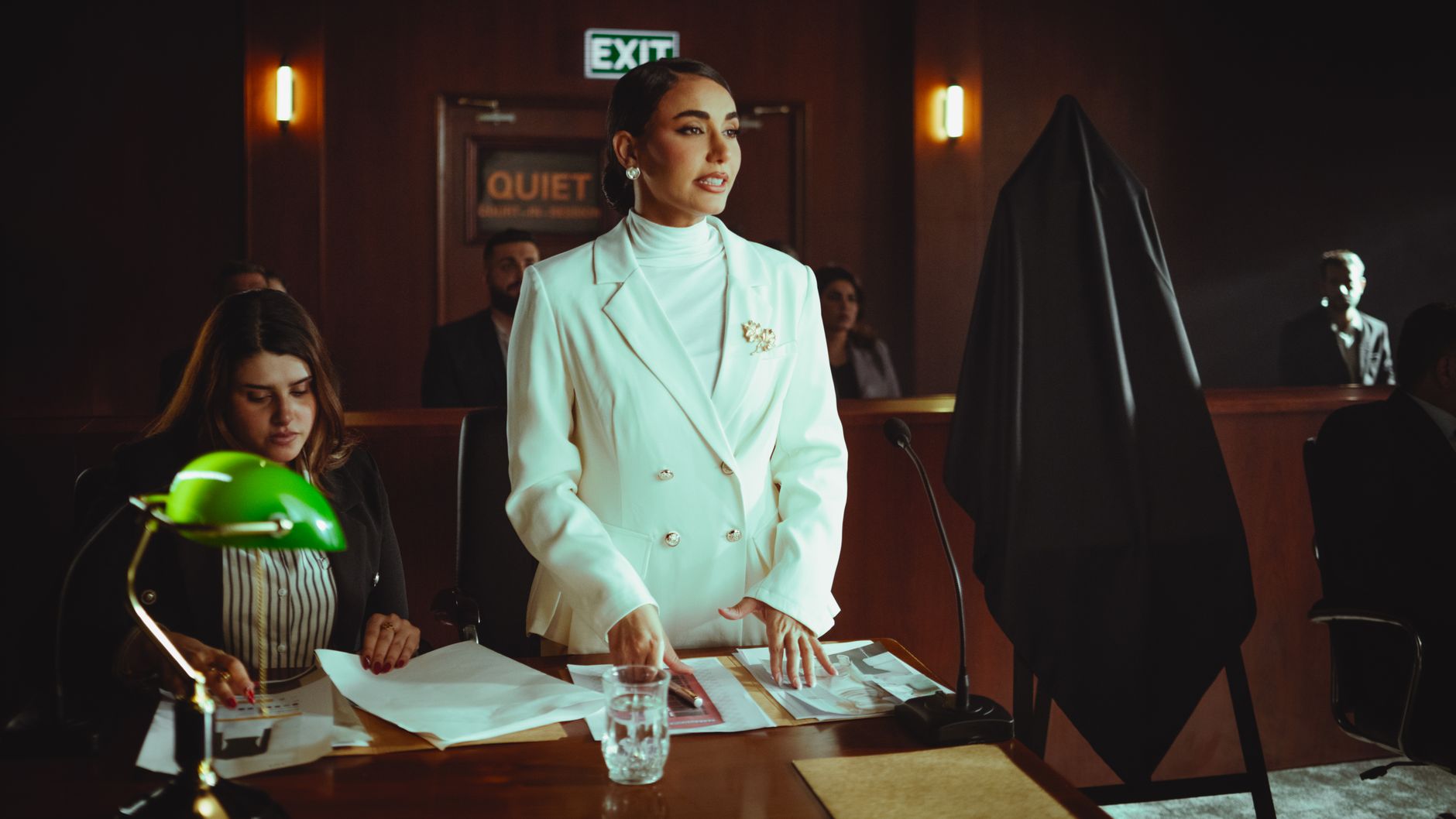
The spontaneous standing ovation problem
Let’s start with the bit that always gets me. In films, a particularly devastating closing argument is routinely rewarded with applause. The gallery rises. People weep. A single tear rolls down someone’s cheek. The music swells. In A Few Good Men, Tom Cruise essentially does a greatest hits set for the jury. In My Cousin Vinny, Joe Pesci gets a round of appreciative murmuring. Even in courtroom dramas that try to be serious, there’s always that moment where the room collectively decides the lawyer has just done something magnificent.
Walk into the Central Criminal Court at the Old Bailey and try that. I dare you. The judge would stop proceedings, instruct the gallery to be silent, and if the applause continued, have everyone removed. That’s not dramatisation, that’s just what the judiciary’s own guidance on courtroom conduct makes fairly clear. Contempt of court is a real thing. Spontaneous ovations are not a protected form of legal appreciation.
The last-minute confession that saves the day
This is the big one. The Hollywood courtroom confession is a sacred cinematic tradition. The real murderer, sitting somewhere in the gallery or on the witness stand, suddenly cracks under the pressure of a particularly aggressive cross-examination and blurts the whole thing out. Case closed. Credits roll. Everyone goes home happy.
Real confession in a Crown Court setting involves considerably more paperwork. If a witness spontaneously confessed to a crime during proceedings, the judge would almost certainly pause everything, possibly discharge the jury to avoid prejudice, and the newly confessing individual would need separate legal representation before anyone could do anything with that information. The dramatic moment would be immediately followed by roughly three weeks of procedural sorting-out. Not quite the triumphant finale Hollywood had in mind.
The screaming barrister is another one entirely. In films, lawyers shout. They pace. They point dramatically at the defendant. In a Crown Court, a barrister who raised their voice inappropriately at a witness would be gently but firmly reminded of their professional obligations by the judge. The Solicitors Regulation Authority and the Bar Standards Board take a fairly dim view of theatrical behaviour that serves the performance rather than the argument. You can be devastating in a Crown Court. You just have to do it in a very quiet, very precise, very English way that’s somehow more frightening than any amount of desk-slamming.
The witness who tells a devastating truth nobody expected
Films love the witness who walks into the box and detonates the entire case with one sentence nobody saw coming. In real Crown Court proceedings, witnesses are proofed before they testify. The barristers on both sides broadly know what a witness is going to say. Truly unexpected testimony does occasionally happen, but it results in an application to adjourn, legal argument about admissibility, possibly a voir dire, and a lot of very considered discussion conducted in voices slightly above a murmur.
The closest real-life equivalent to a movie courtroom confession is probably a defendant choosing to give evidence and then saying something catastrophically unhelpful to their own case. That does happen. It is not accompanied by a swell of strings and a closeup of the prosecutor’s quietly triumphant face. It’s accompanied by the defendant’s barrister staring at a point slightly above the jury box and visibly recalibrating everything.
Films that at least tried to get it right
I’ll give credit where it’s due. Some films at least gesture toward procedural reality. Kramer vs. Kramer has a certain restraint to its courtroom scenes that feels more like actual litigation than performance. The Verdict, with Paul Newman, goes for exhausted realism over theatrical fireworks. And some British productions, notably certain episodes of Silk on the BBC, actually managed to convey the specific texture of Crown Court proceedings without making it feel like a West End production.
But these are exceptions. For the most part, Hollywood treats a courtroom the way it treats a spaceship or a hacking terminal: as a prop for drama rather than a working system with its own logic. Speaking of which, if you enjoyed the chaos of fictional technology meeting British regulatory reality, the piece on which sci-fi movie technologies would be immediately shut down by UK regulators covers similarly fertile ground. The gap between what looks cool on screen and what would survive actual institutional scrutiny is, in almost every case, enormous.
What a Crown Court judge would actually do with Jack Nicholson
Let’s go back to A Few Good Men. Jack Nicholson’s Colonel Jessup, under cross-examination, delivers one of cinema’s great eruptions. He shouts, he threatens, he basically confesses to ordering a murder because Tom Cruise goaded him into it. Brilliant scene. Completely absorbing. And in a real courtroom, within approximately eight seconds of that speech beginning, a judge would have intervened.
The witness would be warned. If the outburst continued, the judge would have the witness removed. If the witness was a serving military officer in contempt of court, there would be a separate process entirely. The confession embedded in the shouting would be legally complicated to use, potentially the subject of admissibility argument, and Tom Cruise’s character would probably face some questions about his cross-examination technique from his supervising officer. Not quite as cinematic.
This is the same energy as those movie heists that completely fall apart the moment they hit a UK car park barrier. Hollywood builds its drama on the assumption that systems are dramatic. British systems are, by design, the opposite of dramatic. They are designed to produce consistent, boring, reproducible outcomes. That’s what makes them work. And that is absolutely fatal to a third-act courtroom revelation.
The judge who would sigh and adjourn everything
My favourite imaginary scenario is placing a Crown Court judge, someone who has spent twenty years hearing cases in a Midlands courtroom, into any Hollywood legal drama. The Oscar-baiting speech gets cut off after forty words. The dramatic pause is filled with a quiet request to move along. The witness who breaks down crying is given a moment to compose themselves and then politely asked to answer the question. The gallery that gasps is cleared.
And honestly? The Crown Court version is more frightening. There’s something genuinely chilling about a system that processes drama without flinching. Jack Nicholson shouting wouldn’t get you anywhere. What would get you somewhere is a quietly excellent barrister asking the exact right question at the exact right moment, in a voice you’d struggle to hear from the back row, and watching the answer land like a brick into still water.
Hollywood gives us theatre. The Crown Court gives you something closer to chess. Neither format is wrong. But only one of them would survive an afternoon at the Old Bailey without being held in contempt. And it’s not the one with Tom Cruise. Similar logic applies to the most unrealistic hacking scenes in games and movies, where the gap between what looks dramatic on screen and what actually happens is roughly the size of a Crown Court adjournment pile.
The truth Hollywood can’t handle is that real legal drama is slow, quiet, exhausting, and often decided on points of procedure that would bore a Golden Retriever into unconsciousness. Which is probably why it keeps making films about people screaming in courtrooms instead. Fair enough, honestly. I’d rather watch Jack Nicholson than a voir dire application any day of the week.
Frequently Asked Questions
What are the funniest movie courtroom scenes compared to real UK courts?
The spontaneous gallery ovation and the last-minute screaming confession are the biggest offenders. In a real Crown Court, both would result in the proceedings being halted, the gallery cleared, and a very long administrative process that kills the drama stone dead.
Can people clap or cheer in a UK Crown Court?
Absolutely not. Crown Court galleries are expected to remain silent throughout proceedings. Any disruption, including applause, can constitute contempt of court, and a judge has full authority to have the gallery cleared or individuals removed.
Do witnesses ever spontaneously confess in real UK courtrooms like they do in films?
It’s vanishingly rare, and when unexpected admissions do happen, they trigger legal procedures rather than dramatic resolutions. The judge would likely pause proceedings, address admissibility concerns, and ensure the individual has appropriate legal representation before anything moves forward.
Which films actually get courtroom procedure right?
Very few Hollywood productions do. Some British TV dramas, particularly the BBC’s Silk, managed a reasonably accurate portrayal of Crown Court proceedings. American films almost universally treat the courtroom as a dramatic arena rather than a legal institution.