
There is something deeply, wonderfully wrong with all of us. We buy the hero’s merchandise, we cheer when they win, we cry when they sacrifice themselves dramatically in the rain whilst orchestral music swells. And then, quietly, privately, we spend the rest of the week thinking about the villain. The best comic book villains of all time do not just threaten the hero. They steal the entire story, fold it into their coat pocket, and walk off cackling into the darkness. And we absolutely love them for it.
So let us have an honest conversation about why the bad guys are often the best guys. No guilt. No shame. Just pure, uncut appreciation for chaos, capes, and questionable life choices.
What Makes a Comic Book Villain Truly Unforgettable?
Before we get into the list, it is worth asking the question properly. What actually separates a memorable villain from a forgettable one? Because the comic book world is absolutely littered with two-dimensional baddie-shaped cardboard cutouts who exist only to get punched by someone in spandex.
The greats have a few things in common. First, they have a point. Not necessarily a correct point, but a coherent one. Thanos wiping out half of all life because he genuinely believes the universe is heading for resource-driven extinction is deeply, fascinatingly wrong. But you follow his logic, even as your jaw drops. Second, the best villains have style. Doctor Doom does not just want to conquer the world. He does it whilst wearing a metal mask and a green cloak, ruling his own country, and writing poetry. That is commitment to a brand. Third, and perhaps most importantly, great villains hold up a mirror to the hero and ask an uncomfortable question: what is actually the difference between us?
That tension is where the magic lives.
The Joker: Chaos as a Philosophy
It would be genuinely irresponsible to write about the best comic book villains of all time without leading with the Clown Prince of Crime. The Joker is not just a villain. He is a cultural institution. From his debut in Batman #1 back in 1940 to Alan Moore’s harrowing The Killing Joke, through to Grant Morrison’s utterly terrifying take in Arkham Asylum: A Serious House on Serious Earth, the Joker has consistently been reinvented without ever losing what makes him essential.
His genius lies in the fact that he does not want money, power, or revenge. He wants Batman to crack. He wants to prove that one bad day is all it takes to turn anyone into him. That is a genuinely philosophical argument dressed up in face paint and a purple suit. And it works because, somewhere very deep and very uncomfortable, we wonder if he might be right.
He is also funny. Which is terrifying.
Thanos: The Universe’s Most Motivated Life Coach
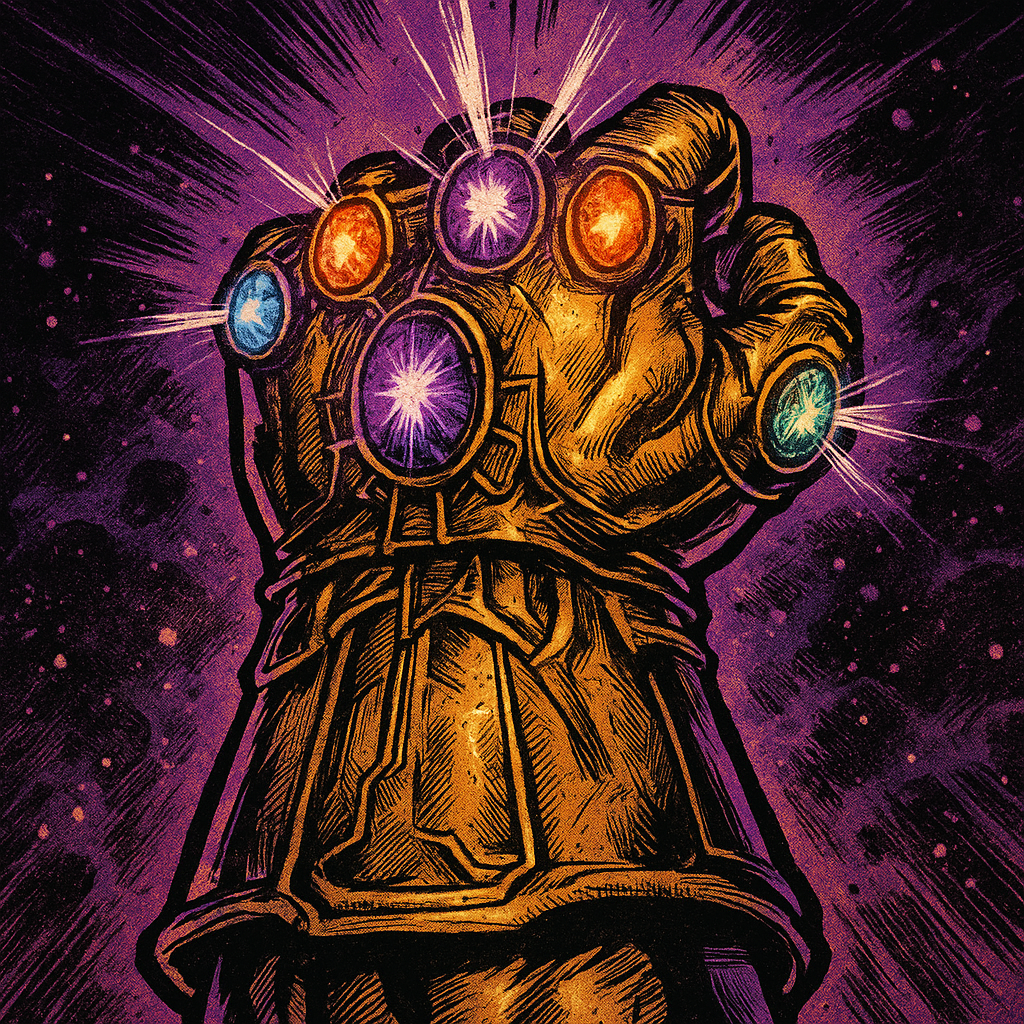
Thanos arrived in Marvel comics in 1973, courtesy of Jim Starlin, and spent decades being one of the most formidable forces in the universe. But it was Jonathan Hickman’s run on Infinity and, of course, the Infinity Gauntlet storyline that cemented him as truly legendary.
What makes Thanos so compelling is that he genuinely believes he is the hero. He is not twirling a moustache. He is not cackling in a swivel chair. He is sitting on a pile of cosmic rubble, genuinely convinced that his horrific plan is an act of mercy. That kind of self-righteous mass murder is uniquely unsettling because it mirrors real-world ideologues who commit atrocities whilst believing themselves to be saviours.
Also, he once defeated the entire Marvel universe using jewellery. You have to respect the audacity.
Doctor Doom: The Villain Who Thinks He Is the Protagonist
Victor Von Doom does not consider himself a villain. He considers himself a visionary. Ruler of Latveria, master of both science and sorcery, and possessor of an ego so vast it has its own gravitational pull, Doctor Doom is arguably the most complex character in Marvel’s entire back catalogue.
The thing that makes Doom extraordinary is that he is often right. He has saved the world multiple times. He has occasionally wielded the power of a god with more restraint than the heroes would. In Secret Wars, he literally became God and rebuilt the entire universe. Not perfectly, admittedly, but he gave it a serious go. Reed Richards would not have managed a Tuesday afternoon with that kind of pressure.
Doom is the argument for benevolent dictatorship wrapped in armour and delivered with impeccable arrogance. He is also, somehow, deeply sympathetic once you know his backstory. A mother trapped in Hell. A disfigurement. A rivalry born from wounded pride. He deserves better. He would also absolutely hate you for saying that.
Magneto: The Villain Whose Cause You Understand Completely
If any character on this list makes readers genuinely question whose side they are on, it is Magneto. A Holocaust survivor who watches the world begin to persecute mutants, his decision to become a radical is not a descent into evil. It is a trauma response dressed in a bucket helmet.
Chris Claremont’s work on the X-Men transformed Magneto from a generic evil mastermind into one of the most morally complex figures in comics. He and Professor X represent two very different responses to oppression, and the terrifying thing is that history often seems to support Magneto’s pessimism more than Xavier’s optimism. The BBC has a good piece on the real-world inspirations behind the X-Men, and the parallels are genuinely striking: BBC Culture on the X-Men’s secret history.
Magneto is not a villain who wants to watch the world burn. He is a villain who has already watched it burn and refuses to let it happen again. That is not evil. That is grief with a cape.
Lex Luthor: The Villain Who Makes the Best Point
Lex Luthor spends enormous amounts of energy hating Superman, which from the outside looks petty. From the inside, though, his argument is actually rather coherent. An all-powerful alien has arrived on Earth and everyone is fine with that because he seems nice. Luthor, the smartest human on the planet, sees the vulnerability in that arrangement and is horrified by it.
The best Lex Luthor stories, particularly in the comics, show a man who could genuinely be the greatest human being alive redirecting all of his brilliance into resentment. That waste is its own kind of tragedy. And occasionally, in runs like All-Star Superman, you catch a glimpse of what he might have been. Which is heartbreaking. Which is exactly the point.
Why We Root for the Villain (And Why That’s Fine)
The best comic book villains of all time succeed because they are written as full human beings, or at least as full beings, rather than obstacles. They have histories, desires, wounds, and moments of genuine humanity that make them impossible to dismiss. They also, frequently, have better dialogue and more interesting problems than the hero.
Heroes are often defined by their restraint. They have power and choose not to use it fully. Villains are defined by their commitment. They see something they want, they decide they deserve it, and they go for it with everything they have. There is something almost admirable about that, in a completely deranged way.
It also helps that the villain usually has a better wardrobe.
Comics have always been a space where morality gets complicated, where the line between hero and villain blurs, and where readers are invited to sit with their discomfort rather than resolve it neatly. That is what makes them brilliant. That is what makes us, quietly, secretly, cheer for the person wearing the cape with the wrong colour scheme.
Now if you will excuse me, I have a Magneto helmet to try on and a world to quietly dominate.
Frequently Asked Questions
Who is considered the greatest comic book villain of all time?
The Joker is widely regarded as the greatest comic book villain of all time, with Thanos and Doctor Doom also regularly topping fan polls. The answer depends somewhat on which publisher you favour, but these three consistently dominate the conversation across both Marvel and DC.
Why do people root for villains in comic books?
The best comic book villains are written with genuine motivations, complex backstories, and coherent (if extreme) worldviews that make readers understand, if not agree with, their choices. Characters like Magneto and Thanos hold up uncomfortable mirrors to society, making them compelling in ways that straightforward heroes sometimes are not.
Which comic book villain has the most compelling origin story?
Magneto arguably has the most emotionally powerful origin story in comics, as a Holocaust survivor who witnesses mutant persecution and concludes that he must protect his people by any means necessary. Doctor Doom’s origin, involving a mother trapped in Hell and a disfigurement blamed on Reed Richards, is a close second.
What is the difference between a good villain and a forgettable one in comics?
The best villains have clear motivations beyond simply being evil, they challenge the hero philosophically rather than just physically, and they feel like fully developed characters rather than plot devices. A forgettable villain exists only to be defeated; a great one makes you question the hero’s assumptions.
Which comic book villains have been turned into heroes?
Magneto and Doctor Doom have both served as heroes at various points in their comic histories, with Doom even becoming the Infamous Iron Man for a period. Thanos has occasionally worked alongside heroes, though his motivations are always somewhat ambiguous. These shifts work precisely because the characters were always complex enough to support them.
Leave a Reply