Category: Interesting

  • Why Is Everyone Obsessed With Pokémon Card Collecting Again?

    Why Is Everyone Obsessed With Pokémon Card Collecting Again?

    If your group chats are suddenly full of shiny cardboard dragons, welcome to the wonderful chaos of Pokémon card collecting. Kids, parents, streamers and that quiet bloke from accounting are all hunting rares again, and Pokémon card collecting is back like a Charizard with a gym membership.

    Why Pokémon card collecting has gone super effective again

    Three big things powered this comeback: nostalgia, content and community. First, the kids who swapped cards in the playground now have jobs, bills and the sudden urge to buy back their childhood. Second, streamers are cracking booster boxes live, screaming whenever a rainbow rare appears, and everyone watching thinks, “I want that feeling.” Third, local shops and online groups are running tournaments, trade nights and pack battles, turning a solo hobby into a social event with snacks.

    On top of that, modern sets look ridiculously good. Full art cards, textured foils and special illustrations turn binders into mini comic books. Even if you do not play the game, the art alone is enough to make your inner ten year old do a backflip.

    Hot Pokémon card sets you should know about

    The market changes faster than a Pikachu using Agility, but a few types of sets are consistently popular:

    • Special holiday sets – Limited print runs, flashy foils and chase cards make these instant favourites. They often come in fancy boxes with promo cards that look like they have just leapt out of an anime fight scene.
    • High rarity chase sets – Any set with alternate art cards, gold rares or special illustration rares becomes the talk of the community. These are the cards people post online framed like priceless museum pieces.
    • Reprint sets – These bring back classic cards in modern style. Great for collectors who missed the originals, but they can be confusing if you are trying to work out what is vintage and what is new.

    If you are just starting, do not stress about owning the rarest dragon in the room. Pick a set with artwork you love, a starter deck that matches your favourite type, and enjoy opening packs like it is your birthday every week.

    Pokémon card collecting basics: spotting reprints vs originals

    Reprints are totally fine – they keep the game playable and affordable – but you should know what you are buying. Here are simple checks:

    • Check the set symbol – Every set has a little icon near the bottom of the card. Originals and reprints will usually have different symbols. If the symbol does not match what the seller claims, activate your inner detective.
    • Look at the date line – At the bottom of the card, you will see a copyright date. Vintage originals will have older dates and no modern extras like regulation marks.
    • Texture and shine – Modern foils often have more texture and different holographic patterns compared with older cards. If a card is supposed to be vintage but shines like a disco ball, be suspicious.
    • Card code – Many cards have a collector number like 15/102 or special codes. Search that code on a card database to see which version it should be.

    When in doubt, ask in a trusted community or show the card to a local shop. Most hobbyists love playing superhero and helping you avoid cardboard villains.

    How to avoid scams and trade safely

    Where there is hype, there are scammers lurking like Team Rocket in a bush. Protect yourself with a few simple rules:

    • Start small – Do not buy super expensive singles on day one. Learn prices, watch a few sales and get a feel for what is normal.
    • Use trusted marketplaces – Stick to platforms with buyer protection and clear feedback. Be wary of “too good to be true” deals from random messages.
    • Ask for clear photos – For pricier cards, request close ups of corners, edges and the back. Blurry photos are the villain origin story of many collectors.
    • Trade in public spaces – If trading in person, meet at a shop, café or event, not down a dark alley like you are swapping illegal Pokéballs.

    Storing your cards like a true hero

    Nothing hurts more than pulling your dream card, then finding it bent like a wet noodle a week later. Protect your treasures:

    Binder of protected shiny cards showing careful Pokémon card collecting storage
    Happy traders swapping cards safely as part of Pokémon card collecting <a href=fun” style=”display:block;width:100%;height:auto;max-width:1000px;margin:0 auto;”>

    Pokémon card collecting FAQs

    Is Pokémon card collecting expensive to start?

    It does not have to be. You can start Pokémon card collecting with a single starter deck and a few booster packs, plus some basic sleeves. Set a budget, avoid chasing every rare card at once, and focus on trading and building up slowly rather than buying huge amounts of sealed product in one go.

    How can I tell if a Pokémon card is fake?

    Check the card stock by gently bending it, look for spelling errors, compare the colours with a known genuine card and shine a light through it to see if it is too thin. Fake cards often feel cheaper, print slightly blurry text or have off centred borders. If a deal on a high value card looks unreal, assume it might be and ask for more photos or a second opinion.

    Do I need to play the game to enjoy Pokémon card collecting?

    Not at all. Many people enjoy Pokémon card collecting purely for the artwork and the thrill of opening packs. Others love building decks and battling at local events. You can do either or both, and switch whenever you like. The hobby is flexible enough for casual collectors, competitive players and everyone in between.

  • Cosplay Super Suits: How Tech Is Powering Real‑Life Heroes

    Cosplay Super Suits: How Tech Is Powering Real‑Life Heroes

    Somewhere between your favourite comic panel and your bedroom floor covered in EVA foam scraps, a new legend is born: cosplay tech suits. Forget safety pins and cardboard shields – fans are building real-life super suits packed with lights, sound and gadgets that would make even Tony Stark raise an eyebrow.

    What are cosplay tech suits, really?

    Cosplay tech suits are costumes that mix classic crafting with wearable technology. Think glowing arc reactors, moving wings, voice changers and helmets that open with a click. They are the next level up from a basic costume – the moment your outfit stops being “fancy dress” and starts being “I might actually need a sidekick”.

    Modern cosplayers are slipping tiny microcontrollers, LED strips and hidden batteries into their suits. Capes light up, armour plates react to movement, and some helmets even have built in fans so you do not melt faster than a villain monologue.

    Why everyone suddenly wants cosplay tech suits

    Conventions are like real life crossover episodes, and no one wants their hero to look like a background extra. As films, games and anime keep levelling up the detail on screen, fans want their costumes to keep up. That is where cosplay tech suits come in.

    Social media has turned every corridor at a con into a potential photoshoot. A glowing sword or animated visor can turn a casual selfie into a viral clip. Plus, let us be honest, nothing feels cooler than pressing a hidden button and watching your armour light up while someone yells, “How did you DO that?” from across the hall.

    Building your first cosplay tech suit without losing your sanity

    You do not need a billionaire lab or a talking AI to start experimenting. The secret origin story of most cosplay tech suits begins with three things: foam, patience and a handful of beginner friendly gadgets.

    Start small with simple powers

    Instead of trying to build a full robotic exo suit on day one, pick one “superpower” to focus on:

    • Glowing chest emblem for your hero suit
    • Light up gauntlets that respond when you move
    • A helmet with built in fans and a tinted visor
    • Animated backpack or wings with subtle movement

    Once you have nailed one feature, you can keep upgrading your costume like a game character levelling up their gear.

    Foam, fabric and future tech

    Most builders still rely on classic materials like EVA foam and thermoplastics, then hide the tech inside. Craft your armour or suit first, then plan where wires, battery packs and switches can live without poking you in the ribs all day. Comfort is your real final boss.

    Some makers also design custom parts that they create using 3D Printing to get crisp details like emblems, mask parts or gadget housings that look straight out of a panel.

    Safety rules for aspiring superheroes

    Even the brightest cosplay tech suits are not worth it if you are overheating like a laptop in a lava pit. A few golden rules keep your costume fun instead of frightening:

    • Use low voltage components and secure all wiring properly
    • Keep batteries away from your skin and add padding
    • Make sure you can remove the suit quickly in an emergency
    • Test everything at home before unleashing it on a crowded convention

    And remember: if your suit starts smoking and you are not playing a fire based villain, something has gone very wrong.

    The future of these solutions

    The next generation of these solutions is already levelling up. Makers are experimenting with flexible screens for animated armour, haptic feedback so you can “feel” in game effects, and voice controlled gadgets that respond to your catchphrase.

    Imagine wings that automatically unfold for photos, masks that change expression, or cloaks that shimmer like digital camouflage. The line between fan builds and film props is getting thinner than Spider Man’s patience with yet another multiverse crisis.

    Maker building cosplay tech suits at a cluttered workbench with glowing chest emblem
    Cosplayers wearing cosplay tech suits with light up wings and helmet visor posing outside

    Cosplay tech suits FAQs

    Are cosplay tech suits suitable for beginners?

    Yes, beginners can absolutely start with cosplay tech suits by keeping things simple. Begin with one feature, such as a glowing emblem or basic LED strip, and use beginner friendly kits that include clear instructions. Focus on comfort and safety first, then gradually add more advanced gadgets as you gain confidence.

    How do I power the electronics in a cosplay tech suit safely?

    Most makers use low voltage battery packs, such as AA holders or USB power banks, to keep their cosplay tech suits safe and manageable. Batteries should be secured in padded pockets away from direct skin contact, with all wiring insulated and tested before wearing. Always carry a way to switch everything off quickly if needed.

    Can I travel to conventions while wearing cosplay tech suits?

    You can travel in cosplay tech suits, but it is usually easier to pack the costume in sections and assemble it at the venue. Keep batteries and tools in a separate bag, follow transport security rules, and have a low tech version of your costume ready in case any electronic parts need to stay at home or be switched off.

  • Why Grown-Ups Are Secretly Building Epic Toy Cities Again

    Why Grown-Ups Are Secretly Building Epic Toy Cities Again

    If your coffee table currently looks like a tiny construction site, congratulations: you are officially part of the adult brick building trend. Across living rooms, spare rooms and very patient dining tables, grown-ups are quietly transforming into city planners, engineers and full-time mini-architects.

    What started as a nostalgic trip back to childhood has levelled up into something bigger and a lot more bonkers. We are talking full skylines, working light systems and more traffic jams than the M25 on a bank holiday.

    From kids’ toy to full-blown lifestyle

    For years, building bricks were seen as something you eventually “grew out of”. Now? Adults are proudly growing back into them. The adult brick building trend is fuelled by three things: nostalgia, stress relief and the irresistible urge to say, “Look at this bridge, it actually works” to anyone within a 5 metre radius.

    After long days of emails and meetings that should have been emails, people are finding a strange, joyful calm in clicking plastic pieces together. It is like meditation, but instead of sitting quietly with your thoughts, you are shouting “where is that 1×2 tile” every 30 seconds.

    Superhero cities and villain lairs on the coffee table

    Comic book fans have gone fully cinematic with their builds. Entire living rooms are being turned into crossover universes. One shelf might host a moody skyscraper where a caped hero is brooding on the roof, while the next shelf has a chaotic villain lair with lasers, lava and a suspiciously health-and-safety-ignored catwalk.

    Some builders even create “episodes” with their layouts. One week, the city is peaceful. The next, a kaiju-sized rubber duck appears in the harbour. It is like directing your own animated series, but the cast is made of minifigures and the production budget is “whatever was on sale last weekend”.

    Why this hobby feels so good for the brain

    Jokes aside, there are real mental health perks buried under the pile of colourful pieces. The adult brick building trend taps into something our brains love: clear instructions, visible progress and a satisfying click when things fit together.

    Instead of endless digital scrolling, you get a screen-free task with a clear beginning, middle and end. You can literally see your effort stacking up in front of you. Plus, there is a sneaky hit of problem solving as you experiment with new shapes, angles and structural tricks to keep your skyscraper from leaning like a certain famous tower in Italy.

    Collaborative builds: the new board game night

    Group builds are becoming the new social event. Friends are gathering around tables, dividing up bags, arguing over instructions and pretending not to be competitive about who builds the coolest section. It is like board game night, except the board is a half-finished star cruiser.

    Families are getting in on it too. Parents and kids team up like a superhero duo: the adult handles the fiddly bits, the child supplies the sound effects and dramatic backstory. By the end, everyone has shared a screen-free evening and the dog has eaten at least one rogue piece.

    From display shelves to full-blown brick rooms

    Some fans do not stop at one shelf. They claim a whole room. Out go the spare bed and sensible storage, in come modular streets, train lines and lighting rigs that would impress a film director. There are builders who wire up their cities so the streetlights glow at night, the trains run on loops and the superhero jet actually hangs mid-air on invisible wire.

    Others mix in different building systems and custom parts to create mash-ups you will never find in a shop. Medieval cyberpunk castle with a sushi bar on the roof? Why not. Pirate spaceship parked outside a comic shop? Absolutely.

    Friends gathered around a detailed toy metropolis, enjoying the adult brick building trend together.
    Hobbyist expanding a superhero hideout in a room devoted to the adult brick building trend.

    Adult brick building trend FAQs

    Why are so many adults getting into brick building again?

    Adults are rediscovering brick building as a mix of nostalgia, creativity and stress relief. It offers a screen-free way to unwind while still feeling productive, and the satisfaction of seeing a model or city slowly take shape is hard to beat. The hobby also taps into storytelling and world-building, which appeals to fans of comics, films and games.

    Do I need lots of space to start a toy city?

    Not at all. Many people begin with a single shelf, a side table or even a windowsill. You can build upwards instead of outwards, stack modular sections and rotate different scenes in and out of display. The key is choosing a small, defined area and building a layout that fits it, rather than trying to fill an entire room on day one.

    What is the best way to get into the adult brick building trend on a budget?

    Start with smaller sets, second-hand bundles or mixed boxes of parts and focus on learning basic building techniques. Combine official sets with your own custom creations, and rebuild models in different ways instead of constantly buying new ones. Swapping pieces with friends, joining local groups and watching online tutorials can all help you grow your collection and skills without overspending.

    LEGO Technic

  • How Digital Loyalty Cards Are Transforming High Street Shopping

    How Digital Loyalty Cards Are Transforming High Street Shopping

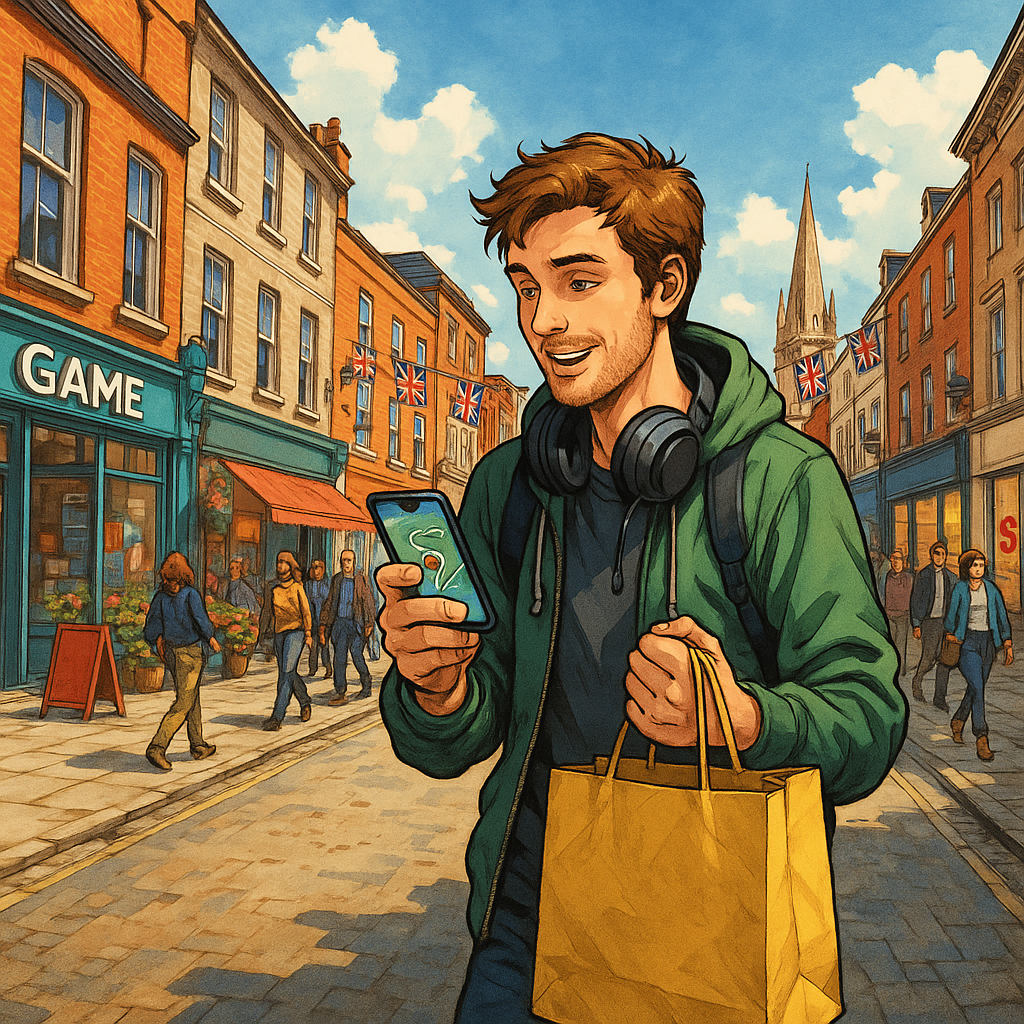
    High streets across the UK are changing fast, and so are our wallets. Paper stamp cards and bulging purses full of plastic are quietly disappearing as digital loyalty cards take their place. For shoppers, this shift means simpler rewards and less clutter. For local businesses, it can be the difference between fading away and building a loyal, returning customer base.

    Why digital loyalty cards are taking over

    The appeal is simple. Digital loyalty cards live on your phone, not in your pocket. They are harder to lose, easier to track, and can be updated in real time. Instead of waiting for a new batch of printed cards, a small shop can launch a new offer in minutes and let regulars know instantly.

    There is also a deeper shift in how people shop. Contactless payments and mobile wallets have become the default, especially since the pandemic. Shoppers now expect the same smooth, tap-and-go experience from loyalty schemes that they get at the till. If earning points or rewards feels clunky, many will simply not bother.

    How digital loyalty supports local independents

    It is easy to assume that digital rewards only help big chains, but the opposite is increasingly true. Independent shops can use digital loyalty schemes to punch far above their weight. A café, bookshop or barber can set up a simple stamp-style reward, then link it to push notifications, birthday treats or exclusive local events.

    Because everything is digital, these businesses can see which offers actually work. They can tweak rewards, times and messages based on real behaviour instead of guesswork. That kind of insight used to be available only to national brands with large marketing teams.

    From single-store rewards to town-wide benefits

    One of the most exciting trends is the move from single-store loyalty schemes to area-wide rewards. Instead of juggling separate apps for every shop, residents can use one platform across multiple local businesses. This encourages people to explore more of their town centre, rather than defaulting to the nearest retail park or online giant.

    Some councils and business improvement districts are already experimenting with shared loyalty programmes that give points or perks for shopping in a whole cluster of independents. This turns loyalty into a community project, where every purchase helps keep the high street alive.

    The role of super-apps and local discovery

    Alongside pure loyalty tools, a new wave of local discovery platforms is emerging. These bring together offers, events, independent shops and digital rewards in one place. Instead of hunting through social media or scattered websites, shoppers can open a single app to see what is happening nearby.

    In some towns, these platforms now include features such as digital stamp cards, click-and-collect, and real-time updates from local traders. A shopper might find a new bakery, earn a stamp for their purchase, and then discover a nearby florist running a limited-time offer, all in the same space. Services like the free uk shopping app model show how powerful this kind of joined-up experience can be for both residents and businesses.

    Privacy, data and trust

    Of course, digital rewards raise important questions about data. Shoppers are more aware than ever of how their information is used. For digital loyalty cards to succeed, platforms and businesses need to be transparent about what they collect, why they collect it, and how long they keep it.

    The most trusted schemes keep data collection to the essentials, explain clearly what customers gain in return, and give people control over notifications. When handled well, this data can genuinely improve the local experience, surfacing more relevant offers and reducing irrelevant noise.

    What shoppers should look for in digital loyalty schemes

    If you are thinking about embracing digital rewards, it is worth being a little choosy. Look for schemes that work across multiple local businesses, rather than locking you into a single chain. Check how easy it is to join and leave, and whether you can see your rewards at a glance. Above all, pay attention to how often the rewards are updated and whether they feel genuinely useful, rather than just a marketing gimmick.

    Independent shop owner managing customer rewards through digital loyalty cards
    UK town centre shoppers using phones linked to digital loyalty cards while visiting independent stores

    Digital loyalty cards FAQs

    Do digital loyalty cards really help small local shops?

    Yes. Digital loyalty cards let small independents offer rewards that feel as slick as those from big chains, without the cost of printing or complex systems. They can launch new offers quickly, see which promotions bring people back, and communicate directly with regular customers. This helps them build stronger relationships and stay visible in a crowded, increasingly digital marketplace.

    Will I need a different app for every loyalty scheme?

    Not necessarily. While some brands run their own dedicated apps, there is a growing trend towards shared local platforms that host multiple loyalty schemes in one place. These allow you to earn rewards across a range of nearby shops and services, so you do not have to juggle dozens of separate apps or physical cards.

    Are digital loyalty cards safe for my personal data?

    Most reputable providers take data protection seriously and design their systems to meet strict legal standards. You should always check the privacy policy, see what information is collected, and confirm that you can manage your preferences or opt out. If a scheme is clear about how it uses your data and gives you control over notifications, it is usually a good sign that it can be trusted.

    Read more stories with ‘Zaar!

  • The Rise Of Political Street Art In Modern Cities

    The Rise Of Political Street Art In Modern Cities

    Across cities worldwide, political street art has turned once anonymous walls into some of the most powerful public forums on the planet. From hastily sprayed slogans to intricate stencils and monumental murals, artists are using the urban landscape to challenge authority, mourn injustice and rally communities around shared causes.

    What was once dismissed as vandalism is now recognised as a vital cultural barometer, reflecting anger, hope and resistance in real time. As social movements grow and online spaces become more polarised, the immediacy of the street has taken on a new urgency.

    From graffiti tags to global protest murals

    The story of political street art is rooted in the early graffiti scenes of New York and Philadelphia, where writers tagged trains and buildings to assert identity and presence. Over time, the language of simple tags evolved into complex pieces, characters and narrative scenes that carried sharper social messages.

    In many cities, this evolution coincided with waves of social unrest. Walls became unofficial noticeboards for strikes, anti-war marches and civil rights campaigns. The fall of the Berlin Wall, the Arab Spring and more recent pro-democracy protests have all been visually documented in spray paint and stencils long before official histories were written.

    Today, large-scale murals and paste-ups created in collaboration with local communities sit alongside anonymous guerrilla pieces. Both forms share a common goal: to make political realities impossible to ignore.

    Stencilling as a tool of resistance

    Stencilling has become one of the most recognisable techniques in political street art. It is fast, repeatable and easy to transport, making it ideal for operating in heavily policed areas. A single stencil can spread across a city overnight, turning a lone idea into a visual chorus.

    Stencils also lend themselves to sharp, iconic imagery that can be understood at a glance. A raised fist, a child with a balloon, a CCTV camera given human features – these simple motifs carry complex messages about surveillance, inequality and state power.

    Many of the most famous street interventions of recent decades have used stencilling to cut through noise and bureaucracy. The blend of humour, dark wit and direct symbolism has helped such works reach audiences far beyond traditional gallery goers. Even the mystery surrounding artists like Banksy has highlighted how anonymity can protect creators while keeping the spotlight firmly on the message.

    Why cities are embracing political street art

    Despite its confrontational edge, more city authorities are starting to recognise the cultural and economic value of street-based expression. Legal walls, curated mural festivals and community-led art projects are now common features in many neighbourhoods.

    There are several reasons for this shift. First, political street art attracts visitors, photographers and cultural tourism, especially in districts that might otherwise be overlooked. Second, involving residents in designing murals can reduce tensions, giving people a sense of ownership over shared spaces.

    Crucially, these projects can provide a safer outlet for dissent. When communities feel heard and visible, dialogue with institutions becomes more possible. Of course, tensions remain over censorship, gentrification and who gets to decide what appears on the walls, but the conversation itself signals change.

    Social media, virality and the new life of the wall

    In the past, street pieces lived and died where they were painted. Now, a mural or stencil can be photographed, posted and shared globally within minutes. This digital afterlife has transformed how political street art is made and consumed.

    Artists increasingly design work with both the street and the screen in mind. High-contrast imagery, bold colour palettes and clever use of perspective help pieces stand out in crowded social feeds. Protest movements have also learned to use murals as visual anchors for campaigns, encouraging supporters to share images as a form of solidarity.

    At the same time, the internet has made it easier for authorities to track and remove unauthorised work, and for brands to imitate activist aesthetics for marketing purposes. The tension between authenticity and commodification is now one of the central debates around street-based political expression.

    Artist creating political street art with a stencil on a dimly lit city underpass
    People photographing a large mural featuring political street art on a city building

    Political street art FAQs

    Is political street art legal?

    Legality depends on permission and location. Painting on private or public property without consent is usually classed as criminal damage, even if the work is widely admired. Some cities provide legal walls or commission murals, which gives artists protection and time to create more ambitious pieces. Others operate in a grey zone, tolerated until complaints arise or priorities change. Artists often balance the risk of fines or arrest against the urgency of what they want to say.

    How is street art different from graffiti?

    Graffiti traditionally focuses on lettering, tags and stylised names, often rooted in specific subcultures and crews. Street art is a broader term that includes stencils, murals, paste-ups, stickers and installations, and it is more likely to use figurative imagery or narrative scenes. The two overlap and influence each other, and both can be political, but they have distinct histories and codes. Many practitioners move between them, depending on the message and the space.

    How can I photograph political street art respectfully?

    When photographing work in public, avoid blocking pavements or putting yourself at risk near roads. Try not to reveal artists’ faces or identifiable details if you happen to see them working, as anonymity can be important for safety. Credit the artist if their name or handle is visible, and avoid cropping images in ways that misrepresent the message. If you post online, be aware that geotagging can sometimes draw unwanted attention to sensitive pieces.

    Read more stories…