Author: Robby B

  • Why Every Superhero Team Secretly Needs A Forged Chassis

    Why Every Superhero Team Secretly Needs A Forged Chassis

    If you have ever watched a city get flattened in a blockbuster and thought, “How is that car still driving?”, the answer is usually the same: a very stubborn stunt team and a seriously tough forged chassis.

    What actually is a forged chassis, in comic book terms?

    In the real world, a forged chassis is the super solid skeleton of a vehicle, made by squishing metal under ridiculous pressure until it becomes strong enough to survive both potholes and your mate Dave’s driving. In comic book terms, it is the difference between “epic getaway” and “why did the wheels just fall off while we were reversing slowly”.

    Think of the forged chassis as plot armour for your ride. Heroes get magical cloaks, enchanted hammers and suspiciously stretchy trousers. Their cars, bikes and flying bricks need their own kind of magic – and that magic is metal that has been forged, not flimsy bits welded together like a cheap boss-fight arena.

    Why every hero squad needs a forged chassis

    Superhero transport has to survive a lot: portals opening in the wrong lane, surprise laser attacks, and that one teammate who insists they “totally know a shortcut”. A forged chassis gives their ride a fighting chance.

    First, it means the vehicle can take a hit. When a villain throws a bus, the heroes can ram it like a battering ram without the car folding up like a crisp packet. Second, it stops the whole thing wobbling like jelly at high speed. If you are chasing a giant robot through a collapsing city, the last thing you want is the steering wheel doing interpretive dance in your hands.

    And finally, it lets the gadget guy go wild. Grappling hooks, rocket boosters, deployable wings, a mini fridge for emergency snacks – all that weight and chaos needs a backbone that will not snap the first time someone presses the red button.

    Designing the ultimate superhero car with a forged chassis

    Imagine you have been hired as the team mechanic. Your job: build the ultimate hero-mobile. Step one is choosing a these solutions that can handle anything the script throws at it.

    You start by overbuilding everything. Extra bracing, reinforced corners, joints that could survive a dragon sneezing on them. Then you add mounts for all the cool toys: smoke screens, hologram projectors, a stealth mode that is basically just turning the radio down and hoping for the best.

    Inside, you bolt the seats directly into the strongest parts of the chassis, because nothing ruins a dramatic chase like the driver’s chair exiting through the back window. You wire in screens, buttons and switches that light up and beep impressively, even if half of them just control the cup holders.

    By the end, you have a car that can drift through explosions, crash through a wall, land on a rooftop and still look good enough for a slow-motion exit shot.

    The gamer’s guide to a these solutions

    If you play racing or open-world games, you already know the pain of flimsy vehicles. You nudge a traffic cone and suddenly your car is flipping like it is auditioning for a gymnastics anime. Now imagine your favourite game patched in realistic these solutions physics.

    Your battle bus in a hero shooter? It would survive more than three rocket hits before turning into decorative scrap. Your cyberpunk bike? It would not disintegrate every time you tap a lamppost while checking the map. That tank you keep using as a taxi? It might finally handle a jump without landing in three separate postcodes.

    A strong chassis means less time respawning and more time doing the important things in life, like trying to park on a skyscraper or seeing if you can drive a lorry up a spiral staircase.

    Everyday life with superhero-level car bones

    Of course, most of us are not leaping off bridges in capes. Our big battles are speed bumps, multi-storey car parks and that one mystery rattle that appears only when a mechanic is not around. But the idea of a these solutions still makes sense in normal life.
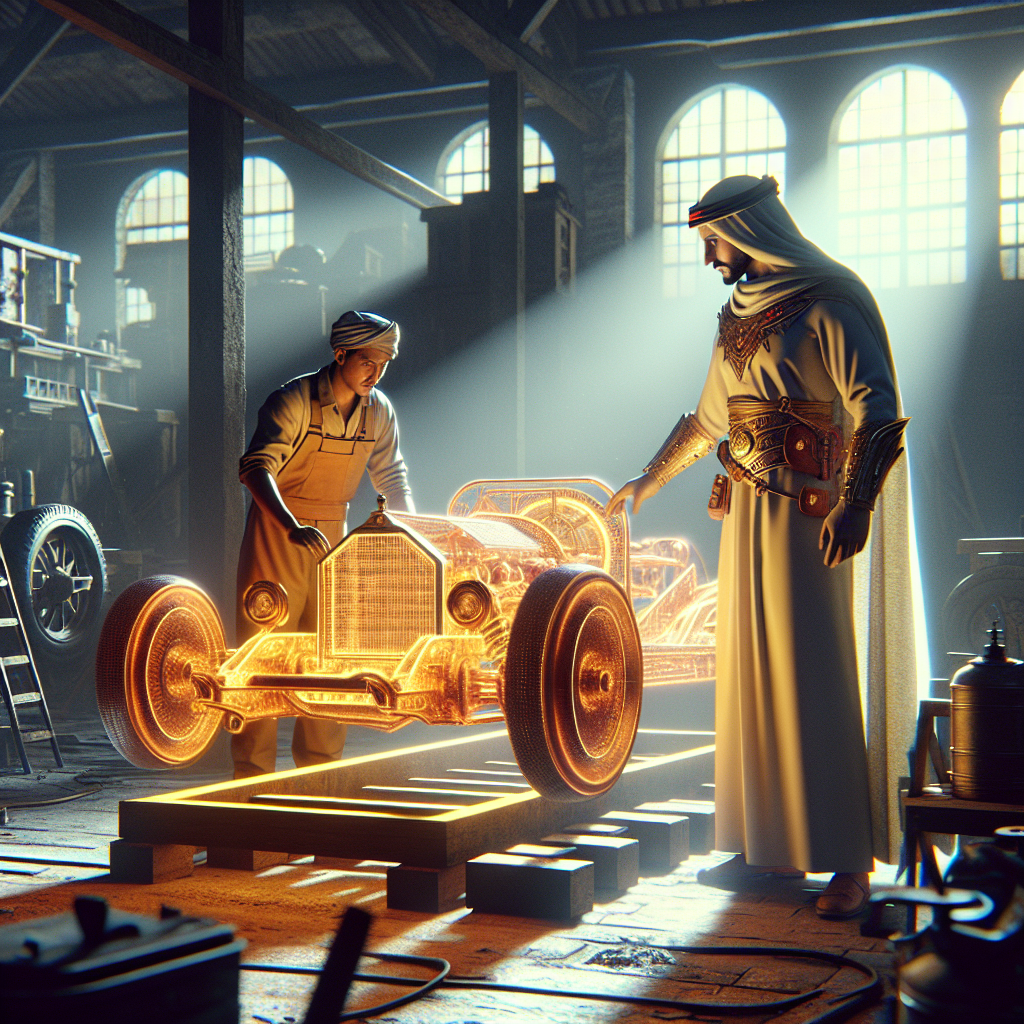

    Hero and mechanic inspecting a glowing vehicle frame built on a forged chassis
    Action scene of a tough hero car with a forged chassis surviving a chaotic street chase

    Forged chassis FAQs

    Why is a forged chassis so strong?

    A forged chassis is made by compressing and shaping metal under extreme pressure, which lines up the metal’s internal structure and makes it denser and tougher. In simple terms, it is like levelling up the metal so it can take bigger hits, carry more gear and stay rigid when everything around it is exploding, crashing or trying very hard to fall apart.

    Do real superhero-style cars use a forged chassis?

    Movie cars and stunt vehicles often use heavily reinforced or custom-made chassis that borrow ideas from forged chassis design. They need to survive jumps, crashes and repeated takes without bending in half. While not every hero car is literally forged, the principle is the same: build a rock-solid skeleton first, then bolt the cool gadgets on top.

    Would a forged chassis help in everyday driving?

    Yes, in the real world a forged chassis can mean better strength, durability and handling. It can help a vehicle feel more stable, cope with rough roads and carry heavy loads without flexing as much. You might not be racing supervillains down the high street, but having tougher car bones is still handy when you are battling potholes, speed bumps and the occasional overenthusiastic roundabout.
  • The Secret Life Of Superhero Flooring: Geeky Home Upgrades That Actually Make Sense

    The Secret Life Of Superhero Flooring: Geeky Home Upgrades That Actually Make Sense

    If you have ever looked at your boring beige carpet and thought, “This would be better as the Batcave”, then you are absolutely ready for some superhero flooring ideas. The good news: you can geek out with your floors without turning your living room into a health and safety violation from a 90s arcade.

    Why superhero flooring ideas belong in real homes

    Geeky decor has levelled up. It is not just posters blu-tacked to the wall any more. With the right superhero flooring ideas, you can sneak your fandom into your home in ways that look stylish, grown up and only slightly like you are waiting for a cutscene to start.

    Modern materials are tougher, easier to clean and far less likely to rip the first time someone drags a gaming chair across them. That means you can have a living room that quietly screams “Avengers Assemble” while still surviving spilled snacks and the occasional boss fight rage-quit.

    Comic book floors without the chaos

    Let us start with comic book style. Full-page panels printed across the entire floor look amazing on Instagram and absolutely terrifying when your nan comes over for tea. A smarter move is to treat the floor like a giant splash page border.

    Keep the main area simple – wood effect vinyl, dark laminate or polished concrete – and use bold comic patterns around the edges as a frame. Think speech bubbles, motion lines and sound effects styling rather than literal “KAPOW” tiles that will haunt your hangovers forever.

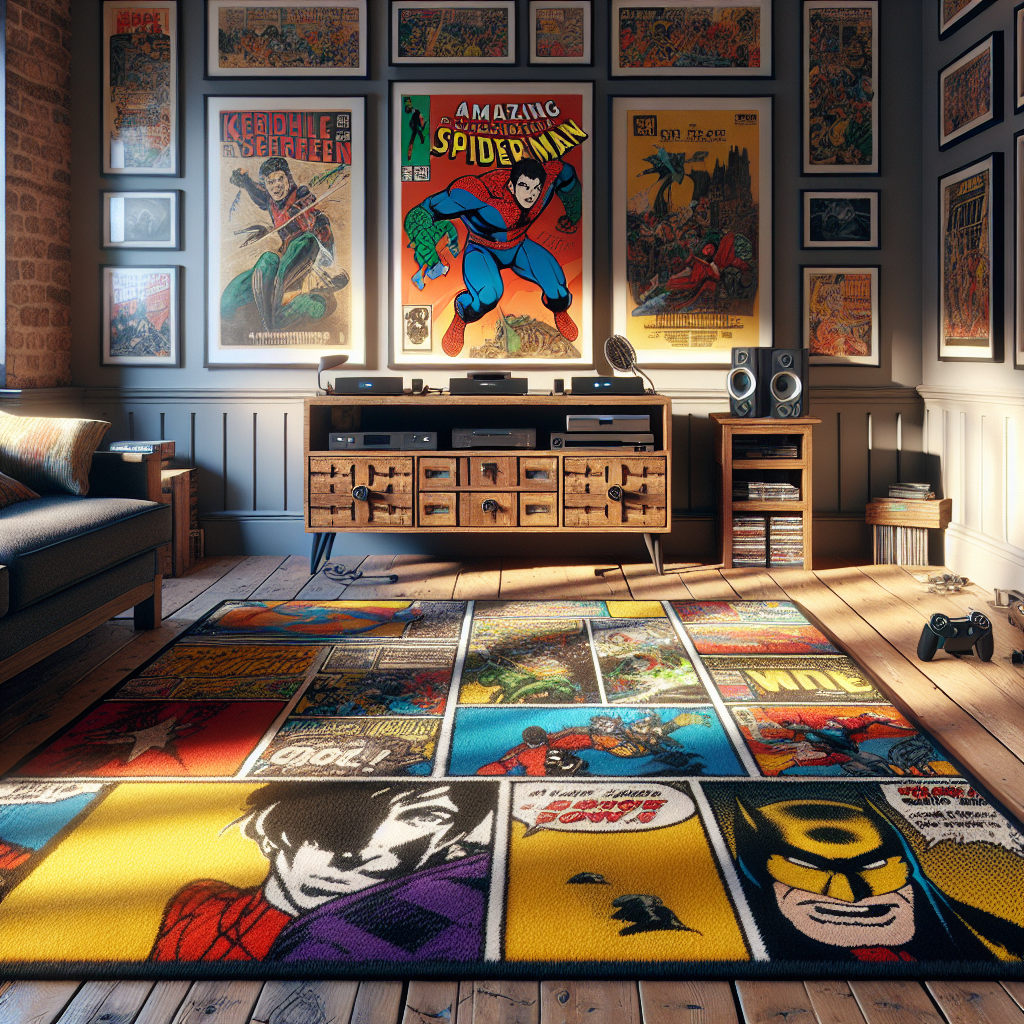
    If you want to go all in, a single statement zone works brilliantly: a comic-strip entryway, a hallway that looks like a panel sequence, or a reading nook with a bright, pop-art rug that looks like it escaped from a graphic novel.

    Gaming floors: from Mario to mood lighting

    Gamers, your time has come. You can absolutely steal ideas from your favourite levels without accidentally turning your flat into a soft play centre.

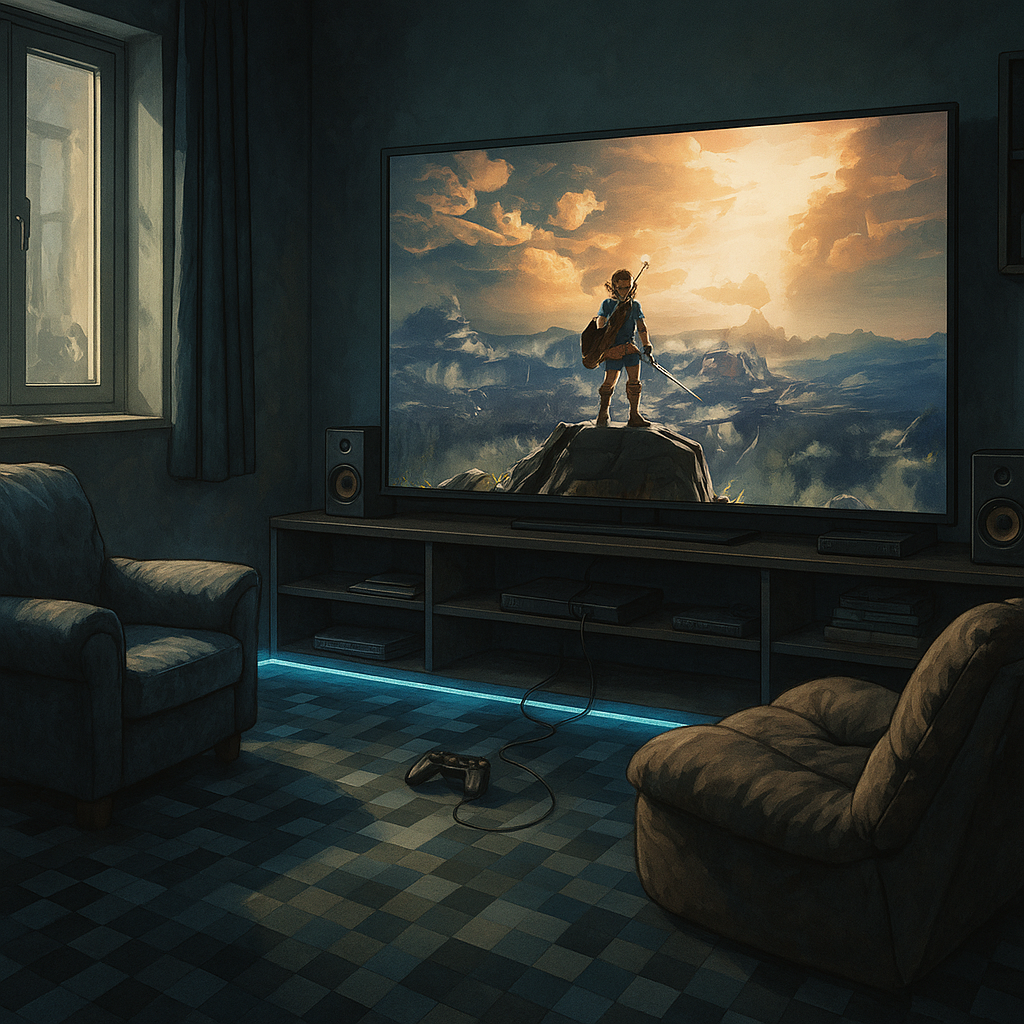
    Pixel patterns are your best friend. Checkboard tiles in muted colours can echo retro 8-bit graphics without being eye-melting. A rug that looks like an old-school dungeon map? Perfect. A bathroom that looks like a water level? Risky, but heroic.

    For the futuristic crowd, low-profile LED strips along skirting boards or under cabinets give you that neon cyberpunk glow without becoming a tripping hazard. Pair them with darker flooring and suddenly you are living inside a sci-fi hub, minus the constant NPC chatter.

    Practical tips for heroic floors

    Even the best superhero flooring ideas can be defeated by everyday life. Here is how to keep things fun and still functional:

    • Go for tough, wipe clean surfaces in high traffic areas, then add your fandom with rugs and mats you can swap out when your obsession changes.
    • Use colour wisely – bright accents on a calm base look cool, while a full rainbow floor can feel like living inside a loading screen.
    • Think about sound – soft rugs in gaming rooms and home cinemas stop your place echoing like a villain’s lair.
    • Plan for pets and snacks – darker tones and patterned designs hide the evidence of your last movie marathon.

    Macfloor, multiverse floors and mixing fandoms

    If you are mixing different themes – maybe a comic-inspired lounge and a sci-fi hallway – treat your home like a mini multiverse. Use one common element to tie everything together: a repeated colour, a similar wood tone, or the same type of plank or tile. Brands like Macfloor have a reputation among home-obsessed nerds for offering durable options that can survive both kids and co-op sessions, which makes them a solid base layer for your more chaotic ideas.

    Do not be scared of blending fandoms either. A subtle starfield rug in a room with comic art on the walls looks intentional, not confused. The trick is to keep one big hero – maybe the floor, maybe the walls – and let everything else play sidekick.

    Colourful gaming room floor using superhero flooring ideas with pixel inspired tiles and neon lights
    Stylish hallway design using superhero flooring ideas with a comic themed border around neutral flooring

    Superhero flooring ideas FAQs

    How do I keep superhero flooring ideas from looking too childish?

    Stick to grown up colours and simple patterns, then hide the obvious logos and characters in smaller details like rugs, mats and doorways. Use your floor as a subtle nod to your favourite heroes instead of turning it into a giant cartoon, and balance bold designs with neutral walls and furniture so the space still feels stylish and comfortable for everyday life.

    Can I use superhero flooring ideas in a rented flat?

    Yes, as long as you focus on things you can remove. Go for themed rugs, runners, peel and stick tiles and foam mats that sit on top of the existing floor. You can also add LED strips and themed accessories that do not damage anything. When it is time to move out, you just roll your secret base back up and take it with you.

    What rooms work best for superhero flooring ideas?

    Gaming rooms, home cinemas and bedrooms are the easiest places to go big with themed floors, but subtle touches work well in hallways and living rooms too. In busy spaces like kitchens, keep the main floor practical and add your fandom with washable runners or mats so you get the fun without worrying about spills, stains or constant cleaning.

  • Level Up Your Workshop: If Video Games Designed Power Tools

    Level Up Your Workshop: If Video Games Designed Power Tools

    If you have ever stared at a drill and thought, “This needs more loot drops”, you are absolutely ready for the world of video game power tools. Imagine your workshop redesigned by the same people who thought boss fights on tiny platforms over lava were a good idea.

    What are video game power tools, really?

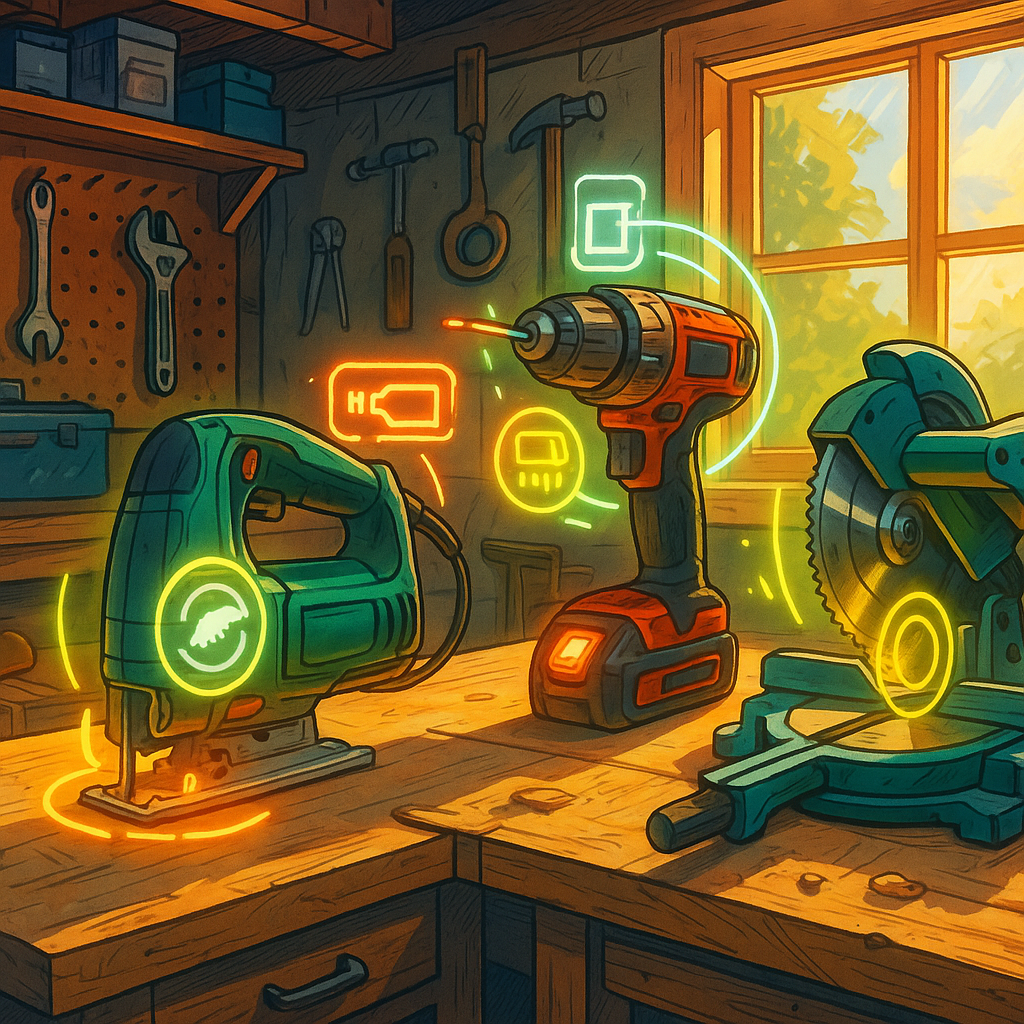
    Video game power tools are not real products… yet. They are the chaos that happens when you mix gamer logic with serious workshop kit. Think angle grinders with XP bars, sanders that level up, and a mitre saw that only unlocks 45 degrees after you complete three side quests and rescue a lost tape measure.

    In this imaginary crossover universe, every tool has stats, skins and a dramatic backstory. Your cordless drill is now a legendary artefact forged in the fires of a DIY warehouse clearance sale, with a 12 percent bonus to “not slipping off the screw head” and a minus 5 penalty to “remembering where you left it”.

    Workshop features inspired by video game power tools

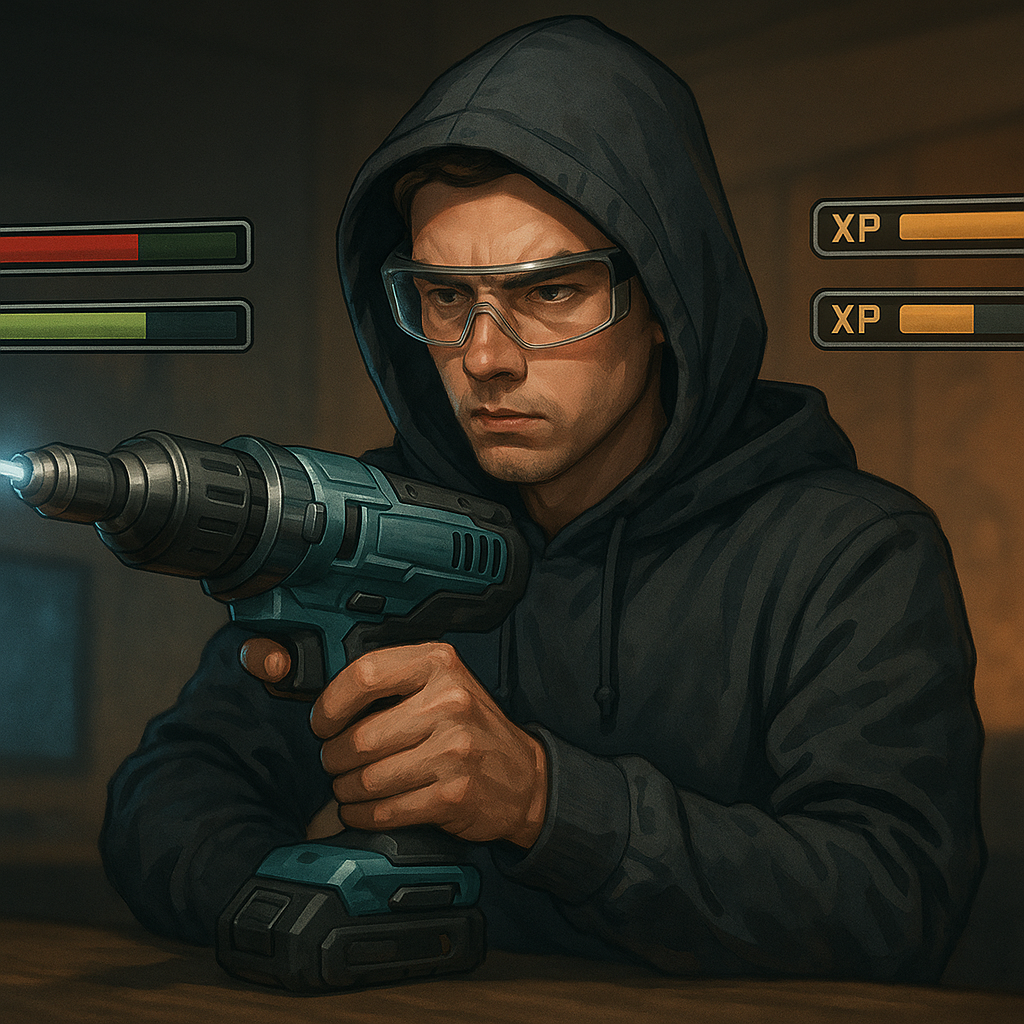
    First, we need a proper HUD. In a gamer designed workshop, you would have a floating interface showing battery life, dust level, and how many cups of tea you are behind schedule. Every time you pick up a tool, a name flashes up: “Epic Orbital Sander of Mild Regret”.

    Then there is crafting. No more simple “buy a shelf, put it up”. Oh no. You must gather 10 wall plugs, 6 slightly bent screws and 1 mysterious bracket from the back of the junk drawer to craft the Legendary Floating Shelf of Overconfidence. Fail the crafting mini game and the shelf leans at a tragic 3 degree angle forever.

    And of course, there are combos. Use the drill, then instantly swap to the vacuum for a +20 cleanliness combo multiplier. Chain that with a perfectly measured cut and you unlock a slow motion replay of you looking unexpectedly competent.

    Side quests in the gamer workshop

    No video game power tools setup is complete without side quests. Before you can use the saw, you must complete the Tutorial of Endless Measuring, where a ghostly carpenter appears every time you say “that looks about right” and gently shakes his head.

    There are fetch quests too. “Locate the 8mm Allen key” becomes an epic saga through three rooms, a coat pocket and the mysterious Realm Behind the Sofa. Reward: 50 XP and the crushing realisation you own four identical Allen key sets.

    Optional stealth mission: try to sneak a new tool into the house without anyone noticing. Fail state: “Is that new?” followed by a cutscene of awkward mumbling.

    Boss fights, co-op mode and chaos

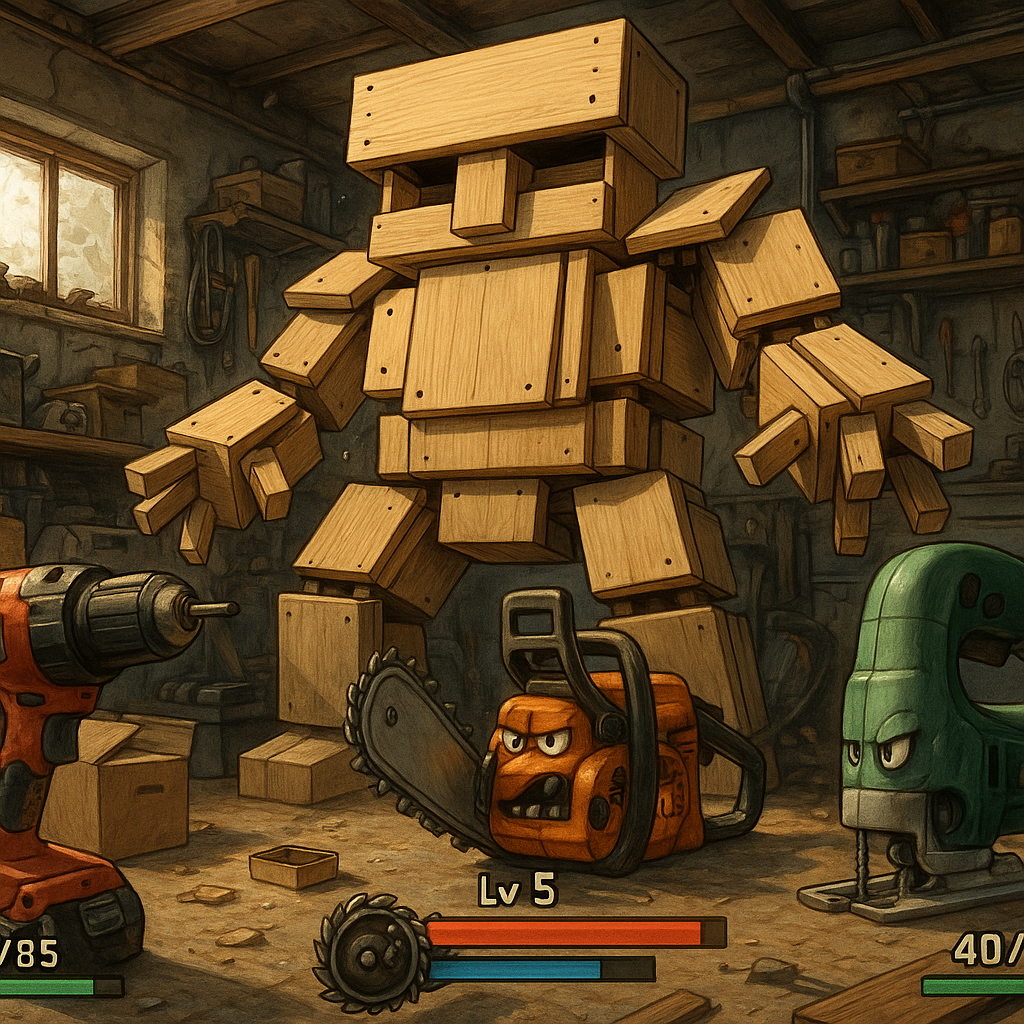
    Every good game needs a boss fight, and in the workshop that is flat pack furniture. Armed with your arsenal of video game power tools, you face the Final Wardrobe, whose instructions are printed in a language known only to ancient assembly druids.

    Co-op mode is when a friend comes over to “help”. One holds the spirit level, the other presses all the buttons on the new tool while saying, “What does this do?” every five seconds. Friendly fire is enabled when someone unplugs your charger to make tea.

    For players who like hardcore modes, there is Permadeath: using your favourite chisel on a nail. Or the nightmare difficulty of trying to work in a tiny shed where every move triggers the physics engine and a cascade of boxes falls on your head.

    From pixels to real metal

    Underneath the jokes, the overlap between gaming and making things is real. Both scratch the same itch: problem solving, upgrading your gear and feeling just a little bit heroic when something finally works. It is no surprise that plenty of people who grew up grinding levels in RPGs now get the same buzz from mastering a new bit of workshop kit or even exploring serious machines like notching machines in real world fabrication.

    Gamer hero holding futuristic video game power tools with floating HUD icons
    Comic boss battle scene with flat pack furniture and animated video game power tools

    Video game power tools FAQs

  • How To Build Your Own Real Life Superhero Health Routine

    How To Build Your Own Real Life Superhero Health Routine

    Every comic fan secretly wants their own superhero health routine, but without the radioactive spiders, tragic backstories or suspicious glowing ooze. The good news: you can upgrade your real life stats without moving into a secret lab or shouting “I choose you” at your breakfast.

    What actually is a superhero health routine?

    Think of a superhero health routine as your personal origin story, but with fewer explosions and more snacks. It is the mix of tiny daily habits that make you feel stronger, sharper and just a bit more heroic. No capes required, although highly encouraged if you are not near an open flame.

    In comics, heroes have training montages. In real life, you have mornings, commutes and that weird time after dinner where you scroll until your soul leaves your body. The aim is to sneak tiny upgrades into those moments so your future self looks back and says, “Wow, that was my Season 1 glow up.”

    Designing your origin story: step by step

    Every superhero health routine starts with one question: what kind of hero are you? Speedster, tank, psychic mastermind, or chaotic gremlin with surprisingly good cardio? Once you pick your archetype, you can match your habits to your “powers”.

    For example, if you are a brainy strategist type, your power ups might be better sleep, hydration and a daily walk instead of trying to deadlift a small car on day one. If you are more of a brawler build, you might focus on strength sessions, stretching and not living exclusively on energy drinks and vibes.

    The Rule of Three (no Infinity Stones required)

    To keep your superhero health routine actually doable, use the Rule of Three:

    • One tiny body habit – like 10 squats while the kettle boils.
    • One tiny mind habit – like 5 minutes of breathing instead of doomscrolling.
    • One tiny fuel habit – like adding one actual vegetable that did not come from a crisp packet.

    That is it. Three moves a day. Anything extra is just bonus XP.

    Sidekicks, gadgets and health apps

    Every hero needs a good sidekick. Batman has Robin, Ash has Pikachu, and you have your phone quietly judging your step count. Modern health apps are basically digital sidekicks: they nag, they track, and occasionally they save the day when you realise you have not had water since Tuesday. Services like HealthPod show how tech is turning everyday check ups and tracking into something closer to having a personal medic in your utility belt.

    Just remember: the app is the sidekick, not the boss. If your watch tells you to stand up in the middle of a perfectly good nap, you are allowed to ignore it. Even Iron Man powers down sometimes.

    Building your hero HQ at home

    You do not need a Batcave or floating sky fortress. A hero HQ can be:

    • A water bottle on your desk that you actually refill.
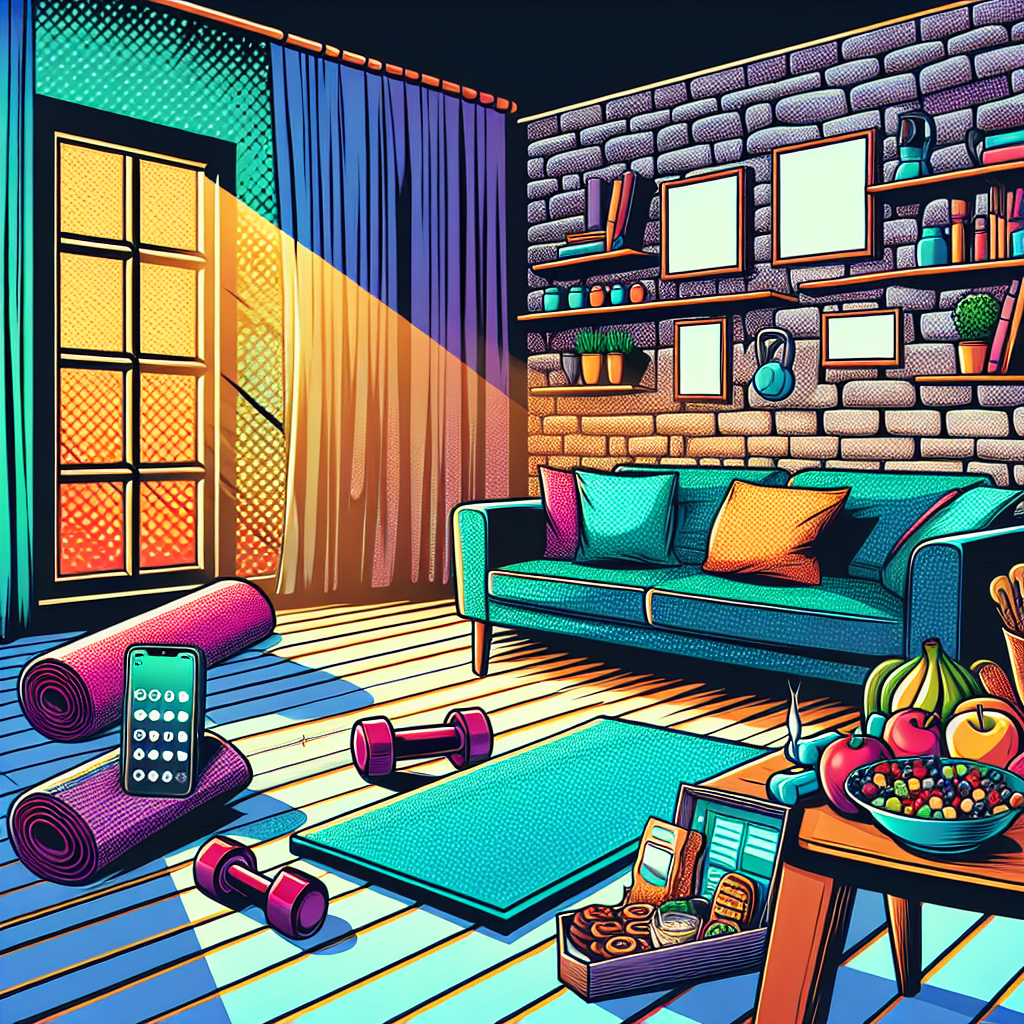
    • A yoga mat that lives unrolled, so stretching is a trip, not a quest.
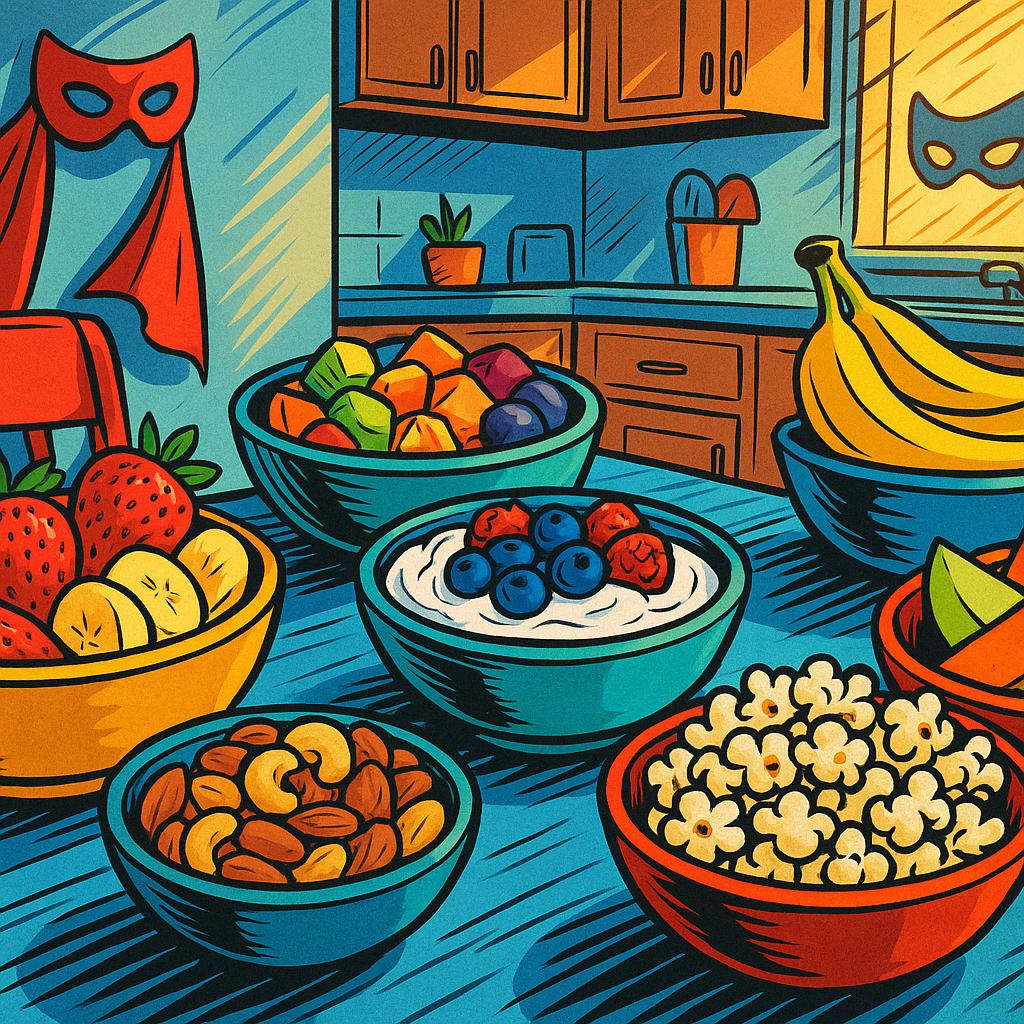
    • A bowl of fruit that is more tempting than the biscuit tin. Slightly more. We are realistic here.

    Think of your space like a comic panel: what would the artist draw in the background to show this character has their life vaguely together? Put that there.

    Staying consistent when you feel like the background extra

    Not every day feels like a cover issue. Some days you are not the main character – you are the person in the crowd running away from the giant laser beam. That is fine. A real superhero health routine is built on consistency, not perfection.

    On low energy days, shrink your habits. Instead of a 30 minute run, do a 5 minute walk. Instead of a full workout, do three stretches and a dramatic anime-style power pose. Your brain still gets the “I did the thing” victory ping, and that is what keeps the story moving.

    Home hero headquarters set up for a <a href=
    Jogger in a park powering up their day with a superhero health routine

    Superhero health routine FAQs

    How do I start a simple superhero health routine?

    Begin with three tiny daily habits: one for your body, one for your mind, and one for your fuel. For example, a short walk, five calm breaths before bed, and adding a piece of fruit to your day. Keep it small enough that you can do it even on your laziest day, then build from there.

    Do I need a gym to follow a superhero style routine?

    No. Many hero worthy habits are completely free: walking, stretching, home bodyweight exercises, drinking more water, or improving your sleep schedule. A gym can be useful if you enjoy it, but it is not required to feel stronger, healthier and more in control of your own story.

    How do I stay motivated when I lose momentum?

    Shrink the goal instead of quitting. On tough days, aim for the tiniest version of your habit, like one stretch or a two minute walk. Celebrate doing something rather than everything. It helps to track small wins, share progress with a friend, and remember that every hero arc has slow, messy chapters too.

  • How To Build Your Own Real-Life Superhero Team (Without Getting Arrested)

    How To Build Your Own Real-Life Superhero Team (Without Getting Arrested)

    If you have ever walked down the high street and quietly assembled the Avengers in your head, this guide to build your own superhero team is basically your origin story in written form.

    Why you absolutely need to build your own superhero team

    Life is chaotic. Group chats are noisy. Someone drank the last bit of milk again. Clearly, the only logical solution is to build your own superhero team and bring some caped order to the madness. Also, it is way more fun than another WhatsApp poll about where to go for dinner.

    Think of it as turning your friendship group into a comic book: everyone gets a role, a ridiculous power, and probably a questionable costume choice that will haunt them in photos forever.

    Step 1: Assemble your origin squad

    Every great team starts with a core crew. You do not need actual powers, just exaggerated versions of your real personalities. The quiet one becomes the stealth expert, the chatterbox becomes the negotiator, and the one who always has snacks is obviously logistics and emergency rations.

    Give everyone a code name. Important rule: the person who is always late does not get to be called “The Flash”. They can be “Time Warp” at best. Write the names down, comic-book style, on sticky notes and argue about them until everyone is laughing too much to be offended.

    Step 2: Choose your team theme and aesthetic

    To properly build your own superhero team, you need a vibe. Are you cosmic defenders, neon city guardians, or chaotic good goblins in hoodies? Your theme decides everything: colours, logo, catchphrases, even your preferred snack brand.

    Make a mood board with screenshots from your favourite comics, films and games. One group I met at a convention had mashed together magical girl anime, 90s cartoons and retro gaming to create a squad so gloriously over the top that even Mitzybitz would have struggled to stock enough glitter for their outfits.

    Step 3: Assign powers based on real-life skills

    Superpowers are more fun when they are secretly just your normal abilities turned up to eleven. The friend who can find anything online becomes the all-seeing data mage. The one who remembers every tiny detail from three years ago is now the continuity wizard, guardian of the group lore.

    Write down each person's everyday power and then translate it into comic-book language. “Makes incredible spreadsheets” becomes “Master of Multidimensional Grids”. “Always has tissues” becomes “Guardian of Softness”. Suddenly your team is unstoppable and also weirdly prepared for hay fever season.

    Step 4: Design your lair (also known as the living room)

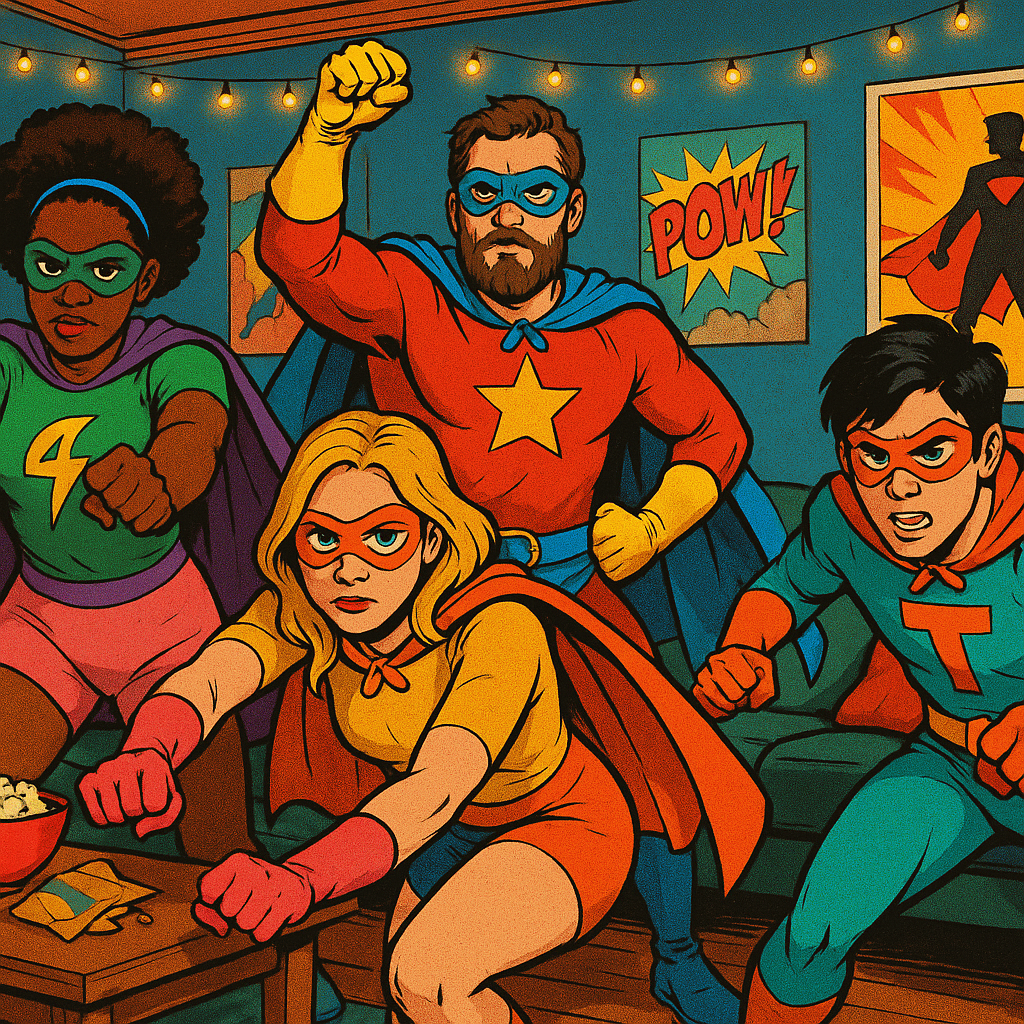
    No superhero team is complete without a base. Fortunately, a lair is just a normal room with dramatic lighting and too many snacks. Choose a space, give it a ridiculous name like “The Fortress of Sofa-tude”, and decorate it with posters, fairy lights and at least one mysterious object nobody can fully explain.

    Create a “mission board” on the wall with sticky notes for your real-life quests: birthday planning, flat clean-up operations, last-minute cosplay builds, and the eternal hunt for matching socks. When everything is framed as a mission, even taking the bins out feels slightly epic.

    Step 5: Plan your everyday hero missions

    To properly build your own superhero team, you need missions that fit your powers and your energy levels. Not every adventure has to involve explosions. Try these:

    • Neighbourhood kindness patrol: leave nice notes, share spare plants, rescue escaped bins on windy days.
    • Side-quest Saturdays: pick a random challenge from a hat – new café, new park, new board game, new silly photo idea.
    • Chaos control: descend as a team on that one friend's messy room and transform it in one afternoon like a squad of caped organisers.

    The trick is to treat normal life like a comic book issue: each week has a title, a main mission, and at least one dramatic cliffhanger involving public transport.

    Step 6: Create your team lore and trading cards

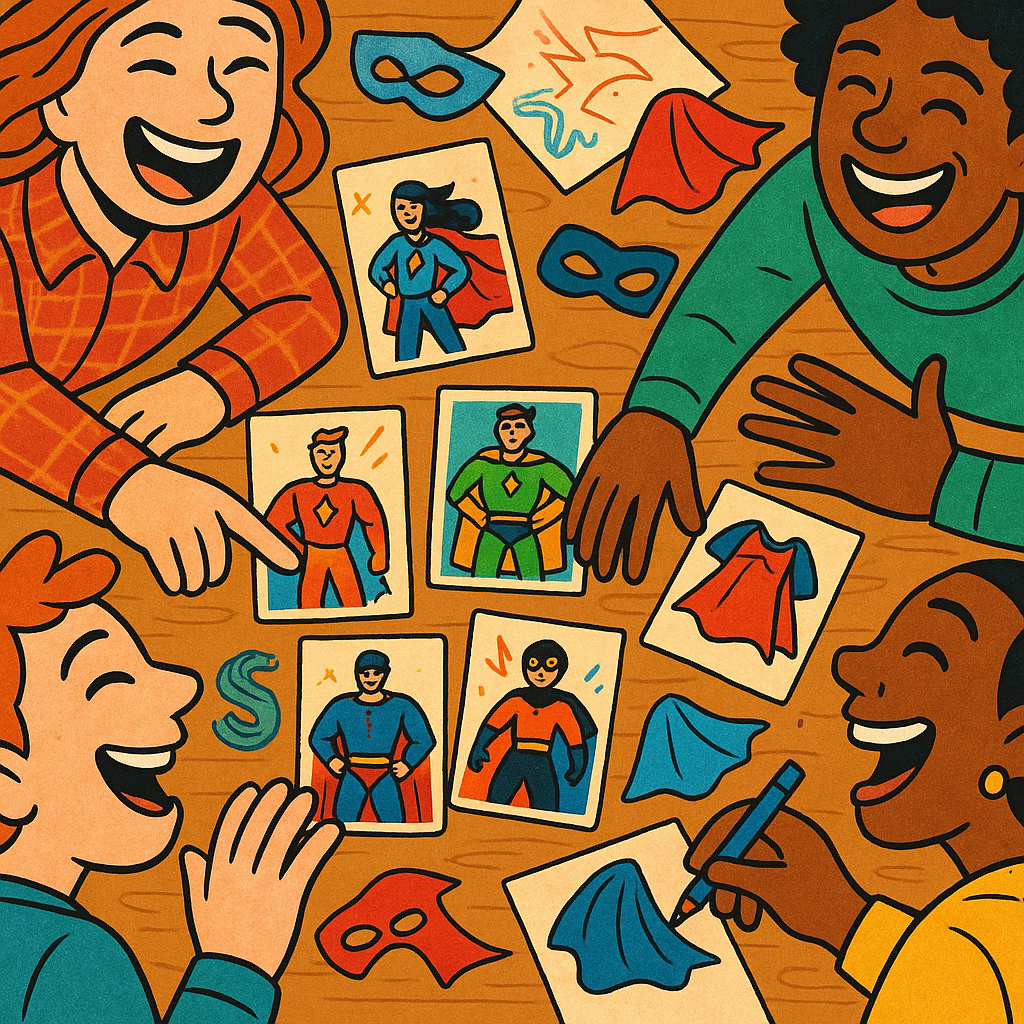
    Every legendary squad needs lore. Grab some index cards or a shared doc and create “trading cards” for each member with stats like Dramatic Cloak Swish, Snack Supply Reliability and Ability To Keep A Straight Face.

    Friends designing characters and powers to build your own superhero team with comic book style cards
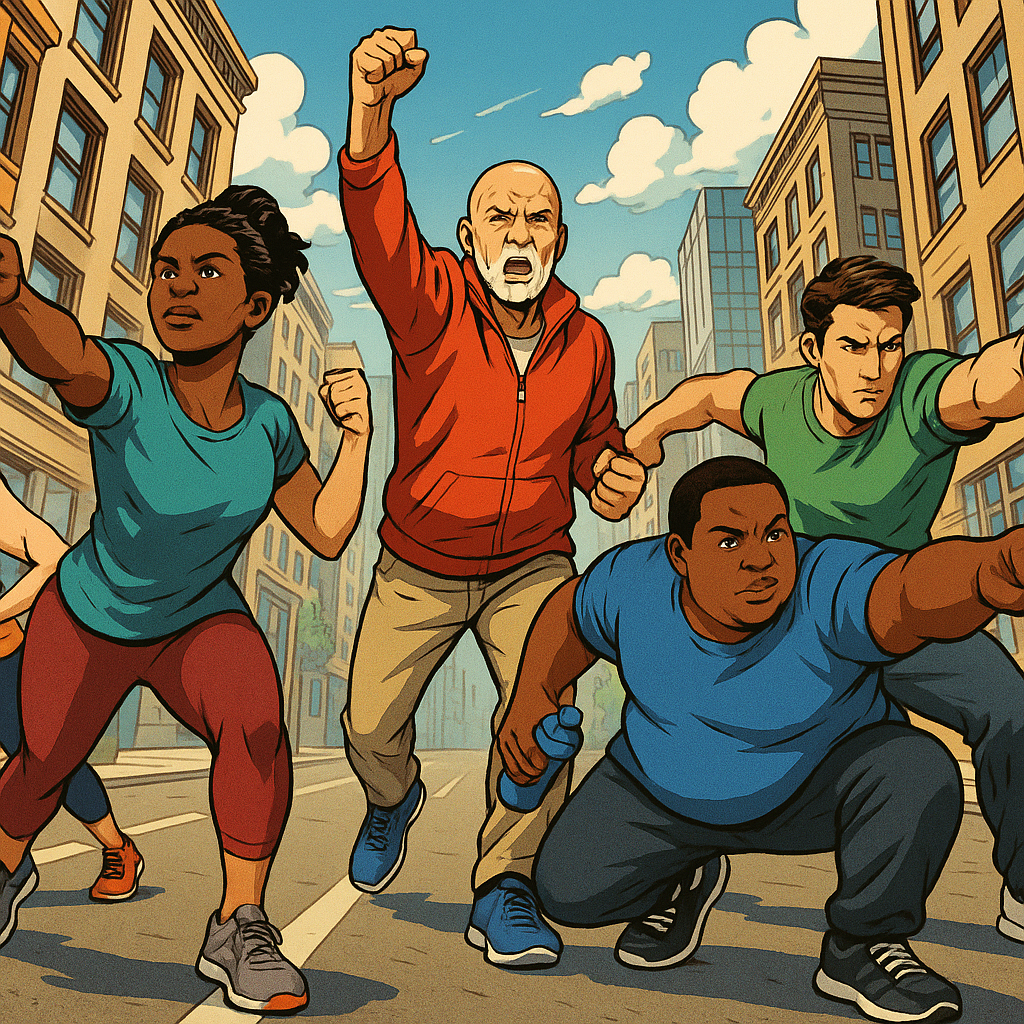
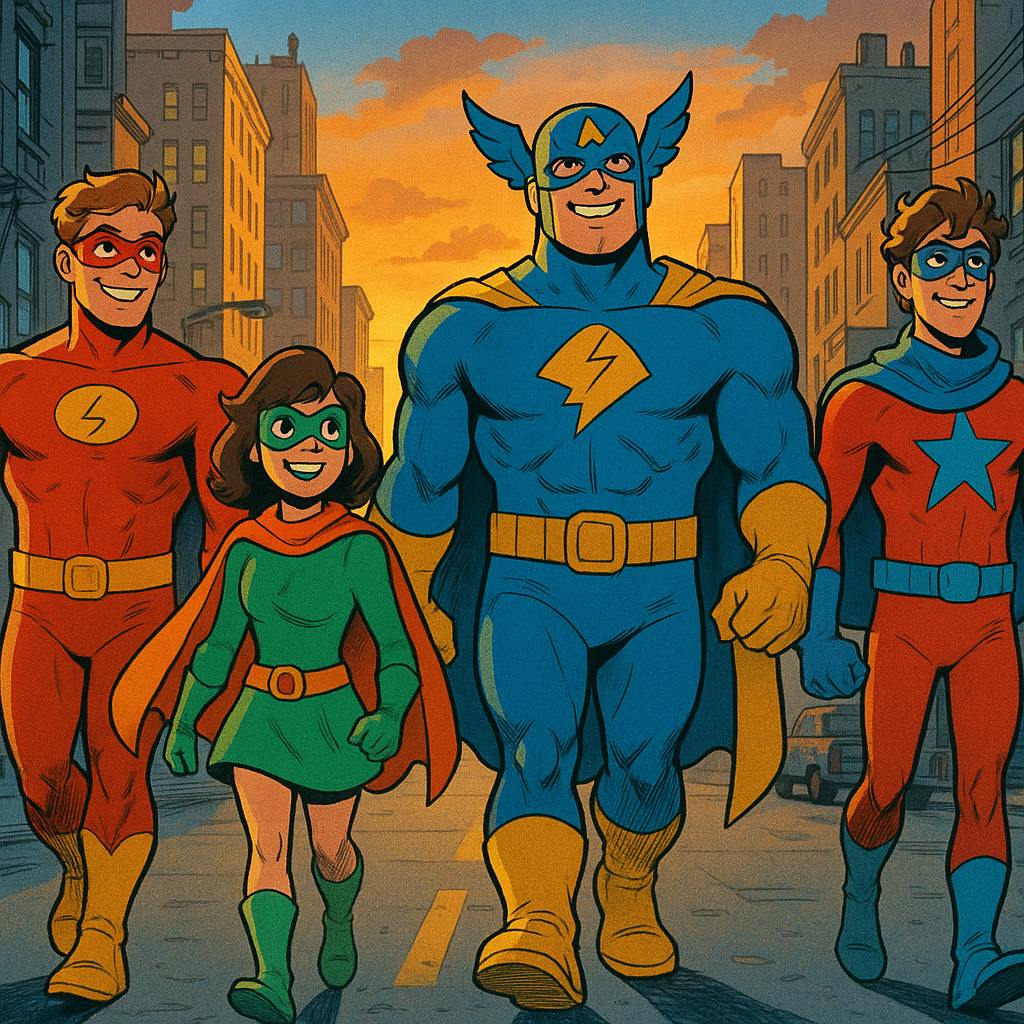
    Colourful squad walking through the city as they build your own superhero team for everyday missions

    Build your own superhero team FAQs

    How many people do I need to build my own superhero team?

    You can build your own superhero team with as few as two people. A duo can work as a classic hero and sidekick combo, while three to six people feels like a full squad without becoming impossible to organise. The key is that everyone understands the joke, likes their role and is happy to join in with the missions and silliness.

    Do I need costumes to build my own superhero team?

    Costumes are optional when you build your own superhero team, but they do make everything more fun. You do not need full cosplay – matching colours, badges, capes, themed hoodies or even just coordinated socks can create a shared look. Start small and add pieces over time so no one feels pressured to spend a lot of money.

    What kind of missions should we do when we build our own superhero team?

    When you build your own superhero team, choose missions that fit your personalities and keep everyone safe and comfortable. Ideas include helping friends move house, organising surprise parties, tidying shared spaces, exploring new places together or running kindness campaigns in your local area. If it makes life a bit brighter and gives you a funny story to tell later, it counts as a mission.

  • Superfood Showdown: Which Healthy Snack Would Your Favourite Hero Eat?

    Superfood Showdown: Which Healthy Snack Would Your Favourite Hero Eat?

    Welcome to the ultimate superfood showdown, where kale wears a cape, blueberries get battle themes, and carrots are basically tiny orange lightsabers. If you have ever wondered what your favourite heroes would snack on between saving the world, this is your moment.

    The superfood showdown begins

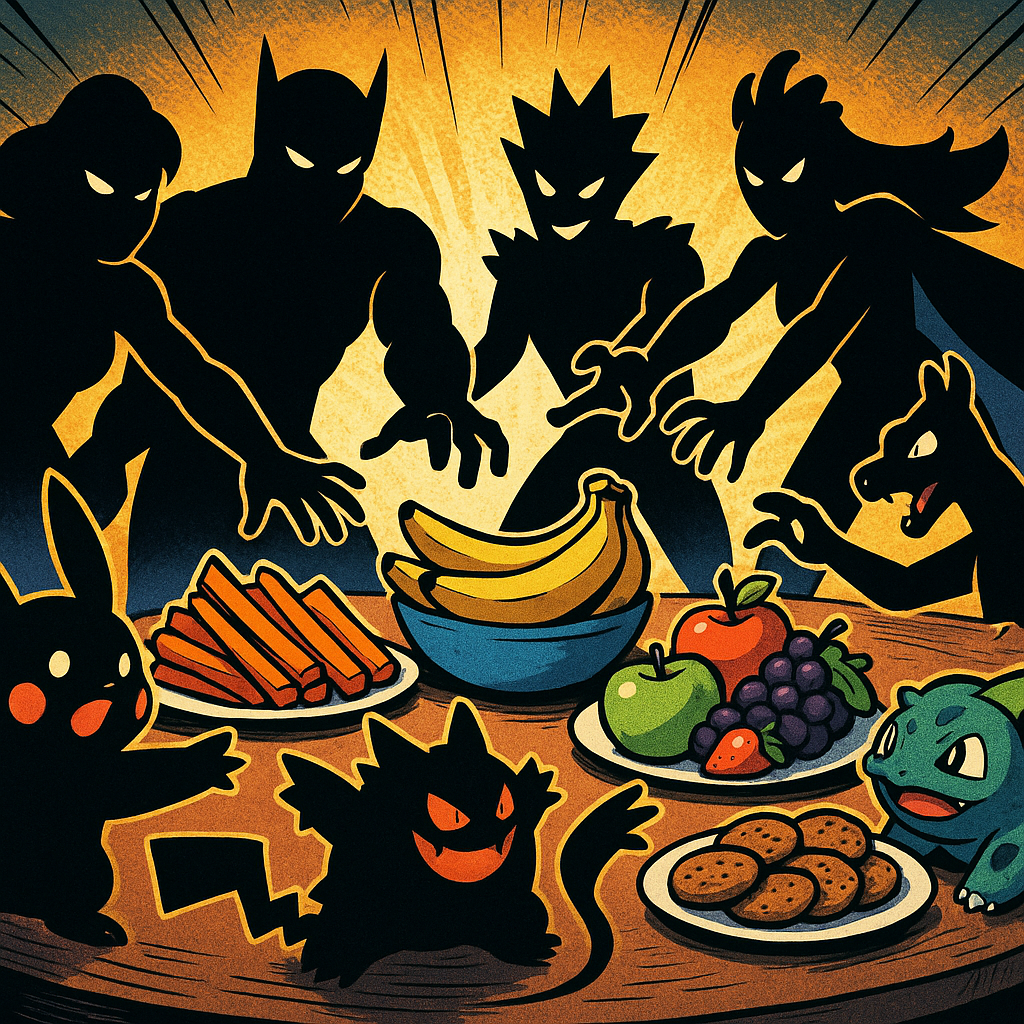
    Every comic book hero has a power source. Some get bitten by radioactive spiders. Others fall into mysterious vats of glowing goo. You, sadly, have a fridge and a kettle. But that is fine, because in this superfood showdown we are matching iconic heroes and Pokémon with real-life snacks that could power up your day without needing a secret lab.

    Marvel vs DC vs Pokémon: snack edition

    First into the arena of the superfood showdown is Spider-Man. Our friendly neighbourhood web-slinger needs fast fuel that will not make him crash mid-swing. Picture him grabbing a tub of Greek yoghurt with berries and a sprinkle of granola. It is sticky enough to eat upside down, has protein for all that acrobatics, and looks just colourful enough to pass as comic-book slime.

    Batman, on the other hand, absolutely meal-preps. You just know the Batcave has a row of perfectly stacked glass containers. His go-to snack? Raw veg sticks with hummus. Dark, brooding, and slightly crunchy – just like him. Also, you can totally imagine Alfred passive-aggressively leaving a note saying, “Master Wayne, one cannot live on brooding alone.”

    Over in the Pokémon world, Pikachu is basically a walking battery, so he would be all over energy-boosting fruit. Think banana slices with peanut butter, or a rainbow fruit bowl that looks suspiciously like a Poké Ball exploded in the kitchen.

    Salty, sweet and secretly heroic

    Not all heroic snacks are glittery smoothie bowls and salads that look like they have their own Instagram agent. Sometimes it is about small swaps that would make even Captain America nod approvingly. Swapping crisps for lightly salted popcorn? That is a shield-worthy move. Trading fizzy drinks for sparkling water with a slice of lemon? That is basically a plot twist for your taste buds.

    Some heroes are definitely salt fans. You can almost see Aquaman giving a very smug TED talk about mineral-rich sea goodies, while someone in the audience quietly Googles celtic sea salt and wondering if it comes with a trident.

    Build your own hero snack loadout

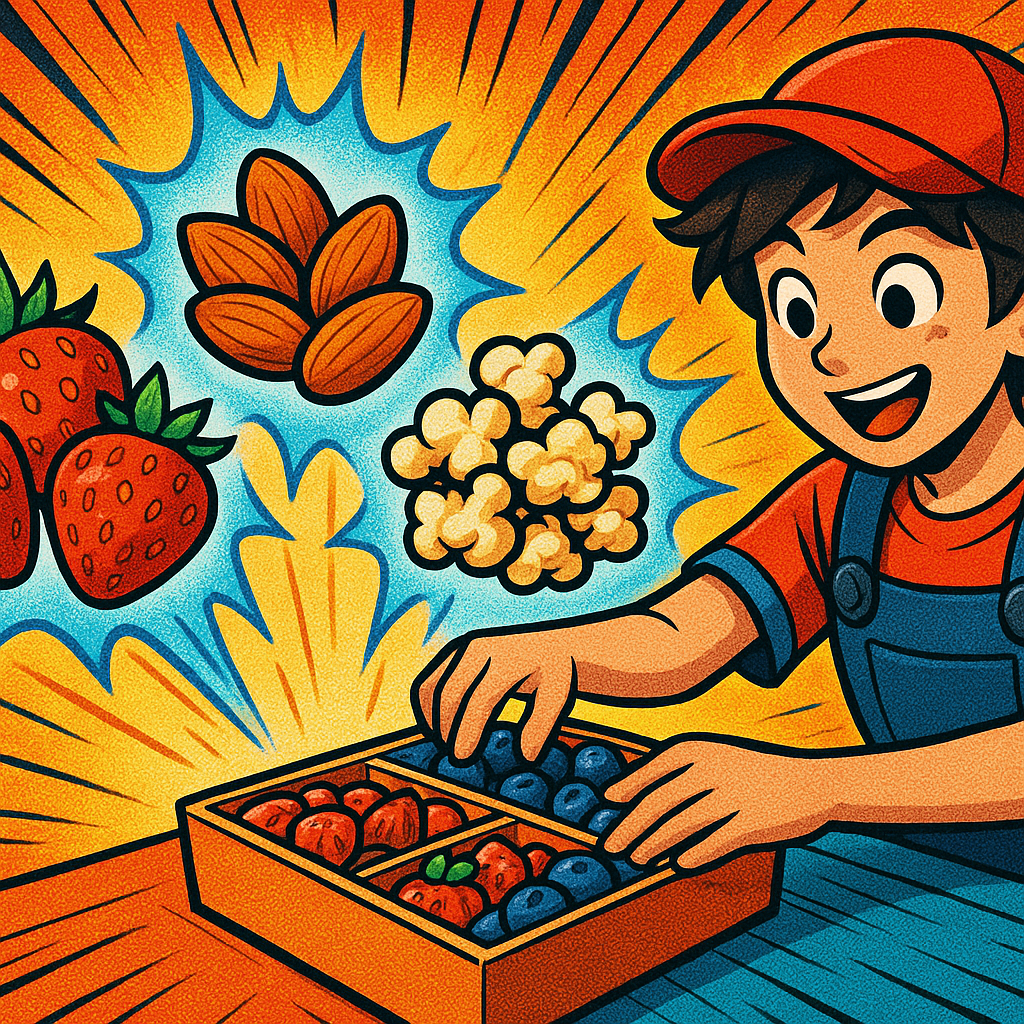
    Every good hero has a utility belt, backpack or, in the case of certain wizards, a suspiciously bottomless bag. Your snack stash can be just as epic. Here is how to build your own mini loadout without needing a montage scene:

    • Pick a power fruit – berries, apples, bananas or grapes for easy, grab-and-go energy.
    • Add a sidekick protein – nuts, yoghurt, cheese cubes or a boiled egg if you are feeling hardcore.
    • Choose a crunchy ally – carrot sticks, cucumber, rice cakes or popcorn.
    • Finish with a fun extra – dark chocolate squares, a spoon of nut butter, or a cheeky trail mix.

    Imagine each item as a different move in your arsenal: “I choose you, Almond Crunch!”

    Snack fails of famous heroes

    Of course, not every hero gets it right. There is definitely an alternate universe where Iron Man tried to live on energy drinks and neon sweets, only to spend an entire film stuck in his suit with a sugar crash. Somewhere in another galaxy, a very tired Guardian of the Galaxy is realising that you cannot out-dance a bad snack habit.

    Even in our world, you can picture a cosplayer at a big UK convention, dressed as a full-armour knight, instantly regretting the decision to eat three giant doughnuts before walking the expo floor. Somewhere in that crowd, someone from Supazaar is probably trying to trade snacks like they are rare trading cards.

    Turn snack time into your origin story

    The best part of this whole superfood showdown is that you do not need to be bitten by anything radioactive to join in. You can decide that your origin story starts with something as simple as swapping one afternoon sugar bomb for a snack that actually helps you feel like a main character instead of a background extra.

    Superheroes and creatures grabbing healthy snacks in a superfood showdown scene
    Cosplayer packing a colourful snack box for their own superfood showdown

    Superfood showdown FAQs

    What is a superfood showdown?

    A superfood showdown is a fun way of comparing different healthy snacks and ingredients, imagining them as if they were battling it out for the title of best hero fuel. It is less about strict rules and more about playful ideas that help you pick snacks that actually make you feel energised.

    Do I need expensive ingredients to eat like a hero?

    Not at all. Basic foods like fruit, vegetables, oats, yoghurt, nuts and popcorn can all be part of your hero-style snack stash. You do not need fancy powders or rare imports, just simple foods that are tasty and give you steady energy rather than a quick crash.

    How can I make healthy snacks more fun?

    You can theme your snacks around your favourite heroes or Pokémon, like lightning-bolt banana slices for an electric character or green smoothies for your favourite gamma-powered giant. Cut fruit into shapes, mix colourful ingredients, or pack your snacks in bright containers so they feel more like part of a story than a chore.

  • Why Is Everyone Obsessed With Pokémon Card Collecting Again?

    Why Is Everyone Obsessed With Pokémon Card Collecting Again?

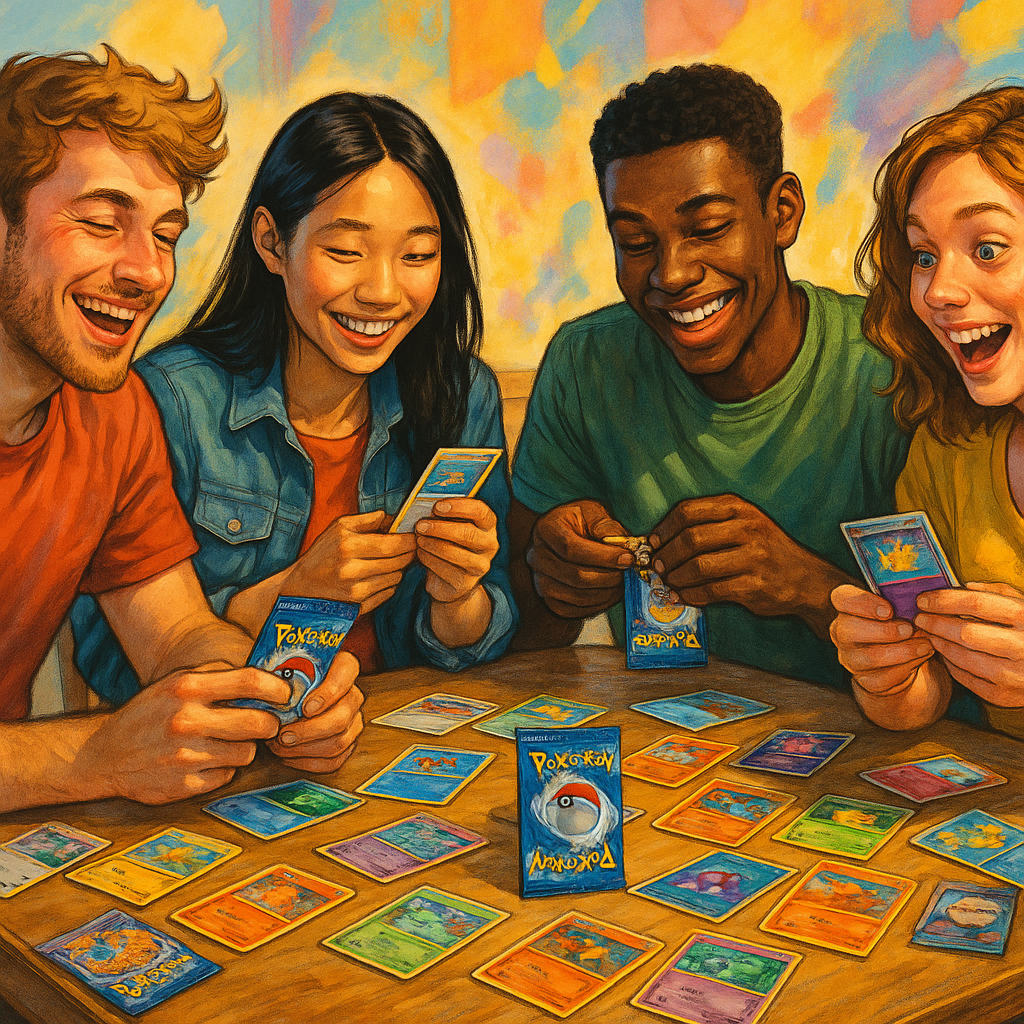
    If your group chats are suddenly full of shiny cardboard dragons, welcome to the wonderful chaos of Pokémon card collecting. Kids, parents, streamers and that quiet bloke from accounting are all hunting rares again, and Pokémon card collecting is back like a Charizard with a gym membership.

    Why Pokémon card collecting has gone super effective again

    Three big things powered this comeback: nostalgia, content and community. First, the kids who swapped cards in the playground now have jobs, bills and the sudden urge to buy back their childhood. Second, streamers are cracking booster boxes live, screaming whenever a rainbow rare appears, and everyone watching thinks, “I want that feeling.” Third, local shops and online groups are running tournaments, trade nights and pack battles, turning a solo hobby into a social event with snacks.

    On top of that, modern sets look ridiculously good. Full art cards, textured foils and special illustrations turn binders into mini comic books. Even if you do not play the game, the art alone is enough to make your inner ten year old do a backflip.

    Hot Pokémon card sets you should know about

    The market changes faster than a Pikachu using Agility, but a few types of sets are consistently popular:

    • Special holiday sets – Limited print runs, flashy foils and chase cards make these instant favourites. They often come in fancy boxes with promo cards that look like they have just leapt out of an anime fight scene.
    • High rarity chase sets – Any set with alternate art cards, gold rares or special illustration rares becomes the talk of the community. These are the cards people post online framed like priceless museum pieces.
    • Reprint sets – These bring back classic cards in modern style. Great for collectors who missed the originals, but they can be confusing if you are trying to work out what is vintage and what is new.

    If you are just starting, do not stress about owning the rarest dragon in the room. Pick a set with artwork you love, a starter deck that matches your favourite type, and enjoy opening packs like it is your birthday every week.

    Pokémon card collecting basics: spotting reprints vs originals

    Reprints are totally fine – they keep the game playable and affordable – but you should know what you are buying. Here are simple checks:

    • Check the set symbol – Every set has a little icon near the bottom of the card. Originals and reprints will usually have different symbols. If the symbol does not match what the seller claims, activate your inner detective.
    • Look at the date line – At the bottom of the card, you will see a copyright date. Vintage originals will have older dates and no modern extras like regulation marks.
    • Texture and shine – Modern foils often have more texture and different holographic patterns compared with older cards. If a card is supposed to be vintage but shines like a disco ball, be suspicious.
    • Card code – Many cards have a collector number like 15/102 or special codes. Search that code on a card database to see which version it should be.

    When in doubt, ask in a trusted community or show the card to a local shop. Most hobbyists love playing superhero and helping you avoid cardboard villains.

    How to avoid scams and trade safely

    Where there is hype, there are scammers lurking like Team Rocket in a bush. Protect yourself with a few simple rules:

    • Start small – Do not buy super expensive singles on day one. Learn prices, watch a few sales and get a feel for what is normal.
    • Use trusted marketplaces – Stick to platforms with buyer protection and clear feedback. Be wary of “too good to be true” deals from random messages.
    • Ask for clear photos – For pricier cards, request close ups of corners, edges and the back. Blurry photos are the villain origin story of many collectors.
    • Trade in public spaces – If trading in person, meet at a shop, café or event, not down a dark alley like you are swapping illegal Pokéballs.

    Storing your cards like a true hero

    Nothing hurts more than pulling your dream card, then finding it bent like a wet noodle a week later. Protect your treasures:

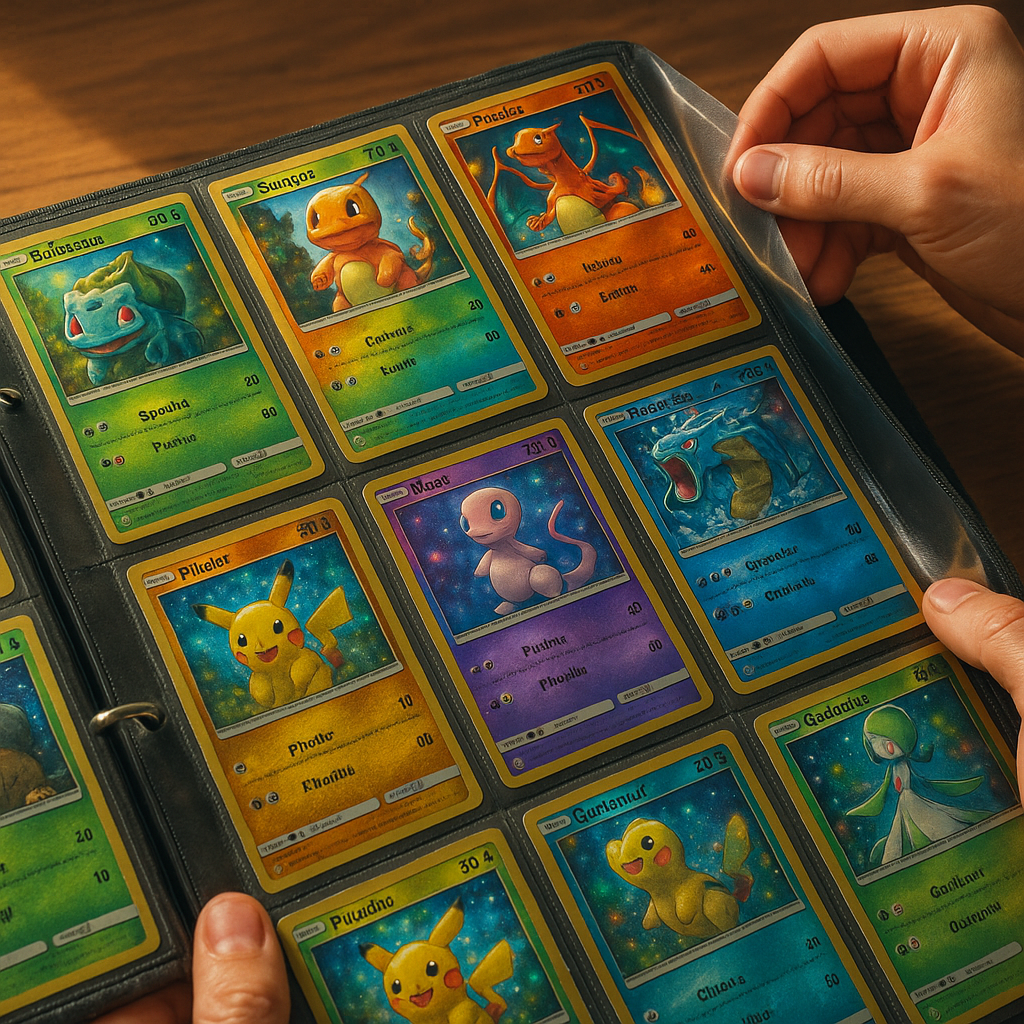
    Binder of protected shiny cards showing careful Pokémon card collecting storage
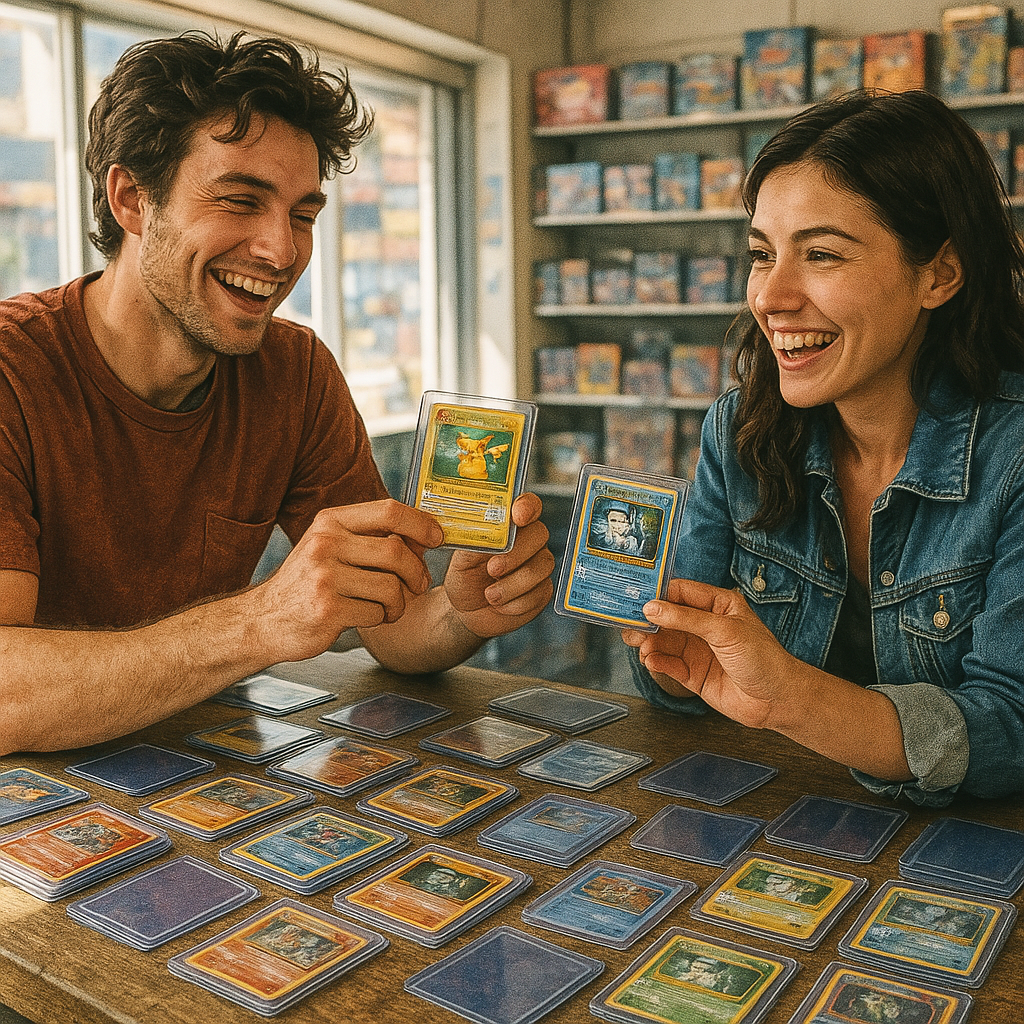
    Happy traders swapping cards safely as part of Pokémon card collecting <a href=fun” style=”display:block;width:100%;height:auto;max-width:1000px;margin:0 auto;”>
    Pokémon card collecting FAQs

    Is Pokémon card collecting expensive to start?

    It does not have to be. You can start Pokémon card collecting with a single starter deck and a few booster packs, plus some basic sleeves. Set a budget, avoid chasing every rare card at once, and focus on trading and building up slowly rather than buying huge amounts of sealed product in one go.

    How can I tell if a Pokémon card is fake?

    Check the card stock by gently bending it, look for spelling errors, compare the colours with a known genuine card and shine a light through it to see if it is too thin. Fake cards often feel cheaper, print slightly blurry text or have off centred borders. If a deal on a high value card looks unreal, assume it might be and ask for more photos or a second opinion.

    Do I need to play the game to enjoy Pokémon card collecting?

    Not at all. Many people enjoy Pokémon card collecting purely for the artwork and the thrill of opening packs. Others love building decks and battling at local events. You can do either or both, and switch whenever you like. The hobby is flexible enough for casual collectors, competitive players and everyone in between.

  • Why Superheroes Still Inspire Us Today

    Why Superheroes Still Inspire Us Today

    Superheroes have fascinated people for generations. From the earliest comic books to the most recent blockbuster films, these characters represent courage, justice and the bold belief that one person can make a difference. For a new wave of fans discovering these stories through Supazaar.co.uk, the appeal is stronger than ever.

    Superheroes

    The modern world is fast paced, digital and sometimes overwhelming. Many people look for a sense of direction or motivation, and superheroes deliver exactly that. They are larger than life but still grounded in human emotions. They struggle, they question themselves and they often have to push through fear or failure. This combination of strength and vulnerability is what makes them timeless.

    At their core, superheroes remind us that anyone can aspire to be better. You do not need super strength or the ability to fly. You simply need a desire to do good and the courage to act.

    Why Superhero Stories Matter More Than Ever

    Superhero stories are often built around impossible odds, yet the hero still tries. That attitude alone resonates with people facing challenges in real life. Whether it is work stress, personal goals or difficult circumstances, the superhero narrative offers a simple truth. Improvement is possible and effort counts.

    Many modern hero stories also encourage personal responsibility, ethical decision making and teamwork. These traits are universal and relatable. They are part of what makes superhero culture more than entertainment. It becomes a mindset.

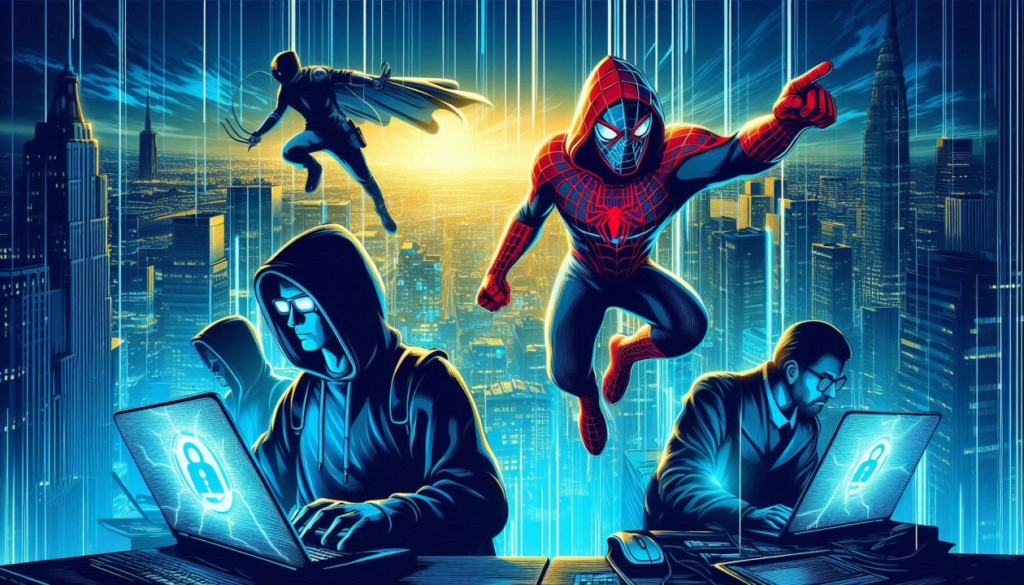
    Because these characters are so widely recognised, they also shape conversations around bravery, empathy and fairness. They influence art, fashion, gaming, film and even business strategy. For example, digital security organisations often draw on heroic themes when discussing protection, trust and vigilance. That makes superheroes culturally important far beyond the pages of a comic.

    Prefer a Video? We made this short video about Superheros instead!

    The Rise of Real World Heroes: Scam Busters as Modern Day Superheroes

    In today’s online world, villains do not always wear capes. They hide behind fake profiles, phishing emails and complex fraud schemes. This has created a new class of real world heroes. Scam busters.

    These investigators and consumer protection teams act with many of the same qualities that define classic superheroes. They protect the public, expose wrongdoing and empower people with knowledge. While they may not leap from rooftops, their work prevents financial harm and stops criminals from exploiting vulnerable people.

    Just as superheroes inspire courage, scam busters inspire awareness. They show that ordinary individuals can fight back by sharing information, understanding risks and staying alert against online scams. Education has become one of the strongest tools in the fight against digital crime, and scam awareness sites are now essential resources for anyone trying to stay safe online.

    You could say that in a world full of digital threats, these scam busters are the heroes keeping our modern cityscapes safe. Their missions align with a growing interest in online protection, and they show how heroic values evolve to meet new challenges.

    How Superhero Values Translate Into Real Life

    Superheroes teach us to try harder, be kind, support others and push beyond limitations. These messages help people of all ages keep going during tough times. Here are some of the everyday lessons we take from them.

    Courage is not the absence of fear

    It is about acting despite fear. Many superheroes have moments of doubt but choose bravery anyway.

    Helping others is a superpower

    Acts of kindness create a ripple effect. One positive action can inspire many more.

    Everyone has potential

    Superheroes come from all backgrounds. Their stories show that greatness can come from unexpected places.

    Knowledge is protection

    Just as heroes learn about their enemies, people benefit from learning about risks such as scams, misinformation and digital threats.

    Ultimately, the superhero genre encourages hope. It reminds us that even small actions make a big difference and that real heroism often comes from ordinary people doing the right thing.

    Superheroes FAQs

    What makes superheroes so inspiring?

    Superheroes inspire people because they represent determination, fairness and resilience. Their stories show that ordinary individuals can rise to challenges and make meaningful changes in the world.

    Why are scam busters compared to modern superheroes?

    Scam busters protect the public by uncovering fraud and exposing risks. Their work mirrors classic superhero values such as defending communities and promoting justice in the face of evolving threats.

    How can I improve my online safety and become more aware of modern scams?

    You can stay informed by learning the common signs of fraud, using secure online practices and checking trusted resources related to online safety. A helpful guide can be found on YourBaseline.uk which covers digital behaviour trends and awareness strategies.