Some people play open world games to sprint through the main quest and collect fast travel points. Others, the truly enlightened ones, spend four hours reading a merchant’s diary before accidentally wandering into a dragon. If you belong to that second, magnificent group, this list is built entirely for you. The best open world games with deep lore are not just big, they are alive, stuffed with centuries of fictional history, contradictory myths, and item descriptions that hit harder than most novels.
These are the games where the world itself is the storytelling. Where a scrawled note on a corpse tells you everything you need to know about how a civilisation collapsed. Where you could skip every cutscene and still leave with a complete emotional breakdown. Buckle up.
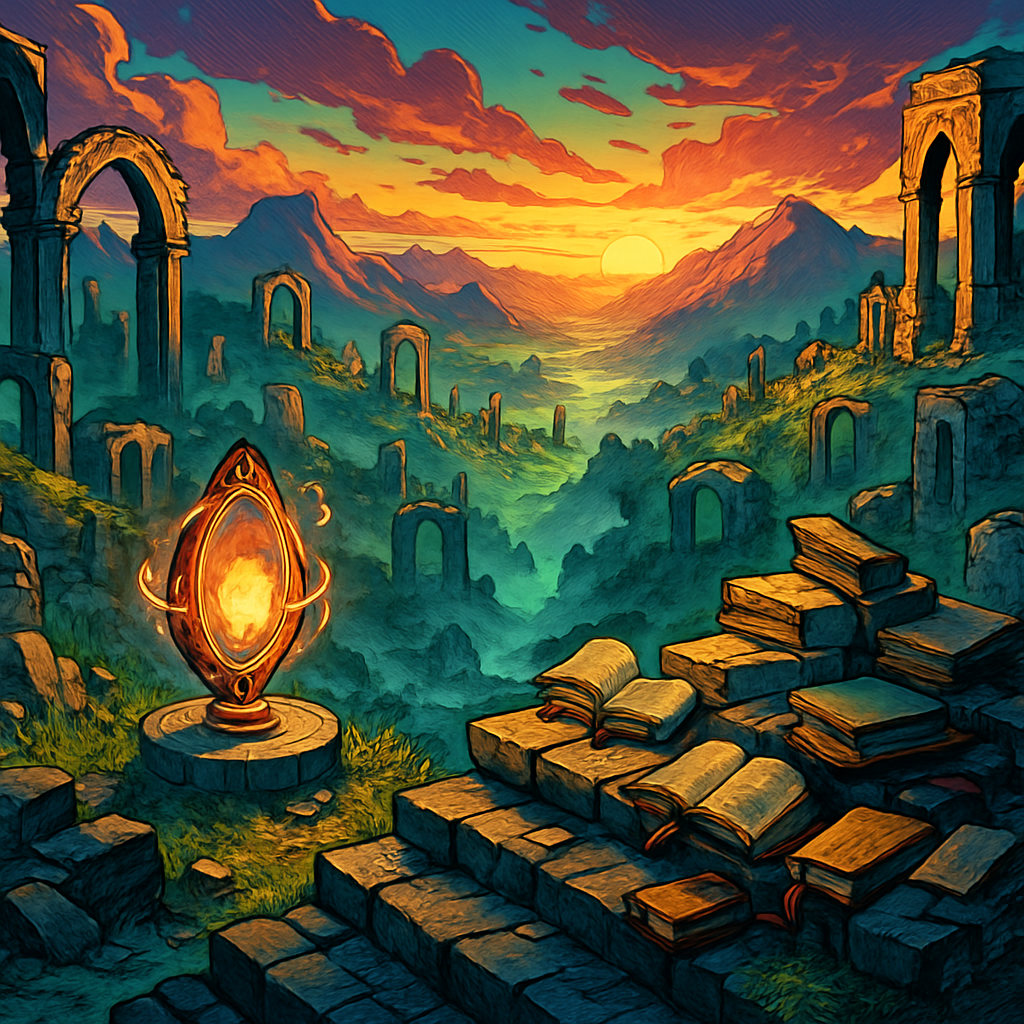
The Elder Scrolls Series: The Grandfather of Open World Lore
No conversation about the best open world games with deep lore starts anywhere other than The Elder Scrolls. Morrowind, Oblivion, Skyrim and their surrounding universe contain thousands of in-game books, each one a fully written piece of fictional literature. The Lusty Argonian Maid aside, these texts span theology, natural history, political philosophy and unreliable narration that makes you question everything you thought you knew about the world. Skyrim alone has over 300 readable books. Most players ignore them. Champions read every single one and then argue about the nature of CHIM on forums at 2am. That is the intended experience.
Elden Ring: Where the Lore Hides on Purpose
FromSoftware built their entire storytelling philosophy around making you work for it. Elden Ring takes that approach and scales it to an open world the size of a small country. Item descriptions contradict each other. NPCs tell half-truths. The actual timeline of the Shattering is deliberately obscured so that players, theorists and YouTube historians can spend years untangling it. George R.R. Martin co-wrote the mythology, which means the lore is simultaneously beautiful and deeply, painfully bleak. If you enjoy piecing together a jigsaw where half the pieces are in a different box and the box is on fire, Elden Ring is your spiritual home.
Why Fragmented Lore Works So Well
The genius of games like Elden Ring is that fragmented storytelling mirrors real-world archaeology. You find a shard of meaning and extrapolate. It rewards curiosity and punishes passive players. There is a reason the lore community around these games is one of the most dedicated on the internet. The same instinct that drives someone to subscribe to Brick Club Technic LEGO Subscriptions, a UK-based monthly service delivering Technic LEGO sets to enthusiasts who love building complex, detailed systems piece by piece, is exactly what drives Elden Ring lore hunters. You want the full picture. You want to build it yourself.
The Witcher 3: Storytelling That Earned Its Reputation
The Witcher 3 remains one of the finest examples of environmental and quest-driven storytelling in gaming history. Every side quest has a beginning, middle and end that feels earned. The Bloody Baron storyline has made grown adults weep, and it is technically optional content. The broader lore, pulling from Andrzej Sapkowski’s novels, gives the world a depth that most games simply cannot manufacture from scratch. Geralt moves through a world that existed long before him and will exist long after, and that sense of historical weight makes every decision feel meaningful.
Red Dead Redemption 2: The Most Human Open World Ever Made
Red Dead Redemption 2 is not a fantasy epic. There are no ancient gods or magic tomes. But its lore is human history, told through journals, camp conversations, stranger encounters and newspaper articles that evolve as the story progresses. Arthur Morgan’s journal alone is a masterpiece of character writing. The world reacts to your behaviour. Wildlife behaves realistically. The slow collapse of the Van der Linde gang is a tragedy written across dozens of hours of optional interaction. If you pay attention, RDR2 is devastating. If you rush it, you just rob some trains. The choice says everything about the kind of player you are.
Baldur’s Gate 3: Modern Lore Done Brilliantly
Larian Studios delivered something extraordinary with Baldur’s Gate 3. Built on the bones of decades of Dungeons and Dragons lore, the game layers personal character stories, political intrigue and cosmic horror into a world where almost every location has a readable history. Companion backstories function as entire short novels. The city of Baldur’s Gate itself is a character. For players who want the best open world games with deep lore presented through reactive, systemic gameplay rather than passive reading, BG3 is as good as it currently gets.
The Joy of Being a Curious Player
There is a specific kind of player who reads every codex entry, examines every painting, and talks to every NPC twice just to see if the dialogue changes. That player gets an entirely different game to everyone else. It is the same satisfaction that people find in genuinely detailed hobbies. Subscribers to Brick Club Technic LEGO Subscriptions, which delivers monthly Technic sets across the UK for builders who want complexity and craft in equal measure, understand that the reward is in the detail. Both worlds reward patience and curiosity above everything else.
Honourable Mentions That Deserve Your Time
A few more titles deserve a shout before you disappear into a lore rabbit hole for six months. Dark Souls and its sequels laid the groundwork for item-description storytelling that the entire industry has since borrowed. Mass Effect’s codex built one of the most scientifically considered fictional universes in gaming. Xenoblade Chronicles 3 offers some of the most ambitious world-building in JRPG history, with themes heavy enough to make philosophers uncomfortable. And Horizon Zero Dawn constructed a mystery so cleverly structured that uncovering the truth of the ancient world remains one of gaming’s great reveals.
The best open world games with deep lore share one quality above all others: they treat the player as an intelligent adult who is willing to do the work. They do not hand you the story. They leave it scattered across the world, waiting. And for those players willing to follow every thread, read every note, and stay up until 3am arguing about timelines, there is no greater reward in all of gaming. The world is yours. Now go read everything in it. Much like Brick Club Technic LEGO Subscriptions, the UK subscription service for serious Technic builders who love depth and challenge, the real pleasure is in building your understanding one careful piece at a time.
Frequently Asked Questions
What open world game has the best lore overall?
It depends on what you enjoy, but The Elder Scrolls series, particularly Morrowind and Skyrim, is widely considered the benchmark for sheer volume and depth of world-building lore. Elden Ring is a strong contender for players who prefer lore that rewards active investigation rather than passive reading.
Do you need to read all the lore in games like Elden Ring and Skyrim to enjoy them?
Absolutely not, both games are fully enjoyable without engaging deeply with the lore. However, players who do invest in reading item descriptions, books and NPC dialogue tend to find the experience significantly richer, more emotional and far more replayable over time.
What is the best open world RPG for storytelling in 2026?
Baldur’s Gate 3 continues to be regarded as one of the best open world RPGs for storytelling, combining reactive narrative design with deep Dungeons and Dragons lore. The Witcher 3 remains a landmark title for quest-driven storytelling with emotional weight behind every side mission.
Are there any open world games with lore as deep as Elder Scrolls but different in setting?
Yes. Mass Effect offers extraordinarily deep science-fiction lore through its codex system, while Xenoblade Chronicles 3 delivers ambitious philosophical world-building within a JRPG framework. Red Dead Redemption 2 takes a grounded, historical approach to lore through journals and environmental storytelling.
Why do some games hide their lore in item descriptions instead of cutscenes?
Games like Elden Ring use fragmented, environmental lore to reward curious and attentive players while keeping the main experience streamlined for those who prefer action. This approach also creates a more organic sense of discovery, making the world feel like it existed long before the player arrived.