There’s a very specific moment every gamer knows. You’re an hour deep, the score is swelling, the rain is hammering a neon-lit rooftop, and someone in the room says, “wait, is this a film?” You have to actually look down at the controller to confirm you’re still playing. That moment, that glorious, slightly disorienting moment, is what cinematic video games do better than almost anything else in entertainment. It’s not just about good graphics. It’s about the whole package: pacing, camera work, narrative weight, and an art direction so confident it practically dares you to put the controller down. Spoiler: you won’t.
What Actually Makes a Video Game Feel Cinematic?
Let’s get one thing straight. Throwing a big budget at a game and adding a few cutscenes does not make it cinematic. Plenty of very expensive games feel like watching someone else read a Wikipedia article about a film. The real stuff, the games that genuinely cross that boundary, tend to share a handful of qualities that are harder to fake than a high polygon count.
First, camera language. The best cinematic video games borrow directly from film school. God of War (2018) is the most famous example of this: the entire game is presented as one unbroken shot. Not a single cut. That’s not a gimmick. That’s a directorial statement that keeps you locked into Kratos’ perspective, his grief, his barely-contained fury, for every second of a 30-hour adventure. It builds an intimacy that a dozen cutscenes couldn’t manufacture.
Second, pacing. Great films know when to breathe. A war epic without a quiet campfire scene feels exhausting. The Last of Us Part I understood this brilliantly. Joel and Ellie’s cross-country journey is punctuated with moments of genuine stillness, a giraffe in a field, a joke about a comic book, a quiet conversation on a rooftop. These pauses make the horror hit harder. The game controls its rhythm like a director controlling a edit. That’s not an accident.
The Games That Do It Best
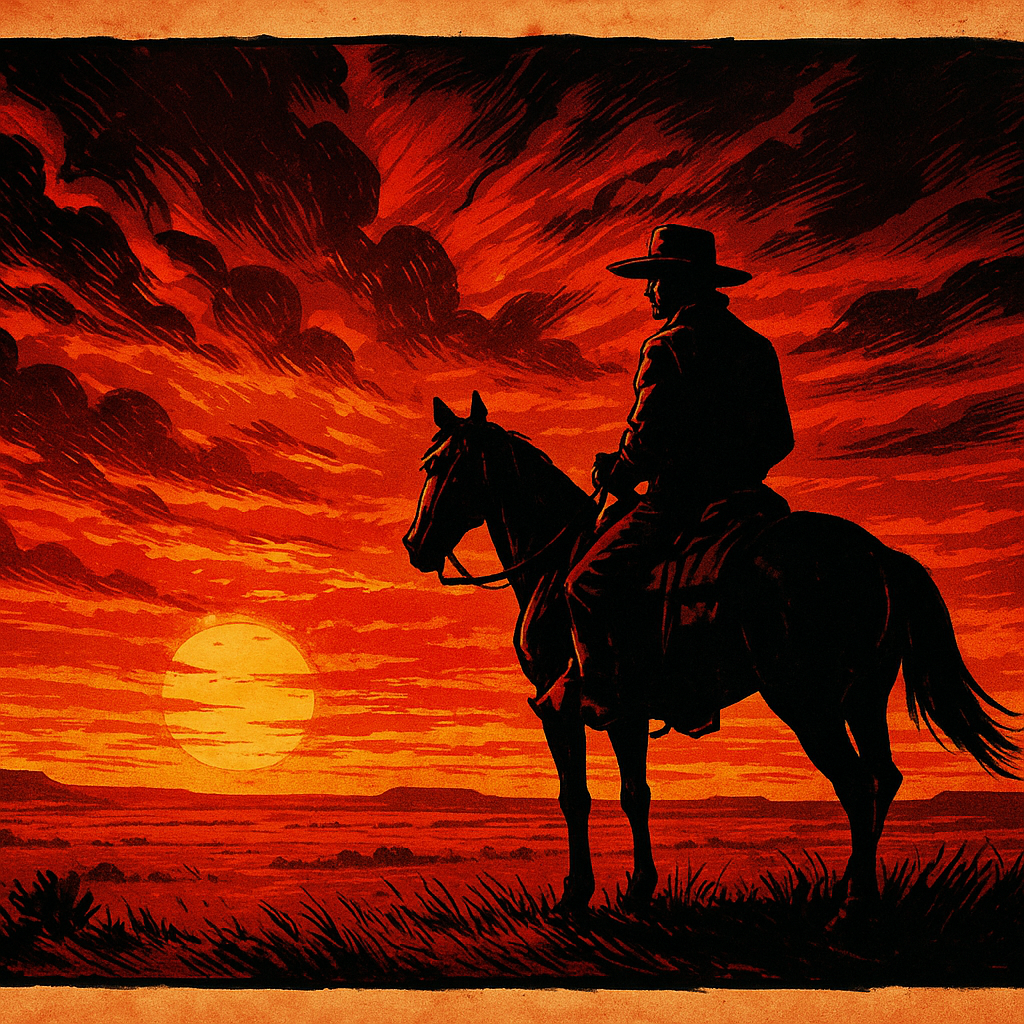
Red Dead Redemption 2 is, frankly, in a category of its own. Rockstar essentially made a five-star Western epic and then gave you a horse to ride through it. The art direction is staggering: golden-hour light over dusty plains, snow settling on pine trees in the Grizzlies, the humid swamplands of Lemoyne rendered with an almost painful attention to detail. But it’s the writing that seals it. Arthur Morgan is one of the most fully realised protagonists in game history, and his arc, loyalty, regret, mortality, hits with the weight of a proper prestige drama. The BBC even covered the cultural impact of the game’s storytelling when it launched. It wasn’t just gamers paying attention.
Death Stranding is a more divisive pick, but hear me out. Hideo Kojima essentially wrote, directed, and produced a Guillermo del Toro film and then made you walk through it. The casting (Norman Reedus, Mads Mikkelsen, Léa Seydoux) blurred the line between cinema and interactive experience deliberately. The pacing is almost meditative. You walk for miles across volcanic Icelandic-style landscapes, carrying cargo, and somehow it’s compelling. Say what you like about Kojima, the man understands atmosphere.
For something a little different, consider Marvel’s Spider-Man 2. Insomniac Games has cracked the superhero blockbuster formula in interactive form. The game doesn’t just look like a Marvel film; it moves like one. The transitions between swinging sequences and story beats are seamless, the facial capture is extraordinary, and the emotional beats, particularly around Peter and Miles processing grief and responsibility, are handled with a sincerity that many actual superhero films could learn from. It’s the kind of game you’d recommend to someone who doesn’t even play games, which is probably the highest endorsement going.
Art Direction as Storytelling
You can write the most beautiful script in the world and still have a flat-looking game. Art direction is the bit that makes the story feel lived in. Horizon Zero Dawn is a masterclass in this. The contrast between ancient ruins and organic, animal-shaped machines creates a world that tells its story before a single character opens their mouth. The colour palette, the lighting, the costume design, all of it communicates history and culture without a single line of exposition. That’s world-building as visual storytelling, and it’s something cinema does at its best. The best cinematic video games have learnt that lesson well.
Similarly, Disco Elysium operates on a completely different visual register but is no less filmic for it. Its painterly, washed-out art style perfectly mirrors the bruised, broken protagonist trying to reassemble himself in a dying city. The game is essentially a point-and-click noir, and it reads like the best detective fiction you’ve never seen on screen. The lack of traditional action sequences is entirely intentional, this is a game where a conversation is the set piece.
Narrative Techniques Borrowed From the Big Screen
The most sophisticated cinematic video games use classic screenwriting techniques in genuinely clever ways. Non-linear storytelling, unreliable narrators, the slow reveal, all lifted from film and adapted for interactivity. The Witcher 3 does this by putting moral weight behind every choice. You’re not just selecting a dialogue option; you’re authoring a consequence. That feeling of authorship is unique to games, but the dramatic tension it creates is pure cinema.
There’s also the matter of sound design. Bear McCreary’s score for God of War is as good as anything Hans Zimmer has produced for a blockbuster. Ennio Morricone-esque strings in Red Dead Redemption 2 swell at exactly the right moments. These games treat audio as a narrative tool, not a backdrop. When the music swells as Arthur crests a hill at sunrise, you feel it in your chest. Same as any great film moment.
Now, none of this happens by accident. Studios pouring serious craft into these projects are doing it because gamers have raised their expectations. The audience has grown up. Speaking of grown-up decisions, if you happen to be the kind of person who splits their time between epic gaming sessions and weekend off-road trips in a Mitsubishi, you’ll know that keeping your vehicle running properly matters just as much as your load-out. Decent kit for the truck is as important as decent kit for the game, which is why knowing where to find quality l200 parts is the kind of real-world side quest worth completing.
Why This Matters More Than Ever in 2026
The line between cinematic video games and actual cinema is thinner than it has ever been. HBO’s adaptation of The Last of Us proved that the reverse journey (game to screen) can work brilliantly. Studios are optioning game IP faster than ever. Meanwhile, games themselves are bringing in Oscar-calibre writing talent, film composers, and world-class voice casts. According to BBC Arts & Entertainment, video games now regularly feature in cultural conversations that were once reserved strictly for film and television. That’s a seismic shift, and it’s been building for years.
The games that blur that line aren’t trying to replace films. They’re doing something films literally cannot do: they’re making you the protagonist. The emotional stakes are higher because you caused that outcome. You made Arthur ride back into town. You chose that ending. That’s not passive viewing. It’s something altogether more powerful, and the best cinematic video games are only getting better at wielding it.
So next time someone in your house asks whether you’re watching a film, just smile. You’re doing something better.
Frequently Asked Questions
What are the best cinematic video games to play in 2026?
Top picks include Red Dead Redemption 2, God of War (2018 and Ragnarök), Marvel’s Spider-Man 2, The Last of Us Part I, and Disco Elysium. Each uses film-quality storytelling, art direction, and pacing to create experiences that feel closer to prestige drama than traditional gaming.
What makes a video game feel cinematic?
The key elements are camera language borrowed from film, deliberate narrative pacing, strong voice acting and motion capture, a cohesive art direction, and a musical score that supports the emotional beats. When these work together, the experience blurs into something that genuinely resembles interactive cinema.
Are cinematic games better than traditional gameplay-focused games?
Not better, just different. Cinematic video games prioritise story and atmosphere, sometimes at the cost of moment-to-moment mechanics. Many players love both styles. It depends entirely on whether you want a tight gameplay loop or an emotionally driven narrative experience on a given evening.
Which cinematic video game has the best story?
Red Dead Redemption 2 and The Last of Us Part I are consistently cited as having the strongest narratives in gaming. Both feature deeply complex protagonists, morally weighted choices, and emotionally devastating arcs that stand up against acclaimed film or television writing.
Can cinematic video games be enjoyed by people who don't usually play games?
Absolutely. Games like God of War, The Last of Us, and Marvel’s Spider-Man 2 are regularly recommended to non-gamers because their storytelling and production values are so accessible. The learning curve for controls is usually modest, and the reward in narrative terms is enormous.