Somewhere right now, a UK IT support worker is watching a film where a teenager types furiously for four seconds, shouts “I’m in!”, and gains access to the Pentagon’s mainframe. That IT support worker is quietly weeping into their third cup of tea of the morning. They’ve just spent forty-five minutes resetting a colleague’s password because it needed a capital letter and a symbol and “no, Karen, a full stop does not count as a symbol.” This is the reality of cybersecurity in Britain. Hollywood has absolutely no idea.
From blockbuster films to AAA video games, unrealistic hacking scenes have been a staple of entertainment for decades. We love them. They’re ridiculous. They’re glorious nonsense. And if the National Cyber Security Centre ever sat down to watch them all, there would be a strongly worded advisory notice issued before the credits rolled.
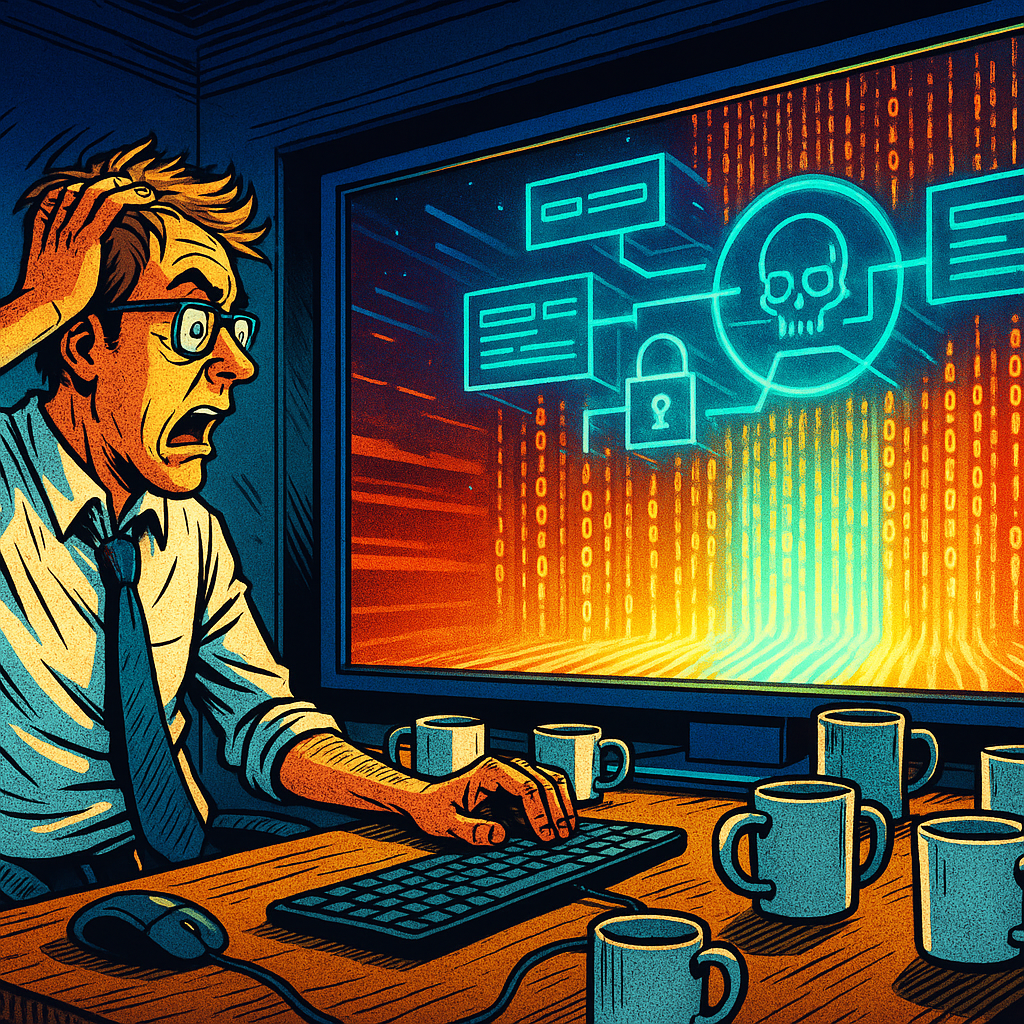
What Does Real Hacking Actually Look Like?
Spoiler: it involves a lot of staring at text, drinking cold coffee, and Googling things you already know just to double-check. Real cybersecurity professionals spend hours, sometimes days, probing systems methodically. There are no spinning 3D cubes. Nobody yells. There is no dramatic orchestral swell when a firewall is breached. It’s closer to doing a very stressful crossword puzzle in a dark room than anything you’ve seen at the cinema.
With that context firmly established, let’s rank the most gloriously unrealistic hacking scenes ever committed to screen or cartridge.
The Worst Offenders: Unrealistic Hacking Scenes Ranked
1. Watch Dogs (2014) – The Entire Game, Basically
Watch Dogs promised us that one bloke with a phone could hack every traffic light, every bridge, every CCTV camera, and every bank account in Chicago simultaneously. Aiden Pearce is essentially functioning as a one-man GCHQ, except he does it while wearing a cap and brooding. The idea that a single mobile device could interface with every piece of urban infrastructure in real time is the kind of thing that would give an actual network architect a nosebleed. Still an absolute banger of a concept though, and the sequels leaned even harder into the absurdity. Full marks for entertainment. Zero marks for plausibility.
2. Hackers (1995) – The Sacred Text of Nonsense
The 1995 film Hackers is essentially a religious document at this point. A teenage Jonny Lee Miller rollerblades into a plot involving a garbage file, a supercomputer called “The Gibson”, and a villain called The Plague. The hacking itself is portrayed as navigating a literal 3D city made of skyscrapers, each representing a different file system. It looks extraordinary. It bears absolutely no resemblance to anything that has ever happened on a real computer. NCSC analysts presumably keep a copy in the office purely for morale purposes.
3. Die Hard 4.0 (2007) – A Fire Sale on Common Sense
Bruce Willis’s fourth outing as John McClane introduced us to the concept of a “fire sale”: a coordinated cyberattack on every critical infrastructure system in America at once. Roads, power grids, financial systems, all crumbling because a small team of people typed very quickly. The actual Cyber Resilience Centre network in the UK has entire frameworks dedicated to preventing exactly this kind of cascading failure, and those frameworks involve rather more than one man and a laptop in a van. Timothy Olyphant’s villain does at least seem to understand what he’s doing, which puts him ahead of 90% of fictional hackers.
4. NCIS (TV Series) – Two People, One Keyboard
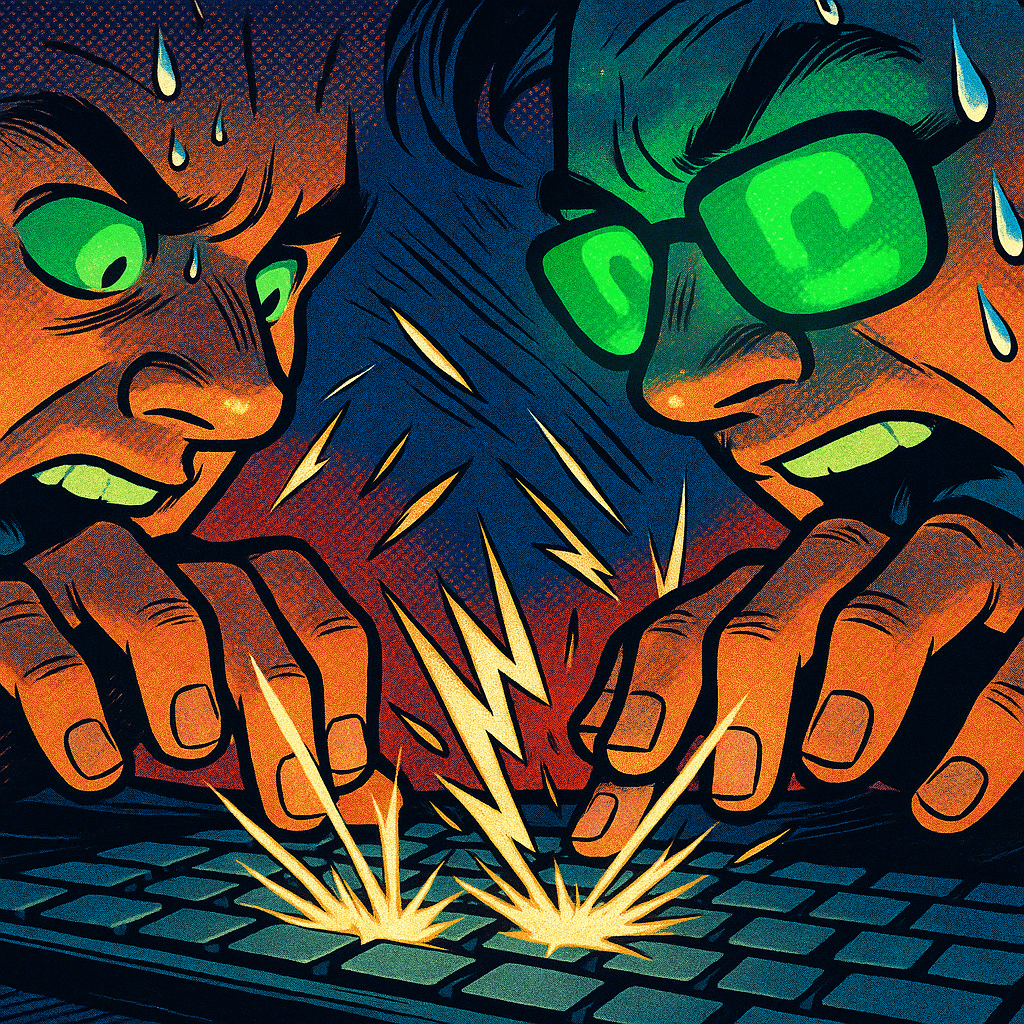
Any episode of NCIS where McGee and Abby face a cyberattack deserves a mention. The solution, on multiple occasions, has involved two characters sitting at a single keyboard and typing simultaneously. This is not a thing. This has never been a thing. If two people tried to type on one keyboard at the same time in a real IT department, they would produce gibberish and HR would be involved. This scene has been parodied more times than almost any other moment in television history, and rightly so.
5. Skyfall (2012) – Q Branch’s Slightly Embarrassing Moment
Skyfall is a masterpiece of a Bond film. However, the moment where Q plugs Silva’s captured laptop directly into MI6’s network to “analyse” it, and is then shocked when it immediately begins hacking MI6 from the inside, made cybersecurity professionals across Britain collectively put their heads on their desks. Air-gapping. Sandboxed environments. These exist. Q apparently skipped that module. Even the most junior IT apprentice at a UK managed services firm would know you do not plug an unknown device from a known threat actor directly into your primary network. Q got fired, presumably.
6. Swordfish (2001) – Hacking Under Pressure
Hugh Jackman is forced to hack a government system in sixty seconds while a gun is pointed at his head and a woman is nearby for reasons the film apparently thought were important. He succeeds, naturally. The actual logistics of breaking government-grade encryption in under a minute are slightly beyond what any human being has ever achieved, regardless of how many monitors they have. The multi-screen setup at least became a meme that accurately predicted every tech YouTuber’s desk setup by 2020.
Why Does Hollywood Keep Getting This Wrong?
The honest answer is that real hacking is visually boring and emotionally undramatic. It doesn’t make for compelling cinema. Watching someone run a port scanner and wait isn’t tense, it’s Tuesday afternoon in a network operations centre. So filmmakers invent visual metaphors, add countdown timers, and give us glowing interfaces that look more like a rave than a terminal window.
The knock-on effect, though, is that it shapes public perception of what cybersecurity actually involves. People assume it’s exotic and instantaneous, when in reality it’s methodical, patient, and deeply unglamorous. The UK has a genuine shortage of cybersecurity professionals, partly because the job sounds less exciting than the films suggest and partly because the actual work is hard. Understanding the basics matters more than Hollywood admits, whether that’s using a decent wordpress security plugin on your personal site or understanding why you shouldn’t reuse passwords across fifty accounts.
The Games That Got It Slightly More Right
Not everyone fumbles it. Hacknet, an indie gem available on PC, is basically a hacking simulator that feels plausible and genuinely teaches you something. Deus Ex has always treated its hacking mechanics with a bit more respect than most, building systems with logic gates and countermeasures that feel grounded. And Cyberpunk 2077, while absolutely science fiction, at least acknowledges that hacking has costs, risks, and countermeasures rather than just being a magic button.
The gap between these thoughtful examples and “I’m in!” typed on a MacBook in a thriller from 2009 is vast. One feels like it respects the audience. The other feels like it was written by someone whose only experience of computers was defragging a hard drive in 2003.
Final Verdict: Brilliant Nonsense We’d Never Give Up
Here’s the thing: we love these scenes anyway. Hackers is in the cultural canon. Die Hard 4.0 is a great action film. Watch Dogs is enormous fun. The unrealistic hacking scenes are part of what makes these stories entertaining rather than being dry technical documentaries. We just shouldn’t confuse them for anything approaching reality.
The NCSC, for its part, does genuinely good work communicating what actual cyber threats look like to UK businesses and individuals. If only their advisories came with a Hackers-style 3D city interface, more people might read them. Someone get Timothy Olyphant on the phone.
Frequently Asked Questions
What are the most unrealistic hacking scenes in movies?
Hackers (1995), Swordfish (2001), and Die Hard 4.0 (2007) are widely considered the most egregiously unrealistic. Common offences include hacking completed in seconds, 3D visual interfaces that bear no resemblance to real systems, and single individuals compromising entire national infrastructures. They’re brilliant entertainment, just catastrophically inaccurate.
Do any video games portray hacking realistically?
Hacknet is probably the closest to realistic, using actual command-line style interfaces and logical system structures. Deus Ex and Cyberpunk 2077 do better than most big-budget games by building in risk and countermeasures. Watch Dogs and the majority of open-world games treat hacking as a magic ability with essentially no technical grounding.
What does the NCSC say about cybersecurity awareness in the UK?
The National Cyber Security Centre (NCSC) publishes regular guidance for UK individuals and businesses on topics including password management, phishing threats, and software vulnerabilities. Their website at ncsc.gov.uk is genuinely useful and a lot more reliable than anything you’ve seen in a Bond film.
Why do films always make hacking look so dramatic?
Real hacking involves methodical, patient work that is visually dull and often takes hours or days. Filmmakers use visual metaphors, countdown timers, and dramatic interfaces to create tension and make technical processes legible to a general audience. It works for entertainment purposes but creates wildly inaccurate public perceptions of cybersecurity.
Is the NCIS 'two people on one keyboard' hacking scene real?
No, absolutely not. Two people cannot meaningfully operate a single keyboard simultaneously to speed up a process. The scene, which appeared in multiple NCIS episodes, has become one of the most parodied moments in television history among tech professionals. It is, by a comfortable margin, physically and technically impossible.