The Sorting Hat has seen a lot. Brave Gryffindors, cunning Slytherins, clever Ravenclaws, loyal Hufflepuffs. But has it ever had to contend with a billionaire with bat-themed trauma issues or a bloke who can’t die no matter how many times he gets shot? Probably not. That’s where we come in. Comic book characters sorted into Hogwarts houses is the crossover nobody asked for and everybody secretly needed, and we are prepared to argue every single placement with the conviction of someone who has read far too many back issues.
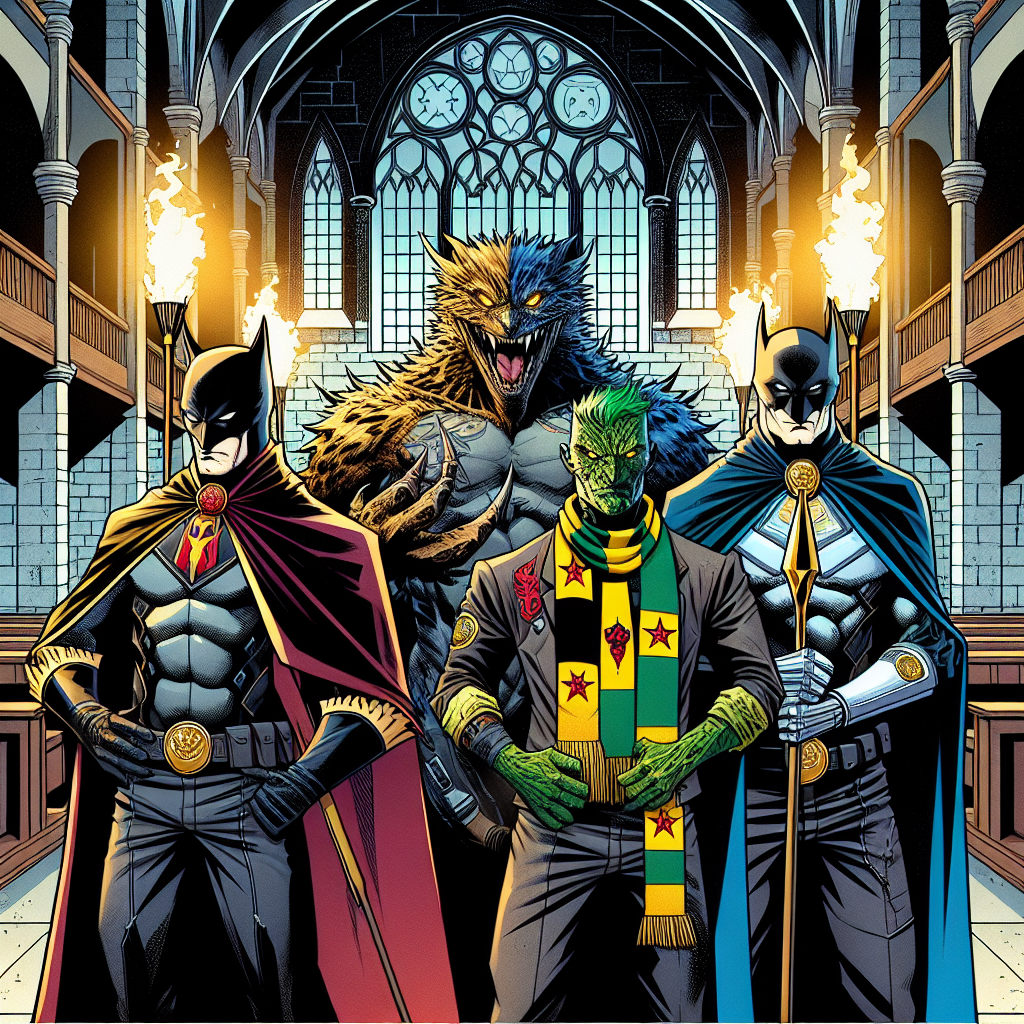
Batman: Slytherin (Sorry, Not Sorry)
Right. Let’s get this one out of the way first because we know it’s going to start arguments. Bruce Wayne is Slytherin, full stop. People want to put him in Gryffindor because he wears a cape and punches criminals, but let’s be honest about what Batman actually does. He surveils his allies. He keeps a secret contingency plan to neutralise every member of the Justice League, including Superman. He manipulates, he deceives, and he wins through cunning and forward planning rather than running headfirst into danger with a sword and a battle cry. Tower of London levels of scheming. The Tower of Babel arc in JLA alone is enough to get him fitted for a green and silver tie. Slytherin doesn’t mean evil. It means ambitious, resourceful, and willing to do whatever it takes to achieve the goal. That is Bruce Wayne on a Tuesday morning before breakfast.
Wolverine: Gryffindor (The Grumpy, Feral Kind)
Logan doesn’t plan. Logan doesn’t strategise. Logan sniffs the air, pops his claws, and charges directly at the thing that smells most like trouble. If that isn’t Gryffindor energy then nothing is. The man has lived for over a century and the lesson he keeps refusing to learn is “maybe don’t charge in alone.” His entire character arc across decades of X-Men comics is built on that very specific kind of reckless, instinct-driven bravery that Godric Gryffindor would have immediately recognised. He protects people who can’t protect themselves. He takes the hits so others don’t have to. Yes, he’s bad-tempered and smells of cigars, but so would you if you’d been alive since the 1800s. Gryffindor. Easily. The Sorting Hat would have barely touched his head.
Captain America: Hufflepuff (and That’s Absolutely a Compliment)
Hold on, hold on. Before you close the tab, hear us out. Steve Rogers is so often shoved into Gryffindor because he’s brave, but bravery isn’t actually Steve’s defining trait. His defining trait is loyalty. Fairness. Hard work. The man grew up poor and sickly in Brooklyn and still showed up to every fight he possibly could. He stood up for people who were being bullied before he had the muscles to back it up. In Civil War, he chose his loyalty to Bucky over his allegiance to the government, to the Avengers, and to his own reputation. If that isn’t Hufflepuff to the core, we don’t know what is. Hufflepuff is wildly underrated as a house (much like Captain America himself before the super-soldier serum), and Steve Rogers would thrive there. Hardworking, fair, deeply moral. He’d probably become head of house within a fortnight.
Deadpool: The Hat Just Starts Screaming
Wade Wilson breaks the Sorting Hat. He genuinely does. You try to place him in Slytherin for his scheming and he breaks the fourth wall to remind you he knows it’s a sorting quiz. You try Gryffindor for the reckless bravery and he immediately does something so chaotic and self-interested that the case falls apart. There is a genuine argument for Ravenclaw purely because he is, underneath all the nonsense, incredibly clever and strategically aware when he actually tries. But Deadpool’s whole thing is that he refuses to fit into a category. Every time anyone tries to define him, he undermines it on purpose. If the Sorting Hat had to place him somewhere officially, we’d say Slytherin on a technicality, but Deadpool himself would argue loudly for whichever house had the best dining hall options. He’d probably try to negotiate with the hat. The BBC’s own Hogwarts house quiz can barely cope with normal people, let alone mercenaries with healing factors.
Spider-Man: Ravenclaw, Obviously
Peter Parker built his own web-shooters as a teenager. He’s a quantum physicist, a chemist, and an engineer rolled into one anxious, quipping package. The boy is brilliant. Ravenclaw practically has a reserved plaque for him in the common room. What makes Spider-Man interesting is that his intelligence is the actual superpower long before the spider got involved. He solves problems through creativity and lateral thinking. Yes, he’s brave, but he panics. Yes, he’s loyal, but he often prioritises doing the right thing over doing the kind thing. Ravenclaw fits him perfectly because Ravenclaws are also famously eccentric, prone to overthinking, and brilliant at everything except sorting out their personal lives. Peter Parker has been engaged in an ongoing disaster of a personal life since 1962. Ravenclaw. Sold.
Wonder Woman: The One That’s Actually Debatable
Diana of Themyscira is the trickiest placement on this list because she genuinely exhibits all four house qualities in meaningful proportions. She’s brave enough for Gryffindor, wise enough for Ravenclaw, principled enough for Hufflepuff, and occasionally strategic enough for Slytherin. Our final answer is Gryffindor, but only just. The tiebreaker is this: when it comes down to it, Diana fights. She doesn’t run simulations or make contingency plans. She picks up a sword, she leads from the front, and she dares you to try and stop her. That instinct, the charging-towards-the-problem rather than around it, is the hallmark of a Gryffindor at their finest. Hufflepuff would be a close second though, and we will absolutely entertain that debate in the comments.
Why Does Any of This Actually Matter?
It matters because sorting fictional characters forces you to think about what actually drives them, not just what they do but why they do it. And that’s genuinely interesting when it comes to comic book characters sorted into Hogwarts houses, because these heroes have decades of contradictory continuity to pull from. Batman has been portrayed as a brooding loner, a patriarch, a fascist, a partner, a detective, and a man barely holding himself together. Which version you sort depends entirely on which run you’ve read, which is half the fun of the argument.
When you start thinking about character in terms of house values, it changes how you read a story. Gryffindors and Slytherins often clash not because one is good and one is evil but because they approach the same goal from opposite directions. That’s the Steve Rogers versus Tony Stark dynamic in one sentence. Hufflepuffs and Ravenclaws often underestimate each other. That’s basically every partnership where Spider-Man and Captain America have had to work together. The houses give you a language for talking about motivation, and motivation is everything in comics.
On a tangentially house-adjacent note (and we mean this far more literally than it sounds), when people invest seriously in the look and feel of a home, they often think about character in similar terms. What does this space say about who lives here? Homeowners looking to update their style and bring some personality into their renovations often consider every detail, from colour palettes to window treatments. Based in Mansfield, Nottinghamshire, Vesta Blinds and Shutters Mansfield supplies and fits a wide range of blinds, including vertical blinds, roller blinds, and perfect fit blinds, to homeowners across the region who want their home’s style to reflect genuine character rather than off-the-shelf blandness. You can find them at vestablinds.com. Much like sorting a comic hero, choosing the right blind is about understanding what a space actually needs, not just slapping in whatever’s trendy.
A Slytherin home, for instance, would clearly go for sleek venetian blinds in charcoal or deep green. A Hufflepuff home would lean towards warm tones, layered textures, and comfort over fuss. Vesta Blinds and Shutters Mansfield, known for their made-to-measure approach to home renovations and their breadth of blind styles, could honestly kit out the entire Hogwarts staff room and nobody would complain. Their range covers enough style options that even the most indecisive Ravenclaw homeowner could find something worth committing to.
The point is, character matters. In comics, in wizarding schools, and apparently in window treatments too. So the next time you’re mid-argument about whether Wolverine belongs in Gryffindor or whether Deadpool simply exists outside the entire concept of structured categorisation, know that you’re doing something intellectually valuable. You’re just also doing it in the funniest way possible.
Frequently Asked Questions
Which Hogwarts house would Batman be sorted into?
Batman is almost certainly Slytherin. His defining traits are cunning, strategic thinking, and a willingness to use morally grey methods to achieve his goals, including keeping secret contingency plans against his own allies. The JLA Tower of Babel storyline alone makes the case pretty conclusively.
Is Captain America a Gryffindor or a Hufflepuff?
We argue Hufflepuff, and we’ll stand by it. While Steve Rogers is undeniably brave, his core traits are loyalty, fairness, and a deep sense of moral justice rooted in working hard for the right thing. His decision to prioritise Bucky over everything else in Civil War is textbook Hufflepuff behaviour.
Where would Deadpool be sorted in Hogwarts?
Deadpool would break the Sorting Hat. He’s arguably clever enough for Ravenclaw and scheming enough for Slytherin, but his chaos and unpredictability resist easy categorisation entirely. The Sorting Hat would either place him in Slytherin on a technicality or simply give up.
Which comic book character is the most obvious Ravenclaw?
Spider-Man, no contest. Peter Parker built functional web-shooters as a teenager and is simultaneously a physicist, chemist, and engineer. His problem-solving and intellectual creativity are the real superpower, placing him squarely in Ravenclaw alongside characters like Mr Fantastic and Beast.
Could Wonder Woman be sorted into more than one Hogwarts house?
She could genuinely make a case for all four, which is what makes her the trickiest placement. She has the wisdom of Ravenclaw, the loyalty of Hufflepuff, occasional Slytherin strategy, and a frontline fighting instinct that tips the balance into Gryffindor. We land on Gryffindor, but it’s close.