Category: The World

  • How Digital Loyalty Cards Are Transforming High Street Shopping

    How Digital Loyalty Cards Are Transforming High Street Shopping

    High streets across the UK are changing fast, and so are our wallets. Paper stamp cards and bulging purses full of plastic are quietly disappearing as digital loyalty cards take their place. For shoppers, this shift means simpler rewards and less clutter. For local businesses, it can be the difference between fading away and building a loyal, returning customer base.

    Why digital loyalty cards are taking over

    The appeal is simple. Digital loyalty cards live on your phone, not in your pocket. They are harder to lose, easier to track, and can be updated in real time. Instead of waiting for a new batch of printed cards, a small shop can launch a new offer in minutes and let regulars know instantly.

    There is also a deeper shift in how people shop. Contactless payments and mobile wallets have become the default, especially since the pandemic. Shoppers now expect the same smooth, tap-and-go experience from loyalty schemes that they get at the till. If earning points or rewards feels clunky, many will simply not bother.

    How digital loyalty supports local independents

    It is easy to assume that digital rewards only help big chains, but the opposite is increasingly true. Independent shops can use digital loyalty schemes to punch far above their weight. A café, bookshop or barber can set up a simple stamp-style reward, then link it to push notifications, birthday treats or exclusive local events.

    Because everything is digital, these businesses can see which offers actually work. They can tweak rewards, times and messages based on real behaviour instead of guesswork. That kind of insight used to be available only to national brands with large marketing teams.

    From single-store rewards to town-wide benefits

    One of the most exciting trends is the move from single-store loyalty schemes to area-wide rewards. Instead of juggling separate apps for every shop, residents can use one platform across multiple local businesses. This encourages people to explore more of their town centre, rather than defaulting to the nearest retail park or online giant.

    Some councils and business improvement districts are already experimenting with shared loyalty programmes that give points or perks for shopping in a whole cluster of independents. This turns loyalty into a community project, where every purchase helps keep the high street alive.

    The role of super-apps and local discovery

    Alongside pure loyalty tools, a new wave of local discovery platforms is emerging. These bring together offers, events, independent shops and digital rewards in one place. Instead of hunting through social media or scattered websites, shoppers can open a single app to see what is happening nearby.

    In some towns, these platforms now include features such as digital stamp cards, click-and-collect, and real-time updates from local traders. A shopper might find a new bakery, earn a stamp for their purchase, and then discover a nearby florist running a limited-time offer, all in the same space. Services like the free uk shopping app model show how powerful this kind of joined-up experience can be for both residents and businesses.

    Privacy, data and trust

    Of course, digital rewards raise important questions about data. Shoppers are more aware than ever of how their information is used. For digital loyalty cards to succeed, platforms and businesses need to be transparent about what they collect, why they collect it, and how long they keep it.

    The most trusted schemes keep data collection to the essentials, explain clearly what customers gain in return, and give people control over notifications. When handled well, this data can genuinely improve the local experience, surfacing more relevant offers and reducing irrelevant noise.

    What shoppers should look for in digital loyalty schemes

    If you are thinking about embracing digital rewards, it is worth being a little choosy. Look for schemes that work across multiple local businesses, rather than locking you into a single chain. Check how easy it is to join and leave, and whether you can see your rewards at a glance. Above all, pay attention to how often the rewards are updated and whether they feel genuinely useful, rather than just a marketing gimmick.

    Independent shop owner managing customer rewards through digital loyalty cards
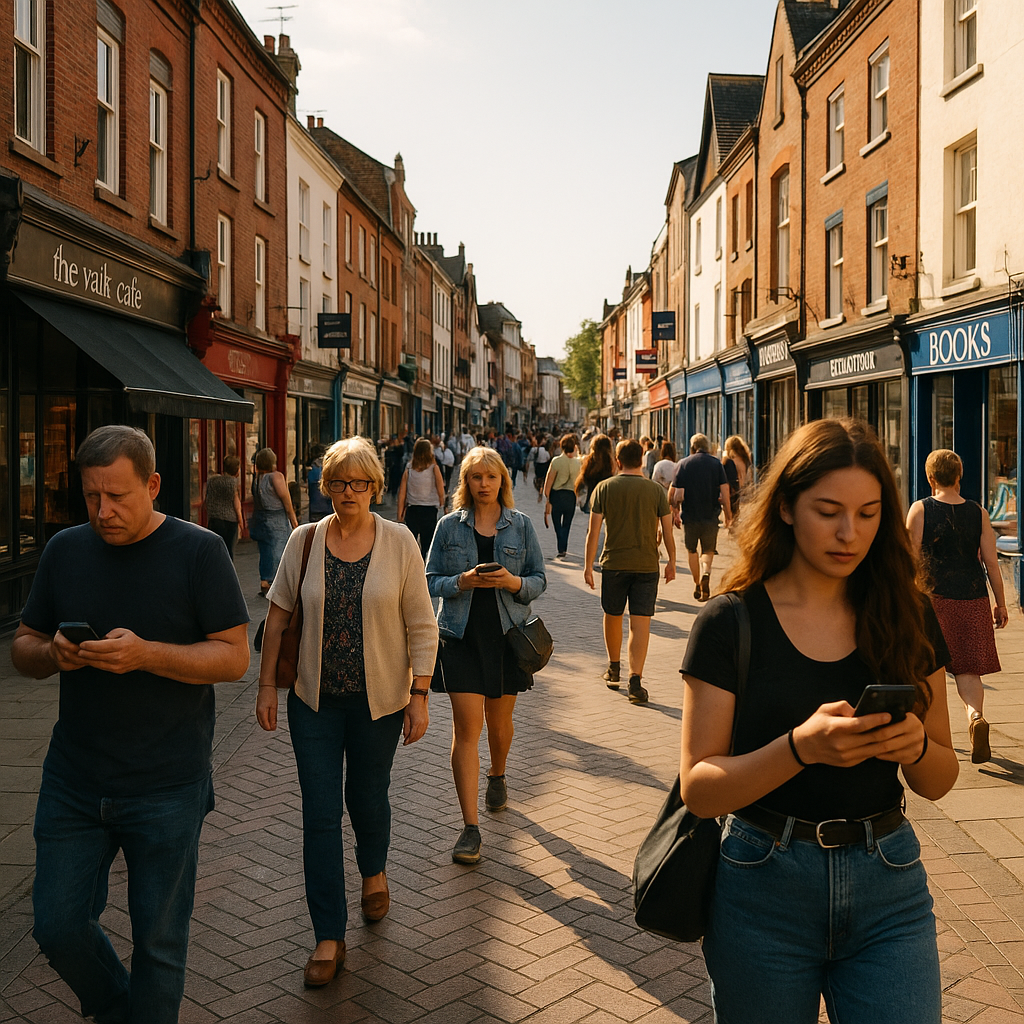
    UK town centre shoppers using phones linked to digital loyalty cards while visiting independent stores

    Digital loyalty cards FAQs

    Do digital loyalty cards really help small local shops?

    Yes. Digital loyalty cards let small independents offer rewards that feel as slick as those from big chains, without the cost of printing or complex systems. They can launch new offers quickly, see which promotions bring people back, and communicate directly with regular customers. This helps them build stronger relationships and stay visible in a crowded, increasingly digital marketplace.

    Will I need a different app for every loyalty scheme?

    Not necessarily. While some brands run their own dedicated apps, there is a growing trend towards shared local platforms that host multiple loyalty schemes in one place. These allow you to earn rewards across a range of nearby shops and services, so you do not have to juggle dozens of separate apps or physical cards.

    Are digital loyalty cards safe for my personal data?

    Most reputable providers take data protection seriously and design their systems to meet strict legal standards. You should always check the privacy policy, see what information is collected, and confirm that you can manage your preferences or opt out. If a scheme is clear about how it uses your data and gives you control over notifications, it is usually a good sign that it can be trusted.
    Read more stories with ‘Zaar!

  • The Rise Of Political Street Art In Modern Cities

    The Rise Of Political Street Art In Modern Cities

    Across cities worldwide, political street art has turned once anonymous walls into some of the most powerful public forums on the planet. From hastily sprayed slogans to intricate stencils and monumental murals, artists are using the urban landscape to challenge authority, mourn injustice and rally communities around shared causes.

    What was once dismissed as vandalism is now recognised as a vital cultural barometer, reflecting anger, hope and resistance in real time. As social movements grow and online spaces become more polarised, the immediacy of the street has taken on a new urgency.

    From graffiti tags to global protest murals

    The story of political street art is rooted in the early graffiti scenes of New York and Philadelphia, where writers tagged trains and buildings to assert identity and presence. Over time, the language of simple tags evolved into complex pieces, characters and narrative scenes that carried sharper social messages.

    In many cities, this evolution coincided with waves of social unrest. Walls became unofficial noticeboards for strikes, anti-war marches and civil rights campaigns. The fall of the Berlin Wall, the Arab Spring and more recent pro-democracy protests have all been visually documented in spray paint and stencils long before official histories were written.

    Today, large-scale murals and paste-ups created in collaboration with local communities sit alongside anonymous guerrilla pieces. Both forms share a common goal: to make political realities impossible to ignore.

    Stencilling as a tool of resistance

    Stencilling has become one of the most recognisable techniques in political street art. It is fast, repeatable and easy to transport, making it ideal for operating in heavily policed areas. A single stencil can spread across a city overnight, turning a lone idea into a visual chorus.

    Stencils also lend themselves to sharp, iconic imagery that can be understood at a glance. A raised fist, a child with a balloon, a CCTV camera given human features – these simple motifs carry complex messages about surveillance, inequality and state power.

    Many of the most famous street interventions of recent decades have used stencilling to cut through noise and bureaucracy. The blend of humour, dark wit and direct symbolism has helped such works reach audiences far beyond traditional gallery goers. Even the mystery surrounding artists like Banksy has highlighted how anonymity can protect creators while keeping the spotlight firmly on the message.

    Why cities are embracing political street art

    Despite its confrontational edge, more city authorities are starting to recognise the cultural and economic value of street-based expression. Legal walls, curated mural festivals and community-led art projects are now common features in many neighbourhoods.

    There are several reasons for this shift. First, political street art attracts visitors, photographers and cultural tourism, especially in districts that might otherwise be overlooked. Second, involving residents in designing murals can reduce tensions, giving people a sense of ownership over shared spaces.

    Crucially, these projects can provide a safer outlet for dissent. When communities feel heard and visible, dialogue with institutions becomes more possible. Of course, tensions remain over censorship, gentrification and who gets to decide what appears on the walls, but the conversation itself signals change.

    Social media, virality and the new life of the wall

    In the past, street pieces lived and died where they were painted. Now, a mural or stencil can be photographed, posted and shared globally within minutes. This digital afterlife has transformed how political street art is made and consumed.

    Artists increasingly design work with both the street and the screen in mind. High-contrast imagery, bold colour palettes and clever use of perspective help pieces stand out in crowded social feeds. Protest movements have also learned to use murals as visual anchors for campaigns, encouraging supporters to share images as a form of solidarity.

    At the same time, the internet has made it easier for authorities to track and remove unauthorised work, and for brands to imitate activist aesthetics for marketing purposes. The tension between authenticity and commodification is now one of the central debates around street-based political expression.

    Artist creating political street art with a stencil on a dimly lit city underpass
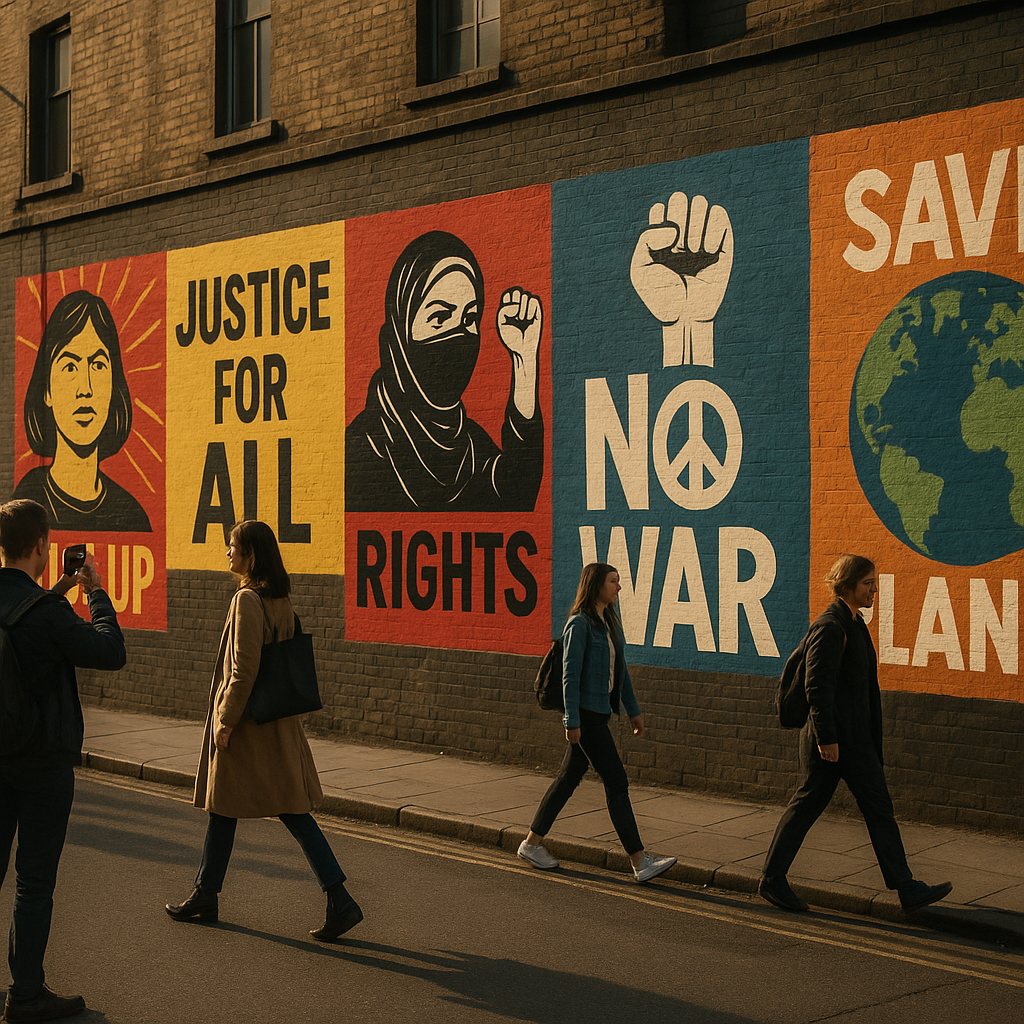
    People photographing a large mural featuring political street art on a city building

    Political street art FAQs

    Is political street art legal?

    Legality depends on permission and location. Painting on private or public property without consent is usually classed as criminal damage, even if the work is widely admired. Some cities provide legal walls or commission murals, which gives artists protection and time to create more ambitious pieces. Others operate in a grey zone, tolerated until complaints arise or priorities change. Artists often balance the risk of fines or arrest against the urgency of what they want to say.

    How is street art different from graffiti?

    Graffiti traditionally focuses on lettering, tags and stylised names, often rooted in specific subcultures and crews. Street art is a broader term that includes stencils, murals, paste-ups, stickers and installations, and it is more likely to use figurative imagery or narrative scenes. The two overlap and influence each other, and both can be political, but they have distinct histories and codes. Many practitioners move between them, depending on the message and the space.

    How can I photograph political street art respectfully?

    When photographing work in public, avoid blocking pavements or putting yourself at risk near roads. Try not to reveal artists’ faces or identifiable details if you happen to see them working, as anonymity can be important for safety. Credit the artist if their name or handle is visible, and avoid cropping images in ways that misrepresent the message. If you post online, be aware that geotagging can sometimes draw unwanted attention to sensitive pieces.

    Read more stories…